Episode 338: JASON SONNERS Has Wellness Maxxing Gotten Out of Hand?
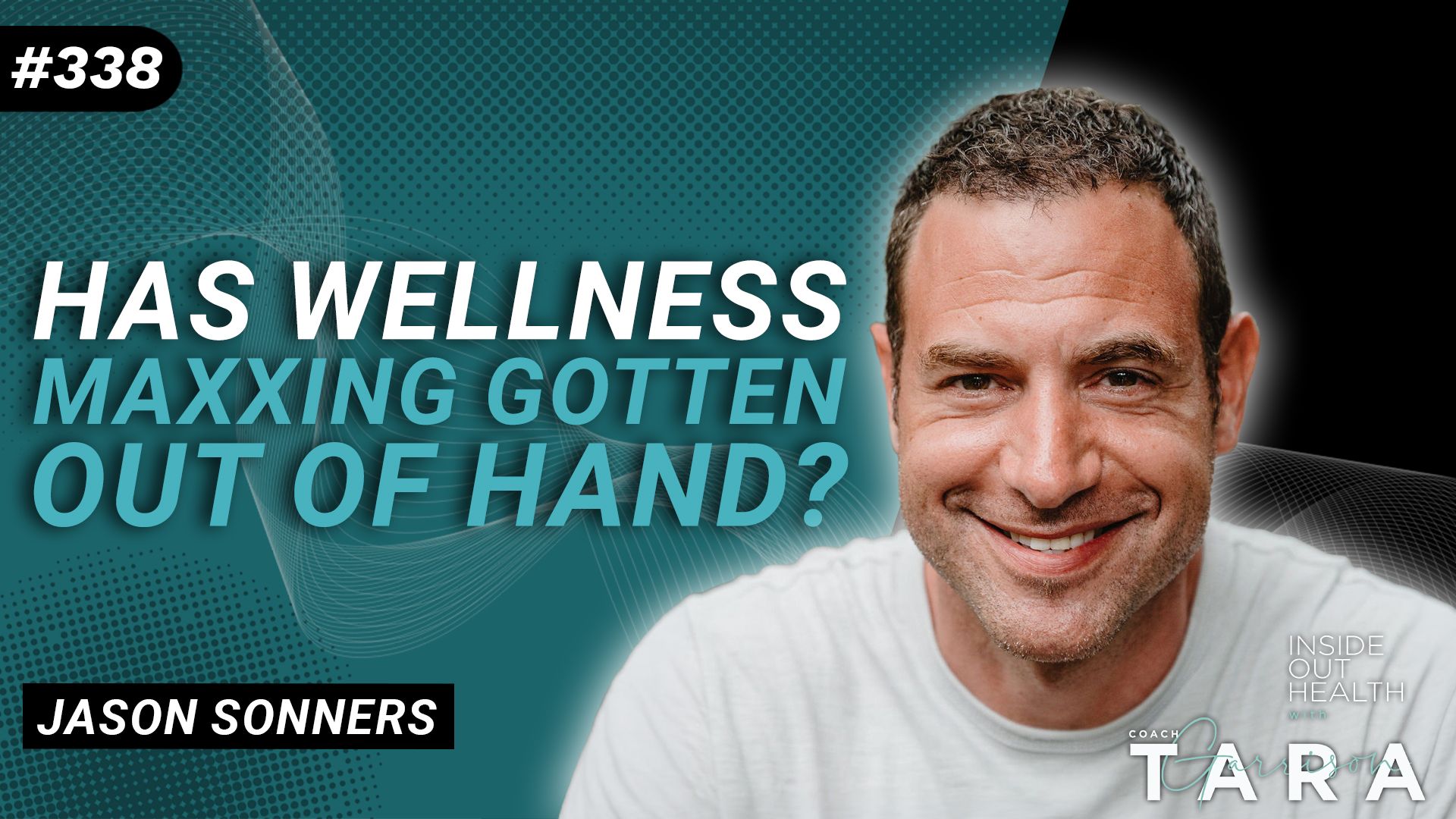


Jason Sonners is a chiropractor specializing in functional medicine. He holds a Phd in molecular biology with focus in regenerative medicine.
Jason owns and operates 2 clinics with his wife Melissa in the North East. He lives in Miami, with Melissa and 3 kids, mostly teaching lecturing and consulting for other businesses.
In this episode, Dr. Jason Sonners joins Tara to unpack how the health optimization world's obsession with stacking supplements, peptides, cold plunges, and biohacking gadgets can backfire without understanding hormesis, foundational health pillars, and when targeted therapies actually make sense.
RESOURCES:
- Learn more about Jason here: http://hbotusa.com
- Instagram: @hbotusa
-
Check out Dr. Sonners books here:
- Oxygen under Pressure: https://amzn.to/43OS0YM
- The Art and Science of Hyperbaric Medicine: https://amzn.to/4jDGa9w
- Get 10% off Peluva minimalist shoe with coupon code COACHTARA here: http://peluva.com/coachtara
CHAPTERS:
0:00 – Intro
1:08 – Meet Dr. Jason Sonners
2:04 – Sponsor: Peluva Shoes Ad
3:51 – Interview Begins: Jason's PhD Journey
4:40 – What Is "Wellness Maxing"?
7:11 – Biohacking's "Be Better" Trap
11:01 – Hawaii's Low-Tech Healthy Elders
12:50 – Bryan Johnson & the Tech Age of Wellness
15:50 – Joshua Tree: Sauna in the Desert
21:00 – Introducing Hormesis
22:02 – Hormesis Explained: The Stress Bell Curve
29:46 – "Just Tell Me What to Do" Trap
31:33 – Foundational vs. Targeted Therapies
32:24 – The Peptide Craze
34:36 – Jason's 5 Foundational Health Pillars
37:01 – Next-Tier Therapies: Contrast, PEMF, Grounding
39:23 – Universal Needs vs. Your Genetics (MTHFR)
41:45 – Host Segment: Coaching, App & Retreats
46:41 – PEMF and Sound as Health Inputs
51:39 – Exercise Variety & Periodization
55:01 – What Worries Jason About Biohacking
57:16 – 3 Sources of Stress: Chemical, Physical, Emotional
1:00:38 – Success Stories: Longevity & Dementia
WORK WITH TARA:
Are You Looking for Help on Your Wellness Journey? Here's how Tara can help you:
- TRY TARA'S APP FOR FREE: http://taragarrison.com/app
- INDIVIDUAL ONLINE COACHING: https://www.taragarrison.com/work-with-me
- CHECK OUT HIGHER RETREATS: https://www.taragarrison.com/retreats
SOCIAL MEDIA:
- Instagram @coachtaragarrison
- TikTok @coachtaragarrison
- Facebook @coachtaragarrison
- Pinterest @coachtaragarrison
INSIDE OUT HEALTH PODCAST SPECIAL OFFERS:
☑️ Upgraded Formulas Hair Test Kit Special Offer: https://bit.ly/3YdMn4Z
☑️ Upgraded Formulas - Get 15% OFF Everything with Coupon Code INSIDEOUT15: https://upgradedformulas.com/
☑️ Rep Provisions: Vote for the future of food with your dollar! And enjoy a 15% discount while you're at it with Coupon Code COACHTARA: https://bit.ly/3dD4ZSv
If you loved this episode, please leave a review!
Here’s how to do it on Apple Podcasts:
- Go to Inside Out Health Podcast page: https://podcasts.apple.com/us/podcast/inside-out-health-with-coach-tara-garrison/id1468368093
- Scroll down to the ‘Ratings & Reviews’ section. Tap ‘Write a Review’ (you may be prompted to log in with your Apple ID). Thank you!
EPISODE TRANSCRIPT:
I have Dr. Jason Sonners back on the show today. We are talking about wellness maxing. This is an incredible conversation I sincerely hope that you enjoy because Jason and I both are very much in the health optimization space, and we both have made the same observations and have the same concerns because, you know, from, from our point of view, like, some of the things that have become more and more popular because of social media in, in terms of health optimization, like, we were in this world when these things weren't very well known, and now we're seeing it's cool people know about them.
It's just also a bit concerning seeing how many things people are stacking on top. It's just like stack more, more, more, more. And he's bringing a scientific point of view, um, of why that may be concerning to do for your health, so just consistently stacking things, but also in terms of, like, is this even really the best approach?
So, um, let me tell you a little bit about Jason. So Dr. Jason Sonners is the founder of HBOT USA. He's the author of the Amazon best-selling book Oxygen Under Pressure. Just FYI, Jason is like, I, I don't know, I would say maybe the leading voice at, uh... I hope that doesn't offend anybody else.
Seems like to me the leading voice in hyperbaric oxygen therapy, at least from my point of view. Um, and he recently completed his PhD in molecular biology with a concentration in regenerative medicine from the University of Miami School of Medicine. His work focuses on how the body responds to stress, recovery, adaptation, and performance, giving him a unique perspective on the increasingly crowded optimization landscape.
So yeah, I hope you join us. I bet there will be many of you that are like,
"Right? Right?" Or maybe this might hit you exactly where you need to hear it. So let's go ahead and get into it. Here is Dr. Jason Sonners. Okay, before we get into the episode, I wanna take a moment to tell you guys about Peluva Shoes. So here's what happened.
So Mark Sisson... If you don't know Mark Sisson, you should know Mark Sisson, okay? Go look him up and start following Mark Sisson. Uh, Mark Sisson and also Brad Kearns, who have been on he's been on the podcast, uh, few times now, and Mark has also. They are, like, legendary OGs in the health and wellness industry.
And, um, Mark, who also started Primal Kitchen, if you're familiar with that brand, um, has started Peluva Shoes. So peluva means foot glove in Portuguese, and these are minimalist zero-drop barefoot shoes, and they have that five-toe articulation. I resisted trying these out for a long time 'cause I thought they looked nerdy.
I'm just being so real. Um, but after many times of Brad being like, "Dude, just try them, just try them," I was like, "Okay, okay, I promise I'm gonna be honest with you." Yeah, I wear them all the time. I absolutely love them. I didn't think that the five-toe articulation was really that important 'cause I've been a longtime fan of Vivos and barefoot shoes and still love Vivos too.
Um, but wow, like, major difference. Like, I was like, "Okay, now I'm, like, really actually using my foot the way I was supposed to." So they are awesome. Um, I told Brad, I was like, "You're right, dude. I love them so much." They're awesome. Um, and then they offered to sponsor the podcast, so thank you to Peluva, and they also offered to give you guys 10% off if you would like to try them out, which I highly recommend.
Um, you can go to Peluva, that's P-E-L-U-V-A.com/coachterra, or you can just use the code Coachterra at checkout and get 10% off of your order, and I highly, highly recommend getting some of their toe socks while you're there because you're gonna need toe socks. All right, let's go ahead and get into the episode.
All right, so Dr. Jason, uh, by the way, I was reading your, your bio just getting ready for this, and I was like, you got your PhD in molecular biology, right? Is that... Did I remember this correctly?
That's, right. Yes.
With a focus in regenerative medicine. And I was like, I, I... I'm not... I'm just being real. I was like, "Damn, he's smart." Molecular biology PhD sounds hard.
I figured, you know, I turned 40, and I was like, "I'm bored. I need to learn something new." "So let me go back to school and figure that out."
Yeah, and your wife is a doctor too
yeah,
So shout out, Melissa. So you guys are a, a, a nerdy, high-achieving, cool household over there.
Um, we are knowledge maxing, I guess maybe.
Yeah. All right, cool. So let's, let's, let's get into it. You, you gave us the, the, uh, the hint. We're talking about wellness maxing today. And I love that you're talking about this. You're actually... I don't know if you're coining that term or if other people are saying it, but you're the first person I've heard bring that to the table.
And as a parent of teenagers, I definitely when I read it, you know, 'cause if you don't know, if you don't teenagers, they put maxing after everything. Okay, I'm being really old right now. My kids would probably be like, "Oh, my gosh."
Yeah. My kids are like, "Roll... You're so old."
You're Just stop explaining it.
Yeah.
But okay. Tell us what you're what, what you're talking about here with wellness maxing and why you're bringing it up.
Yeah, I mean, I think, first of all, I applaud anybody's effort for trying to be proactive in their health.
Right.
I mean, that's been... You know, I've been in practice for a little over 20 years. I feel like when I got into practice, the, the tide was already turning. It was like, "Oh, we should start taking care of ourselves." like, kinda everybody started understanding we need to be exercising.
You know, we... But growing up, you know, I made this joke the other day. Like, growing up, my mom was like, "If they sell it in the supermarket, it can't be bad for you. They would never do that."
Mm.
You know? And I'm
Right
today we can look back on that and be like, "Whoa, like, most of what they're selling in the supermarket isn't okay for us."
Mm-hmm
this idea of, like, we can't just rely on outside information only. We can't rely on, you know, let's say doctors that aren't keeping up with what's going on in the world. We can't just, uh, assume that if it's being sold, it's okay, and we can't assume that, you know, our health is, Just a right that we all deserve to have without having to work for it.
You know? Like, especially in the world that we live in, if we're not being proactive and trying to take steps to maintain, and I'd I'd go further to say, uh, legitimately improve our health year after year, then it should be no surprise that people are losing their health and losing their quality of life as they age.
It seems like we have this definitive correlation, like as I get older, I have to get sicker. As I get older, I have
Right
lose quality of life. And, you
Right
we're seeing the proof of it today that that's just, yeah, maybe eventually, but I think not at the rate that we're seeing it in, in ourselves, in our families and our friends.
Right.
And so, you know, to, to say that I, I do applaud any effort of taking care of ourselves, and yet in the last, I don't know, five years or
Mm-hmm
it almost feels like there's a group of people... And quite honestly, I mean, I love biohacking, but I kind of feel like it stemmed from kind like a subset of, of the biohacking population where it's like, well, how well can I take care of myself? Can I be the best at taking care of myself?
Right.
Can I be better at taking myself, care of myself than you are taking take care of yourself? And it's almost like this competitiveness and this, like, this to-do list and this added
Mm-hmm
of being well. And to some degree, and some, and some of the people I work with, probably you too, it's almost like, wait, are we actually detracting from our health because stressing too much about it? Or, we're just doing too many things, or we don't understand, like, what like I did this and I did this and I did this 'cause I heard they were good for me, but I don't actually even understand the connection or the overlap, the synergy, or is it even dangerous to combine some of these things?
And so after seeing that pattern for enough years, I'm like, we need to like zoom out 30,000-foot view this and assess the bigger picture and
Mm-hmm
what are we actually trying to accomplish? And are
Mm-hmm
and are we getting there or, or not?
Yeah, it's kind of like a... I see this in, in multiple areas. Like, uh, let's go bodybuilding, for example. There's like a hashtag amongst physique competitors, and it's like, be better.
Right.
And
I, I have issues with that, to be honest. Like I, and I know people might be surprised 'cause I'm, you know, pretty into personal growth and, and lifting and all these things, but, like, when we are coming from the place of I just need to be better, all I know is that, like, wherever I'm at is basically not okay.
I just gotta be better
Not
Yeah. It's stemming from a not good enough. It's, it's actually can become addictive or an overcompensation for a feeling of not good enoughness that actually roots at something much deeper. And we see this in personal growth also, like almost a, you know, I just have to be better than I am now.
And it's kinda that same thing we're seeing here is like what can be an, an earnest curiosity in health and, you know, wanting to feel better and all of that, if we're not careful, we wind up with 50 different supplements that we're on and 60 gajillion little gadgets, and we're like terrified to eat in public because we heard that seed oils were
Mm-hmm
we heard that there could be
Mm
the food, and now we're like, can't even connect with our loved ones.
Yeah.
You know? And this is that zoom out that you're
Yeah. Exactly
I'm like, yes.
it's almost like, um,
it's one thing to have a mindset like I wanna continue to improve. It's another thing to not even look back and be like, "Well, where was I?"
Mm-hmm.
So that I can understand and potentially even celebrate where am
Mm-hmm
and then continue to figure out where am I going, but almost to ignore...
I, I don't know if celebrate's the right word or not. Maybe it is, but like you're already, if you're on this journey, like you're already doing something. You've already
Mm-hmm
progress. And sure, there could be room for improvement, but how much pressure are we putting on ourselves to get there? Where is there? Have we defined where there is? 'Cause if you haven't, and most people, quite to your point, like they haven't. better than it is now. I don't know where I'm going.
Right.
Like, then you're on this never-ending pursuit of the
Mm-hmm
which, you know, long-term I think will, will add to the stress of that person's
Mm-hmm
life, um, much more so than it needed to be, and potentially even be harmful over time.
Mm-hmm. Yeah. I'll share a quick example. When you brought up we have this normal viewpoint and we think it's normal that I just start getting, uh, unhealthy and sick the older I get, and that's just... and yeah, sure, I mean, eventually we're gonna die, right? that rate thing, what came to for me was last time you were on the show I was living in Hawaii, and when I was out there I lived very close to a large spiritual community.
Uh, let's say hippies, okay? Like in terms of people.
The Hawaii hippies.
And so I spent a lot of time there 'cause it was really fun and we did a lot of ecstatic dancing and drum circles and beach and all the kind of fun things. And one of my biggest takeaways from being there is you had a lot of older people, you know, 60s, 70s, who are dancing multiple times a week, constantly in community, constantly outdoors, swimming in the ocean.
Like eating food from nature is just a way of life there. Like, it's like not even a question. Like, I think, you know, it's... I'd be embarrassed to pull out a protein bar in these community. They'd be like, "Ew." Like, You need some help there with your food choices?"
Yeah.
You know? It's just the natural is all there is. And these, these older people were so healthy. I'm like, I can't even tell that you're not 25 from the back except for maybe some wrinkles a little bit 'cause you're in the sun a lot. other than that, you are vibrant and full of life and healthy body composition, and that didn't come from being, uh, you know, having a 50,000 to-do list supplement protocol.
It came
Mm-hmm
joy, play, less stress, being outside, being in community, eating some healthy food, and just generally being active, you know? And so just kinda setting the stage there of like we, we've got Bryan Johnson here now, uh, that probably most people have heard of, the like ultimate biohacker, right? And he's an interesting case study.
Mm.
But you know, I mean, to each their own, but just juxtapose my, you know, 65-year-old
Right
feathers in his hair and dancing and, you know, living his best life and eating lychee off the tree to like that life is kind of a, a, an Bryan is kind of an exaggerated, uh, example, I think, of what we're talking about here.
Yeah, I agree. It's like
we were talking off-camera just that there was this journey of like, "Hey, we need to start taking care of ourselves," to, "Wow, there's so many ways to take care of ourselves."
Mm-hmm.
To what I would consider almost these days it's like the, like the technology age of taking care of yourself.
Mm-hmm.
And in the technology age of taking care of yourself, we've gotten so far away from the basics that you're talking about right there, that like without my biohacking den room converted into like all the toys, the tools, the modalities, the strategies, it's
I have one, by the way, so do
So do I
real.
Totally. I mean, I have all of the toys and I use them. And but that's what got me thinking. It's like, well, you know, we have these people who are like afraid to go out into the sun.
Yeah.
Right? And yet, you know, light therapy is based on the sun. And now we're avoiding the sun, but we're getting light therapy from our device. It's like, again, zoom out to be if you can't get it this way, like here are the things
Right
exist naturally.
Right.
Community is so underrated. I, I love that you brought that up. Like, like here's my community. Here are the people that I associate with. This is my tribe, you know?
Mm.
And the, the natural existence of some of these things, I love, you know this, I love hyperbaric. It's not a secret. That's a huge thing. You know, it's a big part of what my life is about.
Mm.
But learn how to breathe. Do some breathwork.
Right.
Go outside. Get some fresh air. Like, there are ways to
Right
outside of using the technology. There's ways to get light therapy outside of the technology. When you, when you have a bigger issue or you have a bigger goal, maybe technology gets you over those hurdles.
Right.
But if you're not getting the natural sources and now we're relying wholly on the tech for the purpose of the
Mm
I think again, we've, we've sort of missed the mark, you know?
Mm-hmm.
yeah, that's... I think that's a big part of what I'm trying to, you know, recreate for people is like, "Hey."
Right.
"Get it, get it out there first, and then supplement with these other things."
Right, or if you're just realistically for some reason not going to get it out there. You know, you're, you're making an image come to my mind. I did a retreat in Joshua Tree, California in May at this hotel. It was very, very cool, very bougie, very like, you know, modern and all this, and, and, and someone had donated an infrared sauna and a cold plunge that they had kinda out, you know, outside of the pool area.
And I'm sitting there in Joshua Tree. It's blazing hot out. You know, it's so full summer, desert vibe, and I'm like, I mean, the cold plunge was cool. I definitely took advantage of that, but I'm sitting there like, "Why would I go in an infrared sauna right now? Like, I am in an infrared sauna."
I mean, you, you live in a, in this, on this planet that is covered by an infrared sauna during the day.
Yeah.
Yeah, totally.
But if you're working long hours, you get
Yeah
it's dark, it's winter, it's just realistically not gonna
Yeah
then cool, red light therapy, infrared sauna, these things can be massive, right? So.
And, or different times of year, depending on where you are. There, there's, there's, you know, different seasons in a year. There's different seasons in our life. There's different times
Mm-hmm
like, to your We have those technologies for those reasons, and I'm not even trying to say don't use them. I, I have them.
Yeah. Right
I, I would be the, the guiltiest person to be like, "Oh, you shouldn't do that." Like, I have them and I do them. But looking for a way to create sort of a, a
Mm-hmm
a healthy rhythm around all of this so that again, we're not
When I started building out my sort of technology and modality, you know, uh, center in my house, let's say, or in even in my office, you start to just like, "Oh, I got this, so I'm gonna start doing it. Okay, now I got this. Well, I'll do that too.
And, and now I have this thing too, and so I'll do that as well."
Mm-hmm.
And it's like before you know it, you're, to your point earlier, you're taking 500 supplements. You're using 50 different modalities. Like, you haven't even started your day yet. You you know, do you have time to eat, be with your family, do all the things? 'Cause the list just keeps getting longer without really understanding where do these tools fit, why are we using them, what's our goal, what are we trying to achieve, and over the course of months and years, how do we incorporate all of these strategies?
Not over the course of hours and days. It feels like everyone has this list that like every day I have to check every box.
Mm-hmm.
And again, what are we maxing for? Are we, are we maxing for how many things I can do physically and how much time do I have in a day to fill it, or am I maxing for a specific result or a specific benefit? In which case I don't need everything every day.
I have a goal in mind. I have some strategies that help me get to that goal. As I get closer to that goal, I create a new goal, and now I create a new strategy a different set of tools and you know?
Mm-hmm.
And I think if we go through it that way, it becomes what we were looking for in the first place, which is improved quality of life, improved longevity, but really everyone wants improved quality of life regardless of their longevity, I think.
Mm-hmm.
And if we're so focused on getting through everything that we have to do every day, like, is that improving your quality of life? You know? It's almost like your life becomes wholly based on that, and I think we're losing, you know, we're some of that bigger picture as a result.
But
I think also to say let's go, like, with the maxing conversation, you know? I get questions like, "Well, uh, I heard soft chambers aren't good. Hard chambers only. Like, has to be high pressure. Um, I got a cold plunge, but I heard unless I'm breaking the ice off of the top, it's not gonna work," right?
And
Mm-hmm
"I got this sauna, but does it get hot enough?"
Right.
So it's even, like, maxing each one of the devices that we have. Do we have to do the coldest, hottest,
Right
you know, heaviest? Even when, like, when you're back to exercise, do you have to do the heaviest thing every time you go to the gym?
Right.
I think that's setting us up for, for, for issues, where it's like when you learn these things, you know... Someone says, "How cold should my cold plunge be?" I'm like, "Uh, have you ever done it before?" "No." "Do you like cold?" "No." "Okay. Like, you shouldn't be breaking the ice off of your cold the first time you go in," you know?
Like, if you go in and it takes your breath away, it's cold enough, you know?
Yeah.
And for somebody, that could be 50-something degrees, and for somebody else it's 30-something degrees.
Right
could be 60-something degrees. Like, you know, cold plunge could be really good for someone who's really sick, but not at 30 degrees.
Right.
You know?
Way too much.
So again, when we, when we when we talk about maxing, it's also, like, maxing each individual therapy, maxing the entire strategy,
Right
for benefit versus for, you know, for, uh, for competitive purposes, you know?
Exactly.
Yeah.
Yeah. You're hit... Okay, let's take that example you gave of the cold plunge and, you know, you were saying before we got on, you were talking about, like, really hormesis is what we're talking about here and, and something that needs to be considered when stacking multiple approaches. So, um, you know, like the, the cold plunging, uh, I've been cold plunging for a long time, and I went cold I my friend had a pool, and it's...
We live in Utah, so it gets very... well, usually, except for last It usually gets really cold here in the winter. And, um, he, he had... He's you know, getting all the ice off. Well, even me as a seasoned cold plunger, it was way too cold. Like, there was no breathing and relaxing or whatever that I was My whole body was shaking, and I just got out.
I was like, "That's enough. I don't need to..." You know, the, it does get to a point where that, what's intended to create a positive response can cause too much and creates a negative response, you know? And I was
Mm
that's enough." So on, light of that I mean, I guess if you could explain what hormesis is and why it matters in this conversation, that would be great.
Yeah. So, you know, if you could picture basically, like, a bell curve, you know, on, on one end of that curve is a Actually, let's take a step back. Stress is anything that causes a cell or your body to have to react, change, and adapt, right?
Mm-hmm.
So the easiest way to understand it, I think, is exercise for most people.
Mm-hmm.
So exercise is a stress. We know that exercise breaks down tissue, but if we do it in the right intervals at the right intensities based on your experience and your body and, and then we nourish properly and create proper rest intervals, even though we're damaging ourselves theoretically every time we exercise, the result of that should be stronger, more flexible, more resilient, faster, you know, whatever area of fitness we happen to be working on.
So when you're, when you're, if you're in that bell curve, when you're operating in the peak of the bell curve, you're causing stress. You're just causing enough stress to get a response, to heal from that response, adapt to that response, and then become more resilient as a result. On the low end of that curve, that would be something that's like, it's not even enough of a stimulus to get a response.
Right
in other words, if a marathon runner stood up from their couch one day and walked two laps around their
Sure
their body probably doesn't even register that as exercise.
Yeah.
Right? And but when they're doing, you know, interval training or they're doing their long runs, like, they're pushing an envelope, that starts to trigger a response in that hormetic curve.
Hmm. Or you put them under some heavy weights and they never do that.
Or
Yeah. It's like, "No stress."
training in their life. All kinds of alarm bells are going off.
Right.
Then you have somebody, let's say, a totally sedentary, never exercised a day in their life. Well, that person just standing up and doing two laps around their house might be enough of a stimulus to actually start that hormetic response.
Mm-hmm.
Meanwhile, if that person who never walked a day or exercised a day in their life went and ran a
Right
they would go all the way to the other side of the curve, where it's now damaging.
Mm-hmm
exercise is good for you, but your body wasn't ready for that. You've exceeded your body's ability to adapt and respond appropriately, and injured. Right? So there's the low end, the high end, but we're trying to operate kinda right in the middle.
Mm-hmm.
And when you operate in the middle, over time, the hormetic curve gets wider and taller, which means over time, you become, whichever topic, we're cold, exercise, strength training, whatever we're talking about, that should grow and expand over time. One of the things we see in athletes, but I'll say now I see it in, like, the competitive biohacker, is I started this thing, and I started to get some improvement.
So I do more of that thing. I like the response. I like the improvement. I do more of the thing. I the response. I like the improvement. I do more of that thing. And so we
Mm-hmm
expanding how much we're doing.
Mm-hmm.
And we hit a point potentially, I mean, this happens in elite athletes all the time. they hit a point where it's like, "I'm training. My performance is getting better. I'm training. My performance is getting better. I'm training. My performance tanks."
Yep.
And in that moment, if they're not educated on this conversation, they think, "I'm not training hard enough."
Right.
Because
Right
every time they increased their training, their performance went up. Now, all of a sudden, it's going down. But what it is is they might be starting to go down the backside that hormetic curve. So they train harder. It goes down more. I must not be working hard enough. I train harder.
I go down, and then I get hurt.
Yep.
And so going back to, like, the maxing of a device, like, I got into a cold plunge. Uh, let's just make, I'm gonna make up, you know, 60 degrees. I'm like, "Oh, that's really cold." So over time, I get adapted to that. And I'm like, "I could do 55." And that's a new stressor for me, and then eventually I get adapted to that, so maybe I go to 46, right?
And if you do it that way, you're becoming more resilient versus the person or even for you, like you said, you're seasoned. You've done cold plunges a ton. It's just, it's too much of a stressor. It's like you went you know, way too far, and if you if didn't listen to your body and somebody was like, "No, this is the way you do it, and you're gonna six minutes in the..."
Yeah
you know, you could become, I don't, well, not necessarily injured for you necessarily, but it could certainly be more of
A negative
from your health and,
It,
and zero.
And, and just totally unnecessary.
Mm-hmm.
Right, yeah.
Right.
And, and the, the getting off your couch to running a marathon is a great example 'cause we can all imagine that that would not be a great experience for someone. Their body would be inflamed like crazy. They would probably be injured. Like, they would be exhausted for the next couple days.
Like, we don't want to push our bodies further than their ability to adapt to
Right
which, like you said.
Right. I mean, that's, to me, that's the key. It's like, if you're not pushing yourself at
Right
and so therefore there's no adaptation, you're gonna lose your health over time, guaranteed, right?
Mm-hmm.
It's, it's the constant struggle, even if it's just that much, cellularly. like, I call it cellular adversity. Like, you're looking for ways to create adversity on a cellular level on a regular basis but in a very controlled window, right? Strategic adversity, not just You know, "Hey, I heard fasting is good for me.
I've never done it before. I'm gonna go do a five-day fast tomorrow." Like, I wouldn't recommend that, right?
Mm-hmm. Exactly.
Maybe a five-day fast is incredibly healthy, but there's a way to work into
Mm-hmm
where you're adapting, you're balancing, you're becoming more resilient, and then you're more able to do that and feel good at the same time
Right
do that and, and you know, just feel absolutely awful. So, you know, I think, I mean, when it comes to patient care, like more and more, especially in the last five or six years, every strategy I offer a patient, I start low as like a test case.
Mm-hmm.
And then we sort of build in based on their ability to
Right
and their ability to adapt.
Totally.
And I think that's a lost art, especially when we're functioning on our own and we're just, like, we're being influenced by the influencers and it's
Mm-hmm
"Oh, do this. Oh, do this. Oh, do that."
Mm-hmm.
You, you, off-camera you were bringing up supplements. Like, "Well, this doctor told me 25 years ago to take this supplement, and now I've taken it every day for 25... I don't even remember what it was for. Meanwhile, I've gone to 11 doctors since and had 20 other recommendations. I've never stopped anything.
I've only continued to add things. I have no clue what I'm taking. I'm actually taking six of the same thing. I didn't even know 'cause it's a different label." Or, "I'm taking antimicrobials for years on end when it's totally inappropriate."
Right.
Um, so, you know, I think having more of a developed, um, strategy around
Mm-hmm
you know, viewing it through that hormetic lens, um, and then looking at it over long, like that we... Not looking at it in, in that days, weeks, and months even, but like months and years
Mm-hmm
allows us to really, a year from now, three years, five years, 10 years from now, yeah, we're aging, but we're aging and we're getting healthier.
Mm-hmm.
Not aging and, you know, beating ourselves up as we go.
Yeah. This, this whole topic of hormesis, thank you for explaining that so well. I, it is... I, I can see, because of my work on social media, how much lack of understanding is there on this in terms of the questions that I get. You know, I've been talking about perimenopause training lately, has been the topic, 'cause I shared something about it and then I had 50 million questions, and so I'm talking about that lately.
But one of the questions I get, and it, and it, I, I hope this isn't, like, insulting if any of those people are listening, but it's like I, they want me to just tell them, "So how many days do we train? How long are sessions? How-"
Mm.
I even get, "How much weight should I lift?" and all of this. And it's like, I can't tell you that. I know that's really popular on social if I just say, "Do this." That's what everybody wants on social media.
12 pounds six times a day, three times week. Whatever.
But I'm like, the, the nature of the question itself, it, is frustrating sometimes when you do work with people individually and I'm just like, I, I, I can't be I would not be being professional if I just told you, "Hey, yeah, you should train six times a week, Mary." "And, uh, you should lift as heavy as you can." I have no clue what's going on in your health at all.
You could be totally exhausted all the time and depleted of all these nutrients, and you got some autoimmune stuff I don't even know about, and I'm gonna tell you to train six times a week. That's what it takes.
Right.
You know? So this, the, these kind of conversations are important because it's reminding, it's a huge reminder to all of us to be a little bit more mature and self-honoring in our approach of like, why am I even doing this? How is my body telling me that it's responding to this, and where do I go from there?
And I think, you know, this kind of brings us to a, very nuanced, this is a very nuanced kind of conversation because you were talking before we started about there's foundational things for our health, and I think a lot of people know what a lot of those are, but we'll, we'll kind of cover them.
And then there's targeted therapies. And it, the reason I'm saying it's so nuanced is because sometimes it's like, okay, well, let's imagine somebody has a high-risk variant on MTHFR. They have not, they, they need folate, super, methylated folate super bad. Um, and you know, there's some sort of other deficiency or major issue or maybe, you know, in your case they have traumatic brain injury or whatever.
It's like sometimes, for Like, sometimes those targeted therapies are appropriate in the beginning, so, kind of as a foundational thing so that they can better achieve the foundational things. But what we're starting to see, and I think the reason you're, you're kind of raising your hand like, "Hey, let's have a little voice of reason here," is that, I mean, with the peptide craze right now, I mean, how much are you getting asked?
I'm getting asked about peptides nonstop.
Every day.
Yeah. And it's
whatever the newest one is, and I'm
right. Well
This is new
what about the, what about the GLP-3? And like, "Have you heard of this one?" And like, you know. Um, and so there's kind of a craze, like a wellness craze right now in terms of targeted therapies are hot, super hot. And you're right, it is a little bit of like a, "I know about this," and like and, and maybe a little bit of a curiosity of an, "I wanna try it," like some innocence there.
But what we're seeing is, like, almost a shift into targeted therapies as the like most
As the main,
main interest. Right? When, okay, we're still eating, like, junk junky food a lot and not super consistent in our training, but we're on peptides and, you know, have all these cool
Right
and we're we're cold plunging and saunaing regularly, but we're missing the foundation. So anyway, I'll let you take it from there. What, what are your
Yeah, I
of foundational versus targeted and how those flux?
I think partially, and this just gets into maybe, like, I don't know if it's only It can't only be American, but it very American to be
I've been thinking this too
like, this is, you know, uh This is the shiny new object, right?
Mm-hmm.
So, like, the peptide is the shiny new object, and then a new peptide is, like, the shiniest of the new, right?
Right.
Again, I, I use peptides, and I think that they're
Right,
and they have a purpose. So it's not to trash talk the concept.
Right.
just to, it's to understand the bigger picture. So unfortunately, diet and exercise are still part of the foundation. Like you can't get away from that. There's no pill. Like, there's no pill that would supplement or remove that as a requirement. And even more so, you can't exercise your way out of a crappy diet, and you can't eat your way out a sedentary lifestyle.
So, like, not only are they foundational, but they're individually critical and, and there's no substitute for that.
Mm-hmm.
So for me, there's, there's five things that are foundational. It's, it's nourishment, you know, nutrition, diet, or whatever wanna but, like, nourish, good nourishment.
Yeah.
Um, movement, we'll say it's exercise but to your point, you know, a couple times a
Swimming in the ocean
your community, like, there's a lot
Right
there's a lot of ways to move that are really healthy.
Right
nourishment, movement, mental health, and whether that's through meditation and, you know, gratitude, you know, practicing
Mm-hmm
But, like, you know, really a focus on, on who you are, who you are in your own world, who you show up to be and as you're, you know, relating to other humans in your community.
Mm-hmm.
But, like, the emotional health component.
Mm-hmm.
Oxygen, which again could be something like hyperbaric, but usually it's really just learning how to breathe
Mm-hmm
at least initially, and then doing some good breathwork and then And light.
Yeah.
Those five things to me cannot be replaced in any way, shape, or form. There's no, there's no oxygen substitute. There's no light substitute. There's no substitute for balancing your emotional state or being able to have some
Right
control over your, your emotional states in, in that way. And, and all five to some degree I think interact with one another, and I think when we get those five, then we could start going into other strategies that are equally beneficial and still systemic. Like, the the one thing that all five have in common is every cell in your body is affected by it.
Like, when you take a supplement, which is a targeted therapy, you take a peptide, which is a targeted therapy, you're pushing a very specific pathway.
Right.
Again, it could be very necessary. You have inflammatory thing and you're So you're taking anti-inflammatory supplements. taking anti-inflammatory peptides.
Mm-hmm.
But in the natural state of a human, you might not need the peptide because, or the supplement, 'cause you're not inflamed, but in the natural state of the human you still have to be nourishing yourself. You still need to be moving your body. You still need positive, you know, mental health.
You still need oxygen. You still need light. So to me, that's why those foundational components are that strong. They're, they're systemic, and they're The, the absence of those will create disease. The absence of a supplement was not gonna create disease if you're getting properly nourished. Does that make sense?
So,
Mm-hmm
that's what makes a foundational therapy so foundational. The next level up would be still systemic therapies, but things that are not quite as definitively required, like cold and hot, right? Contrast therapies.
Right.
Super beneficial, incredibly hormetic, could really build resilience, still affects the whole body, um, but it's not targeted on a specific pathway, right? Um, I'll say PEMF is on that list, but to me that also is, like, part of the grounding conversation.
Right
are you getting in the ocean? Do you walk barefoot in the grass? Like, like the electrical connectivity of your body to Planet Earth naturally or through a device.
Right.
So contrast therapies and electrical connectivity, like those are only, like, one little layer up. The next layer up might be, you know, I'll just say, like, a multivitamin. It's, it's still a supplement, but it's geared towards a number of different pathways to kinda top off your nourishment as an example.
And then the next layer up would be incredibly targeted, like a very specific peptide for neurological repair 'cause you have a particular situation that requires that. What, what's interesting about humans is that, number one, we're the only species on the planet that's ever created their own food supply and decided to try to kill themselves with that, and we're the only ones that don't know what to eat.
Like, we're the only species that are like, "What is a human supposed to eat?" Like, we're so confused by something so, so basic. And, you know, to, to get to your point that you made earlier, it's like, if I wanted to know what giraffes ate, I wouldn't go to the zoo.
I would go to
Mm-hmm
and I would observe them and, and look to see, what do giraffes eat in their natural environment? And you don't see, like, one giraffe eats leaves and the other giraffe eats bugs. every giraffe basically in this region
Mm-hmm
the same diet, you know?
Mm-hmm.
And so yet we're like, "I have no idea. Should I eat this food?" Like, we're, we're not that complicated from that standpoint. Now, unfortunately, we've also become really sick. We've become really toxic. We've got family history of diseases that are now, you know, rapidly progressing over time. So to me, there's like, what does it take to make a human healthy?
Every human, no matter who you are, like, these are the ingredients.
Mm-hmm.
As an example, you know, you said folate earlier, like methylated folate. methylated B vitamins is a requirement for every human on planet Earth. Some people, their body can take that vitamin in its natural and reconvert it into, like, the methylated form. And someone like me, I have, like, the worst version of MTHFR.
I can't. So unless I'm taking methylated Bs orally in liquid form and in pill form and doing, uh, methylated B12 shots, like, I can't keep my homocysteine in a normal range.
Mm-hmm.
So there's, there's, like, what makes Jason healthy 'cause he's human, and then there's what makes Jason healthy because he has genetic passed down from his family, thank
Yeah
um, that, you know, I have to now do to keep myself sort of in balance, right? And so it's creating the foundation and then understanding your nuances to my
Mm-hmm
and then stacking those nuances on top of the foundation. But if your foundation isn't there, just like everything else that you
Mm-hmm
any analogy you wanna make about the, the basement being the foundation of your house, like, the rest of the house doesn't stay up if the foundation isn't solid. And so, you know, everyone wants to get away from diet. Everybody wants to get away from exercise. Everybody wants a shiny thing.
Everybody the pill that fixes all the problems. And again, why did I go back to school when I was 40? To to do molecular biology of all things. It was literally this conversation. It's like, uh, if we can make a single cell in a human body
Mm-hmm
every other cell will follow.
Mm-hmm.
Just like you can't have a sick cell, like you can't have liver disease and it stays in your liver. Like, that's not how
Mm-hmm
that's not how health works. You can't
Mm-hmm
uh, an autoimmune disease affecting your joints, but it doesn't affect the rest of your body. That's crazy.
Right.
All the, all the diseases affect everything. All the health affects every cell in our body. And so if we can just focus on what makes a human healthy first and then stack those nuances, like, we will see massive changes in everybody, everybody's health.
Mm-hmm. I wanna take a moment to tell you guys what I can actually do to support you in your journeys and tell you a little bit more about Higher Coaching, my app, and retreats. So just as a quick summary, Higher Coaching is my full tilt, full on customized health and life coaching.
So we are getting all into every aspect of your life in a very supportive way. So how that's delivered is completely customized training. You'll do my neurotyping test to kick things off, which is a whole thing in and of itself that's really cool, and then I will completely customize your training and also your nutrition.
I base a lot of my decisions on labs. You don't have to do labs, but we can do a lot of labs. You can also bring me labs that you've had done recently or, you know, whatever kind of health history that you have. Love to see it. And, you know, from the labs perspective, we do blood, we do hair tissue mineral analysis, DNA.
Um, I have a software that I run DNA through that I prefer where I can see different SNPs that have to With health, um, that are more research-backed and I actually trust. Um, we do stool testing, so gut microbiome. So if you got gut issues, bring 'em, let's go.
And also, um, hormones through saliva and urine. And those two methods of testing help us get, see a little bit more of a deeper insight into what's going on with your hormones, incorting, incorting, including cortisol, um, and your sex hormones. So, um, there's that. And then we also have biohacking involved in various ways.
That could be through an Oura Ring or Whoop Strap or some sort of HRV and sleep tracking device or continuous glucose monitor or, you know, lots of different interventions that we do depending on the person and what they need. So there's all of that health approach, and then there's the full-on life coaching because I believe these are one.
They are. I, it's not I believe. They are one. Okay? So it's like if there's a lot of dysfunction in terms of interpersonal relationships or professional life or just internal world in terms of boundaries and self-talk and identity and all of that kind of wounded stuff, like we get into that too, as much or as little as someone is willing to.
So higher is my full till we are going all in on you, baby, uh, one-on-one coaching. And I do have a coach that coaches with me, Coach Daria, who has been on the podcast a couple times. Um, so you do have some options there between working with either of us.
And the, you know, obviously the cost is a little different too, so it's kind of a nice service for people because, yes, I charge more. But yeah. So if you wanna learn more about that, go to tara-garrison.com, and you'll see one-on-one coaching. And just, just click on that one, and you can get a free consultation with my team.
Next is my app. So my app is my solution for not everybody can afford or even wants full-on one-on-one coaching. So if you want all my goods, like you want all my training counsel and form optimization and nutrition and, you know, the biohacking and the info, and we do have live Q&As once a month and community and all of that, that is, uh, obviously a lot more affordable and pretty awesome if I do say my do say so myself.
And, uh, there's a whole mindset part in there that a lot of people like where I take you on these little 22-minute guided journeys. So check those out if you get the app, and there's a seven-day free trial, so you can see everything in there, make sure you like it before you actually pay anything.
So just go to app.tara-garrison.com for that. And then I do have a retreat open right now. In 2027, we are going up to the Pacific Northwest. It'll be about 45 minutes outside of Seattle. Um, we are staying at the beautiful Salish Lodge and Spa. It sits on top of 168-foot waterfall, and it is owned by the tribe whose lands that those are.
That waterfall is very sacred to them, and that makes me happy that they are in control of that land again. So, um, it's gonna be incredible. We're gonna do lots of fun things like whitewater rafting, paddleboarding. Uh, you know, we're gonna do holotropic breathwork or, like, conscious connected breathwork, which is a healing type thing.
Um, we will have all sorts of amazing facilitation. And yeah, they're the coolest thing that I offer straight up. They're amazing. So if you want to check that out, just go to tara-garrison.com and click on Retreats. And you can find out more and get all signed up. If that is speaking to you, I firmly believe that anybody that comes to anything, like whether it's working with me directly or in my app or coming to one of my retreats, uh, my whole business is kind of a spiritual thing for me.
So I take that very seriously, and I fully believe that people who come my way are sent my way for a reason. So if that's pinging at you, um, please, please honor it. Like, uh, it's, it's more than just business for me here, you know? So, um, yeah. I would love to hear from you if I can support you in any of those ways.
Yeah. You hit on a couple things in that that I think illustrate what we're talking about perfectly. Let's talk about PEMF for a second.
Yeah.
I love the, the PulseSpas. PEMF is really cool. Really illuminating if you If you guys haven't ever tried them, I mean, they're a little hard to come by if you're not going to a maybe... You probably have them at your center, I would think. You know?
Yeah.
I feel like a lot of health biohacking you know, places, recovery centers might have them locally near you somewhere or something. But they're really cool. Like, they really serve a, a purpose in terms of, like, being able to kinda amplify that electromagnetic field from the Earth, right? Which can do certain things.
That's really cool. And I just, When you've brought it up, it made me think of the I have this, just this little park by my house that I can walk over to and walk around in the grass and lay down and blah, blah, blah. It's like think of that feeling when you're, like, barefoot outside walking around.
The sun is shining. You're not only getting the, the pulse from the Earth, that grounding effect. You're also getting sunlight. You're also hearing birds and the wind go through the trees. And, like, I think sound is actually a really underrated aspect of human health. Um, I I learned that through experience living in Hawaii for two years, where windows are open year-round.
There's tons of birds.
Birds.
Big Island, there's the coqui frogs.
Yeah.
there's just a lot of sound, you know? And when I actually was visiting Utah, I was just visiting for a week during that time, and I was so used to meditating in the morning to the sound of the birds, and the little coqui frogs are still going. And, um, that's what I'm used to.
And the wind even, you know? you can hear it all. It's like, almost like you're living outside. And then being in my friend's basement meditating, uh, when I was staying in her room, I was like, "This is, like, unnerving, sterile silence." Like, I think I hear the light bulb, you know?
I was like, "Holy crap."
Yeah.
"This is crazy." It made me realize, you know... So when you're outside, you're just getting so many of the... You're going for a walk. You're oxygenating. You're getting sunlight. You are getting the electromagnetic pulse of the Earth. You're hearing sounds that are good to bring you into parasympathetic versus, Looking at doing a PEMF thing as like, yeah, this is how I'm grounding, as like your standard.
Right
I know why I'm doing this. I have a specific reason for this. This is just me taking care of myself is laying on my PEMF mat or whatever, and I'm not going outside. I just think that as, and I don't even know why I'm, I'm, I'm just being a wellness I'm just being well, you know?
Right
It's like kind of what we're trying to this
it was good for me, you know?
Yeah.
I saw an Instagram post that PEMF was good for me, so I do it.
And it kinda makes you feel cool, right? It probably has red light in it and lights up, and it's like acupunctures. And you're like, "I am cool." You know? they are, they are cool.
They are.
If, as long
And they're incredibly powerful.
Right.
And these things exist. Like, the same thing I was saying about our food supply. Like, we have a man, in general, like we have a manmade food supply.
Yep.
And now, like from a wellness standpoint, we have these manmade devices, not all, but most of which are in, essentially replicating what we've always had exposure to, what we've always had access to. Now, the doses are higher, the durations are shorter because the doses are higher. Like how long would it take, you know, let's say a 20-minute PEMF session maybe is an hour grounding outside, or who knows the, the exact ratios.
But like,
if we're getting these things on a regular basis, we could rely less on the technology. And the technologies are amazing, and they are incredibly powerful, and they're life altering in many cases, and they serve a definitive purpose, again, depending on, on your needs and your goals.
Mm-hmm.
are you even not you specifically, but are you even evaluating your needs and your goals to understand, to your point, why am I doing this? What purpose is it serving? What needle am I trying to move? And how do I know when I got there so that I know what my next step would be?
Right.
Like, to think we're all static, this is the routine. Same thing with diet and exercise. You can't just eat the same diet every day for the rest of your life and get benefit. your diet requires variation. You can't exercise the exact same way every single day, day in and day out.
Right.
Your exercise requires variation. Well, so do your exposures to all these other concepts, your exposures to light, your exposures to cold and heat, your exposures to eating and fasting, your all of these exposures require, like ebbs and flows and, and, and some degree of strategy.
Mm-hmm. And, and kind of centering back in your hormesis conversation, uh, exercise is a great example 'cause most people can relate. Like, imagine that you're deciding to become a powerlifter and a jujitsu, uh, person, and run marathons and, um let's see, what other kinda, I don't know. Some, some type
you're gonna be, um, like a professional gymnast and
Yeah, yeah. And, so you're just hitting all these different stimuli, right? You're like squatting 300 pounds, and then you're going to this like strength jujitsu thing where you're holding onto people. And then you're running forever, and then it's like, it's, it's a lot for the, a lot of different stimuli at once for the body
Right
trying to adapt to. And when you think of taking, I mean, I, I, I literally have had clients taking like 50 supplements when they come to me, you know? And like, um, you know, I take my little stack, but it's, it's not, it's not like that. Um, it, but, but let's say, you know, whatever.
You're taking all these things. Now you're doing your red light therapy, and you're cold punching, and you're doing your sauna, and you're exercising, and you have your normal life stress, and you just have all of these different stimuli going like crazy. You can't even tell what you're getting out of them.
Right.
And, and it
Or if something, if something goes well, you'd have no idea why or what it was.
Right.
And likewise, if something goes
Right
you no
No idea
what contributed to that. And the, the flip side to that conversation that you're bringing up is also that like, let's just say fitness, like what are the aspects of it? Cardiovascular, flexibility, agility, strength, right? Like, there are a number of, um, factors that influence whatever your total fitness And we have some people that, like, all they do is yoga.
Mm-hmm.
Period.
Mm-hmm.
Somebody else, all they're doing is power lifting.
Mm-hmm.
Period. Somebody else, all they're doing is
Mm-hmm
let's say, period. So, like, the flip side to your conversation, which is equally important, is not over the course of a day should you do You should not be a power lifter and a marathon runner and a yogi and a gymnast in the same day, but over the course of months and years, you certainly need to exercise all the aspects of physical fitness.
You should go through ranges of strength training, ranges of cardiovascular
Mm-hmm
ranges of flexibility, right? So,
Mm-hmm
again, going back to strategy and, like, the big picture over the long
Mm-hmm
not the how many things can I do today or tomorrow, it's like in the next 10 years, what can I be over the next 10 years, what can I be doing to improve the likelihood that 10 years from now I look back and I'm like, "Wow, I thought I was healthy then," or, "Wow, I was really sick then.
Look at me now." You know? And, and that takes a, that takes a degree of consistency for sure and, and strategy.
I'm curious, like, okay, 'cause you guys, many of you probably aren't, like, in the biohacking scene where you're going to the conferences and all that, but Jason is Like, you're you're, you're always there. You're always speaking at these things. Like, you're definitely
Yeah
a, a a presence in those communities, right? Health optimization and all of its little branches and all of this. And so I'm just curious because of that, because you're around it so much, like, what was it that concerned you? You know, like, what was it that you're like, "Mm, we need to talk about this." Like, what is your concern?
I think, like, early, much earlier on, even just in the basics, like, having a patient, let's say, that for whatever reason, maybe they had a parent or a loved one that got sick and they were like, "I don't want that for me," like, "What do I need to do to get healthy," right?
Mm-hmm.
And so we would go on this journey together, you know, and then I would see it where they, like, they just couldn't deviate.
Mm.
And their, their inability to deviate started to show up as new health problems that would never have shown up had they not been so incredibly regimented that deviation
Mm
Melissa and I will joke about it, but, like, we love to eat Like, we enjoy eating well and eating healthy. That doesn't mean that I never deviate from that. That doesn't mean that, like, I've never had a piece of pizza or ice cream or something ever
Yeah
decided I'm gonna be healthy. And it's like we almost joked about, like, diet variation, like, "Oh, I'm just gonna have ice cream. It's diet variation." And it started as a joke, but, like, I almost I, I actually view Like, as long as The same way that a singular Like, if I never exercise a day in my life and I exercise once, I'm not actually any healthier as a result.
Right.
And if, if I exercise incredibly consistently for throughout my life and I miss a day or I miss a
Mm-hmm
I'm also now not sick.
Right.
And if I eat one salad tomorrow, I'm not healthy, and if I eat ice cream tomorrow, I'm not sick.
Right
it's okay.
Mm-hmm.
Like, if we don't have a lens And not only that, this came up the other day and it was so interesting, but
some people will agree with what I'm saying. Like, "Yeah, you know, I, I need that meal that's just, like, the F-it meal. Like, I'm just gonna have whatever this thing is." So they do it and then they beat the heck out of themselves.
Yeah.
Right? So now you know, we haven't really talked about this. don't know if we have that much time, but, like, stress comes from three sources. Chemical stress is everything you put into your body, physical stress is everything you do to your body, and emotional stress is everything you think about.
Right
and, and there's good you know, healthy versions and, and unhealthy. Like, exercise is, could be a healthy stress, but exercise, too much exercise could be an unhealthy stress, right?
Mm-hmm.
Back to that hormesis. So you chose, "Okay, I'm gonna eat this. I'm gonna have some potato chips," whatever. That's, like, one of my one of my problems. So I have some potato chips and then I'm like I'm finding myself at the bottom of a bag of potato chips next thing I know.
What I realized is if I'm gonna have that food, I'm also going not all in, like, I have to finish the bag, but I'm in, like, I'm not gonna look back and beat myself up. Like, I made a conscious decision. I'm going to eat this
Mm
and then I'm gonna move forward. I'm not gonna eat this thing and be like, "Well, since I had this, I might as well go and do that." And I'm not gonna beat myself up and be like 'Cause, 'cause now you, you took a chemical stress and then you made it an emotional stress.
Right.
And now it's, like, compounding negativity in, in your world.
Mm-hmm.
Right? So it's like when I take a day off from the gym, I don't regret it. I don't think about
Right
more than, like, the time it took me to make that decision. And I know that tomorrow and the next day are, are brand-new days.
Mm-hmm.
You know? And I don't carry that with me, but So that was, like, early on in that journey I, I saw that in some people. But as the biohacking world really expanded, I saw that level of, like,
Mm
A, competitiveness, which a little I love Listen, I'm a competitive person, so like
Mm-hmm.
But a little too much of that.
Mm-hmm.
Or this, this, this rigidity around it that's, like, so reminiscent of what I was just explaining and feeling like
if, if you I mean, it's different if you have celiac disease, right? But if you're avoiding
Yeah
gluten's unhealthy, which is generally true I would say
Right
all of us, like,
and therefore you just never eat it because you're so afraid of
Right
that's not healthy either.
Mm-hmm.
You know? Like, there has to be a little bit flexibility
Mm-hmm
in terms of decision-making, but also in terms of, like, the emotional
Mm-hmm
to tolerate those deviations.
Mm-hmm.
And that's really when I started wanting to talk about this, 'cause I,
Mm
I see the future of this being, like, I killed myself to be so healthy.
Mm-hmm.
Like, it It actually, literally, it's like an oxymoron to me.
Mm-hmm. Yeah. I mean, you're... This is one of the main reasons I do mindset in my coaching. The, like, the life coaching end of things is very deep, emotional stuff
Yeah
we have to be real. Like, when we're talking health optimization, we're going to attract people who have anxiety, and maybe some OCD, or at least those type of tendencies towards orthorexia or things like that. And even if it's not a full-blown
diagnosis,
or whatever,
Exactly
a, a way of being is kind of there, where there's a lot of fear, and that fear is being calmed through extreme control, right? And that is a totally different conversation than, than, than this whole thing.
For our next
Yeah
will cover.
And, uh, 'cause that's a, that's a different path. But I, I, you know, to summarize, I... Uh, my, um, my ex-husband's grandma was, like, a a almost 100. She was in, in her late 90s when she passed away. And I always look at her as an example of, she had she was frying, you know, scones in vegetable oil, and always had peanut M&Ms at her house.
And, like, and but you know what? She didn't, she didn't stress about stuff. She was always the, like, "Eh, ha ha ha." Everybody's all stressing, she's like, "Eh, it'll be fine." She walked every day with her friends. She had community all the way to the end, you know. And granted, there may be some genetics there as well, of course.
But I have noticed that there... I like to watch for patterns, as I'm sure you do too, and I've noticed a really strong correlation between longevity and not stressing that much about stuff. And if we are stressing ourselves to damn death in the pursuit of being
Right
are, what are we doing?
What are doing?
You know? Yeah.
My, my great-grand... So dementia runs really strong in my family. So, like, for me, a lot of the things I choose to keep in my routine
Mm-hmm
long
Me too
has a lot to do with, like, brain health and neurological
Yes
and like trying to not go the direction that my family's gone. But my great-grandmother, uh, was a Type II diabetic. And when when she became, when she got dementia, she was no longer a diabetic. Like, her insulin response started to normalize when her brain started to deteriorate.
Oh.
And at every... She was, like, the worriest worrywart on planet Earth. Like, everything was like
Oh, wow.
Like, she was so anxious and
Uh-huh
tightly wired that way. Like, when her brain was like...
Ooh.
She got incredibly... Like, she lived for a really long time, unfortunately, with dementia, because so many of her other health issues went away once that anxiety left. And that stayed with me for... I
Oh
I've never actually brought that up, I don't think, with anybody. But, like, that has stayed with me as like a wow, how, how
Yeah
is just saying? Like, how
Mm-hmm
that part of our world is, and how overlooked it is from, like, a physiological standpoint.
That is crazy. That's gonna
Yeah
we're gonna get off this. I'm gonna be like, "Whoa." Thanks for sharing that. Well, Jason, thank you so much. I, I, I so 100% resonate with it, not only what you're saying, but also the importance of saying
Mm
especially right now.
Absolutely
thanks for, thanks for being the voice of coming straight out of the heart of the health optimization world. Thank
I love it. Thanks for having me again, Tara. I love, I love chatting with you, so.
Likewise.
I knew we'd have fun.
Thank you so much for joining me on this episode of the Inside Out Health podcast. I hope it's been helpful to you in your journey. If you think that it might be helpful to someone you know, please share it with them. Please share on social media. It really helps me grow the show and reach more people with these amazing messages.
And if you could be so kind as to rate the show and, um, possibly even leave me a review, that really helps. So, uh, much thanks in advance if you do that. And yeah, please subscribe if you wanna hear more of this type of content. I have lots of amazing expert guests on the way.
All right. Thank you.

Want One on One Coaching with Tara?
Click below to learn more about Tara's flagship 1:1 program HIGHER Coaching. Work directly with Tara on training, nutrition, personal development and biohacking!

Try Coach Tara App for 7 days FREE!
Learn how to train for results at home or in the gym, how to make easy, healthy recipes to achieve your goals faster, and explore the world with Tara as she helps spark shifts inside you to bring your best self out!
