Episode 335: ERIC PERNER Regenerative Ranching for Human, Animal & Planetary Health
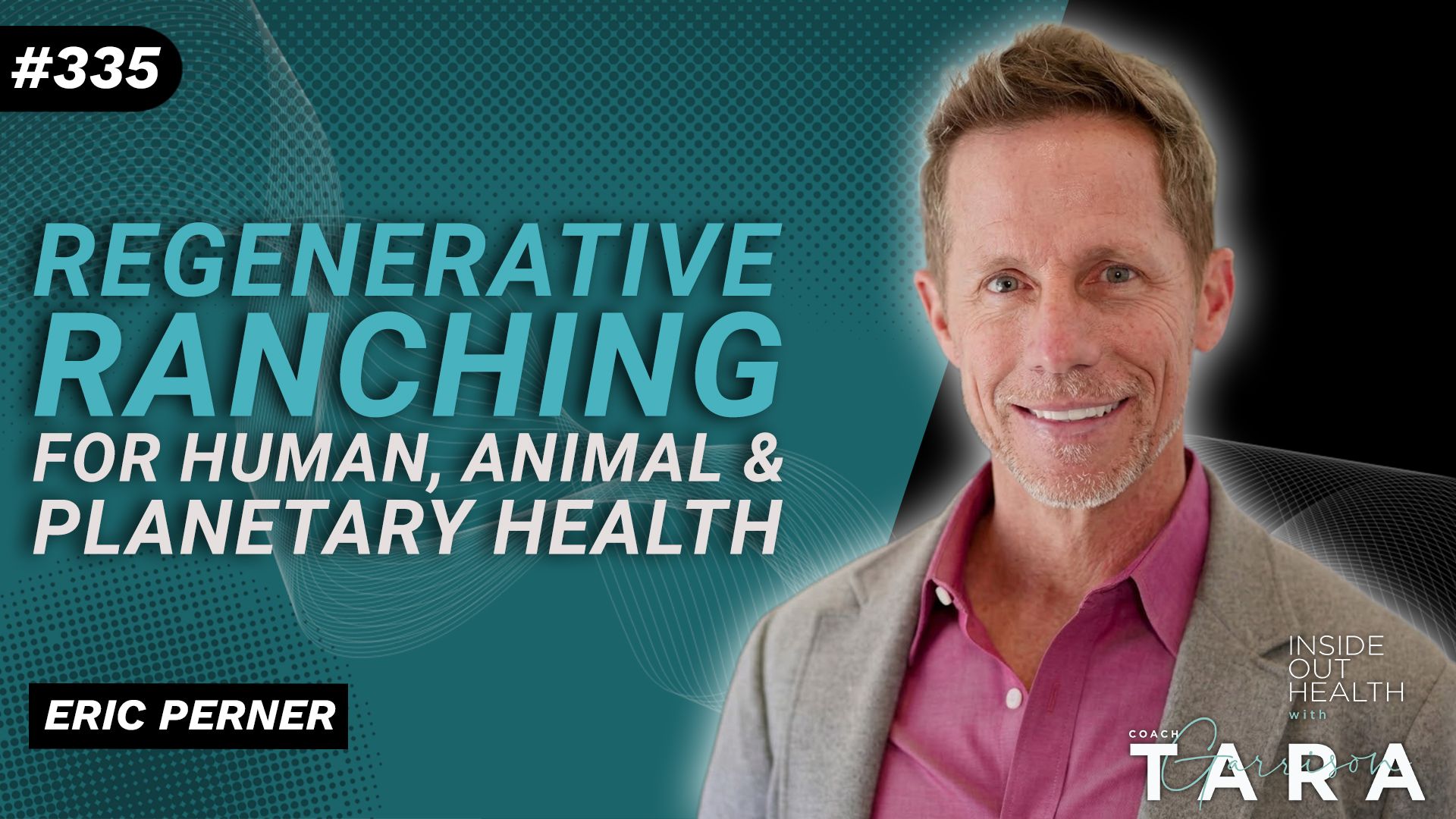


Eric Perner spent most of his early life and career on horseback learning the craft and trade of equine athletic competitions at the highest level.
After competing nationwide as a professional journeymen jockey for 10 years he retired and completed his Mechanical Engineering degree at the University of Tulsa, he has since received his Professional Engineering license and served in multiple executive roles in the O&G industry.
Later he moved on from the extractive O&G industry and became a full time cattle rancher, Co-Founder/CEO of REP Provisions, a direct to consumer supplier of locally raised regenerative meats from local family farms, and COO of Rebellion Energy Solutions, a company focusing on the plugging of leaking O&G wells and the restoration of these lands to regenerative landscapes.
He uses his diverse skill sets to develop unique environmental solutions in the Energy Industry and for various problems facing agriculture. Eric is an educator on the topic of regenerative agriculture and his unique insights show why cattle can be an intricate and necessary part of our grassland ecosystems; however, the improper management of cattle can lead to environmental degradation.
Eric owns the Double P Ranch in Mounds, Oklahoma where they produce grass-fed beef, goat, lamb and pastured pork as part of the supply chain for REP Provisions. He operates his ranch as a Savory Global Business Hub to provide restoration grazing education and guidance for other local ranchers in the methods of holistic management to create the conditions that lead to the regeneration of our native grasslands.
In this episode, Tara and regenerative rancher Eric Perner dive into how truly regenerative agriculture restores soil, water cycles, and biodiversity while improving human health and why voting with your food dollars really matters.
RESOURCES:
- Learn more about Rep Provisions: Vote for the future of food with your dollar! And enjoy a 15% discount while you're at it with Coupon Code COACHTARA: https://bit.ly/3dD4ZSv
- Instagram: @repprovisions
- Get 10% off Peluva minimalist shoe with coupon code COACHTARA here: http://peluva.com/coachtara
CHAPTERS:
00:03 – Host intro & why Eric’s back on
02:00 – Sponsor: Rep Provisions coupon and challenge to go regenerative
02:27 – Sponsor: Peluva barefoot shoes ad
04:09 – Gratitude & how they met at Paleo f(x)
05:50 – Eric’s mission and founding Rep Provisions
08:03 – Discovering Savory Institute & holistic grazing education
10:52 – Why regenerative agriculture matters for human health
13:26 – Biodiversity collapse, shifting baselines, and extinction alarm
16:04 – Disconnection from food systems and how the “they grow the food” mindset hurts us
20:06 – How to actually vet regenerative brands as a consumer
23:34 – What true regenerative looks like vs greenwashing and “carbon tunnel vision”
27:40 – Ranching as ecosystem stewardship, not just beef production
31:49 – Higher Coaching, labs, HTMA, and biohacking support
34:18 – App, community, and retreats as lower‑ticket ways to work with Terra
36:36 – Fire as a regenerative tool and controlling invasive trees
43:01 – Milkweed, monarchs, and supporting pollinators at home
43:16 – Tallgrass prairie vs monocrop corn: the small water cycle demo
52:40 – Why buying regenerative meat is a powerful vote with your dollars
58:22 – Beef prices, Eric’s own health markers, and why quality protein pays off long term
WORK WITH TARA:
Are You Looking for Help on Your Wellness Journey? Here's how Tara can help you:
- TRY TARA'S APP FOR FREE: http://taragarrison.com/app
- INDIVIDUAL ONLINE COACHING: https://www.taragarrison.com/work-with-me
- CHECK OUT HIGHER RETREATS: https://www.taragarrison.com/retreats
SOCIAL MEDIA:
- Instagram @coachtaragarrison
- TikTok @coachtaragarrison
- Facebook @coachtaragarrison
- Pinterest @coachtaragarrison
INSIDE OUT HEALTH PODCAST SPECIAL OFFERS:
☑️ Upgraded Formulas Hair Test Kit Special Offer: https://bit.ly/3YdMn4Z
☑️ Upgraded Formulas - Get 15% OFF Everything with Coupon Code INSIDEOUT15: https://upgradedformulas.com/
If you loved this episode, please leave a review!
Here’s how to do it on Apple Podcasts:
- Go to Inside Out Health Podcast page: https://podcasts.apple.com/us/podcast/inside-out-health-with-coach-tara-garrison/id1468368093
- Scroll down to the ‘Ratings & Reviews’ section. Tap ‘Write a Review’ (you may be prompted to log in with your Apple ID). Thank you!
EPISODE TRANSCRIPT:
I'm very excited to have Eric Perner back on the show. It has been way too many years, and honestly, Eric is one of the people in business that I respect more than anybody. Um, if you've followed me for any amount of time, it's no secret that I am a huge fan of Rep Provisions.
Um, they are a regenerative ranch out in Oklahoma, Double P Ranch. It's in Mounds, Oklahoma. And, um, they also serve as a savory global business hub to provide restoration, grazing, education, and guidance. So yeah, Eric is the guy that educated me on regenerative agriculture. Blew my mind back in 2020, I think it was, maybe 2019.
And ever since, I've just been amazed by how much heart is going into regenerative agriculture and honestly, how critically important it is. So I wanna make sure that you guys know all about regenerative agriculture, so I asked Eric to come back on the show. And I was like, "Let's just pretend this is episode, the first time we've ever done this," 'cause most of my listeners probably haven't heard this.
And, uh, I think he did a phenomenal job, and of course, there were many things that came up on this episode that didn't come up when we did an episode years ago. So, um, yeah, excited for you guys to learn all about this. And I am currently pulling up, 'cause I know I have a coupon code for Rep Provisions if you would like to order.
Like, all of their stuff is shipped right to your doorstep, so just saying, I'm, I'm gonna be like that right now. Like, if you are ordering some sort of meat or food, like, direct to your doorstep and it's not regenerative, I'm going to challenge you to make sure it's regenerative.
And listen to this episode to find out why, because it's so much more than just the quality of the, the meat. It's it's so much more than that. Um, it's what it's doing for our ecosystems and our planet, and yes, it's extremely high quality because it's coming from extremely diverse soil and incredibly healthy environments.
So yeah, if you go to Rep, R-E-P, repvisions.com, and you enter Coach Terra as your coupon code, you can get 15% off your entire first purchase. So definitely take advantage of that. And, you know, in the future ones, I would say be happy to pay full price because you are, uh, supporting, in my opinion, one of the most important things that we can support on the planet right now.
All right, let's get into it. Here is Eric Perner. Okay, before we get into the episode, I wanna take a moment to tell you guys about Peluva Shoes. So here's what happened. So Mark Sisson, if you don't know Mark Sisson, you should know Mark Sisson, okay? Go look him up and start following Mark Sisson.
Uh, Mark Sisson and also Brad Kearns, who have been on the... He's been on the podcast, uh, a few times now, and Mark has also. They are, like, legendary OGs in the health and wellness industry. And, um, Mark, who also started Primal Kitchen, if you're familiar with that brand, um, has started Peluva Shoes.
peluva means foot glove in Portuguese, and these are minimalist zero-drop barefoot shoes, and they have that five-toe articulation. I resisted trying these out for a long time 'cause I thought they looked nerdy. I'm just being so real.
Um, but after many times of Brad being like, "Dude, just try them. Just try them," I was like, "Okay, okay. I promise I'm gonna be honest with you." Yeah, I wear them all the time. I absolutely love them. I didn't think that the five-toe articulation was really that important 'cause I've been a longtime fan of Vivobarefoot shoes, and still love Vivobarefoot too.
Um, but wow, like, major difference. Like, I was like, "Okay, now I'm, like, really actually using my foot the way I was supposed to." So they are awesome. Um, I told Brad, I was like, "You're right, dude. I love them so much." They're awesome. Um, and then they offered to sponsor the podcast, so thank you to Peluva, and they also offered to give you guys 10% off if you would like to try them out, which I highly recommend.
Um, you can go to Peluva, that's P-E-L-U-V-A.com/coachterra, or you can just use the code Coachterra at checkout and get 10% off of your order, and I highly, highly recommend getting some of their toe socks while you're there because you're gonna need toe socks. All right, let's go ahead and get into the episode.
All right, Eric. One of my favorite humans. I talk about you guys all the time, and what you guys are up to out in Oklahoma, and it's just honestly so much... I have so much gratitude for you guys. Not only for what you're doing, but also on a personal level because you guys were the ones who taught me what regenerative agriculture was.
I had never even heard of it, and I was pretty into health and food quality and all these things. And we met at Paleo fX in
Yeah
I don't know, so many years ago, and it was just like nobody else even existed in the whole conference. I was just like, "Wait, what are you guys talking about? Wait, what? Really? What?"
Yeah.
And
Yeah
turned into, you're like, "You... There's a TED Talk by Allan Savory you should really watch," and,
Yeah
mean, ever since, I've just been like, this is one of the most important things that we can consume our minds with, our energy with, and understand. So thank you for that on a personal level, and on a more broad humanity level, thank you for the work that you're doing.
Yeah, absolutely, and thanks for supporting us all these years. You've been a huge contributor to our success and getting the word out, you know, about regenerative agriculture. And I, I would say we were one of the first folks to really start pushing that narrative. I mean, there was, there's others,
Yeah
you can really hear it in the dialogue more than it
Mm-hmm
six years ago at Paleo It's like it's more kind of mainstream now, and so are starting to get it, and it, it really just started with a mission for me. I'm, I'm a second-generation cattle rancher here in Oklahoma. We're, we're south of Tulsa. We operate a, a cow-calf operation.
We do, you know, we finish some cattle, and we run sheep, and we have some pastured pork on this ranch as well. But it really started with a mission for
Um, to figure out how do I grow healthy food for humans and support biodiversity and wildlife, and all these things that I always had a passion for, and we've always been taught that they're mutually exclusive. Like, you can't do that. You know, to grow food, you've gotta kill everything off and grow that single crop, and I just hated that.
It just, it killed me. Like, I couldn't stand the thought of that, and so that's why I wanna try to rethink how our food system operates on, on an agriculture level, and that's kinda what inspired me to start our company, Rep Provisions, to be that outlet for folks that are trying to do it right.
And, you know, create habitat for wildlife, create biodiversity, create healthy soil, and create healthy food for humans. And so that was kind of the, the mission of, of what I started out to do.
Now, currently, and for many years now, you guys not only are an active regenerative ranch, but you're also educators on regenerative agriculture. But I'm curious, like, how did you even find out about it?
Uh, so, it... The, the the spark, well, for one, you have to tie the things back. I, I grew up on a cattle ranch and, um, my dad, you know, he raised me to think a little differently, think about how do you, how do you work with nature, not against it so much.
And he wasn't... I don't think we were considered typically regenerative, but just had this mindset of, you know, not, not using all these inputs and extractive processes. And so I kinda had that in my brain for a while. And then as, in the early, oh, mid-2000s or so, I, I started reading and learning more about just grass-fed beef.
We grew up on grass-fed beef. But started learning about the nutritional aspects of just grass-fed animals and, and how the, the fatty acid profiles are healthier for you, and the nutrient density is typically higher. So that kinda resonated with me, 'cause that was something we were already doing. And so that led me then, um, to another introduction to the Savory Institute.
So you mentioned Allan Savory and, and he gave a TED Talk in 2014 of all the research he did in South Africa around how you manage animals as being a net benefit for the ecosystem that you work in. And it was really a management issue, not, not anything else.
And so that inspired me to kinda take up the cause myself in thinking, "Oh, how can I participate in this? How can I help move this food system along in a better path?" And so that was kind of, you know, how I how I got started in that.
So you're
swimming in a sea of ranches and farms out there in Oklahoma, and you're, like, getting really curious about this, and you're finding out about Allan Savory. Like, how did how did that education path go for you? 'Cause that was like, you're like kind of a lone island back then, right?
Yeah.
wasn't like now you can just follow Rep Provisions, and there's books and... I mean, I guess there was maybe Holistic
Yeah
Allan Savory's book. But how'd you
Yeah,
educated on it?
Yeah. Uh, I, I, I attended all the Savory Institute courses. They had a lot of classwork, so I traveled, um, their, their bases in, in, um, Colorado, and so I did a lot on their bison ranch there. We trained for, I don't know, several months just talking and learning.
And it was stuff you know, when we say training, was stuff I inherently knew in my gut, right? And maybe even stuff I was practicing, but then they just kinda brought it all together.
Mm-hmm.
so that was kind of the initial education piece. And then I also got aligned
with a, a group here in Oklahoma that I've known has been around all my life, and it's called the Noble Research Institute, and they were promoting regenerative farming and ranching as well around the same time I shifted. And so they are a huge education resource for our farming and ranching community.
And so now I participate with them on their producer panel to help guide the education piece of regenerative farming and ranching. And, and they are, they, you know, they're, they're the largest 501 [c] [3] dedicated just to regenerative farming and ranching. And, and so I learn a lot through them.
I, I participate with a lot of other farmer and ranchers. We also participate with the Audubon Society. They have something called Audubon Conservation Ranching, where you, you get your ranches certified for bird-friendly habitat, which, by the way, birds are a great indicator if you're doing it right, I, I believe, and, and I think Audubon does as well.
Like, if you are, are a regenerative farmer and rancher, and your bird numbers, you have high diversity of your bird numbers, you're doing something in that regenerative pathway. And, and so that, that's another component of that. In fact, they were just out here about a week ago, two weeks ago And they send a biologist to monitor for bird numbers and diversity.
And within their monitoring period, like a couple hours, and within that two hours they monitored 45 different species of birds. Just... That's not the full gamut of what we have here, but that's what
Wow
caught in just two-hour time period. And they told me that was the most they've counted since they were, um, measuring ranches this year. So that makes me feel like we're doing something right.
That is awesome.
But, but to be clear, it's a continual learning process, right?
Yeah.
It's a continual learning process. It's more... Yeah, it's more kind of a, a journey for me than like, "Oh, oh, I have the recipe and now I just do it." You constantly have to adapt with nature. So it's, it's a continual learning process. But just getting that core concept, that core concept that the more life you create, the more life you create, and life begets life, and it's really...
You know, our modern systems are meant to maximize around a single output.
Right.
So one crop. And so that comes at the expense of life's ability to create more life, which then creates all these other benefits of healthy soil, a healthy water cycle, healthy nutrient cycle. So that's really that... If I could just boil it down to that simple thing, life begets more life, and if you understand that in a regenerative system, you start to get it.
Wow. All right. Well, thanks for sharing that. And let's zoom out a little bit for anybody that this might be new to. So let's start with why is regenerative agriculture important in our current Earth 2026? Like, you know, what, what purpose is it serving or what, what is it helping to do, and why is it so needed right now?
Uh, and, well, I think it's no secret, um, if you look around at least in the United States or, or around... From a human, let's just focus on human health component. I, I would say our outcomes for, um, health in this nation are not great. I that's just a fact.
Right.
Like, you know the stats. I think, what is it, Tara? 70, 60 or 70% of our,
um, have, are, um, are obese or overweight or obese. Or maybe it's higher than
it's climbing. It's not just
And So yeah, it's not getting better
it's like jumping up. Like type 2 diabetes, obesity.
Type 2 diabetes is another one. Yeah. Um, how many times do you have clients that are lacking a certain nutrient
Constantly. Always.
Yeah.
too.
And so how do it seems only reasonable to tie that back to our food system.
Mm-hmm.
Right? And so I think that's, that's kind of, um, like one, one component of regenerative farming and ranching. It improves the nutrient cycle. So the ability for plants to uptake nutrients
gets broken in a more conventional system. So when there's lots of plowing, you know, there's lots of killing the soil, killing all the organisms that work together, and then they have to... What they have to do? They have to add, um, chemically derived, uh, fertilizers to get the plants to grow, and so that's...
You really break that, that nutrient cycle. And so I think that's kind of important for human health, you know? So that's why it's important for human
Mm
to repair that nutrient cycle so that the foods that we do have are more nutrient-dense. So just from human health, I think that should be fairly obvious. We can improve our health if we have the best food that, that we, our bodies can consume. Um, number two, I guess the, the second thing, um, I would add to that is if you, if you look across the world, um, you know, the way humans have been operating, um, we're basically collapsing biodiversity.
I think the World Wildlife Fund, um, has estimated that since 1970, I think it's 70% of all species they measure are declining. And, and I see that too. It's not, you know, it's pretty obvious. You take away all the habitat of these species, they're, they're declining over time, and if you draw that out over the next 100 years, that gets pretty scary to me.
Yeah
you know, I don't wanna live on a planet that has no biodiversity or has no beautiful birds that I look out my window that I can see. So I... That to me is a very important piece of it. And I
Mm-hmm
you know, again, all these animals and all that that, that works together to generate more life, to create more healthy soils, create more food. Um, so that's, that's another reason why I think it's critically important.
Can I interject real quick on that?
Yeah. Please do. Yeah.
You know how like on scary movies there's like a tidal wave or like something scary is happening and like all the animals just start running and flying away and you're like, "Oh
Yeah
"you better run." It feels like that to me. It's like all of our animals are rapidly declining and going extinct, and we're just like,
"Oh, well," "no big deal." it's like, that's scary.
I don't get it.
alarming.
You know, and I try to understand why, why do we have that mindset as humanity? And I don't, I don't know, think I have all the answers, but I think part of it is this, uh, what I call a shifting baseline syndrome. Have you heard that term?
No.
Like for example, like if you grew up in a, an earlier time era, maybe the, the '60s or whatever, and you were on a farm and we haven't plowed up, you know, 400 million acres of monocrop. For example, let me give you a good, a good concrete example. When I was a kid growing up, uh, we lived on a farm and we had guys that loved to hunt a species of bird called bobwhite quail.
They're just a awesome bird. They, you know, they're great for meat and, and they would, they, they, they bred hunting dogs to hunt bobwhite quail, and we would let them come and hunt 'cause they were abundant back then. And, um, and now you can't find them anywhere. You... I have them on my
No way
but cannot find... None of the hunters are, have those capabilities. They, it's
The numbers have dropped so drastically that, that, that the number of hunters that are hunting bobwhite quail is very small now comparatively speaking, right?
Wow.
It doesn't mean there's nothing that doesn't exist. But, so if you grew up back then and you saw that decline, you're like, "What?"
Right
let me give you another example. When I grew up on my farm, um, in Oklahoma, we had massive numbers of monarch butterflies that would, as they were doing their migration, which they have this beautiful migration from Mexico to Cana and then back to Mexico. We... I continually would see hundreds of, uh, maybe thousands of monarch butterflies.
Now, it's, it's much more rare. It's
Wow
more rare. So I, guess if what I'm saying is if you grew up today or, or some period before that decline, you're thinking, "Oh, these animals are still here. They're fine." But your baseline is not what it used to be.
Mm.
You follow me? So if if you grew up in the era I did, you see the decline very dramatically, and you, and you believe it, and it hits you hard. But if you didn't, maybe your, your, your baseline is something different, right? And you just "Well, they're still here, so they're okay." But when you draw that out, that line from abundant to at some point it drops below the x-axis, and it's zero, and it's gone, and it just hits you, and you've done nothing about it.
So I think that shifting baseline syndrome is, is maybe one component of us not really getting it.
Well, and also as a representative of all of us, which is most of us, who aren't, uh, working on a ranch or
Yeah
there's a complete and total disconnection from this. Like, we have no idea. It's like the people, they, the great they, they grow the food and make the food, and they'll take care of everything and do everything right I'm sure, and I just go to the grocery store and buy it.
there's very little connection. and I would say even those of us like me who like to get out and hike and be in nature, it's not the same as living on a ranch where you're seeing thousands of monarch butterflies and you're like, "Hey, now I only like four," you know?
So I think it's also just we're very, very, very
Absolutely
from where our food comes from, the cycles of nature. You know, even, like, during COVID I was, uh, walking around the lake by my house every single night when it was dark, and I was like, "Oh, this is why so many of the ancient civilizations, like, understood the stars and all that," because I'm starting to be able to understand, like, Venus and its relation to the moon and, like, how it moves over the sky at night.
And, like, I... this is just from me doing this for a few months, you know? But we're so disconnected from nature.
I think that's right.
it, it's all just a mental stat. There's no visceral experiential connection like you're having with maybe the quail or the butterflies. And so it's a high cost of our convenience system that we've created. And I, and I... We love our convenience system. I love that I could just go get an avocado right now.
yeah.
But if, if we're being real, like, I live in Utah, I shouldn't really be having avocados, like, whenever I want, you know? So it's, it's real nice, but it's also has a steep cost, and I think that's a big, big part of it.
Yeah. Yeah. No, you're, you're right. It, it does come with steep costs. And I think, you know, like you mentioned, consumers just don't see that cost. You
No idea
can you? You know?
Yeah
but, but yeah.
Okay. So we hit on the, the health of... for human health, the nutrient cycle, and we hit on biodiversity, which is obviously pretty critical. And then what are some other
Uh,
regenerative agriculture that are needed?
one thing that's, that some... a lot of... So it's very, um, controversial, and I get it, but you know, you, you hear, um, this alarmism around climate and CO2 in the atmosphere, and I think, I think we, we could touch on 'cause I have... I think there's some great solutions here.
And whether or not you,
you know, your belief is, "Oh, the world's coming to an 'cause it's gonna heat up and we're gonna..." Well, okay, maybe, maybe not. But I mean, I know it's very controversial subject, but the, the, the fact remains that the, the...
there's definitely more CO2 in the atmosphere today than there was, you know, most of the time that humans evolved. I, I think most people would agree with that. Now, how it affects climate, maybe there's some debate that might happen. But, um, on, on a planet that, that is increasing more CO2,
um, and if that is a concern for runaway greenhouse gas effect, and just maybe we could talk about that a Like if there's... Uh, the way I think of this is the atmosphere's made up of about 76% nitrogen, 23% oxygen, and 1% of other gases. Of that 1%, CO2 is one of those gases along with a few, a few others that are what we call greenhouse gases, and that's a very tiny window of what protects life, right?
So just if we didn't have these gases, we wouldn't have life 'cause our planet would be just a frozen, um, you know, ball of, uh, solid, right? So it'd just be, it'd be completely frozen. So it's very important that we have these gases to hold in that infrared heat to warm the atmosphere and, and and keep a, a, a stable temperature.
Now, you could argue that if you increase that significantly, you could overheat. I mean, for example, Venus has that runaway greenhouse gas effect. It's a very high proportion of CO2, and so it has a runaway greenhouse gas effect. So I think that there should be some concern, but what are the answers to it?
How do you fix it? And I, I take a different approach. Instead of us going crazy and trying to, you know, pull CO2 out of the atmosphere and inject it in the ground and try to find all these crazy ways, why not just use life that's here?
Life,
uh, consumes energy, and when life consumes energy, it creates these systems that puts more energy to work that absorb carbon or CO2. And so if we have this, if we have this abundance of CO2, then use it. Put it to work. Regenerative systems, that's what they do. That's what they're meant to do.
And not only, you know, um, would you pull, um, CO2, um, PPM down, you would create more life in the process. So I feel like it's, it's like this, um, this thing out there that we can extract to use for our benefit is how I would like to think of it.
Can you talk a little bit about... on this note because you live out by, I think you said is the largest grassland, native grassland prairie preserve in the United States, which we got to visit when we did a, a regenerative awareness event back in 2021, and they still have some bison roaming it.
And, um, yeah, I, I felt very fortunate for you to just show us, like, this is what it looks like. This is what it means. These are the root structures. Um, and can you talk a little bit about that and then also how you are applying that on your ranch?
Yeah. So the... what you're talking about is the Nature Conservancy's Tallgrass Prairie Preserve. It's in Pawhuska, Oklahoma. I think it's roughly 35,000 acres. But it's what basically covered the entire middle of the United States from South Texas all the way up into Canada, and I think the tall grass alone, just the Tallgrass Prairie is what we visited.
It was roughly 100 and historically around 180 million acres of Tallgrass Prairie. Of those tall blue stem grasses that you saw, all the, all the diversity in the forbs and all the animals that live in it, so that covered a roughly 180 million acres. It's estimated now there's just less than or around 1% of connected prairie left.
It's basically all been plowed up, um, you know, and used for monocrop for the majority, um, of those acreage because it was such healthy, robust soils that
Imagine that
to grow crops, right? Yeah. How'd that get there? Well, okay. Bison and all these plants, you know, regenerating and cycling nutrients and, and organic
Yeah
the soil. And but it's but it's a great... it's a beautiful way to step back in time and see what did this country used to look like. So I love going up there just to reset me of what, hey, what we typically see today is not natural. If you wanna go back in time, go to the Tallgrass Prairie Preserve and see that.
It's incredible. Uh, and so I use methods on my ranch to try to shift all of our grasslands back. That's kinda my context. I wanna restore the Tallgrass Prairie because I believe it creates the best things on regenerative agriculture. And, you know, for the most part, when we... when I bought this place, it was not Tallgrass Prairie.
It was very damaged prairie. Some of it was plowed. And so I've spent my efforts to try to restore that, and I'm just doing it not by planting the seed, replanting all these seeds. I'm just using methods that benefit our native grasses and our native prairies, and they're responding as well.
So they... the things that benefit those are rotational grazing and fire and just, just, you know, random disturbance events that then give an avenue for these, these seeds to germinate. And they, they're coming back, and they respond to that, that method of, of farming and ranching more.
Hmm
that's, that's how I spend my time in managing, trying to bring back Tallgrass Prairie.
Okay. Well, let's stay here for a second 'cause there's so
Yeah
good things. Um,
yeah, let's start, let's start with the, the seeds and things 'cause... so when we were there doing our event, the Noble Research Institute was there, and you know, we had representatives from the Savory Institute and everybody. And they... and one of the things that was, very memorable for me was...
can't remember who it was. It might've been Bobby from Savory. I'm, I'm not sure. But somebody came out and was like, "So see this plant right, right here?" We're just out there.
Mm-hmm.
"So this plant is one of the plants that we look for when we're basically deciding if a regenerative ranch or farm is actually doing a good job because this plant doesn't really grow anywhere else anymore unless it is nurtured appropriately. And so the fact that this is growing here shows that the soil..." It reminds me so much of the gut microbiome 'cause it's so similar, but like, okay, it, it's, it's basically like those seeds have gone dormant, and now because of the conditions, it's allowed to grow.
So can you talk... I, I kinda summarized on my junior kindergarten level, but can can you speak on how that goes?
Yeah. I, mean, basically, that um, a lot of these seeds are in the, this, um, dormant state that live in the soil. Um, even if you've damaged it or whether through overgrazing or other practices or spraying or whatever, a lot of those seeds stay dormant in that soil. Could be for many, many years just waiting for the right conditions to, you know, germinate and grow again.
And, um, you're basically, once you start providing those conditions, they come back, and you see it in a big way here. So, um, I think that's what you're talking about. The one we, we viewed was, I believe, gamma grass, and it's just like this huge root ball, this root structure, and those roots go down super deep.
And the grass is super high protein, and it creates, you know, a lot of habitat above ground and a lot of conditions below ground for other microbial life to flourish as well.
Mm-hmm.
But really, it's about just providing the right conditions through proper planned grazing and occasional, um, what we do is prescribed burning that kinda stimulates that, the, the germination of those seeds.
Okay. Yeah, and, and on the note of carbon, you know, like that plant, for example, or, or restoring the grasslands in general, like how does that help with carbon for anybody
Yeah
isn't
Well, great question. So the, basically when those plants grow,
um, you know, they they, you know, when, as they grow above the ground, they're also growing a lot of roots below ground. And through photosynthesis, so you know, green plants taking in sunlight, converting that sunlight through photosynthesis to carbohydrates that then are extruded through their root system. And the reason plants do that, those carbohydrates feed, you know, a vast fungal and bacterial network that feed on those sugars.
And and there's this benefit from, you know, a good bacterial life in your soil for those roots because they break down the nutrients to feed to the plant roots. And then the fungal network is like an extension of those roots to go out further and harvest more nutrients to feed that plant.
So it's a beautiful thing in
Mm-hmm
that they all have this symbiotic relationship working to together to pull more CO2 out the atmosphere, store it in the soil, and grow more life. And so I love that, that concept of how all these organisms from bacteria, to fungus, to nematodes, all these things that work together to benefit that plant, the, benefit the plant, but also benefit the organisms as well.
Mm-hmm.
And so what a, what a beautiful web of life, you this cycle of life that happens underground and above ground.
I always have all these kind of, uh, instant analogies happening in my mind of humans and, you know, like when you... it's more my life coaching side coming out 'cause the environment is so... It's the most important thing in terms of the thriving of a human. Um, and when we talk about these dormant seeds, you know, I think of somebody who's been through a lot.
They're in a really unhealthy environment. They're, you know, in every way, maybe their actual, you know, home and lighting or workplace to people to frequency, you know, just nothing about it is supportive of that person being able to thrive, and it reminds me of this dormant seed. Like, it's kinda how you feel when you're in a not so healthy environment.
And then it's like, wow, like maybe there's nothing wrong with the seed. Like, there was nothing wrong with that seed. That seed was perfectly able to grow into a, an incredible, or that root ball was incredibly capable of thriving and then giving and receiving and all of these things.
It just needed a more supportive, safe, nurturing, healthy environment. So yeah, it just makes
Yeah
think of that so much.
Yeah, no, that's a great analogy. I mean, you, if you don't provide the right conditions to humans as well, they can't flourish.
Right.
That's the proper environment, proper nutrition. You know, all those things that you work with, with clients on, you're just providing the right conditions for them to flourish.
Mm-hmm. I wanna take a moment to tell you guys what I can actually do to support you in your journeys and tell you a little bit more about Higher Coaching, my app, and retreats. So just as a quick summary, Higher Coaching is my full tilt, full on customized health and life coaching.
So we are getting all into every aspect of your life in a very supportive way. So how that's delivered is completely customized training. You'll do my neurotyping test to kick things off, which is a whole thing in and of itself that's really cool, and then I will completely customize your training and also your nutrition.
I base a lot of my decisions on labs. You don't have to do labs, but we can do a lot of labs. You can also bring me labs that you've had done recently or, you know, whatever kind of health history that you have. Love to see it. And, you know, from the labs perspective, we do blood, we do hair tissue mineral analysis, DNA.
Um, I have a software that I run DNA through that I prefer where I can see different SNPs that have to do with health, um, that are more research-backed and I actually trust. Um, we do stool testing, so gut microbiome. So, if you got gut issues, bring 'em, let's go.
And also, um, hormones through saliva and urine, and those two methods of testing help us get, see a little bit more of a deeper insight into what's going on with your hormones, incorting, incorting, including cortisol, um, and your sex hormones. So, um, there's that, and then we also have biohacking involved in various ways.
That could be through an Oura Ring or Whoop strap or some sort of HRV and sleep tracking device or a continuous glucose monitor or, you know, lots of different interventions that we do depending on the person and what they need. So there's all of that health approach, and then there's the full-on life coaching because I believe these are one.
They are. I, it's not I believe. They are one. Okay? So it's like if there's a lot of dysfunction in terms of interpersonal relationships or professional life or just internal world in terms of boundaries and self-talk and identity and all of that kind of wounded stuff, like we get into that too, as much or as little as someone is willing to.
So higher is my full till we are going all in on you, baby, uh, one-on-one coaching, and I do have a coach that coaches with me, Coach Daria, who has been on the podcast a couple times. Um, so you do have some options there between working with either of us and the, you know, obviously the cost is a little different too, so it's kind of a nice service for people because, yes, I charge more.
But yeah, so if you wanna learn more about that, go to terragarrison.com, and you'll see one-on-one coaching, and just, just click on that one and you can get a free consultation with my team. Next is my app. So my app is my solution for not everybody can afford or even wants full-on one-on-one coaching.
So if you want all my goods, like you want all my training counsel on form optimization and nutrition and, you know, the biohacking and the info, and we do have live Q&As once a month and community and all of that, that is, uh, obviously a lot more affordable and pretty awesome if I do say my do say so myself.
And, uh, there's a whole mindset part in there that a lot of people like where I take you on these little 22-minute guided journeys. So check those out if you get the app, and there's a seven-day free trial so you can see everything in there make sure you like it before you actually pay anything.
So just go to app.terragarrison.com for that. And then I do have a retreat open right now. In 2027, we are going up to the Pacific Northwest. It'll be about 45 minutes outside of Seattle. Um, we are staying at the beautiful Salish Lodge and Spa. It sits on top of 168-foot waterfall, and it is owned by the tribe whose lands that those are.
That waterfall is very sacred to them, and that makes me happy that they are in control of that land again. So, um, it's gonna be incredible. We're gonna do lots of fun things like white water rafting, paddleboarding. you know, we're gonna do holotropic breathwork or, like, conscious connected breathwork, which is a healing type thing.
Um, we will have all sorts of amazing facilitation and, yeah, they're the coolest thing that I offer, straight up.
They're amazing. So if you want to check that out, just go to terragarrison.com and click on Retreats, and you can find out more and get all signed up. If that is speaking to you, I firmly believe that anybody that comes to anything, like whether it's working with me directly or in my app or coming to one of my retreats, uh, my whole business is kind of a spiritual thing for me, so I take that very seriously and I fully believe that people who come my way are sent my way for a reason.
So if that's pinging at you, um, please, please honor it. Like, uh, it's, it's more than just business for me here, you know? So, um, yeah. I would love to hear from you if I can support you in any of those ways. And then let's talk about fire 'cause, uh, kinda rolling with this analogy, and also I'm just curious 'cause I've seen you guys posting.
And by the way, guys, if don't follow Rep Provisions on Instagram, I, and probably Facebook, TikTok, TikTok, I know you guys are on TikTok.
Mm-hmm.
follow them 'cause you guys, they're giving so much cool content, and it's always like, it's either like, wow, I don't know how to cook meat and now I just learned, or it's like something, uh, like paradigm shifting or, like, makes my heart feel warm and fuzzy So really awesome what you guys are putting out, so thank you for doing that.
Yeah.
Um, but sometimes you guys will share about fire, um, but I still feel like I don't have a quite an understanding. Can you talk about how you utilize fire and why that's beneficial for the ecosystem?
Yeah. I, well, I, think it would take a little bit of understanding context historically, and the fact is a lot of the prairie that I'm talking about, the tallgrass prairie, um, evolved over many thousands of years and, and fire was a component of that. So, uh, occasionally fires would break out on the open prairie and it would just, you know, tear through and there was nothing to stop it.
They didn't
Right
fire
in every county, right? We didn't have, you know, all these ways to mitigate fire, but that was like a cleansing of the prairie. Like, it, it just cleansed it and then reignited it so it would regenerate. And so, um, but as time went on and humans been, again, controlling everything, we stopped fire, so now there's a, you know, a fire department, like I said, in every county, and as soon as a fire breaks out from something, whether it's lightning strike or something else, it's immediately put out.
And I get it, you know?
Mm-hmm
there's people that live around these. But, but so since we've taken that out of the ecosystem. We've taken that fire out of the ecosystem.
Um, we have to put it back in a really controlled way,
and the reason we do it for, for our, uh, for what we do here is to control, um, woody species. So trees just pop up in the pasture every year, you know? So we, in, in this part of the country we've got a a lot of trees, and if there's no fire to help benefit the grasses and control the woody encroachment, then, um, it just begins to take over the prairie and it just becomes a, a choked out,
Mm
monocrop of trees, and that's not how prairie evolved, number one. And it, and it's a huge issue here in the state of Oklahoma. There's a certain specie called, species of tree called Eastern red cedar juniper,
and because of no, no fire, no way to control it, it just spreads like, like crazy. Like, um, wildfire. Like, no pun intended. But
Yeah
this species, uh, consumes the prairie land by around 300,000 acres per year.
Whoa
just take that. 300,000 acres is gone, and it's... You know, when we talk about trees typically people think, "Well, isn't that a good thing? We want more trees."
Not in the context of what should be prairie it's not. It basically destroys that, um, that soil. It, it sucks up about 30 gallons of water a day, and it is just, it allows to... And then without fire or good grazing, it just expands like crazy. So it
Mm-hmm
and this is a strict result of humans, right? This isn't natural. That's what we gotta understand. It's not natural for these trees to exist in the numbers they are. It's because we've broken a lot of cycles in nature that then give these trees the advantage to just spread like, like crazy.
Mm-hmm.
And so that, that's kind of another important concept. You know, when you take large grazing ruminants out of the ecosystem, you remove fire from the ecosystem, you're gonna give an advantage to something else. And in this case,
Mm-hmm
Eastern red cedar juniper. That's one of those species of tree that got that advantage and is taking, you
Mm-hmm
you know, taking control of that. Um, so we're just merely resetting to how things would, would behave, you
Mm-hmm
several hundred years ago, or thousands of years ago.
Yeah. I got an experiential understanding of this living on the Big Island of Hawaii for two years, everything grows out there, right? So invasive species are a huge issue and a huge threat to the ecosystem. If somebody brings something over, now all of a sudden you got albizia trees growing everywhere and it's, like, not good because it crowds things out.
Like, they're kind of like a opportunistic bacteria in the gut that is just taking over and not playing nicely with the rest of the ecosystem, so.
Yeah. And, and, and also the, you know, obviously too when you allow them to grow at such fast pace, they create more fuel for an out of control wildfire. So we see all these wildfires, right, that are out of control. Well, that's partly because there's been no, um, no fire cycles, you know?
Or no way to control these. So when you, when you don't do this, you're just preparing for that day when it will catch fire, and then it, then it, then it wipes out homes and puts people's lives at risk and, and that's a lot of, I think, a lot of the reason why we see these really dangerous wildfires just not, not able to control or manage a lot of these species that, that you're talking about, these invasive species.
Or, um, just species that are, are, have the, the extreme advantage. And so that fuel load grows and grows and grows every year, and then you have a really dry year and you get a spark, and then boom, you're in an out of situation. Yeah.
And this is what I mean by thank you, you know? You guys are true stewards of the land and of the ecosystems in your area, and it's, it's really inspiring. Um, I know that you guys have been big advocates of planting, um, is it milk thistle? Is that
Milkweed
what is it called?
Yeah.
Milkweed. Sorry.
Yeah. We, we have, we have some that exist here, um, and we do some, some planting as well, and that's really to benefit, um, that
Uh-huh
that pollinator. It it's good for all pollinators, but the monarch, um, species has particularly been hurt in the last, you know, couple decades, so we're trying to help those numbers as best we can. And it's, it's a, um, it's not something the cattle eat. They don't touch it. Um, goats nibble on a little bit, but it's adding something to that soil which has benefit the surrounding grasses, which benefits my cattle.
But it's also, you know, as I said, for, for monarchs and other pollinators it's a great plant for that. And, and So we, we wanna promote, again, all life on our ranches, not just one single species, 'cause we think that then benefits the whole.
Yeah. And, and that's a simple thing. We might not be doing controlled fires where we live,
Oh, no, you can't,
But we might be able to plant some
Yeah. Yeah, exactly
in our flower beds.
Yeah, yeah. That, exactly. Exactly.
Let's, let's talk about water for a second, and I, and I wanna set the stage here, guys. Like, when I went out to Eric's ranch, I mean, I've never seen anything like it in my life. Like, I am just so used to seeing the typical, you know, big, giant sprawling grass with the white fence.
Yeah, everybody knows what I'm talking about, and there's cattle there, and you're just like, "Yep, that's how it looks." And then I pull up to Eric's ranch, and it's like tall grasses. Like, literally, I, I'm like, I didn't know cows cattle could jump like this or, like, jumping through, like, this tall grass prairie.
And there's pigs running around and burrowing little holes through things, and I'm like, "Okay, yeah, this is, this is cool. Like, this is different." Um, and when we did that event, uh, I'm, I'm setting the stage of kinda, you know, what exists there. There definitely is tall grass prairie on your, on your land.
And when we did the event, you, um, decided to do a demonstration to show how that helps with water.
Mm.
so I was wondering if you could share about that.
Yeah. I, so, um,
I'm talking about this... I talk a lot about the small water cycle. So that's the cycle that on land, usually in a local region, that water is, you know, it rains. We all know it rains. It, it goes into the soil, and then, uh, uh, or on the ground, and then evaporates back up and then comes back down again.
And in, in most cases, like, um, you know, you talked about the grasslands, uh, and, and a lot of farms you see, you know, they don't promote tall grass prairie, and so it's very you know, like for example, a golf course.
Right
they'll, like... I always used to use, like, love to use that analogy. Like, people look at a golf course. I mean, how tall is the grass on a golf course? Like, you think like, less than an inch, right?
Right.
Um, and but people see that, but it's beautiful green, you know?
Mm-hmm.
But they gotta water it continually, constantly, you know, thousands of gallons of water a day. Uh, and you gotta think, is that, you know, is that, does that contribute? Does that help the small water cycle or hurt it? And I think in a human's mind, we look at that and we think, "Look at that beautiful lawn." "So perfectly manicured.
Doesn't have a weed in it." Like, we constantly have this, this logic in our mind that that has beauty, but in my mind, it looks like a complete, um, desert because it doesn't promote any life. But anyway, back to my point on the water cycle.
When, when it rains on, on grasses like that or, say, bare soil from a lot of plowing, that water immediately evaporates back up to the atmosphere, and so there's no balance there. And in a, in a regenerative ranch, and in fact the demo that we did, we had, uh, I had a little, a plot planted, and I had corn on one side simulating a monocrop with lots of bare soil, and then I had a tall grass prairie on the other.
And what, what happens is on the tall grass prairie side, you can... We, we simulated a rainfall event,
and I think we left and we came back, and the water was just flowing off of that corn side, just water just running and running and running. But on the tall grass
Within minutes. Within minutes
yeah, within minutes, right?
It was like 11 minutes or nine or something.
Yeah, yeah. It was really small. Yeah, that's right. I forgot. So we, we did that, and then we shut that water simulation off and watered the tall grass prairie. Then we went on a hike for two or three hours.
Mm-hmm.
Came back. It still had zero runoff. Well, why is that? It's that extensive root system below it that's absorbing that water, pulling it in, locking it away, and that's really establishing a proper water cycle. And so now when that water's released, it's released more through transpiration of the plant slowly back to the atmosphere.
But while it's locked away underground, it's nourishing that plant for longer periods, allowing more growth. But also, um, it's able to, to penetrate deeper down to aquifers to replenish aquifers.
Mm.
And so that's what I'm talking about, a small water cycle. And I know that cycle's broken because we see it a lot now. You've seen these massive rainfall events. I mean, just massive amounts of water in very small areas just hit hard and have tremendous flooding, especially on a lot of our crop lands, and then that water, you know, that's, that's part of a broken water cycle.
We shouldn't see some of the massive amounts of rainfall that we see on very, very I mean, very short periods they happen. And so when you begin to repair that water cycle, number one, you have a lot less bare ground. You have more plants above ground and more, more, um, cycling of that water below ground replenishing aquifers.
And so I think that's the kind of the demo that you saw really brought that home to you it sounded like.
Oh, yeah. I mean, I'll never forget that. It was just like, "Oh, just turn it off. It's been... it's never gonna run off."
Yeah, yeah.
Like, we were
And it takes a lot
so
before that soil gets saturated when you have lots of plants growing on it. It takes a lot, a long
Mm-hmm
for it to get saturated. And that, that tells you again, you know, would we have less flooding events, um, in these cities if we didn't have a bunch of, you know, yards with, you know, almost no grass on them? Because what's happening, all that water's hitting, it's running off, and then you have these massive flooding events.
But if more of our cities were designed in a way to capture that water and lock it
Mm-hmm
I think there'd be a huge difference in the number of flooding events that we see across the nation.
How severe at this point in 2026 do you feel like the, um, the loss of soil, like, you know, the runoff going into rivers and eventually ocean, like how... Has that improved since I first met you? Do you know? Is there, are there any sort of estimates recently?
Yeah I haven't seen of any recent studies, but I can tell you I still see massive dust storms on... I still, when I drive across from here, if I'm going to Colorado,
uh, certain times of the year, and I'm driving across Kansas to Colorado, I still see massive amounts of open, what used to be prairie, that's just plowed. Um, and it's left dormant, you know, from about October to when it starts growing again. So if they're growing corn, soybean, wheat, whatever...
or, or maybe not wheat, but corn and soybean on a lot of these crops, they'll plow them in the fall and just leave them fallow till the next year. And so during that time with, with there's no ground cover, that soil's just being blown away or eroded away, you know, um, through water erosion or wind erosion.
So I, I believe we're still losing a lot of topsoil. But I do think the cover crops are becoming more of a topic
Nice
for folks, for, for ranchers. So I, I see more and more successful cover crop operations.
Cool.
Um, and so I think that's benefiting. So it has made some improvement, but I don't think we're anywhere close to where we need to be.
Mm-hmm. Uh,
in case there are any farmers or ranchers listening to this that do things conventionally and they're kind of like, "Well, this all sounds really cool, but, like, ugh, I'm just supposed to, like, change everything?" Like, how, what, you know... Do you have any counsel? Just, just in case. I'm you because I do have some farmers and ranchers who follow
yeah, well, that's great. I mean, and I, and I, I don't mean... I I don't try to criticize anyone. I want everyone to kind of have... And, and there's a, probably a place for all kinds of agriculture at, at, you
Mm-hmm
at some point along the way. So I
Mm-hmm.
If my words ever sound offensive to
Mm-hmm
I hope, I hope not. I hope that they say, "Hey, I just have a different way of doing." Hey, you know, maybe, maybe this could help your operation. And I think the main ways that I've seen it help my operation is reducing, um, inputs. So, so many inputs go into conventional agriculture, whether it's fertilizer or plowing or all kinds of machinery.
And like, um, I think reduction of inputs is the biggest, you know, um, cost for more conventional farmers and ranchers. So if you can reduce those inputs, even, even if it's just marginally reducing your inputs, it's, it's gonna be a net gain at the end of the day. And, and people may say, "Well, I've reduced my yield if I reduce my inputs," but are your economics better?
And I think over and over again, people reducing inputs in these, in these regenerative ways find that that their economics end up working better at the end of the day. So I think, uh, you know, there's a whole lot to unpack there. So government subsidies are one.
Right.
You know, all these
Right
benefit monocrop and conventional agriculture. Like, there's a whole lot of things to unpack. But I think, um, just to simply put, like, you know, if you want to reduce inputs, you know, try regenerative. You know, um, I think that's a good way to do it, and that will eventually help your, your bottom line, your economics.
Well, let's say... I mean, I imagine that if I was a farmer or rancher listening to this, doing things conventionally, I would be hearing this personally and be like, "Man, I would love to do that. But that just sounds unbelievably overwhelming. Like, I don't even know where to start." Like, if, let's say there is somebody like me, where, where would you...
how could they even tiptoe in the direction of seeing if it's even possible?
Um, I think you, you'd have to you know, have some context of what it is you're wanting to achieve. You know, you know, what, what is your current form of agriculture? Are you just plowing crops and, and growing, you know, corn, soybean, wheat? Um, if you are, I mean, there's, you know, think of cover crops.
Think of how that benefits, you know, next year's crop adding to that soil. So I think there's, there's that component. Now, if if, if you are, you know, that monocrop, monocrop guy, can you incorporate beef or other small ruminants in that operation to add an added benefit when you're not growing your corn or soybean?
So I think can you find ways to add value to your operation by using regenerative methods? So, um, it, it's kind of, you know, what is, what is your good context fit? If... Are you, are you... What is the reason you're wanting to change? Why are you entertaining this change, number one?
Is it health? Is it, is it, you know, reduced inputs? You know, what is it? Try to understand what that is, and I guarantee you in regenerative agriculture there's some some fix for all of this. Like, you just have to explore it, and you have to have the will to want to do it.
And it really takes a, a paradigm shift in your mind of thinking about, you know, how you've done things in the past and,
Mm-hmm
what it means to be truly regenerative, you know, as you, as you trail, you know, blaze that trail to regenerative pathway. But I think it just leads to, in my opinion, it leads to a better life, it leads to better economics on your farm and ranch, and just an overall benefit, you know, leaving this world a better place.
I don't
Mm-hmm
how you can put a price on that, but it's a pretty big deal for me.
I'm becoming increasingly aware of people wanting to do, like, small-scale regenerative practices at home. Um, now obviously you're a rancher, so they're probably not
gonna have a small-scale... I mean, they might have a small-scale regenerative ranch, but they're probably thinking more like a garden. Um, any, any tips on that, like, for the at-home person that wants to learn more about this and kinda like maybe dabble in it a little bit with some lettuce or something?
Yeah. Well, I, I think a good, um... You know, well, number one, if you can, if you have enough land to incorporate, you know, an animal or two, that's that's a benefit, whether it's just a backyard sheep or, or pig or you can feed scraps.
Mm-hmm.
They can work into your, your, your garden, right? So they can, in, in the in the, in the winter years when you're not growing a garden, they can be in there, you know, cycling nutrients for you.
Mm-hmm
I think one thing, um, that I also love is, um, if, if you have access to a lot of mulch to mulch your garden with, whether it's, you know, where you can get that organic matter at. Um, I've been doing a lot of research around converting woody biomass to biochar, and then using that in, in a garden setting.
Um,
Mm-hmm
that's just straight carbon going straight into your soil. So there's all kinds of methods that I would consider organic and regenerative that you can utilize, whether it's in a small garden setting or, you know, a small ranchette or a small, you know, few acres, like... But if you can incorporate animal...
Chicken, backyard chickens are another way, you know, to, um, create
Yeah
yourself or eggs for yourself and still, you know, help with your soil health as well. So any, any, any part where you can recycle organic matter and add an animal, even if it's a small number, to your operation, that's a net benefit for that soil and for that land.
Yeah.
Thanks. I I love that. Very appropriate coming from you. Thank you.
Yeah.
And, uh,
I, I think I'm gonna say this, 'cause I don't wanna make you say it, so I'm gonna say it. This is how I feel about... I'm not trying to do, like, a massive sales pitch. I'm genuinely coming from my heart here. This is how I feel.
Like,
sometimes I buy conventional meat, for sure. I'm at a
Mm-hmm
whatever, you know. I'm not gonna, like, just be that difficult. But in terms of at home, you know, the way I look at supporting regenerative or maybe a a local, you know, operation or whatever, um, I look at, especially you guys, because you guys are not... It's not just, like, food quality with you guys.
There's so much more going on with, like, uh, the education component and the biodiversity and, you know, the birds and the butterflies and just... It's so much more. I look at it as, okay, when I spend money on conventional stuff, that is literally me saying, "Yes, keep doing this.
I like this. Keep doing these CAFO operations. the market is here." You know? I mean, the market is what drives reality of what is happening in business, period.
And so I'm not trying to be overly perfectionist here. Like, I get it. We live our lives, and I, and I... You know, if somebody's, like, barely frigging rubbing two quarters together, I completely get, like, just do what you need to do. I'm not trying to do any sort of shamey thing or whatever.
Yeah.
But if you are at all able to support operations that are doing the actual work, that's what I mean, is, like, thank you for doing it. I'm not gonna I'm not gonna do that. I'm not gonna have a regenerative operation at my home with cattle and pigs and chickens and all of this stuff.
But so the people that are doing it, it's like, to me, it almost feels like, like donation. and you get, like, free, amazing high-quality meat as, like, a thank you. You know? It's like you're like saying, "Yes, I want this to keep happening." And that's, that's how I feel about it.
And also, your guys' stuff, like, really isn't very expensive at all. You know? Like, I... You look at some of the stuff in the stores and I'm like, "Geez, this is very affordable." So anyway, any thoughts on that?
Yeah, I do. I mean, well, number one, you pointed out beef prices are through the roof anywhere. Like, we... Our, our herd numbers in the nation are the lowest they've been in, um, maybe, I don't know, many, many decades,
Okay
yeah, very... So that's causing the price of beef to go up, whether it's conventional or us.
Mm-hmm.
I don't know that there's a whole lot of difference right now between cost. Maybe there is some because we've got to ship to people. But that, that's number one, just beef is expensive right
Mm-hmm
anywhere you go. Um, the other thing I would say is, you know, it when, when I would say, what's in it for the customer,
and, um, to me, it's, it's... We, we test all of our beef, so fatty acid profile, we test for nutrient density, we test for a lot of things, and I think over and over it is an improvement upon what you could find on conventional
Mm-hmm
products. So I
Definitely
just, like, I think the data is there, and I
Yeah
it's, you know,
um, plays out. But I think for, for me also, I think for my health, how that's affected my health over the years, you know, when I... and I, I tracked all my... I've been tracking my numbers from whether it's cholesterol Um, you know, my metabolic panel, um, my microbiome, my gut health, I've tracked that over the years as I started this company, and all my metrics have improved from any inflammation markers have come down.
I used to be pre-diabetic. Can you believe that?
Wow.
When I was more, uh, like a standard American diet, before I started this company, I was pre-diabetic. Every year I would test.
Wow.
"Hey, you got pre-diabetes. You need to work on it." What I... Well, since I started this company, I had access to all these great proteins, and that's the majority of my diet.
Mm-hmm.
And I also tested my gut microbiome. That has improved dramatically, um, in the years I've tested it, and well, why is that? I mean, I, I don't... It has to be the food. Like, there's just no other way. So, you know, if you want those low inflammation markers and you want good gut health, I think you gotta have...
you know, feed the right products to your body. And if at the end of the day, if our food is slightly more expensive, does it save you money in the long run of your life?
Yeah.
I think we
And last thing I'll say is, like I'm not knocking on grass-fed. I mean, there's definitely times I'm like, "Oh, I keep forgetting to order from Rep," and I like... if my sprouts, and I'm like, "I'll just get this grass-fed beef or whatever." But just to share, it's like, it's not the same.
It... because, like,
of, course your guys' stuff is grass-fed and grass-finished. I mean, you guys,
it's all very small operation, right?
Mm.
Uh, from start to finish, you know? Like, you guys are the ones actually processing the cow.
Yeah
locally and delivering and shipping it out to people's doors and stuff. But it's like, yeah, but it's... Is it, is it restoring native grasslands and bird populations and, you know, rebuilding the top soil consciously and all of that? No. So like, yeah, I'm not saying, like, I won't buy it, but it, I'm...
it definitely feels like a step down to me when I do. You know? So just sharing that.
Yeah. I mean... and all of my ranch and our participating ranches on the beef ranches I, I mentioned, they are checked every year by Audubon Society. Um, you know, we... and, and everything goes from our local farms. We have local processing, and we have three local processors. There's about five family farms.
They all feed from their pasture to that processor, and then from there, we ship out to your house.
Mm-hmm
it doesn't get much simpler than that.
Yeah. It's awesome. Yeah. And, uh, don't forget, if you guys are gonna order any, don't forget that they're... like, all the pork products, like I've never seen anything like these pigs they got going on.
Yeah, yeah.
Like, what are they? do you still have that same breed with the curly
Uh, yeah. We, have a, um, a, it's called, like a Berkshire Duroc cross is what seems to do best on pasture at least.
Okay.
But, um, um, and that's the majority of the breed. We used to
Okay
some different breeds as well, but we've kinda settled on that.
Okay.
Yeah.
Okay, cool.
Well, yeah.
Yeah. And there's chicken, and then also you guys have made it really easy with all these kits and different things for
Yeah
and it goes right to your door, and it's, like, freaking awesome. Like, I can't recommend enough. I know a lot of people get, like... I'm sorry to say brands, but they'll get like ButcherBox and stuff, and I'm like, "Well, if you're gonna order stuff like that, do Rep." It's like way better.
Yeah.
It's regenerative. They've got all these kits. Like, yeah.
Yeah. And all, all of our farms are right here, and they're in America. You know, we're not sourcing. We're not getting boxed beef from overseas or anywhere else. Everything is right here local farmers, benefiting local communities, and so I
Mm-hmm
that's another piece. Like, we're, we're, we're strictly, you know, sourced from American farmers and ranchers.
Right. Yeah. I mean, you guys are doing the work day in and day out,
Yeah
I just so appreciate it. Thank you, Eric,
Thank you, Terri
everything you do, everything that you guys are. Like, I have so much respect and gratitude for you guys, and thank you for taking the time out from the... your big, you know, busy operation to come educate my audience again on
Absolutely.
'cause it, it's just been too long, and people need to know, so thank you.
Absolutely. I'm thrilled to do it. Thank you again so much for all your support over the years too, Terri. You've been a great advocate for us, so very grateful for you.
Thank you so much for joining me on this episode of the Inside Out Health podcast. I hope it's been helpful to you in your journey. If you think that it might be helpful to someone you know, please share it with them. Please share on social media. It really helps me grow the show and reach more people with these amazing messages.
And if you could be so kind as to rate the show and, um, possibly even leave me a review, that really helps, so, uh, much thanks in advance if you do that. And yeah, please subscribe if wanna hear more of this type of content. I have lots of amazing expert guests on the way.
All right. Thank you.

Want One on One Coaching with Tara?
Click below to learn more about Tara's flagship 1:1 program HIGHER Coaching. Work directly with Tara on training, nutrition, personal development and biohacking!

Try Coach Tara App for 7 days FREE!
Learn how to train for results at home or in the gym, how to make easy, healthy recipes to achieve your goals faster, and explore the world with Tara as she helps spark shifts inside you to bring your best self out!
