Episode 343: CHRIS READE Reversing Type II Diabetes with Soluble Fiber
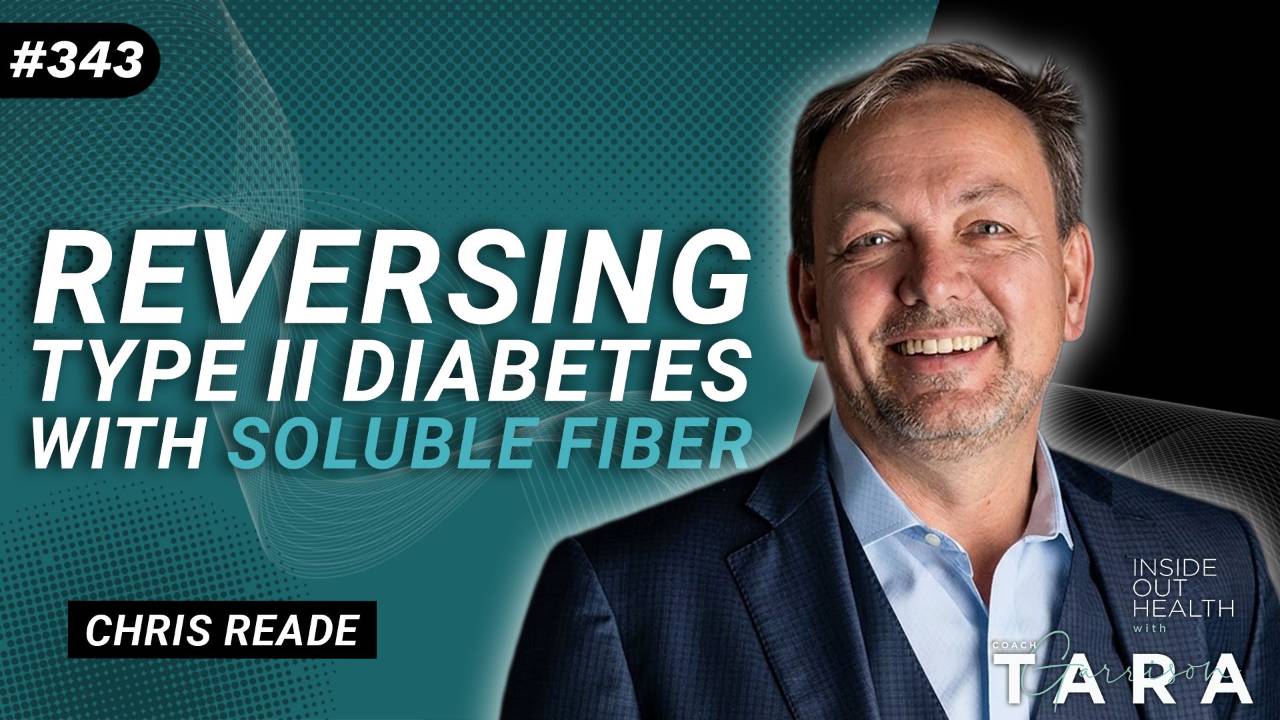


Most people with type 2 diabetes are told it's a forever sentence. Chris Reade was one of them.
In 2017, his A1C hit 9.1 with zero warning. He refused medication, did the research, and built a food system around the science of soluble fiber.
Six months later, his A1C was 5.5. Seven years later, it has never gone back up.
In this episode, entrepreneur and author Chris Reade explains how he reversed a shocking diabetes diagnosis using soluble fiber instead of medication, and why simple, sustainable habits beat extreme diets every time.
RESOURCES:
- Learn more about Chris Reade here: https://www.beatingdiabetes.
us/ - Instagram: @beatingdiabetesus
- Get 10% off Peluva minimalist shoe with coupon code COACHTARA here: http://peluva.com/coachtara
CHAPTERS:
00:00 Intro: meet Chris Reade, author of Beating Diabetes
01:13 Sponsor: Peluva Shoes ad
02:59 Chris's diabetes story
03:35 Insurance renewal reveals an A1C of 9.3
06:00 Doctor's grim prognosis and hunting for the cause
09:07 Cancer scare leads to a surprisingly simple fix
11:13 The research: soluble fiber studies since the 1970s
12:19 How soluble fiber controls sugar, weight, and health
17:52 Writing the book: family history and friend Tim's scare
19:41 Frustration with "pills-only" medicine
22:03 Habit stacking, forgiveness, and small daily habits
28:04 Segment: Tara's coaching, app, and retreats
33:00 Soluble vs. insoluble fiber, explained simply
36:34 Continuous glucose monitors: benefits and pitfalls
43:46 His current routine, and "the warranty ends at 30"
44:49 Soapbox: the vegan/carb-fear myth
51:27 Morocco motorcycle trip: eating simply on the road
54:58 Success story: Tim's A1C drops from 13 to normal
56:57 Next-level challenge: cooked-and-cooled resistant starch
WORK WITH TARA:
Are You Looking for Help on Your Wellness Journey? Here's how Tara can help you:
- TRY TARA'S APP FOR FREE: http://taragarrison.com/app
- INDIVIDUAL ONLINE COACHING: https://www.taragarrison.com/work-with-me
- CHECK OUT HIGHER RETREATS: https://www.taragarrison.com/retreats
SOCIAL MEDIA:
- Instagram @coachtaragarrison
- TikTok @coachtaragarrison
- Facebook @coachtaragarrison
- Pinterest @coachtaragarrison
INSIDE OUT HEALTH PODCAST SPECIAL OFFERS:
☑️ Upgraded Formulas Hair Test Kit Special Offer: https://bit.ly/3YdMn4Z
☑️ Upgraded Formulas - Get 15% OFF Everything with Coupon Code INSIDEOUT15: https://upgradedformulas.com/
☑️ Rep Provisions: Vote for the future of food with your dollar! And enjoy a 15% discount while you're at it with Coupon Code COACHTARA: https://bit.ly/3dD4ZSv
If you loved this episode, please leave a review!
Here’s how to do it on Apple Podcasts:
- Go to Inside Out Health Podcast page: https://podcasts.apple.com/us/podcast/inside-out-health-with-coach-tara-garrison/id1468368093
- Scroll down to the ‘Ratings & Reviews’ section. Tap ‘Write a Review’ (you may be prompted to log in with your Apple ID). Thank you!
EPISODE TRANSCRIPT:
Today's guest is an entrepreneur, technologist, and author on a mission to change how we think about diabetes and food. After having a serious scare with diabetes, Chris Reid refused to accept it as a life sentence. He took control, reversed it, and now shares his science-backed practical approach in his new book, Beating Diabetes.
Uh, get ready for an eye-opening conversation on breaking free from medications, mastering blood sugar control, and living healthier without extreme dieting. So I had Chris on the show because, uh, the approach that he took, uh, when I read about it, I was like, "Yep, yep, yep. More people need to hear that message." That's a really smart way he went about this.
Um, and it just turned into a really, really cool conversation, so I think you'll get a lot out of it that's... You don't need to have any sort of diabetes. I mean, if, if that is something that's, you know, either creeping up or already happening, definitely listen to this.
But it doesn't matter. Like, even if you have perfect blood sugar control, I really, really recommend listening to this episode, um, especially because we get into some impacts on the gut microbiome and, uh, just some really interesting things about health. So let's go ahead and get into it. Here is Chris Reid.
Okay. Before we get into the episode, I wanna take a moment to tell you guys about Peluva Shoes. So here's what happened. So Mark Sisson... If you don't know Mark Sisson, you should know Mark Sisson, okay? Go look him up and start following Mark Sisson. Uh, Mark Sisson and also Brad Kearns, who have been on the...
He's been on the podcast, uh, a few times now, and Mark has also. They are, like, legendary OGs in the health and wellness industry. And, um, Mark, who also started Primal Kitchen, if you're familiar with that brand, um, has started Peluva Shoes. So Peluva means foot glove in Portuguese, and these are minimalist zero-drop barefoot shoes, and they have that five-toe articulation.
I resisted trying these out for a long time 'cause I thought they looked nerdy. I'm just being so real. Um, but after many times of Brad being like, "Dude, just try them. Just try them," I was like, "Okay, okay. I promise I'm gonna be honest with you." Yeah, I wear them all the time.
I absolutely love them. I didn't think that the five-toe articulation was really that important, 'cause I've been a longtime fan of Vivos and barefoot shoes, and still love Vivos too. Um, but wow, like, major difference. Like, I was like, "Okay, now I'm, like, really actually using my foot the way I was supposed to." So they are awesome.
Um, I told Brad, I was like, "You're right, dude. I love them much. They're awesome." Um, and then they offered to sponsor the podcast, so thank you to Peluva, and they also offered to give you guys 10% off if you would like to try them out, which I highly recommend.
Um, you can go to Peluva, that's P-E-L-U-V-A.com/coachterra, or you can just use the code Coachterra at checkout and get 10% off of your order. And I highly, highly recommend getting some of their toe socks while you're there, because you're gonna need toe socks. All right. Let's go ahead and get into the episode.
So Chris, let's talk about diabetes. And you... I love... You know, I wanted to have you on the show because I love that you approached... You know, I'll let you tell your story, but I love that you approach this in a way that not many people think about, and that those of us who understand nutrition are like...
I, I read your story and I was like, "Smart." So let's, let's, let's let you tell it. Can you talk about your experience and what leads you here today?
Yeah, yeah. And, and thanks for having me. And I, uh... So for me, I think a lot... There's two reasons, I think, that I approached, uh, what I did the way I did. And so for me, it starts, uh, way back in 2017. Um, and my daughter was little, uh, which definitely played into a, a role in it at the time.
And, uh, I was a pretty healthy guy. I play sports all the time. Um, I, I felt fit. I didn't feel like I was sick at all. And, uh, of all the things that was gonna change my life, I never thought it would be, uh, an insurance renewal, but that's what it turned out to be.
And, uh, what ended up happening was
my insurance agent changed companies. And when he did, he said, "Hey, I can't take your account with me, so you're gonna get somebody new." And so about six months later, I never get a bill. I was kinda like, "Huh, should've gotten another bill." I got an initial bill, and it's been like half a year.
I should've gotten another bill. So I call my guy up and he says, "Hey, remember the part where I left for another company? Yeah, I can't help you, but I'll go ask the people who took over what it is." And he said, "Well..." Calls me back and he says, "Well, it's a good thing you're not dead, 'cause, uh, they never finished processing your policy.
You don't have any life insurance." And, uh, I said, "Oh, wow." He said, "But the positive is you get to redo it with me." I said, "Okay, great." So we did it. And as you know, or you, you... I'm sure some of your readers, uh, listeners will know, uh, when you do that kinda thing, you have to do a, a blood screening, right?
And I'd had one the year before, 10 months earlier, not even, not even a year, and, uh, totally clean. You know, normal A1C, normal most things, which is fine. Anyway, uh, so I go do the second one, and now my A1C has gone from normal to 9.3, and I didn't even know what an A1C was at the time.
I had no clue.
Just diabetes, if
Yeah
familiar, for sure.
Right. So normal, normal for most people ends at 5.7, and diabetes really starts at 7. And for most people, they don't have the experience I had. Most of us, they... You know, you go to your annual checkup and the doctor says, "Hey, Chris, you might wanna start taking it easy on the sugar," blah, blah, blah.
Like, that's what most people get. I didn't have that experience. For me, and I think this is... You asked the question, like, what made me do this. It was such a shock. Like, I went from 10 months earlier, totally fine, to now you're a full-on diabetic. And I was like, "Oh my God, what?" And, uh, and I was like, "I can't be a diabetic." And she's...
And the doctor, she's very nice. So I went to see this doctor, and, and I hadn't seen a doctor, like a lotta guys, I hadn't seen a doctor in a long time. And, uh, and she says, "Look, this is a progressive, incurable disease. You're gonna have this the rest of your life." And we're gonna start you on some metformin, and if that doesn't work, we're gonna hit you up with some insulin, and we'll go from there." And I was like, "Whoa, time out.
What?"
Mm-hmm.
And, uh, so I think that shock is part of what made me just go, "No, we're find another way."
Mm-hmm.
I think that was part of it. And the second thing, um, I'm, I'm a entrepreneur, I'm a self-employed person. I've been since basically my whole adult life. And so I'm not temperamentally suited to following the rules particularly well.
Right.
And so I, uh And I'm a tech person, so I, I, I'm a systems person. I wanna find a new system. So that's why I went and I did a lot of research and came up with the solution that's in my book, um, and, and implemented it successfully. And within four months, I had my A1C under, uh, seven, and by the time six months had rolled around, it was 5, 5.2, 5.1, something like that, which is nice and normal, and, uh, has never been above that really since.
Um, and so that's the, that's the story more or less.
So before we, you know, I know everyone wants to know what you did,
A lot of details,
we're yet. I, not yet. I have a question. Did you ever find out, like, what, what, what caused it to jump so high so quick? Like,
Well, I'll tell you what, I've had a lot of time to think about that.
Uh-huh.
And I believe I had been, um, I had, uh, I had gone to go buy... I'm a motorcycle rider, and I had gone to buy a bike up in Chicago. And we had gone to this, like, one of these, like, experimental food kitchen things that's, like, in an alternative location and all this kinda stuff.
A couple nights earlier, I ended up getting giardia and
Mm
uh, you know, intestinal parasites and all this stuff. And the first doctor didn't know what to do with it, and they gave me this, um, kind of, uh, nukes your gut bacteria, uh, type of pills, like these super powerful antibiotics, which didn't do squat because it was an intestinal parasite.
And, uh, once I realized what it was, took, like, two seconds, like one pill and, like, no problem. But, uh, I'd had my gut biome, you know, napalmed, you know, like
Mm-hmm
six months, eight months in between when I had that first
Mm
second. And I think my bacteria, my biome changed.
Mm-hmm.
And I think that I was able to process sugar more successfully before.
Yep.
And then when that got kinda recolonized, it didn't have the
Yeah
strengths to it.
Right.
that I
Yeah
that's what it is. I have no
Yeah
that, but
Right
very coincidental timing, so I
Mm-hmm
that's what happened.
Mm-hmm.
Um, and obviously I've had a lot of time to read up about your biome and
Mm-hmm
pay a lot attention that kind of stuff nowadays.
Mm-hmm.
And, um, it, kinda
Yeah.
to, to how that
makes sense to me. Wow. Thanks for sharing that. That's a nice insight for people as well, in addition to what you actually did. So okay, we won't make wait.
Well, and I will say, if you Google up, you know, "Hey, I didn't have... My A1C was normal, and now it's super elevated," and if you Google that sort of thing up or ask ChatGPT what that is, they're gonna say you have a reasonable chance of having, uh, pancreatic cancer, and that scared the living hell out of me.
Like you said, my daughter was five or six at the time.
Right.
And I was like, "Oh, my God." And I went to a, a GI person, and I was like, "Hey, I want you to do an MRI." And he's like, "You know what the odds of you having pancreatic cancer are?" was like, "Yes, 1 in 110. I do not amount to be Mr.
110." "So can we please do this?" And it turned out to be normal, and, uh,
Mm. Nice
but it was definitely, it scared the living out of me, which I think really gave me the oomph to
Mm-hmm
make a change.
Mm-hmm.
as it turned out, what I stumbled on by doing a lot of research turned to be so easy that I, I don't even... There's, like, no effort to it anymore. It's just part of my natural rhythm.
Mm-hmm.
I'm here on vacation in a, in a different city that I normally live in, and I've had no trouble sticking to my normal way of living yet.
Nice. Yeah, it's always Changing patterns is hard, but once they become your new normal, then it, they're kinda easy 'cause it just feels normal, right? Um,
Yeah, and I write a lot about that, like, habit stacking and,
Mm-hmm
forgiveness and all of these other
Mm.
of things that you kinda use as tools to stick with things.
Mm.
Um, and they make a, they make a big difference. In my industry, kind of a, a watch word or a watch saying if you will, is, uh, ease of use equals use. If it's easy, you'll do it, right? So when we build software, if we make it simple, you'll do it.
If we make it complex, you probably won't do it. And I felt the same way about finding a new way to live, um, was that it had to be simple. I had to be able to follow it anywhere, anytime.
Mm-hmm.
Um, traveling, um, at home. Like, it had to be easy. If it wasn't easy, I wouldn't have stuck to it.
Mm. All right. So you went full tech entrepreneur research, uh
Yep
and what did you find?
Well, here's what I found. This is what's so funny about science, right? Science, uh, a lotta answers are already out there and have been out there for a very long time, and you don't realize it until you go look for it.
Yep.
So I have a whole chapter called, uh, Studies I Bet My Life On, because I did. Um, and they are mostly about studies that start in the 1970s.
Yeah.
So early in the '70s, um, there's a handful of studies that basically show that soluble fiber, not And, uh, we'll get into the difference between soluble and insoluble fiber. But soluble fiber, uh, has the ability to slow digestion of sugar and reverse diabetes. Um, and so this has been studied, and studied, and studied for we have longitudinal studies that start in the '90s that are still going today.
There's a lot of people who have written about this. Interestingly, most American physicians don't know this or have heard it in school and are like, "Oh, yeah, I heard that once," right? And don't really realize how prevalent the studies are showing and the many, many people who have put this into action.
I'm hardly the first by any means. Um, it, it basically means when you digest things that have sugar in them, your body will turn around and take the sugar out of those products, carbohydrates or actual sugars or whatever, and turn them into glucose in your blood. And that glucose in your blood, if your pancreas can't eliminate it using homemade insulin that it makes itself, then you get elevated blood sugar, and that's what drives your A1C higher is the spikiness of that.
Well, what soluble fiber does, it slows down your digestion. So it's oatmeal, broccoli, beans of every type, um, chickpeas, like, all that kinda stuff. It slows down your digestion, and in slowing down your digestion, you never spike your blood sugar. And as a result, you basically put diabetes in remission by allowing your pancreas to have more time to kinda deal with things.
Mm-hmm.
Um, so that's what I discovered by reading up on what many other people had studied over many years. And then I said, "Well, all right. Let's try it."
Mm-hmm.
And I did, and it was amazing how fast and easy that was. I mean, it was a few months. It was not that big a deal.
Well, and not to mention that soluble fiber is food for your beneficial gut bacteria.
Oh, yeah. Absolutely.
And also some of them, the opportunistic ones. So I, I am curious about this. Like, when you first started increasing your soluble fiber, since you had this kind of, you know, A-bombed gut microbiome, was that kind of a negative experience? Did you titrate up slowly or, like, what
No,
go for you?
wasn't thinking.
Just went for it.
I was just like, "Let's go full monte immediately," right?
Uh-huh.
And, uh, and I cut all the sugar. I mean, that's a You know, first of all, if you don't wanna take drugs and you have an elevated A1C, cutting added sugar out of your diet's table stakes. That's just what's gonna have to happen. It's just And it's Uh, the soluble fiber part is what turbocharges it.
And so it didn't give me, like I don't really have, uh, you know, terrible gut issues, stabbing pains, any of that kinda crap.
Mm-hmm.
For me, it was actually really, straightforward. Um, and you know, it happened to I also happen to like a lot of those things. So, like, broccoli and, and chickpeas, and hummus, stuff like that, I love that stuff anyway.
Mm-hmm. Mm-hmm.
So it wasn't It was just saying, "Okay, let's, let's dial back all these added sugars and all this crap that I'm having, and let's dial up the fiber," that I was already having some and just didn't even really think too hard about it.
Mm-hmm.
and, uh, you know, and I also the interesting thing about that, if you wanted to drop a quick 20 pounds or 40 pounds
Yep
this is also the diet for you.
Yeah.
'Cause what happens when you eat soluble fiber is you feel full, so you don't end up eating. I wasn't trying to lose weight, but I lost almost 25 pounds. And I didn't feel like I had 25 pounds to lose, but I obviously did.
Mm-hmm.
And, um, I That wasn't the goal. I wasn't, like, watching what I ate in the sense of, like, portions or anything. I just went I was like, "All we're gonna switch to this soluble fiber stuff," and magic happened.
Mm-hmm.
and so from that perspective, it's healthy for your guts, you know, your microbiome. It's healthy for your sugar control, and it helps you maintain or lower your weight. And so
Mm-hmm
it's good all around. And I feel I am, uh, like, objectively speaking, I'm eight, almost nine years older now. I am in significantly better shape now than I was then. I play the same sport. I play volleyball three to four days a week. Um, I'm a better player now than I was then.
Mm-hmm. No doubt.
I could run myself, my my 44-year-old self, I could run ragged right
Nice
problem. I have no doubt about it. And that has everything to do with what I've eaten, not with the I haven't changed the exercise at all. And so that makes such a huge difference in terms of how healthy a human being I am, 'cause it knocked all my other numbers too, right?
So I was a normal middle-aged American dude.
Mm-hmm.
So I had slightly elevated LDL,
Right
you know, it was like all the, they were a little
Right
a little bit
Mm-hmm
little bit there. They're all low now. And I don't do anything. I don't take any drugs. I don't do any weird stuff. I just eat healthy food and
Right
happens. And that is a lesson for me. Like, I, what I took away from it was that I was also going down a path... Like, people have asked me, I've asked myself, and people have asked me, if I could magically resurrect my pancreas, like make it like it was I was 18 again, would I do that?
And I would say no. I wouldn't, I wouldn't trade it for the world there were so many other things in my life that were all food related that was slowly pushing me into the normal American pattern of unhealthiness in your 50s, 60s, 70s, et cetera. Like, I was shrinking my health span without really
Right
was, 'cause I was still young enough and healthy enough that I wasn't feeling it.
Right.
And that's what most of us do. We don't feel it, and so we're like, "Ah, I'm fine. It's no big deal. Numbers are a little high, but whatever," you know?
Mm-hmm.
And because of this thing, this pushed me to be a healthy person, and man, I wouldn't trade that, 'cause I don't know... I don't have a lot of willpower, so I don't know, absent uh, a good reason that I would ever have gotten off my duff, uh, and done anything.
So that's why I wrote a book, honestly. I had a friend of mine, he had a similar experience, 'cause I, I also... Maybe a background piece. My mother was an actuary in a healthcare company, in a health insurance company, so I grew up around somebody who talked a lot about how you are judged based on your demographics and your numbers by insurance.
Mm.
So I, I had that in the background.
Mm-hmm.
So I never, I've actually never been officially diagnosed as a diabetic, not then, because I knew, from knowing my mom, that it's the second test over a certain period of time above a
Mm
A1C number that makes the diagnosis, not the test, 'cause it can always be an anomaly. So I was like hell bent. There was never gonna be a
Mm-hmm
test above that number.
Mm-hmm.
And so I, I made sure that that didn't happen. That was the other impetus, was
Right
wanted to make sure I could honestly check the box that says, "Am I diabetic?" Like, no, because I never got the second test.
Mm-hmm.
And so there was some push there, but I also didn't wanna talk about it. I didn't tell... Like, close friends knew this, but I didn't tell, like, every Tom, Dick, and Harry. Certainly wasn't gonna write a book about it. But then, as I got into my 50s, a couple of friends of mine, my friend Tim calls me up one day, and his A1C was 13, and they wanted to put him in the hospital.
And he also felt, he's like, "I feel fine. I don't know what they're talking about." He's like, "Well, what did you do?" And I said, "All right. I'll, let me text you list." And I was like, "I can't do this in a text," so then I, I I wrote an email, and it was like, this isn't structured enough.
So then I sat down and wrote a book.
Nice
um, so I would never have written this book otherwise. I would've just kept this to myself and just kind of lived my life that way.
Mm-hmm.
But then I realized that there were a lot of people, people I
Mm-hmm
personally, and then more broadly, people at large, whose only answer they get from our medical establishment is, "Here's a bottle of pills. Here's the, here's the thing to shoot yourself up with. Here's all this
Right
that we wanna sell you." Or not, "Hey, here's a way to change your diet and change your without taking a bunch of drugs and paying a whole bunch of money."
Mm-hmm.
And I was like, "Well, then maybe I should write this down so that maybe-"
Exactly. Yeah. Thanks for doing that. I say there's so many things like that. Like, I almost I, I was livid, uh, maybe a year and a half, two years ago. My sister, who was also only 44, um, at the time, uh, her total cholesterol was like 232 two or something like that.
I don't consider that, like,
That's not really high
army. It's, like, not a big deal. And her doctor wanted to put her on a statin over that.
Statins already. Yeah.
And
Yep
lost it. I was like, "No." I, I wanted to be like, "What's his number? I wanna give him a piece of my mind."
Uh-huh.
but just, we, we did some things, and she's totally in normal range now. And it's, like, totally manageable, and so I appreciate you, you know, putting word out, 'cause I feel the same way, is like, people need to know that, that they... It's, it's, you know, I think of, let's use statins as a you know, analogy here.
Like, statins, there's a lot of consequences.
Yeah.
I'm not saying no one should ever or anything like that. I'm not anti. But, uh, I mean, if someone's willing to make lifestyle changes, they deserve to know that that's completely possible for them, and that their life, their health can get upgraded as a
Yep
versus downgraded as a result of medications with side effects.
Absolutely. I mean, and I, I remember, uh, before he passed away, my father, I mean, he literally... And he was pretty on the ball for a guy in his mid-80s. Uh, he was still pretty on the ball, but he couldn't keep track of his meds, and we ended up doing a med management
Mm
because he's taking like 10 or 12 thing... I'm like, "I'm I'm a pretty on-the-ball person. I run a company. I do all this stuff. I don't think I could keep track of taking 10 or 12 meds a day."
Right. Right.
And, you know, it's, that's where I was like, man, you start on this one thing, and then next thing you know, there's two of them. And, you know, it just kinda
Mm-hmm
I, I really didn't... I was like, "I'm too young to start down this path." Uh, and I, and so I was just thirsting for another answer. And, and I knew, and this is why I write a lot about, uh... I've got a couple chapters on, like, habit stacking, and meditation, and forgiveness, and all this kinda stuff because I was like...
I have a good friend of mine, he had a similar problem. He was, he was, uh, but he was also a smoker, and, and very overweight, and all this other stuff, and he turned himself completely around. But Neil's got, like, five times the willpower I do. Like, I am just not a get up at 5:00 AM, lift weights, and, like, eat nothing but meat guy.
I just don't have it in me. And I know that about myself. So, you know, I was old enough to know that I don't have that kinda guts. Like, the, the, the perseverance to do that for the next 40 years, I just didn't have it. And so I was like, "I gotta find an answer that I could do, that I could actually do." You know, because I...
So I'm at this, uh, I'm, I'm on vacation now at this, at this wedding, right? I'm going tomorrow. There is gonna be cake, wedding cake. I love wedding cake. I'm gonna have a piece of wedding cake. I know I am. I'm not even gonna pretend to myself that I am going to have the strength to be like, "Oh, I'm definitely not having any."
Yeah.
not doing that. I know I'm gonna give in, but I know that if you don't practice forgiveness, as a good point, from a psych management standpoint, a system
Mm. Mm
what happens if you don't forgive yourself? Not that you have to be like, "Oh, I just forgive myself every day, and I just give in." But when you have a lapse, if you don't practice good forgiveness and say, "Look, yeah, I screwed that up yesterday. I had a wedding cake, but this morning I'm gonna kick ass.
Right this morning, I'm gonna be really good," that's the, that type of forgiveness keeps you going. Because if you don't, you end up the self-recrimination cycle where you're like, "Oh, you just suck, Chris. You can't get anything done." You know, "You just this. You always give in," and blah.
You know, like, you can torture yourself to death, and that's how you end up giving up. And that's why, like, I have a, a whole chapter on diets and why I never use the word diet.
Yeah.
I never use this word. I have a different way of eating and approaching food, but it's not a diet.
Mm. Right.
Because a diet is also a prescriptive thing that you do for an amount of time.
Right.
This is the way I changed eating for my whole life, for the rest
Mm
this entire existence on the planet. I'm not going back to the way I used to eat. I'm keeping this system going forward. If it was a diet, I don't think I could stick with it here.
Mm-hmm.
And half the game is here. It's not in your body.
Right.
It's, it's in your brain, and, and that's where habit stacking... Like, uh, we were just talking on a, on another show that I was on. We were talking about a study last year, a great one, about five minutes of exercise after a meal will lower your blood sugar, your glucose level by about 20 points.
Just doing nothing. Just get up and walk around the block.
Mm-hmm.
Which, if you think about it, a lot of cultures that are still in their traditional mode do
Mm-hmm
exact thing.
Right.
You know, you go to you go to Italy, and you hang out after dinner, you are gonna see a parade of people right after dinner, and that's... And they eat nothing but pasta, said,
Mm
they eat fresh food, which is really good for you. But, like, a lot of the stuff they eat is on the don't eat list, and yet
Mm-hmm
significantly healthier. And, and I think a lot of that has to do with this kind of healthy activities that don't have to be... You know, Americans, we love us some, "I'm gonna go run 10 miles." Uh, you know, it's like we love kind of extremeness, and a lot of it's really simple.
So for
Mm
I have a dog. I gotta walk the dog. I used to walk the dog before we go to bed. Before go to bed, last thing we do, go walk the dog. I just rewound that, and now it's after dinner we walk the dog.
Right. Right.
Which means that I automatically have this thing, 'cause the dog is now looking at me after dinner, "Hello, it's time for us to go for our walk," right?
Mm-hmm.
Um, so I have this built-in
Mm-hmm
that reminds me, oh, yeah, we just finished dinner. Time to go do our little exercise. Costs me nothing. It's an activity I'm gonna do anyway.
Mm-hmm.
And now it's habit-stacked into my normal life. This sort of, like, this the, the mental game that I use to stay on it for so many years, and to the point where it no longer even registers. Like, uh, you know, my, my head of sales last year, she says to me, when my book first came out, she says...
She read And she's like, "I have had probably 150 meals with you, and I have never noticed... I just thought you ate healthy, but I never noticed you were eating any different from anybody else."
Right.
And I was like, "That's the point,
Yeah
it should be just something that I don't wanna be that person who's like, 'Oh, wait. I'm sorry, we can't go there. I need to have this special meal.'"
Yeah.
I, I didn't wanna be that guy.
Mm-hmm.
I wanna just be quietly doing my thing without really telling
Mm-hmm
just do it, which is, I think, doable.
Yeah. And I mean, I'm thinking even your wedding cake tomorrow, right? I'm like, well, now, now you know. You can have some soluble eat some
Oh, yeah. I'm gonna load
protein first. And it's not gonna have as much of an impact,
Oh, yeah. We're in Mexico
no biggie
There's gonna be soluble fiber on the menu tomorrow, I'm sure.
Exactly. Yeah. And then, okay, cool, you're dancing, walking around. Like, you're gonna
Yeah
you know?
Oh, yeah. I'm not worried about it, but it's, it's just as you said, you can pre-plan it.
Yeah.
Like, I love sushi. I love sushi. Sushi's freaking well, rolls are terrible for you. Sushi itself, sashimi is fine for you, but rolls are terrible for you. They're white rice. And I love it anyway, so what I do is when I go to have sushi, I order a whole app of edamame just for me.
Uh-huh.
And I will down that entire thing of edamame. I happen to like soy beans.
Mm-hmm. Mm-hmm
I'll go through the whole thing of edamame, and then I'm cool. I'll just have a roll. It's fine. It's not a big deal. And that's what it kinda buys me, is the ability to, to be able to a little forethought in a meal to, to get myself in a place where I don't have the spikiness,
Mm-hmm
that's what keeps my, my sugar under control for years on end.
I wanna take a moment to tell you guys what I can actually do to support you in your journeys, and tell you a little bit more about Higher Coaching, my app, and retreats. So just as a quick summary, Higher Coaching is my full-tilt, full-on customized health and life coaching.
So we are getting all into every aspect of your life in a very supportive way. So how that's delivered is completely customized training. You'll do my neurotyping test to kick things off, which is a whole thing in and of itself that's really cool. And then I will completely customize your training and also your nutrition.
I base a lot of my decisions on labs. You don't have to do labs, but we can do a lot of labs. You can also bring me labs that you've had done recently or, you know, whatever kinda health history that you have. Love to see it. And, you know, from the labs perspective, we do blood, we do hair tissue mineral analysis, DNA.
Um, I have a software that I run DNA through that I prefer, where I can see different SNPs that have to do with health, um, that are more research-backed and I actually trust. Um, we do stool testing, so gut microbiome. So if you got gut issues, bring 'em, let's go.
And also, um, hormones through saliva and urine, and those two methods of testing help us get, see a little bit more of a deeper insight into what's going on with your hormones, incorting, incorting, including cortisol, um, and your sex hormones. So, um, there's that, and then we also have biohacking involved in various ways.
That could be through an Oura Ring or Whoop strap, or some sort of HRV and sleep tracking device, or a continuous glucose monitor, or, you know, lots of different interventions that we do depending on the person and what they need. So there's all of that health approach, and then there's the full-on life coaching, because I believe these are one.
they are. I, it's not I believe. They are one. Okay? So it's like if there's a lot of dysfunction in terms of interpersonal relationships or professional life or just internal world in terms of boundaries and self-talk and identity and all of that kind of wounded stuff, like, we get into that too, as much or as little as someone is willing to.
So Higher is my full-tilt, we are going all in on you, baby, uh, one-on-one coaching. And I do have a coach that coaches with me, Coach Daria, who has been on the podcast a couple times. Um, so you do have some options there between working with either of us.
And the, you know, obviously the cost is a little different too, so it's kind of a nice service for people. You 'Cause yes, I charge more. But yeah, so if you wanna learn more about that, go to tara garrison.com and you'll see one-on-one coaching. And just, just click on that one, and you can get a free consultation with my team.
Next is my app. So my app is my solution for not everybody can afford or even wants full-on one-on-one coaching. So if you want all my goods, like you want all my training counsel on form optimization and nutrition and, you know, the biohacking and the info, and we do have live Q&As once a month and community and all of that, that is, uh, obviously a lot more affordable and pretty awesome if I do say to do say so myself.
And, uh, there's a whole mindset part in there that a lot of people like, where I take you on these little 22-minute guided journeys. So check those out if you get the app, and there's a seven-day free trial so you can see everything in there, make sure you like it before you actually pay anything.
So just go to app.taragarrison.com for that. And then I do have a retreat open right now. In 2027, we are going up to the Pacific Northwest. It'll be about 45 minutes outside of Seattle. Um, we are staying at the beautiful Salish Lodge and Spa. It sits on top of 168-foot waterfall, and it is owned by the tribe whose lands that those are.
That waterfall is very sacred to them, and that makes me happy that they are in control of that land again. So, um, it's gonna be incredible. We're gonna do lots of fun things like white water rafting, paddleboarding. Uh, you know, we're gonna do holotropic breathwork or, like, conscious connected breathwork, which is a healing type thing.
Um, we will have all sorts of amazing facilitation and, yeah, they're the coolest thing that I offer, straight up. They're amazing. So if you want to check that out, just go to taragarrison.com and click on retreats, and you can find out more and get all signed up. If that is speaking to you, I firmly believe that anybody that comes to anything, like whether it's working with me directly or in my app or coming to one of my retreats, uh, my whole business is kind of a spiritual thing for me, so I take that very seriously, and I fully believe that people who come my way are sent my way for a reason.
So if that's pinging at you, um, please, please honor it. Like, uh, it's, it's more than just business for me here, you know? So, um, yeah. I would love to hear from you if I can support you in any of those ways. Okay, let's have you talk a little bit more about fiber itself,
Sure
because, you know, I... Let, let's get from basics all the way to, like, soluble and insoluble, but, like, a lot of times, just letting you know as a health coach, like, when I talk about fiber, people think I'm talking about Metamucil.
Yep.
Right? So there is some... Which is fiber.
Sure.
But there's also some, you know, and, and it's no shame. It's we didn't learn this stuff in school really, or if we did, we weren't paying attention. Um, but there's some lack of awareness about, like, well, what do you eat that is fiber? And so can you talk about that, and then also the difference between soluble and insoluble?
Two types of fiber. Yeah. So, so the big thing that I find that's confusing to folks is they tend to think of whole fibers, like whole wheat and things like that, when they
Mm-hmm
fiber.
Right.
Right? And that would include corn as a insoluble fiber. That's why, like, you can't really digest corn. That's
Mm-hmm
you know, that's what corn, right? And, um, same with wheats and stuff like that. That's why they're so good for your gut. They clean it all out 'cause you can't digest it.
Mm-hmm.
Soluble fibers are fiber that you can digest, but it just takes a while.
Mm-hmm.
And so those things tend to be, uh, a little more, um... They, they fall into it. Like, once I start naming them, you're gonna see this pattern, right? So, like, my favorites the green veggies. Broccoli, Brussels sprouts, green beans, um, cooked carrots. Regular carrots good too, but cooked carrots are better.
Um, stuff like that. In the beans, you know, everything from black beans and, and basically any bean is all gonna be all soluble or a good chunk of it. Uh, chickpeas and things like chickpeas, oatmeal. Um, all stuff, if you think about it, that makes you kinda feel full and kinda the whole works down.
Mm-hmm.
Those are the things we're looking for. The things that are really good for us but aren't the kind of fiber that will control your sugar are things like whole wheats, right? So whole wheat's great for your guts, it's gonna do nothing for your sugar control, whereas, like, oatmeal is both a fiber and a soluble fiber.
It's got both components to it. In fact, a lot of them, frankly, have both components to them.
Mm-hmm.
if you eat the broccoli, you're gonna get a lot of regular fiber, and then you're gonna get insoluble fiber as well. Um, but at the end of the day, I can almost always... And I, I do this on my Instagram a lot, where I go to restaurants, and I look at the menu, and we just film the menu, and we're like, "Okay, bing, bing, bing, bing, bing.
Here are the the soluble fiber items on this menu." And a lot of them are in your, your apps or sides, right? That's where you see your Brussels
Yeah
asparagus, your broccoli, or that sort of stuff. And they're on almost every menu. You can always find these things there. Um, and then I talk a lot about the things that you want to avoid, and I'm sure you've covered this on, on many times. Foods that are white, that's the simple mnemonic.
If a food is white, like potatoes and rice and stuff like that, it's probably sugar-laden or will become sugar when you eat it. And so most people say to avoid those things. Um, and things that are, are hidden added sugar. Uh, but yeah. So at, from a fiber perspective, for me, it's all my friends, and I got a couple of chapters on these where we go through, uh, menus and then grocery store items, be like, "These are the things we're looking for." Um, and, uh, yeah.
So I don't know if I answered your question or not.
No, that's great. Yeah. Um, you know, and just throwing out there for people listening also, it's really cool to wear a continuous glucose monitor if you ever are up for it, if you wanna go on kind of a nerd quest with your nutrition and your blood sugar. Um, I mean, there's different options.
You can get one like Nutrisense, where they have, like, dieticians in the background, like, helping you if you want, like, but it's obviously more expensive 'cause you're paying for that. But then there's also ones like Stelo or some of these others that it's like, you know, it's 99 bucks for two monitors that each last for two weeks, so 100 bucks for a month is pretty feasible for most people.
But I, I just bring that up because, you know, you can see, like, okay, for example, white rice or potatoes are, these are interesting things for people to experiment with. Like, okay, well, yeah, if I just eat white rice by itself, like, that was my response. Okay, let me try that again on a different day.
Okay, let me try to eat my chicken or steak before and then have this much and see how my blood sugar's
Yeah
or et cetera, right? So just throwing that out there in light of this conversation.
Yeah.
One of the coolest things I think that we have available to us these days are CGMs, because you can learn your own body's responses to things in, um, different situations. Like, do it on a sleep-deprived day, full night of sleep, right? Which will impact glycemic control. See how much it goes up when you're stressed.
Uh, you're gonna tell yourself you're not stressed. It's gonna go up.
Oh,
See how much... you know, see how you respond to different foods. There's even some data coming out with, like, you know, you may have a slight allergy to certain foods and have a higher blood sugar response. So anyway, just talking about the specific foods made me
yeah
about that for people.
Well, and, and also every body is different.
Mm-hmm.
Like, every physical body is slightly different and responds in different ways.
Mm-hmm.
and so, you know, certain things, all of us... You know, like, for me, like, and one of the things I noticed when I had, uh, uh, Giardi all those years ago, I didn't used to be able... Like I said, I like sushi. I would go get tuna sushi, and I used to get, like, the worst gas pains after tuna sushi.
After I had Giardia and my gut biome kinda got
Uh-huh
I can eat tuna sushi, like, no problem now. It's really weird. Like, this, it's just
Makes to me
your body's a little different, you know?
Mm-hmm.
but what I'd say is similar to, you know, your Oura Ring and stuff.
Mm-hmm.
The thing about the continuous glucose monitors is you have to use... I think you have to use them exactly like you just described them. It's an information that is meant to be short-lived in duration.
Mm-hmm.
If you keep them for long periods of time, I found, like with my Oura Ring, I never used a CGM, but, uh, they, they didn't exist when I
Mm-hmm
this whole little quest. But they can be information overload. You have to be very cognizant, because you can also chase data.
Yeah.
You can, like, start thinking,
Perfection. Get perfectionist
would torture myself with my Oura and be like, "Why is my sleep not 100%?" Like, I would and I'd like, uh, you know, kinda think, overthink it. So I actually put that thing on the side my bedside table and, and said, "Okay, I'm gonna put this aside for a while."
Mm-hmm.
But I used the heck out of it to do exactly what you just described, which is to tell myself... Like, I investigated personally the study from a couple of years ago, uh, where the sleep doctors were saying the most important thing for staying asleep in the middle of the night, a lot of people wake up, is to make sure that your feet are warm.
It's the dumbest thing in the world. I was like, "BS, man. There is no way that that is gonna make a difference," 'cause I, I always was a throw the covers off in the middle of the night person. I run a lot... I run hot. And, uh, and I was like, "There's no way just keeping my feet under the covers is gonna make a difference." And with my Oura Ring, I was able to track it, and sure enough, keeping my feet covered even in the middle of the night when I'm hot and throw off all the rest of the covers, but keeping my feet covered made a material difference in my sleep patterns.
So that's where I think there's a lot of utility for, for
Yeah, experimenting
glucose
Mm-hmm
is to say, "Okay, people say this thing. Is that true for me?" And then find out.
Mm-hmm. Right.
Because then you, you know, you're, you're using that data in a way that is usable, and you're not getting information overload.
Mm-hmm.
Um, because you can also... The normal human, like my 18-year-old self, perfect pancreas, perfect health, good athlete, all of that, that dude's blood sugar was still going up and down a lot. Ba-da-da-da-da-da-da.
Mm-hmm.
Every human. Oh, it's, it's not a perfect system.
Oh,
Homeostasis means on the whole, your body keeps it in rhythm, not at any given moment.
Mm-hmm
the only issue I have with CGMs is they give you every moment. So it's almost like you want, like, a lens to be like, no, don't show me every minute. Show me every hour, or show
Mm-hmm
these minutes right as you were just saying, "I ate this food and I wanna see what the heck happens."
Mm-hmm.
And then I'm gonna try it again tomorrow when I haven't eaten in four hours and see what happens, you know?
Mm-hmm.
And that sort of stuff. Same with, uh, people talk about the fasting thing, like the overnight fasting where you, like, go skip the dinner or skip breakfast and,
Mm-hmm
go a long period. I found that didn't help me. Um, but I also, like I said, I, I like, I feel perfectly at home doing science experiments on myself.
Mm-hmm.
Um, and which is maybe not the smartest thing in the world to do, but it's what I've done. I, I investigated, I wrote about a few of them. My personal favorite was the cinnamon thing, where they'll,
Mm-hmm,
add a teaspoon of cinnamon to... I choked down a teaspoon of or tablespoon of sugar, like, cinnamon, I can't remember which it is, every day for 30 days. Made no difference in me, for me at all. But that was one of the hardest things. Talk about willpower. That stuff is really hard to put down.
Um, I mean, if I wanted to torture someone, I'd make them eat a whole thing of cinnamon, um, 'cause it's, uh, it's great sprinkled on top of stuff.
Yes.
Big old spoonful of it, not, not, not good at all. It's actually terrible.
Yeah. Yeah, I think, I think knowing oneself, I'm, I'm not much of a perfectionist, um, so, you know, when I get data, I'm like, "Mm, okay, whatever," you know? Like, it's, it's data. It's, it's cool. It's interesting, but it doesn't, um, it doesn't affect me like that. Like, it doesn't...
I, I'm not trying to perfect it. I'm just kinda like, "Oh, interesting," you know? Um.
Yeah. I mean, to, as you guide it, if
important
yeah, if, it doesn't guide your activities, then it's just noise.
Yeah. But there are definitely a lot of people who wear, it kinda owns them, so I think it's a good, you know, word of caution. Like, if, and I have clients like that, too, and they go through seasons, right? Like, I, I currently have two, two clients that are like, "I took my Oura Ring off.
I just am tired of tracking everything." I'm like, "Go, go for it, yes." I, I think it's an important part of a process. Um, it's kinda like, you know, tracking food or how much fiber you're eating. Well, at first, you gotta wear training wheels 'cause you have no clue.
Yep.
You just, you don't even know what it, that feels like to get 30 or, you know, I I'm sure you share in your book, like, how much and all that kind of stuff.
Yeah.
you don't know what 30 grams of fiber feels
Yeah
from food. You have no clue. You never tracked it before, you know? So there's some value in, uh, training wheels, and then there's also
For
like, I got it now. I understand, you know? So
Yeah, that's the thing. Like, now, you know, I, about the only thing I do is about once a quarter I'll do a, I do the home A1C test, and then twice a year I go to my doctor, and that's it.
Mm-hmm.
And, and
Nice
but, but I just do the full blood workup. And I, I like doing that because, you know, you, you also, unlike when I had this sneak up on me in my early 40s, I didn't, I don't want to have that again, have something else sneak up on me that I just wasn't watching and didn't care about.
So I'm like, and that's part of, you know, getting older, middle-aged, you're like, "Well, maybe I should start paying attention to this stuff," because, you know, as I've said 100 times, the warranty ends at 30. After 30, the warranty on your body is over. So you just kinda have to start treating
Mm-hmm
a little better as you get older.
Mm-hmm.
'cause, uh, you know, I'm sure you've said this to your clients many times, how you treat your body in middle age is how your old age will go.
Right.
And so doing it now is better than waiting till later.
Yeah.
For
And I'll say, your, your message is important. This is part of the reason I wanted to have you on, because there's a few things. I'm gonna go on a soapbox here for a second. One.
Bring it.
Um, in my end of the health industry, I guess you'd say, where it's kind of like biohacking meets, like, keto, primal, paleo, meets not, meets, I don't know, just the, the nerds. Uh, we're the nerds. Um, there's a lot of, uh, dogma, yes, there's a lot of dogma around vegans and vegetarians, okay?
I wanted to... Like, that that's dumb and that's bad and la, la, la, la. And I have had many vegan and vegetarian clients. I do not, uh, you know, I, I share my viewpoints and I respect theirs also. And I just wanna say, there's a, there's kind of this myth that exists out there that if you eat that way, that you're gonna have high blood sugar because you have to eat so many carbs.
Well, I can tell you, I have seen the blood labs of, you know, I, I'm not gonna say a ton, but many people on these kind... And they have excellent blood sugar control.
Yeah.
And, you know why? Because they eat a lot of fiber.
Yeah.
They, the, I mean, at least the people that I've worked with, they are, they're eating healthy. They're prioritizing vegetables and whole foods, and they have great blood sugar. And these are older people sometimes, too, like, people in their 60s and beyond. And so just sharing that in light of I think there's a lot of misunderstanding about just carbs.
You know, like, carbs became the new fat. Um, and, you know, I,
totally
I feel slightly responsible. I'm in the keto world-ish, but I also wrote a book about why I think people should not do keto forever, so I'm a little bit rogue in the keto world, and that was in the peak of the keto frenzy. So, um, I, I, I get frustrated with dogma that, um, causes people to not get their highest health outcomes because they're being misinformed.
they're only getting part of the story, et cetera. But I will say that, you know, the, the carbs,
You know, I, for example, I just had to give a client, um, some macros 'cause I want, I do want her to track a little
Mm
'cause we need to, yeah, we need to relearn some things. And she was terrified. Over 170 grams of carbs, right? Which, you know, for her, her I'm like, that's not a lot. That's
That's not as much as you think it is, no
It's not that much. You know, and it's just giving that as an example of, like, this carbs are bad mentality. Well,
that come from whole food sources are chock-full of fiber, which to your very powerful story, I love that you mentioned that you had this gut upset because this is the part that is not getting talked about enough when it comes to carbs. You know, there's all been all this stuff of, like, oh, it's just gonna turn into body fat, and it just makes you fat instantly.
I'm like, well, yeah, if you're like diabetic and you're drinking soda or
Oh,
okay, we can kind, we can start... Right.
Yeah.
But in, in, in just if we're talking generally, you, we need fiber. I know there's people, even people I know in the industry, who are like, "No, you don't, and your gut will get better without fiber." And excuse my language, but that is effing bullshit.
It
Your
Full
microbiome needs fiber.
It
Anyone whose gut microbiome got better by removing fiber clearly had overgrowth of opportunistic bacteria. They did not have the proper bacteria to break down carbohydrates. They you know, maybe you know, there's, there's all these bacteria that do very specific jobs for our entire system, and they likely didn't have some of those.
They, they went too fast. You know, luckily, that's why I asked how your experience was 'cause, cool, that wasn't negative for you. But for some people, that can be. They have to titrate slowly.
Yeah.
Right? But what I'm trying to say is, like, you know, you know what has fiber in it? foods that are carbs, you know? And ideally, we want to boost the ones you're talking about. Vegetables. You know, for me, I'm, I eat fruit, I, a lot, every day. I eat, personally, you know, I have excellent low excellent blood sugar control, blah, But I just wanna say, like, we, it concerns me the fear around carbs as a, you know, whole category because of exactly what you're talking about with the gut microbiome, with the glycemic control, with, because of fiber.
We need fiber.
Yeah.
And quite frankly, it's easy to not eat a lot of it these days. So I appreciate your message, not just for people with high blood sugar, but everyone needs to understand that.
I would say especially, you know, the people that I really want to reach, the people that I, I've tried, like, to aim this book at is just the regular person who's like, "Man, I just, I don't, I can't be extreme. I don't have enough-"
Yeah
or, "I don't have the-"
Yeah
"time in my life. I don't have all these things. I need something I can just follow that is easy-"
Mm-hmm
is very simple, doesn't take me a lot of effort, and gives me a result that happens in a reasonable timeframe."
Mm-hmm.
and that's, you know, Americans like, uh, you know, uh, I love my culture, my spirit of my, my, my people, but there is a downside to it, which is we much prefer either a simple answer, like a
Mm-hmm
or an extreme answer, like, let's go and do nothing of X or everything of
Right
when the actual answers are mostly in the middle of those things.
Right.
Where you say, okay, we're gonna have a lot of soluble fiber. Well, what does soluble fiber really look like in a meal? So most people in the soluble fiber universe would say about 16 grams a day, 16 to 20. That's a reasonable bowl of oatmeal and a couple of sides of either beans or broccoli during the day.
That's it. That's the whole thing.
Mm-hmm.
That's the whole thing. We are talking about enormous amounts of food that
Right
having to, like, micromanage the heck out of, which is why it's doable for an average person, 'cause that's who I'm trying to talk to, is less the biohacking
Mm-hmm
which I have friends of mine. You know, I'm, I'm a middle-aged entrepreneur. I have a lot of friends who
Right
into biohacking, right? That is
cold plunging and only eating steak
The the
they wear blue blockers on their Zoom calls
Absolutely. The whole culture that I'm, that I, I spend my working life in is chock-full of that.
Yes.
And, and so I'm a bit of a, an outlier in them because I'm like, "I, I, would just like to make it easy, man." I don't need to be extreme. I just, you know, I just needed what I didn't want. And the part, and this is the, the part that was important to me.
I was in Morocco, uh, like I said, I ride motorcycles. I was in Morocco. I did a, 24 days there. I did a motorcycle ride across the desert and the mountains and all this stuff, right? There's no way for me, realistically, well, there's a couple of cities you went through, but we're out in the middle of nowhere.
I, meds were an issue for me, there's no easy way to do that trip. I needed a way that I could just get on the plane and not think about it.
Right.
That was the part. I wanted to be free the way I was free when I was young. Didn't think about anything, just got up and went. Maybe I packed a bag, right? You know, but that's it.
Mm.
Like, didn't have to think about it. And a lot of the biohacking world is full of meds, but in different formats.
Yeah.
So now it's like, I still need a basket full of supplements and all this other crap. And I'm like, "Nah, I just wanna able to walk out the door." So, like, I was in Morocco, right? Morocco is filled with soluble fiber, and it's filled with lots of
Mm-hmm
but they're different ones than I normally eat. So like a typical Moroccan cuisine, right? That tagine pot. Reveal. Oh, tagine, right? And it's gonna be, like, lamb or goat or something like that, and carrots, cooked carrots, potatoes, and some other veggies, usually some green ones that I've never heard of
Mm-hmm
but are clearly soluble fiber, right? You look at them and you're "That's soluble fiber." I skipped the potatoes, ate all the carrots, ate all the lamb. Everything was fine. I didn't have to think too hard. I could just go on this trip and not... I mean, I, I've crossed the Himalayas on bikes doing that.
I've crossed Patagonia doing that. Been out on my own, no meds available if I needed them. And that's why to me, that freedom of being able to just walk out the door, no supplements required, just regular old food, was so critical. Because for me, that was the question, which is, am I going to live a life where I am thinking a lot all the time about the way that my body needs, or am I trying to strive to be just healthy and free?
Mm-hmm.
And I was going for healthy and free.
Mm-hmm.
And that probably does cost me a few points in the ultra-healthy department, undoubtedly. And I'm sure, like, my biohacking friends, if they see this podcast, they're gonna throw stuff at me. Um, but I, I just, I'm a simple person, and I just
Mm
things to be easy. And I know being the lazy, low-willed slug abed that I am, that if I didn't make it easy, I wouldn't do it.
Right. Yeah,
And so I had to come up with something that was easy and you could do. It was just practical.
Mm-hmm. Yeah.
Um, and, and that even this lazy schlub like me could do it. And so that's what I went for, and it definitely could... You highly I'm sure somebody else is gonna come behind me and, like, highly optimize my version of it, which is fine. But for me, it was just ease of use equals use.
Mm-hmm.
If it's easy, you'll do it. If it's not, you're eventually giving it up. Um, and it's been almost 10 years now, and I don't even give up. I, I don't even know what I would give up. Like, it's like, it's just the way I eat now. Don't even think about it.
As you said, it's enough of a system becomes so background hum that you don't even notice you're doing it.
Mm-hmm.
Um, and that's where I hope people who read this book try it, give it a few months, and see what happens. And I think they're gonna find, I know everybody who's read it and tried it has realized, like my friend Tim, Tim dropped 100
Awesome
took his A1C from 13.1 down to
Wow
in under six months.
Wow. Awesome.
And all he did was change what he was eating. He didn't do anything else.
Awesome.
not on, not on Ozempic, not on any of that stuff.
Mm-hmm.
Just changed his food.
Mm-hmm.
I mean, and that's the sort of like... and that's not like I said, this is a, this guy, that guy happens to be a general contractor. If you know anything, if you know any general contractors in your life or, or people who run in that world, you're in your truck all day, there's nothing but fast food all around you.
And so being able to stick to the diet I'm talking about, man, if you can, if a guy like Tim can do
Mm-hmm
who's in his truck driving from job site to job site all
Mm-hmm
if that guy can do it, then anybody can do it.
Mm-hmm.
Because he's really got the most challenging job you could possibly have for keeping any kind of diet, which
Mm
of course, how so many GCs are unhealthy and stuff, is because their life is filled with, "I've, running from place to place to place in a vehicle, and I don't really have a lot of time to plan things, 'cause at 6:00 a.m., there's already clients calling me saying, 'Hey, this happened at the job site last night,' and blah, blah, blah." Like, they're going all day.
And so he was able to do it, and has stuck with it. It's now, like, three years and he's stuck with it the whole time, and that's the sort of thing, the result that I'm going for, is for average, normal people who have a job that is very demanding can do this on their own.
Now, did Tim go to his doctor? Yes. I was like, yes, medical advice. You definitely want medical advice. That's important. A nutritionist. All of those people are great. No, no knock on them. But at the end of the day, it's gotta be you, and you've gotta have a way to do it that you can stick with.
Yeah
and I think this is the right way. At least for me, it certainly was.
Yeah. Super smart. And I, I'm gonna, I'm gonna throw out a challenge to you and Tim to, an experiment, a, an next level experiment.
All
Now that you guys have restored your HBA1C back into normal range, and you've done all this My, my challenge is to experiment with cooked and then cooled, and they can be reheated again after they've been cooled, but cooked and then cooled potatoes and rice, because that becomes resistant starch
is an interesting study on pasta that way, that
And pasta, same thing. Yeah
yeah, cold, overnight reheated pasta apparently glycemic index is very low apparently.
It is. It's becomes full of resistant
Yeah
is
It's right?
really good food for your beneficial gut bacteria. And I actually have even had clients on a ketogenic diet experiment with this.
Mm-hmm.
they, they're, they actually went down in their blood sugar and up in their ketones, which that's how it
Yeah
after eating cooked and then cooled, you know, and then reheated
I will check that out
So try it. just, just saying. Like, you guys might be
I'll check
have potatoes and rice again, you know? And
Yeah
get benefit from it. Um, I think even somebody earlier in the journey probably could do that too, but we'll just we'll, we'll just leave it
No, that's a fascinating... Um, and, that's the other
Sure,
you know, like, I'm, I'm a science person, right?
Mm-hmm.
I'm a technologist and science person, and part of science, and this is why I had a whole, that whole chapter on studies, is because I don't want people to just take my word for it. Read them yourself.
Yeah.
You, you wanna find the experiment, people say the, the overnight cooled pasta or rice or whatever, I'm like, hell, I'll try that.
And have it with some protein too, because that's just smart.
Yeah.
Yeah.
Absolutely.
Little bit of fat, you know, balance it all out. So yeah.
No, I'm always open to, uh, to finding ways to improve things. Um, I think that's really important. Dogmatic behavior is generally bad for you. You know? I mean, you, you you gotta live a real life, and that real life includes changes.
Mm-hmm. Yeah, and one of the things also is just that you guys have earned that place to... Like, even if it wasn't necessarily cooked and then cooled, like, you could probably eat some potatoes and some rice and be fine, just like your cake, you know? But at this point, right?
Um,
Oh, yeah. And I, I'm sure I could, but I'd be fascinated just to see.
Mm-hmm.
That's where you, like, get the, you bust out the GCM,
Yeah
CGM just to, to find
Uh-huh
like, is that actually doing it? You know? Like, it
Yeah
interesting to see,
It is fun
how that, how that played out
or you could just finger prick
Oh, yeah. You could easy
finger prick one from a pharmacy. You don't have to get the whole dance
Do it the old school way.
Mm-hmm.
You know?
Yep.
Did that for years. Um, and you know, it's funny, I used to, I would test that obsessively, and it's why I realized, like, this, the CGM would probably be, I'd be a junkie to it.
Oh, right.
Is, uh, I would get obsessive about this stuff, and then I have to remind
Mm
this is, it's all a smoothed out data point, man. It's, that's why
Yeah
is so awesome, is
Right
just the last 30 days, and it's just a rolling average over 30 days. And, you know, it's kinda your body telling you, you know, did you treat yourself right or not in the last 30 days? And that's why every doctor likes that measure, right? Is it's, it's so useful to give you the long, the long game really.
Yeah. Well, Chris, thank you so much. We're gonna refer them over to your website, first of all, which is beatingdiabetes.us, right? Is that the one you prefer?
That's also beatingdiabetes.us, which is also my Instagram, uh, TikTok, LinkedIn, Facebook, the whole deal. Beatingdiabetesus.
Awesome. Well, I love your message. Thank you for sharing it and taking the time to write the book and come on podcasts, 'cause people need to hear it, so thank you so much.
Thanks so much. Thanks for having me.
Thank you so much for joining me on this episode of the Inside Out Health podcast. I hope it's been helpful to you in your journey. If you think that it might be helpful to someone you know, please share it with them. Please share on social media. It really helps me grow the show and reach more people with these amazing messages.
And if you could be so kind as to rate the show, and um, possibly even leave me a review, that really helps, so, uh, much thanks in advance if you do that. And yeah, please subscribe if you wanna hear more of this type of content. I have lots of amazing expert guests on the way.
All right. Thank you.

Want One on One Coaching with Tara?
Click below to learn more about Tara's flagship 1:1 program HIGHER Coaching. Work directly with Tara on training, nutrition, personal development and biohacking!

Try Coach Tara App for 7 days FREE!
Learn how to train for results at home or in the gym, how to make easy, healthy recipes to achieve your goals faster, and explore the world with Tara as she helps spark shifts inside you to bring your best self out!
