Episode 339: ARIANA THACKER How to Identify and Treat Mold Toxicity
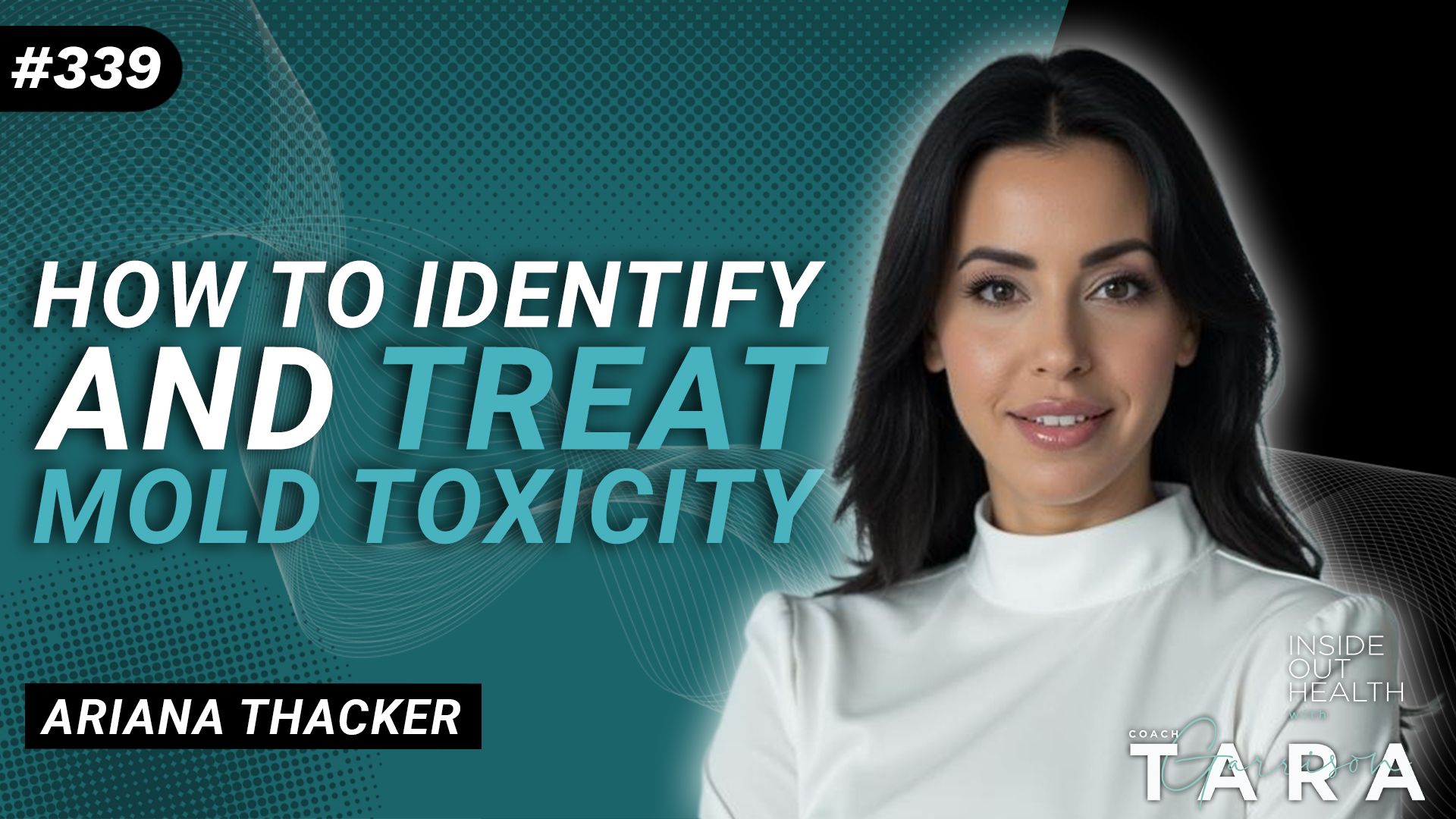


Ariana Thacker is a chemical engineer, venture capitalist, and the founder and CEO of MoldCo, a health-tech platform addressing mold toxicity.
After co-founding Conscience VC to invest in science-driven startups, Ariana launched MoldCo, inspired by her own health journey.
Today, she leverages her technical expertise and investing background to pioneer data-driven, empathetic solutions for overlooked healthcare and environmental challenges.
In this episode, chemical engineer Ariana Thacker, founder of MoldCo, breaks down how to test for mold exposure at home and in your body, why genetics (HLA haplotype) determine who actually gets sick, and how her company's affordable, virtual Shoemaker-protocol care gets 90%+ of patients significantly better.
RESOURCES:
- Learn more about Ariana here and use code COACHTARA15 for 15% off the CIRS and Home tests: https://go.moldco.com/tara-garrison
- Instagram: @themoldcompany
- Get 10% off Peluva minimalist shoe with coupon code COACHTARA here: http://peluva.com/coachtara
CHAPTERS:
00:00 – Intro: Mold Toxicity & Guest Ariana Thacker
01:43 – Sponsor: Peluva Shoes Ad
03:30 – Interview Begins: Ariana's Mold Journey
04:21 – Her Symptoms: Brain Fog, GI Issues, Fatigue, Hair Loss
06:07 – Finding the Shoemaker Protocol & Key Biomarkers
06:43 – Founding MoldCo & the Scale of the Problem
08:30 – Why Doctors Miss Mold-Related Illness
10:47 – MoldCo's 3-Step Approach: Test, Diagnose, Treat
12:29 – Why Not Everyone Gets Sick: HLA Genetics
14:17 – Host's Story: Mold Hiding in a Client's Car
16:20 – Patient Outcomes: Symptoms & Recovery Rates
17:36 – Treatment Protocol: Meds, Supplements & Diet
18:46 – Environmental Warning Signs & Testing Methods
23:14 – Finding a Qualified Mold Inspector
25:04 – Industry Gaps & Wasted Money on Bad Care
26:40 – Higher Coaching, App & Retreats
31:41 – Cost, HSA/FSA & Insurance Coverage Push
33:49 – Getting Started with MoldCo Testing
35:49 – Dr. Shoemaker's Research & CIRS Origins
WORK WITH TARA:
Are You Looking for Help on Your Wellness Journey? Here's how Tara can help you:
- TRY TARA'S APP FOR FREE: http://taragarrison.com/app
- INDIVIDUAL ONLINE COACHING: https://www.taragarrison.com/work-with-me
- CHECK OUT HIGHER RETREATS: https://www.taragarrison.com/retreats
SOCIAL MEDIA:
- Instagram @coachtaragarrison
- TikTok @coachtaragarrison
- Facebook @coachtaragarrison
- Pinterest @coachtaragarrison
INSIDE OUT HEALTH PODCAST SPECIAL OFFERS:
☑️ Upgraded Formulas Hair Test Kit Special Offer: https://bit.ly/3YdMn4Z
☑️ Upgraded Formulas - Get 15% OFF Everything with Coupon Code INSIDEOUT15: https://upgradedformulas.com/
☑️ Rep Provisions: Vote for the future of food with your dollar! And enjoy a 15% discount while you're at it with Coupon Code COACHTARA: https://bit.ly/3dD4ZSv
If you loved this episode, please leave a review!
Here’s how to do it on Apple Podcasts:
- Go to Inside Out Health Podcast page: https://podcasts.apple.com/us/podcast/inside-out-health-with-coach-tara-garrison/id1468368093
- Scroll down to the ‘Ratings & Reviews’ section. Tap ‘Write a Review’ (you may be prompted to log in with your Apple ID). Thank you!
EPISODE TRANSCRIPT:
We're talking all about mold and mold toxicity and how you can find out if you might be having that issue and how you might be able to find out if you have mold issues in your home or work or car or whatever environment. So my guest today is Ariana Thacker.
She's a chemical engineer and the founder and CEO of MoldCo. It's a health tech platform addressing mold toxicity. So after she had her own issues with mold, um, she developed this company, and it's a really cool resource. Um, so if you go to moldko.com, um, you can find everything there, and there's testing methods, like for your home and also for your health.
She's gonna tell you all about this. So as she's talking about these seven biomarkers you can test for your health to see if, like, mold is likely the root of a lot of the symptoms you're having, um, that is called their CIRS. I don't know if they say S...
I can't remember if she said CIRS kit, but you can, um, get a discount as a podcast listener if you would like to do either that blood seven biomarker kit or the one of the home tests. Um, and that coupon code is COACHTARA15. I'll put this in the show notes.
And then, um, she's gonna tell you all about, like, how there... If you, if you find out you have issues with mold and you would like to get support through them, um, make sure you remember that you can use the link in my bio 'cause it'll give you 20% off the first three months of membership.
It's really cool what she's created. Uh, this is a very informative episode about mold toxicity, and, um, I'm, I'm really proud of her as a human for building this, um, what she did with Moldko. So let's go ahead and get into it. Here is Ariana Thacker. Okay, before we get into the episode, I wanna take a moment to tell you guys about Peluva Shoes.
So here's what happened. So Mark Sisson... If you don't know Mark Sisson, you should know Mark Sisson, okay? Go look him up and start following Mark Sisson. Uh, Mark Sisson and also Brad Kearns, who have been on the... He's been on the podcast, uh, a few times now, and Mark has also.
They are, like, legendary OGs in the health and wellness industry. And, um, Mark, who also started Primal Kitchen, if you're familiar with that brand, um, has started Peluva Shoes. So Peluva means foot glove in Portuguese, and these are minimalist zero-drop barefoot shoes, and they have that five-toe articulation. I resisted trying these out for a long time 'cause I thought they looked nerdy.
I'm just being so real. Um, but after many times of Brad being like, "Dude, just try them. Just try them," I was like, "Okay, okay. I promise I'm gonna be honest with you." Yeah, I wear them all the time. I absolutely love them. I didn't think that the five-toe articulation was really that important 'cause I've been a longtime fan of Vivos and barefoot shoes and still love Vivos too.
Um, but wow, like, major difference. Like, I was like, "Okay, now I'm, like, really actually using my foot the way I was supposed to." So they are awesome. Um, I told Brad, I was like, "You're right, dude. I love them so much." They're awesome. Um, and then they offered to sponsor the podcast, so thank you to Peluva, and they also offered to give you guys 10% off if you would like to try them out, which I highly recommend.
Um, you can go to Peluva, that's P-E-L-U-V-A, .com/coachterra, or you can just use the code COACHTARA at checkout and get 10% off of your order. And I highly, highly recommend getting some of their toe socks while you're there because you're gonna need toe socks. All right. Let's go ahead and get into the episode.
All right. So Ariana, I'm excited to talk to you about mold today. You've had quite the journey with mold. Mold is probably your favorite and least favorite thing. Thanks for, thanks for coming on to educate us today.
Yeah. Thank you for having me.
Okay. So let's start with, uh, just a bit of your own journey. Why is this even a thing that you're involved with?
Yeah. So I was a patient first, um, I, I say quite serendipitously now versus unfortunately. So I had mold in my Miami unit, uh, got quite sick due to that exposure, and then, uh, pivoted my life to help other patients with this. I believe it's one of our biggest medical blind spots.
Yeah, absolutely. I, I bet a lot of people listening today are you guys are gonna get a, a paradigm shift. Okay. So let's use you, um, as an example, and then we'll kinda juxtapose to many other people. But what were you experiencing symptom-wise?
Yeah. Um, I would say I was experiencing the very traditional shoemaker symptom clusters if, if you're familiar with that. So, um, it shows up as brain fog, uh, cognitive issues. I remember having to reread my emails multiple times, for example. Um, processing issues with even, um, audiovisuals, so, um, I would have my friends repeat what they were saying to me just so I can, um, totally comprehend what they were, um, sharing.
Uh, gastrointestinal issues. So a lot of patients, um, like me, I had experienced, um, what felt like IBS, so, um, like just not being able to process food as I normally would. Uh, sleep issues. I remember having night sweats, not having great sleep, uh, fatigue. So I really had to manage my energy during that time.
Like, I, I felt like I had a few, uh, really functional hours in the day, and the rest of the day I was, like, in bed doing Zoom calls and just kind of recovering. Um, hair loss and a whole host of other issues. So I, I listed so many because it's not just one acute symptom.
It's actually multiple symptoms that present that impact many parts of the body.
So what did you try from there? What was your idea of how to get out of this situation you were in?
Yeah. Um, so pre-discovering mold, I went through standard medical care, like went to my PCP, went to multiple specialists, did a whole battery of lab testing and some imaging, and largely that showed up as normal, and my, uh, doctors and specialists were perplexed. Um, uh, like full transparency, I did have low iron levels, but it didn't really, um, didn't really justify the symptoms I was experiencing, and taking iron pills didn't help the issue.
Uh, it wasn't until after I discovered it was mold I, um, actually went more functional health and alternative medicine and, um, worked with a shoemaker-certified provider and got back to better health. So, um, that, that specific MD tested me for, uh, markers unique to the biotoxin illness pathway, so those are the shoemaker, um, lab tests like MMP-9, MSH, TGF-beta1, and these labs were, uh, quite dysregulated and then, um, went through, um, the shoemaker protocol.
So starting with a prescription binder. Um, usually there's cholestyramine or colesevelam. I, uh, went with colesevelam and, um, cetera. Um, just went down that journey and, uh, got back to better health.
Wow. How many people... Well, hold on, before I ask that. Like, so where has your journey taken you from here? Can you tell us about what you've created to help people with this since then?
Yeah. Um, originally, um, went down this rabbit hole just to get better, like wasn't trying to start a company. Um, and then I started, uh, talking to a lot of my friends and even family members that had their own personal mold journey and realized, wow, you know, so many more people are impacted by this than I thought, and my best guess for how many people are impacted, um, we, we've actually published an economic impact report.
It was roughly 25 million Americans, adults and pediatric, um, patients severely impacted, like to the level of chronic inflammatory response
Wow
our best guess is up to 50 million, um, moderately to severely impacted. So, um, I, think this is a really big issue, uh, bigger than we've realized before in healthcare, mainly because so many homes are impacted by mold. Uh, there's been multiple studies that corroborate around 50% of homes have some level of mold, water damage, and dampness.
Um, we've seen estimates as high as 70%. Even we know 85% of commercial buildings have had historic water damage, 45% ongoing water damage. It's considered the number one issue on the military bases, so there's just a lot to support that exposure is happening, and there's even more and more evidence to support the health impacts are, um, bigger than just, uh, respiratory, um, asthma, um, allergies, and fungal infections.
Like, it, it's, it is this inflammatory response. And finally, the NIH recognized that too. Um, so the NIH updated their mold page to reflect the immune, um, disruption that happens, inflammation, and even mental health issues that, um, result.
So yeah, so okay, so then that's progress. Um, but still currently in 2026, you know, if you go to the doctor because you're having mood stuff or brain fog or gut issues or whatever, it's likely to be not, that's not the route that they're gonna go currently in our current medical system, right?
You're a yeah, you're 100% right. Like, you're you're more likely to get referred to a, a psychiatrist or
Right
psychologist, um, if you're experiencing anxiety or depression. Um, we even see suicidal ideation, um, fairly common in, in this patient cohort. Um, and unfortunately, the root cause issue just never gets addressed.
Mm-hmm.
It's, um, mainly at the Like, what is your most acute symptom? You're probably gonna get referred to that specific specialist to try
Right
address very acute, uh, symptom. Yeah.
Right, and this one's not gonna be They're probably not gonna refer you to a mold specialist. You know what I mean? So it's just, I think hidden from so many people. I think so many people haven't even really heard of it, right? Like, they're It's still pretty on the DL, mold-related illness.
I, Yeah. I, would say very much on the DL. Like, as a, as a company, we're trying to shift that in a, in a very meaningful way.
Mm-hmm
we've been producing a lot of content. Um, you know, I've, I've been, um, spending a lot of time on podcasts too and writing
Mm-hmm
like really leaning on our clinical team to share our insights, and we're also advancing research in the space. So we've amassed what we believe to be the world's largest data set in the space of thousands of whole blood samples and detailed patient
Mm.
really understand how this illness impacts human health, and then Also publish those insights so it's open and available to other, um, clinicians and scientists outside of this, like, smaller community of, um, doctors in the Shoemaker circle.
That's amazing. Yeah, so tell us, uh, just... 'cause now people, if they're having some of these symptoms, they're probably like, "Okay, so what... Like, what, what do you do?" So first of all, your social media is really great. I'm like, "This is a lot of followers for a mold, a mold company."
Thank you.
so lots of great info. I mean, as soon as I started thumbing through, it's like these are the labs that we test, this is what they mean, this is all, you know. So great info on your Instagram, by the way, if anybody wants to check that out, and we'll link that in the show notes.
Mm-hmm.
but you know, in, in terms of how you're helping people, can you talk a little bit about how that experience goes for people?
Yeah, absolutely. Um, I like to think of it as three core problems we're solving, so answering the question, "Am I being exposed to mold?" We have an environmental DIY test for your home. Uh, answering the second question, "Is mold making me sick?" So we have blood-based biomarker testing, which is available at LabCorp, which just makes it so much easier.
Mm-hmm
and then the third question, um, we answer is, "How do I get better?" And for that we have concierge care, uh, with our specialized and trained providers. Um, they're all trained under the world experts in, in this space, so Dr. Shoemaker, Dr. Scott McMahon, and, um, others on our team.
And then we also ship the medications that are prescribed directly to patients' doors as well. And we've delivered that experience at about 1/10 to 1/100 the cost of status quo. Um, so working with these, like, brick-and-mortar, um, providers, which they'd normally have multi-month wait lists. There's normally, um, a high, um, barrier to entry from a cost standpoint, and you're not ever really gonna get that hands-on, um, concierge care where you can DM your clinical care with our average response time right now being around two hours.
So, um, just a very, like, hands-on approach to getting patients better through every step of the journey. And soon we'll also be layering on more on the environmental side, because, like, just navigating how do I find a home inspector, how do I find a remediator, what's the right next step for me on the environmental side is also fairly treacherous.
Mm-hmm. Yeah. Yeah, and you can do this all virtually too, which is nice, I
Yeah
your website, right? It's like, okay, cool.
Exactly.
Very accessible.
Yeah.
It's awesome.
Thank you.
So, okay, next big thought that's probably going, maybe going through people's minds is, like, okay, well, if there's mold in this many homes, then how come not everybody is having all these symptoms? Can you talk about that?
Absolutely, yeah. So there's a few, um, pieces to the recipe there. So one, there's a genetic susceptibility, um, to this illness, and that's actually something our research, uh, team has mapped out, and it's called HLA haplotype testing. So that's what we do. Um, roughly 24% of the US population has an HLA haplotype to make them more susceptible to exposure.
Um, what that means more specifically is that roughly 95% of CIRS cases that we've mapped end up having one of these genetic susceptibilities. So it's fairly high signal for who gets, um, sick in the environment. And beyond that, um, there's a lot that goes into, um, who gets sick beyond the genetic susceptibility.
It's how much time are you spending in the mold environment. For example, if it's in, um, your, your bedroom and it's not in your housemate's or roommate's bedroom, they're, um, less likely to get sick from that exposure. Um, if you're living in the home and you're already immunocompromised, you're more likely, um, to get sick.
Or if you've, um, uh, have, have had poor health or, um, poor habits in general, right, that makes you just a lot more susceptible to that. So, um, I would still say we're at the early innings of mapping out who exactly gets sick and the reasons why they get sick, but, um, our best, um, our best information today is really this HLA haplotype, um, known exposure that's nearby, and, um, acute and also, um, for a long duration.
And also, um, specific types of mold hasn't really been that mapped out. We know some molds are more problematic than others. For example, we, um, test for the top five, and soon to be 10, inflammation-causing molds that we're aware of. But there's so much more research that's needed in, in that space.
Mm, okay. Yeah. And you're making me think. I had this client one time that she... mean, she had been working with a very well-known doctor. He's very out there, and I know him personally, and he's awesome. And, you know, she was in his group and all this stuff, and then she's working with me, and I'm like, man, something is seriously wrong.
Like, I, uh... She got an unbelievable stomach bug and was puking and nonstop for, like, a week, you know, diarrhea, all that. And she's like, "I didn't lose a single pound, by the way." She's like, uh... And I'm like, "That's weird." You know? Like, not even water? Like, okay.
Wow.
Something's really going on with her physiology. And then she kinda, like, disappeared for, like, a couple weeks. I'm like, "Hey," like, "you good?" Like, like, "Shoot me a check-in or something." And she's like, "I am so sorry. I, uh... So I got in a car accident, and my car got totaled, and, um, we discovered that the whole underneath, like, that fabric on the top of my car, there was tons of mold." Like I'd had some sort of water...
Oh, sorry, it wasn't an accident. It was her car got, like, mechanically totaled, that's what it was, because it, like, broke. And so when they were, like, looking for that, like, they found that. And she's like, "I am in my car for hours, uh, commuting every single day." So just throwing that out there in this conversation, like, who would've thought mold in her roof of her car.
You probably see that stuff.
That... I would say that's one of the more underrated places to look. we, we spend so much time and attention in the home, uh, less so, um, the workplace, school place, and especially the car, and it could be, um, in the air fired in, in the car, the air filters more specifically.
Um, so there's just so many different point sources for this. Um, like, absolutely, especially if your car has had water damage before. Um, like if there's a known flood and there's water
Yeah
it didn't completely, uh, dry out Nor do you have an automotive expert look at it and make sure there wasn't microbial growth. There's so many different point sources that this can come from.
Mm-hmm. Mm-hmm. So can you tell us some of the experiences people have had, you know, just a little bit of a highlight reel of just to make this relatable to people, of like what they're experiencing, you know, what they found out, what they did, and like what was the outcome?
Yeah. Um, I'd say every patient journey is, is a bit unique, but, um, the pieces I see in common, um, one are... I can just speak to our, our specific numbers in our, our patient cohort. So, um, the average patient comes to us with 27 symptoms on average at, intake.
Um, somewhere between 90% and 95% of our patients see some improvement in the first 30 days, so that's hopeful. And some of these patients are still in environment. They're not in a completely sterile, uh, home, nor is that ever really the goal. It, it's really challenging to be in a completely sterile environment, and from a remediation standpoint, that's quite expensive.
Um, so it's finding that acceptable limit, um, to, to where you feel good in your home. And within the first, uh, seven to eight months of care, what we typically see is around 78% symptoms resolution, meaning the patients that are, um, reporting symptoms no longer have the symptoms that they're reporting.
So, um, it is patient-submitted, um, symptoms improvement, but quite meaningful in just a matter of months. So what we've, um, created was a virtual version of the Shoemaker protocol. Um, we've adapted it, uh, to be more streamlined, more scalable, and what we use is, um, prescription medications like colesevelam.
Um, we also use an EDTA, uh, nasal spray, and we use VIP peptide. We also guide patients through the titration of those medications. Not all patients can tolerate, uh, the medication at the full dose on day one, so we hand, um, we hold their hand through that journey. Um, we also include, um, varied strategic supplements.
Our take as a company is that you don't need a lot of supplements to get better. I think that's a common misnomer in this space. We often see patients taking, um, like over a dozen supplements every single month at a time, and it's not really pushing the needle.
Mm-hmm.
So we like more minimalist, um, approach to that, as well as a, a low-amylase diet, so adjusting the diet a bit, too, um, to just reduce that inflammation. Um, having a low-amylase diet, um, specifically lowers a marker called MMP-9, um, so that's what we've noticed with these patients. Um, so that's, that's at a high level how we guide patients through the experience.
We also, um, educate on the environment, like the common signs to look for. Um, some of those common signs include, um, known water damage, uh, leaks, um, prior flooding events, even maybe as, um, innocuous as, um, a loose nail head on your roof and there's rainfall and then suddenly you have water damage behind, uh, your walls, for example.
So there can be various, um, sources of water damage. High indoor humidity, earthy, musty odors, uh, visible mold, um, paling peeling paint, uh, warped flooring. So we're also, um, educating our patients on these are some of the common environmental signs to look for, so you're just a lot more aware as you're traveling, um, relocating, or even in your current environment if there's ongoing, um, exposure.
That's really helpful. Thanks. You've been on some podcasts.
You know the roadmap. Um, okay. And then, you know, okay, so you're saying typically in about seven or eight months on these protocols, people are, you know, about pushing 80% symptom resolvement. I'm really curious on your experience with that. Like, what, what are the most common symptoms you're seeing related to mold-related illness or mold toxicity or whatever you wanna call it?
And, um, how, uh, like what are the ones that you're most commonly seeing get resolved through this protocol?
Um, I would say brain fog and fatigue, um, for both questions. Those seem to be the most commonly reported and also the most, uh, disruptive to, uh, lifestyle. Um, we normally see the cognitive issues and the energy issues resolved by, uh, towards the end of the protocol. Um, towards the beginning we see other, um, symptoms typically resolve, like, uh, the gastrointestinal issues, um, some of the sleep issues.
However, I would say it's mostly, um, a somewhat linear climb towards, uh, towards health. It's not like, um, suddenly you have the symptom and then suddenly you don't. Um, so what we see is just that, that patients are improving over time as they go through care versus, like, one step is specifically targeting, um, one symptom.
Okay. Um, let's talk a little bit more about the environmental aspect. So mold toxicity is Mold toxicity stuff is not something that I do. Like, whenever I, we suspect that, I always refer out for that. So I'm, I'm definitely not the expert on, on any of that. But I would say that, um, what I've kinda heard in the biz, you know, uh, is just that, like, there's certain types of environmental testing that aren't really good, and then there's other things you need to do that are better.
You know what I'm talking about? Can you educate us on that?
Yeah. Um, there's a lot of tools that inspectors use to look at your home. So that, that looks like air spore trap sampling, um, so getting an air sample. That looks like a, a thermal gun, uh, looking at active leaks behind the walls. That looks like a
Mm-hmm
inspection, seeing if there's any visible microbial growth and some of those other uh, environmental signs that I mentioned. Um, there's also environmental dust testings, using, like, a cloth to wipe down different surfaces in the home, and, um, sending that for PR testing to see, uh, which different fungals, these are um, air and what their prevalence score is.
There's also, uh, like bulk testing, so just, like, swabbing, uh, visible mold in the home. Um, our take is that as a first step should probably just do this testing. Um, it's, it, it typically answers am I being exposed or not? It doesn't really tell you where the source is.
Um, so after you know that the exposure is there, then, um, you would typically hire an mold certified inspector to come into the home and then do a lot detailed, uh, inspection. And it's normally not just, like, one tool that's needed. Multiple tools are needed. Um, our general take though is that air spore trap sampling is way over-weighted in the industry.
It's not, um, it's not the more useful test. Like, our preference is more the environmental dust testing and, um, some of these more visual inspection techniques, um, to find where the source is.
Okay, cool. Thanks for clarifying that. 'Cause yeah, you always see, like, these companies popping up that do testing, and I'm like, I tell my clients, I'm like, "You're gonna have to ask, like, a functional medicine doctor or somebody," 'cause I, I know that some of these aren't worth it, and I know that some are, and I cannot...
I know that having, you know, obviously somebody coming in and, like, doing the thing personally is gonna be more ideal. Even within that, though, is there certain having an inspector come in, are there certain types of inspectors that come in and that, like, if they do this way it's not as good, they need to be doing this, or anything like that?
Um, there's a, there's a whole spectrum of, uh, skill level out in the mold inspection world. I would, say, find someone who's really specialized in this mold. It requires just so much, uh, insider knowledge to really inspect a home properly. Um, because what your inspector should do is find the sources and also help, um, risk rank those sources for a remediator to come in, and then start to, um, fix, fix those problems.
So, um, ideally you're having an inspector who's thorough, they've done this for several years. Certifications out there like NORMI and IICRC and ACAC. So ideally they have some of these certifications and training. Um, hopefully mold is not, not just, like, one of many services they offer. Hopefully they are just, like, mainly a domain expert in that.
Um, ideally they're, they're well-rated. Um, ideally you can see some sample reports, um, to see the level of detail you can expect, and then also ask some of those, uh, questions around what tools do they use. Do they use environmental dust testing? Um, are they doing, um, the thermal gun analysis behind the walls?
Ideally also looking, um, in the wall cavities too. Um, you can save some money if an inspector's doing that versus your remediator. So, um, I'd say this is, like, a much bigger, uh, question as to, like, how do you find the right inspector, and how do you know they're doing a complete enough job, and how do you know they didn't miss anything that's really important?
Um, so I, I would say, like, this part of the, the industry just needs so much more, um, training and attention, and also, um, more templated guidelines. That... Like, that's what's missing. Um, we're actually trying to build some of that out in, in Mold Co. now, um, providing patients with these resources as to how they can find the right inspector, and also connecting them to the right inspector to make sure that they're doing a, complete job.
So this is a gap right now,
Mm-hmm
for patients, and it usually requires quite a bit of research.
Mm-hmm. Okay. Yeah. Thanks. And thanks for what you're doing. This whole thing is a gap, you know? I mean, you can go to a functional medicine doctor, but yeah, it's, it... There isn't really much standard of care, you know what I mean? There's, like, lots and lots of different ideas and, you know what I mean?
And so it's kinda hard to know, like, is this gonna work, or am I gonna drop, like, thousands and thousands and thousands of dollars and be in the same place?
I, yeah, it's like, exactly. Like, we're trying to minimize the amount of guesswork here so we can have the most efficient path, um, for patients, because that's what we end up seeing. Um, especially with patients that have hopped around to many different providers. They've spent already tens of thousands of dollars.
They're still sick, if not worse off. Um, and they, they've been told the wrong information, and they've even been prescribed, um, harmful medications for these patients, which we've actually published on, the use of antifungals, which we don't endorse, or, um, well-known supplements like turmeric, which also don't help these patients out.
There's a lot of, um, very nuanced information that's not well, uh, known even to healthcare providers, uh, that end up hurting patients or keeping them line for, um, just wasting money and, and time on ineffective solutions.
I wanna take a moment to tell you guys what I can actually do to support you in your journeys and tell you a little bit more about Higher Coaching, my app, and retreats. So just as a quick summary, Higher Coaching is my full tilt, full on customized health and life coaching.
So we are getting all into every aspect of your life in a very supportive way. So how that's delivered is completely customized training. You'll do my neurotyping test to kick things off, which is a whole thing in and of itself that's really cool, and then I will completely customize your training and also your nutrition.
I base a lot of my decisions on labs. You don't have to do labs, but we can do a lot of labs. You can also bring me labs that you've had done recently or, you know, whatever kinda health history that you have. Love to see it. And, you know, from the labs perspective, we do blood, we do hair tissue mineral analysis, DNA.
Um, I have a software that I run DNA through that I prefer where I can see different SNPs that have to do with health, um, that are more research-backed and I actually trust. Um, we do stool testing, so gut microbiome. So if you got gut issues, bring 'em. Let's go.
And also, um, hormones through saliva and urine, and those two methods of testing help us get, see a little bit more of a deeper insight into what's going on with your hormones, incorting, incorting including cortisol, um, and your sex hormones. So, um, there's that, and then we also have biohacking involved in various ways.
That could be through an Oura Ring or Whoop strap or some sort of HRV and sleep tracking device or a continuous glucose monitor or, you know, lots of different interventions that we do depending on the person and what they need. So there's all of that health approach, and then there's the full-on life coaching because I believe these are one.
They are. I, it's not I believe. They are one Okay? So it's like if there's a lot of dysfunction in terms of interpersonal relationships or professional life or just internal world in terms of boundaries and self-talk and identity and all of that kind of wounded stuff, like we get into that too, as much or as little as someone is willing to.
So Higher is my full tilt, we are going all in on you, baby, uh, one-on-one coaching. And I do have a coach that coaches with me, Coach Daria, who has been on the podcast a couple times. Um, so you do have some options there between working with either of us and the, you know, obviously the cost is a little different too, so it's kind of a nice service for people because, yes, I charge more.
But yeah. So if you wanna learn more about that, go to terragarrison.com, and you'll see one-on-one coaching and just, just click on that one and you can get a free consultation with my team. Next is my app. So my app is my solution for not everybody can afford or even wants full-on one-on-one coaching.
So if you want all my goods, like you want all my training counsel on form optimization and nutrition and, you know, the biohacking and the info, and we do have live Q&As once a month and community and all of that, that is, uh, obviously a lot more affordable and pretty awesome if I do say my do say so myself.
And, uh, there's a whole mindset part in there that a lot of people like where I take you on these little 22-minute guided journeys. So check those out if you get the app, and there's a seven-day free trial so you can see everything in there, make sure you like it before you actually pay anything.
So just go to app.terragarrison.com for that. And then I do have a retreat open right now. In 2027, we are going up to the Pacific Northwest. It'll be about 45 minutes outside of Seattle. Um, we are staying at the beautiful Salish Lodge and Spa. It sits on top of 168-foot waterfall, and it is owned by the tribe whose lands that those are.
That waterfall is very sacred to them, and that makes me happy that they are in control of that land again. So, um, it's gonna be incredible. We're gonna do lots of fun things like white water rafting, paddleboarding. Uh, you know, we're gonna do holotropic breathwork or, like, conscious connected breathwork, which is a healing-type thing.
Um, we will have all sorts of amazing facilitation. And yeah, they're the coolest thing that I offer, straight up. They're amazing. So if you want to check that out, just go to tara-garrison.com and click on Retreats, and you can find out more and get all signed up. If that is speaking to you, I firmly believe that anybody that comes to anything, like whether it's working with me directly or in my app or coming to one of my retreats, uh, my whole business is kind of a spiritual thing for me, so I take that very seriously, and I fully believe that people who come my way are sent my way for a reason.
So if that's pinging at you, um, please, please honor it. Like, uh, it's, it's more than just business for me here, you know? So, um, yeah, I would love to hear from you if I can support you in any of those ways. Okay, so I'm assuming people are probably wondering, you know, we're talking about how expensive this stuff can be.
Like, how does that work with you guys? Do you take, like, HSA or anything like that? Or, you know, can you share on that? I'm sure people are wondering.
Yeah. Um, so we do take HSA and FSA. Um, we're trying to hack right now insurance coverage for this as well, so that's a goal of mine. Uh, and, it's actually something I've been pushing on the policy side too because currently there isn't an ICD-10 code for mold-related illness.
Um, there's a code for a suspected exposure to toxic mold, which is more of an environmental, like, footnote, but it's not, um, the health impacts of mold exposure. So we've been pushing for that. Um, and our lab testing, we offer one lab test at cost to us. It's only $56, and it's the top three, uh, markers that we believe every patient should be testing for.
So those markers are MMP-9, um, which is an inflammatory marker, um, MSH, which is a master, uh, regulator hormone in the body, and then, uh, TGF-beta1, which is another inflammatory cytokine in the body. So we test for those three, which are usually, um, off with these patients. Um, we have a really big emphasis on affordability and accessibility, just given how expensive this has been, um, for so many patients.
Like, that's often the biggest barrier, um, to getting better besides, like, awareness of the issue. There's so many different, um, barriers to getting help. So what we've created was something that is approximately $250, like, all in. Uh, that includes concierge time, all the medication shipped to your door, et cetera, et cetera,
Wow
250 a month. So, um, quite a bit more affordable. At, at this point, with everything all in, like, uh, medical costs, storage costs, uh, moving costs, et cetera, I'm at over $165,000 spent. So, um, and I wish I could say I was the exception to the rule. There's so many more, um, patients that end
Wow
like, draining their bank accounts, uh, dealing with this issue 'cause
Wow
are expensive, too. Yeah.
Yeah. Yeah. That's, that's awesome. Yeah. And especially since it's eligible for HSA and FSA, like, that, that helps also. So nice. Okay. So yeah. Um, in terms of getting started if somebody wants to, I, I'm assuming, like, they would start by taking those three tests and see if those come back, or I'm sure there's, like, a questionnaire and all that kind of stuff.
But, like, what does that getting started process look like for people?
Yeah. Um, I would say start with the dust test if you're not even sure if you're being exposed or not.
Okay.
So, um, that, that'd be, like, very, um... Like, I would say that's, like, step one if, if you don't
Okay
you've been in exposure or have had a historic exposure. step two, if you're still, um, not sure if mold is causing your health issues, and I would say do our lab panels. Um, we have more complete lab panels which are, um, a, a bit more expensive. One's $299, the other one is $799.
But you just get so much more information, um, with those. Um, and then we also have a free assessment on our website, so going through a lot of the common symptoms that I've mentioned as well as environmental signs. And from that we give you, um, like, an educational, um, result.
So whether we think it's, like, low, medium, or high, um, for suspected, um, exposure or health issues caused by mold. And then we also have our, um, care too. So you can meet with a, a specialized provider and ask a lot of questions and really see if, if this is right for you.
All right. Cool. So the testing thing that you have on your website is the dust tests, right? They can, people can get that there? Okay, cool.
Yeah, exactly. Yeah.
Yeah.
It
And it's nice... Oh, go ahead.
Oh, um, it, it also... I find this helpful. It, it comes with a report too. So, um, it tells you whether your score, uh, is harmful or not. Um, so that's helpful because you're not... Like, you could have mold, but maybe it's not at a level that's actually problematic for you.
Um, so it's helpful to have that, like,
Right
high score.
Okay, cool. Yeah, and it's nice that you guys break it up into, like, if it's one you just wanna test one room, you can pay less than if you wanna test three or more rooms or areas. You can, you can get obviously a more expensive one. But it's nice that you have those options, right?
Yeah.
Um, and then I also wanna note that you guys have the science on your website. So can you tell us a little bit more about Dr. Shoemaker and why, you know, you've referenced him multiple times?
Yeah. So Dr. Shoemaker created this space. So he coined the term chronic inflammatory response syndrome. Um, his research into biotoxin illness started in the early '90s, um, actually with a fistaria breakout, which is a, um, it's a, like, waterborne illness. And, um, he ended Treating the patients that had that exposure with cholestyramine, which was the original, um, prescription binder in this space.
So that's a bile acid sequestrant. Both, um, cholestyramine and cholesevelam are FDA-approved medications used off-label, um, for this use case, so for mold-related illness or, uh, sometimes, uh, the severe form is chronic inflammatory response syndrome. Um, so he started that research then, and since then he's identified the key biomarkers, which are the biomarkers we use in MoldCo.
Um, he created the Shoemaker protocol, which is the most evidence-based approach in this space. It's also patented, um, which, um, people don't really know about it. And, um, separately, um, he's joined us as our founding physician, um, with Dr. Scott McMahon, um, who left his medical practice to join us full time as our medical director, and, um, other key, um, clinical researchers and scientists in the space.
And, um, together, we amassed the world's largest data set, um, so the thousands of biospecimens and, uh, close to 10,000 detailed patient history forms. And what we're doing now, um... And that's separate from any patient data. We don't touch that, um, to do this analysis. This was, uh, a very separate process.
But, um, what we do is, um, we sequence the samples, and we're trying to understand the insights of how mold impacts human health, and also, um, what medications and what biomarkers could also potentially help these patients. 'Cause right now, um, roughly 90% of patients get 70 to 90% better.
So I would love to have the goal of 100% of patients get 100% better.
Mm-hmm.
And I think that's, um, I think that's possible, um, through this research.
Yeah. Awesome. And you guys do have the peer-reviewed research from Dr. Shoemaker, from Dr. McMahon on your website too. So if anybody wants to get super
Yeah
that is on moldco.com. Or, sorry, yeah, moldco.com. Yeah.
Yeah And I'm pretty sure we're at over 40, um, publications now as a team too, so there's, there's much more, uh, research out there beyond what's on our website.
Awesome. Okay, cool. Well, this is amazing. I mean, it's like, okay, here's the problem. Here's how to understand if this is possible for you. Here's what you could be experiencing. Here's to find out a little bit more if maybe this is the reason why, and it's all done for you.
And guess what? It's more affordable than any, pretty much any functional medicine doctor you're ever gonna go to. So nice job.
Thank you. Yeah, I'm really excited, um, potentially to also get the insurance coverage in this space too, just make it even more, um, affordable and accessible for patients.
Awesome. Well, Ariana, thank you. We will definitely link up in the show notes, uh, moldco.com, and then also make sure you check them out on Instagram as... It's @themoldcompany, right? I'm remembering that correctly.
Yeah. That's right.
The Mold Company. Yeah. So they, they'll fill you in. Um, anything else that you would leave with people?
I would say if you have any questions, feedback, or want more support, um, we have an email that we're very responsive to, and that's [email protected]. So please don't be shy. We have a whole team supporting, um, those emails, and we're happy to help.
Amazing. All right. Thank you so much, Ariana.
Yeah. Thank you.
Thank you so much for joining me on this episode of the Inside Out Health podcast. I hope it's been helpful to you in your journey. If you think that it might be helpful to someone you know, please share it with them. Please share on social media. It really helps me grow the show and reach more people with these amazing messages.
And if you could be so kind as to rate the show and, um, possibly even leave me a review, that really helps. So, uh, much thanks in advance if you do that. And yeah, please subscribe if you wanna hear more of this type of content. I have lots of amazing expert guests on the way.
All right. Thank you.

Want One on One Coaching with Tara?
Click below to learn more about Tara's flagship 1:1 program HIGHER Coaching. Work directly with Tara on training, nutrition, personal development and biohacking!

Try Coach Tara App for 7 days FREE!
Learn how to train for results at home or in the gym, how to make easy, healthy recipes to achieve your goals faster, and explore the world with Tara as she helps spark shifts inside you to bring your best self out!
