Episode 337: RIC SCALZO Herbs for Immunity, Regenerative Farming & Syncing Our Bodies with Nature
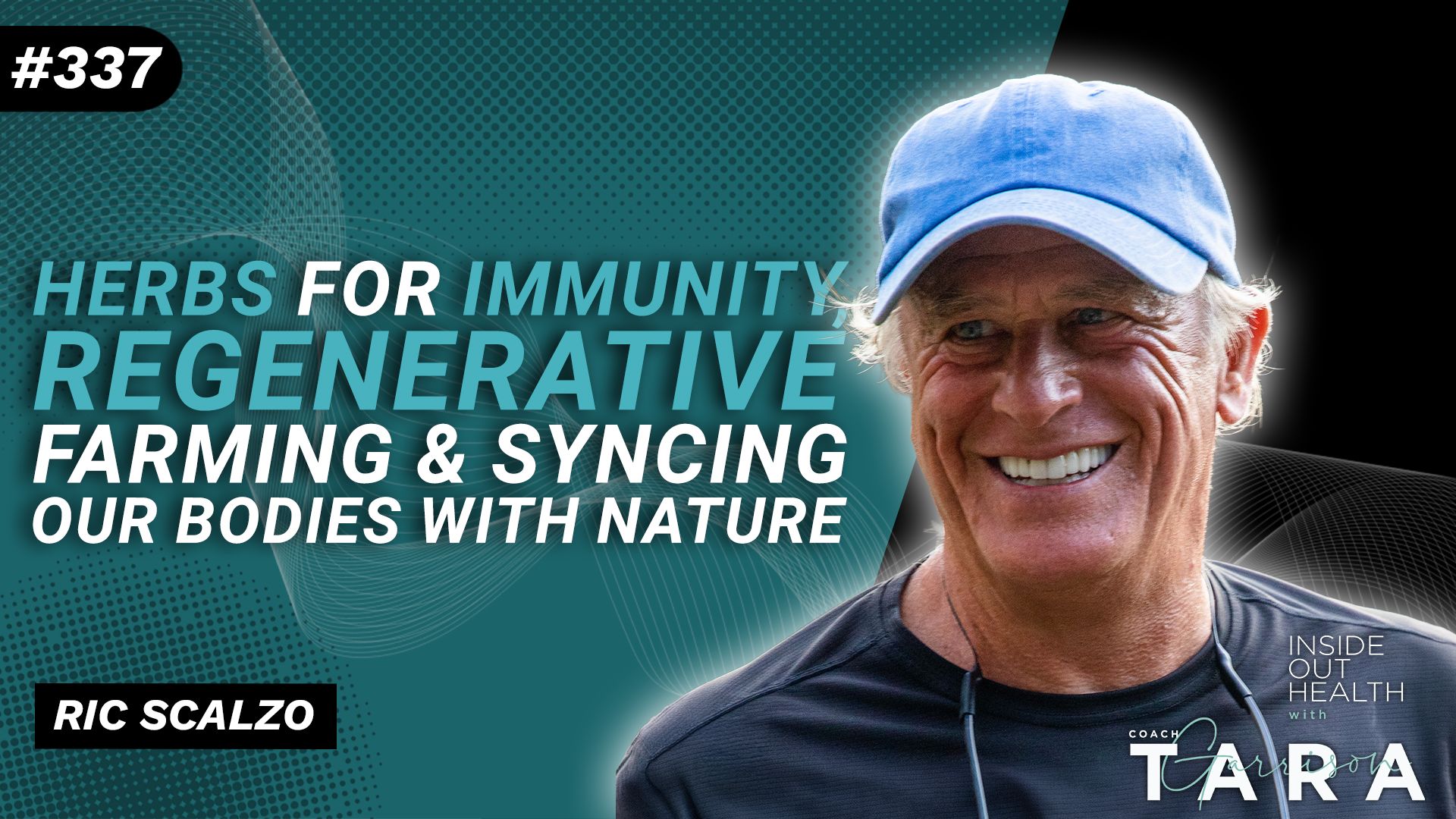


Ric Scalzo began his exploration of herbal and naturopathic medicine in 1980, delving into fields such as Naturopathic Herbal Medicine, Eclectic Herbal Medicine, Ayurvedic Medicine, Traditional Chinese Medicine, and various diagnostic methods. He earned a master’s degree in Herbal Medicine from the School of Herbal Medicine and was awarded an Honorary Doctorate of Naturopathic Medicine from Southwest College of Naturopathic Medicine.
After several years of medical practice, Ric founded Gaia Herbs in 1987 and grew Gaia to the most respected and successful herbal company in the country. After selling Gaia in 2019, Ric established the Institute of Botanical Research in Arizona and established CR Medicinal Farms, a regenerative organic farm in Costa Rica. These became the stepping stones for his new adventure called Kokora, a herbal products company focused on regenerative organic cultivation with a mission to "create the finest herbal remedies that promote health and vitality for all”.
Celebrated for his pioneering work in Herbal Medicine and his dedication to preserving herbal integrity for over four decades, Ric continues to innovate in the field and plays a key role in integrating regenerative agriculture with herbal medicine.
In this episode, Ric Scalzo explores how regenerative herbal farming, constitution‑based botanical formulas, and aligned sleep practices can radically upgrade immune resilience, metabolic health, and inner‑outer environment regeneration.
RESOURCES:
- Learn more about Ric and Kokora Life here: http://kokoralife.com
- Instagram: @kokoralife
- Check out our previous episode with Ric here: https://www.taragarrison.com/blog/ricscalzo
- Get 10% off Peluva minimalist shoe with coupon code COACHTARA here: http://peluva.com/coachtara
CHAPTERS:
00:00 – Ric Scalzo bio and herbal medicine journey.
00:30 – Founding Gaia Herbs and moving into regenerative farming.
00:59 – Why Ric’s research farm and regenerative agriculture matter.
02:01 – New regenerative agriculture courses and Kokora Life.
02:32 – Sponsor: Peluva barefoot shoes story and offer.
04:19 – Interview begins: welcoming Ric back and setting the stage.
05:07 – Life in Costa Rica and fruit‑tree sanctuary.
05:59 – Turning a sugarcane monocrop into a regenerative organic farm.
07:04 – Soil microbiology, nutrient density, and immune resilience.
08:47 – Environmental toxins, plastics, and depleted soils as a “double whammy.”
11:02 – Why regenerative agriculture is essential for diversity and life.
13:02 – Soil diversity, multiple crops, and gut microbiome parallels.
23:31 – Ric’s clinical background, diagnostic methods, and constitutional herbal formulas.
28:33 – Mast cells, allergies, and Total Defense immune support philosophy.
31:24 – Immune stressors, nasal turbinates, silent onset, and inflammation research.
36:06 – Quick Response vs Total Defense: timing the immune “war.”
36:06 – Higher Coaching, app, retreats, and lab‑based work.
41:43 – Sleep, circadian rhythm, angel train metaphor, and latency vs maintenance.
49:51 – Golden Milk Bliss, ojas, sattva, and nighttime nervous‑system support.
53:07 – Why to support Kokora and what regenerative agriculture provides.
WORK WITH TARA:
Are You Looking for Help on Your Wellness Journey? Here's how Tara can help you:
- TRY TARA'S APP FOR FREE: http://taragarrison.com/app
- INDIVIDUAL ONLINE COACHING: https://www.taragarrison.com/work-with-me
- CHECK OUT HIGHER RETREATS: https://www.taragarrison.com/retreats
SOCIAL MEDIA:
- Instagram @coachtaragarrison
- TikTok @coachtaragarrison
- Facebook @coachtaragarrison
- Pinterest @coachtaragarrison
INSIDE OUT HEALTH PODCAST SPECIAL OFFERS:
☑️ Upgraded Formulas Hair Test Kit Special Offer: https://bit.ly/3YdMn4Z
☑️ Upgraded Formulas - Get 15% OFF Everything with Coupon Code INSIDEOUT15: https://upgradedformulas.com/
☑️ Rep Provisions: Vote for the future of food with your dollar! And enjoy a 15% discount while you're at it with Coupon Code COACHTARA: https://bit.ly/3dD4ZSv
If you loved this episode, please leave a review!
Here’s how to do it on Apple Podcasts:
- Go to Inside Out Health Podcast page: https://podcasts.apple.com/us/podcast/inside-out-health-with-coach-tara-garrison/id1468368093
- Scroll down to the ‘Ratings & Reviews’ section. Tap ‘Write a Review’ (you may be prompted to log in with your Apple ID). Thank you!
EPISODE TRANSCRIPT:
I'm so excited to have Ric Scalzo back on the show today. So Ric began his exploration of herbal and naturopathic medicine in 1980, delving into fields such as naturopathic herbal medicine, eclectic herbal medicine, Ayurvedic medicine, traditional Chinese medicine, and various diagnostic methods. He earned a master's degree in herbal medicine from the School of Herbal Medicine and was awarded an honorary doctorate of naturopathic medicine from Southwest College of Naturopathic Medicine.
After several years of medical practice, Ric founded Gaia Herbs in 1987 and grew Gaia to the most respected and successful herbal company in the country. After selling Gaia in 2019, Ric established the Institute of Botanical Research in Arizona and established CR Medicinal Farms, a regenerative organic farm in Costa Rica, where he is tuning in from today.
So if you're watching on YouTube, you're gonna get a beautiful view. And what, what I asked Ric to talk about today is, you know, of course, establishing a little bit of why regenerative agriculture's important, and also I wanted to really inquire about some of the benefits of the different herbs that he's growing just because he has such an not only incredible knowledge on this, but he also has this research institute now, and he was bringing up some things on our Instagram Live recently that I was like, "Wait, what?
Wait, wait, Tell me more. Where can I access this information?" Um, and so he is going to tell us some things about immunity today, um, and how different herbs can help with our immunity in a way that... I mean, I've never heard any of this. This is so cool.
And, um, we also get into sleep in a really interesting way. I really appreciated his perspectives there, so make sure you listen for that part. And yeah, if you're somebody that loves, um, nature, you're going to love this episode. And, um, also just wanna get word out, they... Ric, I, I, I don't have all of the information yet, but I will put it the show notes as soon as I get it, but they are also starting courses for people who want to do regenerative agriculture practices at home, um, or, you know, whatever scale you want to, but that's what it's geared for.
So as soon as I get that, I will add those to show notes. He just told me about that before we got started, and we forgot to talk about it in the episode. So heads up on that. Um, check out kokoralife.com. That is where you can get all of these products.
K-O-K-O-R-Alife.com. Okay, let's get into an amazing conversation with Rick Scalzo. Okay, before we get into the episode, I wanna take a moment to tell you guys about Peluva Shoes. So here's what happened. So Mark Sisson... If you don't know Mark Sisson, you should know Mark Sisson, okay? Go look him up and start following Mark Sisson.
Uh, Mark Sisson and also Brad Kearns, who have been on the... He's been on the podcast, uh, few times now, and Mark has also. They are, like, legendary OGs in the health and wellness industry. And, um, Mark, who also started Primal Kitchen, if you're familiar with that brand, um, has started Peluva Shoes.
So Peluva means foot glove in Portuguese, and these are minimalist zero drop barefoot shoes, and they have that five-toe articulation. I resisted trying these out for a long time 'cause I thought they looked nerdy. I'm just being so real. Um, but after many times of Brad being like, "Dude, just try them.
Just try them," I was like, "Okay, okay. I promise I'm gonna be honest with you." Yeah, I wear them all the time. I absolutely love them. I didn't think that the five-toe articulation was really that important, 'cause I've been a longtime fan of Vivos and barefoot shoes and still love Vivos too, um, but wow, like major difference.
Like, I was like, "Okay, now I'm, like, really actually using my foot the way I was supposed to." So they are awesome. Um, I told Brad, I was like, "You're right, dude. I love them so much. They're awesome." Um, and then they offered to sponsor the podcast, so thank you to Peluva, and they also offered to give you guys 10% off if you would like to try them out, which I highly recommend.
Um, you can go to Peluva, that's P-E-L-U-V-A.com/coachterra, or you can just use the code coachterra at checkout and get 10% off of your order, and I highly, highly recommend getting some of their toe socks while you're there, because you're gonna need toe socks. All right. Let's go ahead and get into the episode.
So Rick. Rick guys, Rick was on my Instagram recently, and we've had another episode with Rick, but it's been a little while, and I wanted to bring him back because not only are you, I would say, a pioneer in natural herbal medicine and have had, what, 40, 50... How many years have...
Uh, let's... Yeah, let's keep it at 40.
40. I... Yeah. I mean, uh, well, I know your kinda life story, you know, from our last one, so it's like you've, you've been just doing this forever. And it... A lot of you are listening on audio, so you're not seeing where Rick is at, but it is clear that he is somewhere very tropical, very humid, very beautiful.
So let's start there. Tell us where you're at and what you're up to right now, and then we'll go from there.
Yeah. Well, thank, thank you again, Tara, for having me on your show, and I'm, I'm coming to you from Costa Rica right now, which is where my home is. And, um, it's on the southern peninsula in Costa Rica. And you can't see it. Actually, we have so much, um, uh, fog and mist in the air today, I can't see the ocean, but I have this beautiful, uh, Pacific Ocean in front of me.
Mm.
And, you know, my, my... I have this beautiful property that has about 120 fruit trees, and so I'm getting to live a beautiful life down here that's, that's really supportive of what I believe in, and my connection to nature is really real and authentic here.
And what... Do you just live there, or what are you up to?
So yeah, I, uh... You know, when I moved here, one of the first things I did was I bought a farm. Of course, right? I had to buy a farm. And I bought a sugarcane farm about 100 acres, and, uh, sugarcane is a monocrop. It was not, not chemically used for about five years, so it qualified for, um, organic, um, certification straight away.
But that doesn't mean a lot when you're talking about making a regenerative farm, because you're all, all concerned about soil health. You know, you know, everything that, that really we talk about in regenerative agriculture is all about the soil. So we had to regenerate the soil. We've been doing that for, for four and a half years now, and, um, that means so many factors we've talked about before.
I'll just briefly just summarize what does it mean to regenerate the soil. it means that we are regenerating the microbiology of the soil. Um, you know, keep in mind one teaspoon of soil contains trillions of microorganisms,
It's crazy
having the capability of interfacing with each other and collaborating with the total environment around. You know, these organisms are evolutionary. They have been here long before we and they'll be here long after us. So we, we say we are co-evolving with them, and they are a very significant part of our evolution, our co-evolution, and our wellness.
You know, and we, we only get to know them by virtue of the role they play in our gut, right? You know, for, for
Mm-hmm
health, digestive health. But think about the gut of the universe. Think about the gut of this planet. This is the microbiology that comes in our soil, which is interfacing, interfacing with the most powerful photonic force of nature, the sunlight; interfacing with the carbon, which is converted when it, when it's, uh, sequestered into the soil, into sugars that can feed the beneficial fungi and bacteria, which starts a whole chain of relationships under the ground that are responsible for plant life, plant growth, and what, what, uh, the term I use is our nutrient density.
They're responsible for, you know, enabling us to get high levels of nutrition in our food. Something that you and I talked about, the, the importance of why we need greater nutrient density in our foods today. And it's, you know, our immune I come back to say our immune systems are compromised by virtue of the environmental stress, by virtue of environmental toxins.
That means, you know, we no longer have the the, the strength and resilience we used to. We're not getting it from our food anymore.
Yeah.
You know, a lot of, a lot of people don't know, but if you're not eating organically, you may still be consuming some of the agrochemicals, some of the, uh, petroleum-based fertilizers, some of the microplastics may be part of what you're consuming on a day-to-day basis if you're not eating organically.
Mm-hmm.
Right?
Yeah, it's a double whammy. It's all of these new chemicals. Like, I think of plastics. Like, when I was a little kid, there nobody had plastic water bottle cases that they were taking a plastic throwaway water bottle everywhere. Like, that didn't exist, you know? It was maybe Saran wrap, and my mom wrapped you know, that was the beginnings, right?
My mom would wrap my sandwich up in foil or Saran wrap. But I mean, that was only, what, 30-something years ago, and now it's everywhere. So that's just one thing, and there's so many chemicals, so many everywhere. So we have that is totally new for humans to adapt to and evolve to, and at the same time, our soils have become so depleted of vital nutrients and, and like you're talking about, these microbes, this, this health that creates higher nutrient density in all of our foods from healthier soil.
So it's like a double whammy. It's like, you know, our house you took out all the, you know, all the protective elements, the infrastructure that helps your house stand upright, and then you introduce a massive storm. It's like that's kind of how our immune systems are right now. So that's why we got people like you and others, the kind of pioneers still at this point, doing regenerative agriculture, and I'm really grateful for that, and it's one of the reasons I like to bring it up, because we do have solutions, right?
But it's a whole mindset shift, right? It is like 'cause people kind of know organic now, obviously. I think that's very mainstream, but regenerative is not. We just had an episode with Eric Perner from Rep Provisions, who's a regenerative rancher, and he had some stats, and I can't remember now, but it was like very very few people actually even have heard the term regenerative agriculture before.
Well, I wanna say that Kiss the
Mm-hmm
which people may know the movie Kiss the Ground.
Mm-hmm.
Or the sequel, which was Common Ground. By the way, they just released the trilogy, the third part of that trilogy, and it's now available on Amazon Prime to watch. I highly recommend people watch it.
Mm-hmm.
It's called Groundswell, Groundswell on Amazon Prime Video.
Oh.
Really good. Well done.
Mm-hmm.
Uh, but they did say, uh, in the Kiss the Ground organization that from last year to this the amount of people who recognize and have learned about regenerative farming has nearly doubled. It's gone from 7% to 13%, which is a big jump in one year. Let's see, let's see if we can't double it again from '26 to '27.
Mm-hmm. Okay. Well, let's ask you, I'm gonna put you on the spot here. Like, if somebody, you know, they listen to this episode, we're gonna talk about it a little more, they listen to Eric's episode maybe a couple episodes ago, how would you concisely communicate why regenerative agriculture is important?
Diversity. I mean, in one word if I were to say why it's so why do we need diversity in our life? Because we are beings that are co-evolving with nature, and we have done everything as in, in the industrialized world to separate us from nature. You know, we've isolated from nature with the use of the agricultural practices to grow our food.
We've mono-cropped. We've tilled our soil to the point where there's no life left in the soil. Um, we've used agrochemicals, chemical fertilizers. I mean, and this is just with soil, let alone to say what goes into our water systems. And, um, and if you don't have diversity, you don't have life.
Yeah. Yep.
So this is why it's so important.
Mm-hmm.
Because that's what regenerative agriculture allows us to accomplish, to build diversity. And when I say diversity, I'm, I'm talking about the diverse... not just, um, uh, the... not just the numbers of
Mm-hmm
organisms in our soil,
Mm-hmm
the diverse
Mm-hmm
organisms that are living in our soil. That's just the start of it.
Mm-hmm.
When you, when you, you know, live in harmony with those organisms which are orchestrating life for us, for our food, for our immune systems, then, you know, you look at, well, on one field in my, on my farm, I might have five, six, seven crops growing, and there's a reason for that, is because I can...
with each crop, I can attract more diversity of nature. And nature will, will harmonize. It'll
Mm. Mm-hmm
our soils.
Mm-hmm. It's just like the gut microbiome. I mean, there's really no difference. And, you know, I'm doing people's stool analyses, and what do you see every time somebody has something going on with their metabolic health or they have actual gut issues that are manifesting? Low diversity. And it's specifically what you said.
There's a difference. It's, it's not just diversity in terms of the number of, you know, okay, cool, you have a lot of this and a lot of that and a lot of that. No, what's most important is that you have a lot of variety, a lot of different bacteria in your gut, 'cause they all play a role and they all help each other out, and they prevent the likelihood that an opportunistic one is going to overgrow and start causing a lot of problems, right?
So it is a direct correlation to what is happening inside of us that is happening outside the earth.
You know, you could have high levels of a, a variety of lactobacillus, but no um, uh, bacillus organisms or no, um, spore-forming organisms.
Mm-hmm.
So you need the
Mm-hmm
of the organisms, right?
Yeah.
To carry out the job.
So let's backtrack a little bit, 'cause we, we didn't acknowledge your, your history yet. And I'm wondering if, as you can share it... Once again, this is like the third time you've shared it on my platform. Last podcast, we just did an Instagram Live. But for those who didn't hear it, um, if you could share some of your background and how that led you to doing what you're doing now.
Yeah. I, I, um... Many people know my name through Gaia Herbs. I was the founder of Gaia Herbs, um, back in 1987. And prior to that, I went to herb, uh, medical herb school. I went to naturopathic school, and I studied some, uh, quite a lot of, uh, diagnostic procedures.
I studied Ayurvedic pulse diagnosis. I studied medical the German model of medical iris diagnosis. And that gave me a platform for, um, a clinical practice, which I saw 10,000 patients or more during those years. And, and it gave me the ability to understand how to assess constitution. What I mean by that is look at a person's genetic, you know, their genotype, their phenotype, their genetic makeup, and understand how, what role that plays in the present state state of health of that person.
And so when I would develop formulas, I would not only develop formulas to address their health concerns, but I would base those formulas based on their individual constitutional type.
Mm-hmm.
that means the herb would be harmonious for them as a person, not just for their specific health concerns.
Mm-hmm.
So... And I think that was the greatest gift for me that I brought to Gaia, was all, seeing all those patients and learning from constitutional diagnosis and constitutional, um, treatment. I was able to really formulate so precisely for, for Gaia Herbs, and now for my new company, Cocora. And, um, where you, it's, it's very, very uncommon to have formulations that are not just based on a specific need state, like you need to sleep better, right?
Mm-hmm.
And, but who is this person that needs to sleep better?
Right.
And I want, I want to, I want to support the person's constitution to help them sleep better too. Right?
You keep reminding me of the gut, just to interject real quick. I mean, that's a, it, it's not about, like, just getting rid of bad things. It's supporting the constitution, getting a healthier environment, supporting what that person needs. You know, if they have clear signs of low stomach acid from chronic stress and low diversity and all these things, it's like, okay, cool, well, we might need to address some things.
But the main goal, the main goal is to make the constitution of their gut healthier again. So yeah, I mean, I, yeah, it's, it makes sense, like, why you're doing what you're doing now, 'cause you obviously understand that at a very deep level how important that is.
You know, in, in, in naturopathic college, and I, I still believe this today, that our gut blueprint, this is what we were taught, our gut blueprint is established when we're by four years old.
Mm-hmm. Mm-hmm.
And it, you know, the foundation of our gut comes in those first years when we interface with, you know, the the mother's breast milk,
Mm-hmm
you know, the environment, the soil. How many, how many parents shelter their children
Mm-hmm
environment, you know?
Yeah
but the truth is, children need to be exposed in order to develop diversity in their gut.
Oh, yeah.
And, um, because as they're at, by four, two, three, four, five years old, what we have is what we got for life. And, you know, and then, you know, we can ebb and flow it a little within that, that framework, but, you know, to say that we can totally transform and create a new blueprint, it's very hard to do.
Mm-hmm.
what we need to do is to, what we have is to really sustain and nourish what we have.
Mm-hmm. Mm-hmm. Yeah, so I mean, after, after Gaia, after your clinical years and Gaia and all of that, you know, you then went on to open a botanical research institute. Am I saying those words right? Is that what you call it?
After I, after I sold Gaia, um, uh, which was in, in 2000, so six years ago, I, um, I went back to Sonoran University. At the time I went there it was Southwest College of Naturopathic Medicine. This is in, in Tempe, Arizona. And, um, I said to the president, who's a friend of mine, "Let's do what we always dreamed of doing."
Mm-hmm.
"Let, let's put herbal medicine under the roof of a naturopathic university."
Cool.
So we built out the, uh, Rick Scalzo Institute for Botanical Research there. And installed a tremendous amount of, of testing equipment. And so the institute now does, uh, all the scientists there do, um, uh, a, a lot of human bioassay, uh, cell line research to kinda give us a direction of efficacy of the herbs.
And we do, um, uh, RNA gene sequencing to understand, you know, we have a map, a genetic map, every one of us, and if you take turmeric, for example, um, we can tell which genes are turned, are upregulated or which genes are downregulated. So I like to use the word which genes are turned on and genes are turned off.
Right.
Um, fortunately, you know, when, when we're looking at our research, for example in turmeric, we can see that turmeric is turning on the genes that are, uh, help us manage inflammation better, and it's turning off the genes that induce inflammation.
That's awesome.
And so
so cool
uh, Teri, that's what we can assess with the, with the herbs at the institute through this RNA gene sequencing kinda study that we're doing.
I love that you guys are doing that, 'cause it's like my, my nerdy brain is always like, "Okay, it reduces inflammation, but how? Like, how is it doing that?" I wanna know how it's, how it's working. And, and, uh, it's amazing that you decided to do that after selling Gaia Herbs, because, you know, we, we always say in the industry a lot, like, "Well yeah, we don't have a lot of research because somebody's gotta pay for it, and who's gonna run a research study on cinnamon," you know?
It's usually pharmaceutical companies that are running research on things, and so it's really cool to, to know that, you know, there's more and more research being done on, no, let's just, just the plant by itself unaltered, you know, not turned into a pharmaceutical, what does that, what is, what's going on there?
It's really cool to know that that's happening.
You know what, what, what, one of the first, um, because I, I I, I started this institute, it was about 2021 when we got the institute fully set up, and then suddenly COVID happened. And I you know, and at the time we thought, well, let's just, let's start our research on CBD and understand the mechanism of CBD.
Mm.
Um, and then COVID happened, and then I said, "Guys, we need to, we need to go full-on, and we need to study this virus."
Mm-hmm.
And fortunately, our, um, our institute is very close to the, um, campus at Arizona State University where they have a level three lab. So we were able to go over to their lab and use their safety level three lab to measure the live virus, the COVID virus.
Oh, wow.
And, um, and, you know, I said, "Guys, here's 80 herbs. I want you to study 80 herbs one at a time to see its effects on, on the COVID virus." And, um, we reduced it quickly down to 40, and then down to 10, and then we got some really great data, and we reduced it down to four.
And the four herbs, we actually some of at least one that I know of, which is sweet Annie. I don't know if you've heard of that herb.
Mm-mm.
Artemisia annua. It's a type of artemisia, sweet Annie. Um, it, is the plant that actually was developed that the malaria drug was, was developed from. Um, so it's a very
Mm
rich therapeutic plant historically. It's got a lot of history. Um, but this plant was very, very interesting to us in our research. We saw some pretty, um, powerful results looking at this plant. And so what I did is I formulated a, um... And again, a lot of this, Tara, was based on my constitutional knowledge.
In this case, um, Chinese constitution and Chinese diagnostics. I formulated a, uh, a formula that was synergistic that was not just based on what can, what herbs can, uh, can we look at or are we looking at against COVID in, in, in the live virus in the lab at ASU, um, and we know what, what effects they're having, but how can we, um, support the kind of constitution that needs to be supported?
Mm-hmm.
In, in this case, you know, when we get sick, these, and these kind of, uh, viruses usually result in dampness in the body, and they usually result in a lot of mucus oval production, inflammation, and, um, uh... So knowing how to formulate around that and support the and support the organ systems that, um, you know, are necessary for, for that, we came up with a formula that I've never seen the likes of before in terms of how
Wow.
It
Very cool. Okay. What... And so what are the four? Can, can, can you share?
Yeah. They're, they're in the formula. The formula's, uh, Cocor's Total Defense. That's, that's how that product emerged. It, it made it to the market after all these years of research. It made it to the market in February of last year, I think. So, um, but yes, the, the herbs are sweet
Mm-hmm
which is artemisia. Um, another really, really important herb you may have heard of called andrographis.
Mm-hmm.
Very bitter, bitter herb.
Mm.
We grow it on our farm in Costa Rica. Uh, a third herb that we grow on our farm in Costa Rica called, um, Chinese skullcap or Chinese scutellaria baicalensis. Um, not to be confused with the American skullcap.
Okay.
And, um, the fourth herb that this formula was based around was Chinese bupleurum root.
Wow.
You've probably bupleurum. So those four were
Mm-hmm
you know, were the foundation of the formula. And then I based, um, Chinese coptis root, which is a very bitter herb much like goldenseal, but some different properties, and, um, another Chinese herb called isatis root, and then finally, um, licorice root.
Mm-hmm.
that, that's pretty much the formulation that Total Defense evolved into.
Mm.
And it's become, um, somewhat of a magical, um, product to take in time of need, you know, when your
Mm
is being affected by some biological stressor or environmental stressor like this.
I'm curious on that. Uh, and but hold on. Two things. One, Chinese medicine, like the, the synergistic blends of Chinese medicine, it's been so fun. Like that has been around for so long, way before people could run research, and I've seen reports, I've seen research of like, oh yeah, no, they were right.
These are extremely synergistic together, and I just think that's really fun that like after what, thousands of years or something of, you know, at least hundreds on some of them, you know? Like it's like yeah, oh yeah, no, they were right. It can be like proven now, and I think that's so cool.
And the beautiful thing about a formulation like this is the, the, the whole is more than the sum of the parts. We could take any one of these herbs and they would have a strong effect, but when you combine them together and extract them together, you get a much more powerful effect.
Yeah. Yeah. And I, yeah, I can't wait to get some of that 'cause, uh... this was my other question. What about like for somebody who kind of has chronic immune issues, you know, maybe they just have like mast cell activation that comes up every once in a while, or they're just really prone to having kind of reactions to things, like is that something that you would recommend somebody take for like a long duration or only like a short duration when they're sick?
Like could they take it a long duration?
Yeah. No, um, if, if mast cells are degranulating in a person's body, you know, and they have this autoimmune disease, and, um, as a result, you know, you're getting mast cell degranulation, you're getting allergies, and, you know, that's a, that's one story. But if
Mm-hmm
a reactive one-off reactivity to some sort of environmental stressor, that's another story.
Mm-hmm.
This... Tara, this is why I like to as a practitioner, a former practitioner, I, I like to draw upon my knowledge of constitution and the understanding of how to really address the question that you just asked because I can answer in two different ways.
Okay. I'd love to hear it.
Oh
Let's... Like, where, where, where's your mind going?
Well, my mind going is just what I said. I, I can answer in terms of, uh, understanding the person who's
Mm-hmm
you know, um, developing mast cell
Mm-hmm, mm-hmm
um, disease, or a person who's having an allergic response.
Mm-hmm, Yeah. Right. Yeah. Okay. But so for the, um... What is the product called again? Uh,
Total Defense.
Defense, yeah. Um, like for that one, that one is more for, like, enhance... 'Cause what I'm trying to get at is, like, is it enhancing the, the ability of the immune system to operate well, or is it more directly targeted at, like, a specific kind of, you know, viral flare?
You know, that's what I'm trying to get at, is, like, is it just a overall enhancer of the immune system, or, like, how is it working?
It's both. Um,
Okay
a lot of people when they, they are suffering from some symptoms like this, you know, they are responding to the symptoms. "Oh, I'm sneezing, I'm mucusy."
Mm-hmm.
so I need to take an astringent herb, you know, to check all this mucus, and-"
Mm-hmm
But, you know, I'm gonna ask a different set of questions. I'm gonna ask, "Well, what is underlying all this mucus production? What..." You know, "What are the systems in the body that are responsible for generating this kind of mucus production, and what is the story..." You know, you mentioned the gut a few times.
What is the story in the middle jiao, which is representing the spleen
Mm-hmm
the liver system? I wanna understand the role that these organ systems are playing at this point in time. That's why in this Total Defense, I put in Chinese bupleurum, Chinese skullcap into the formulation, and not just... I'm... you probably didn't even hear me speak about echinacea in this formulation.
Mm-mm.
I'm approaching it very differently because of my knowledge on,
Mm-hmm
traditional Chinese medicine, TCM practice. And, um, because I know that I have to address my liver liver function and, you know, and there's an important role of phase one, phase two
Right
liver serves that is... you know, comes out of, uh, metabolism and, and so forth. Well, you know, we're, we're now in a state of, of... I mean, let me, let me explain it this way. When you are exposed to a biological stressor, an environmental stressor, you start to... Usually the way we take on these stressors is through the nasal system, the nasal turbinates.
These stressors attach to the nasal turbinates, and they begin to sequester an immune response as a result of the body, um, viewing it as a foreign invader. So now the immune response is sequestered. We, we uh, we create phagocytes, lymphocytes, um, T cells, fighter cells. Our body goes to attack the sites of infection because what's happening, once, once that stressor attaches to the nasal turbinates, it's going wild replicating itself, moving throughout the body.
The body wants to you know,
Mm-hmm
and excrete it.
Mm-hmm.
So there's a fight going on.
Mm-hmm.
Who's gonna win? is the stressor gonna win, or is your immune system gonna win?
Mm-hmm.
But the, but the, the, thing about this, all of this is happening, and you do not know about it.
Mm-hmm.
It's the early what I call the onset stage of expression.
Mm.
It's a silent stage of expression, and this is the wisdom of the body knowing that your body's being attacked, but you are not symptomatic at that point. By the time you become symptomatic, much of this invasion is already cleared out of the body.
Mm.
Most of it is, and you're now dealing with the secondary response to that biological stressor, which is the onset of an inflammatory... It's part of the immune system, an inflammatory response, and that's what you need to support. You need to know how to manage this secondary, uh, response of addressing biological stressors, environmental stressors, and I think that's, that's something...
I did back in 20, 2005, for three or four years, we were funded $2 million to study this, and so this is why I can speak so confidently. We did all kinds of research on, on this through NIH funding, National Institutes of Health.
Mm-hmm.
um, I'm very confident that when we speak about this, we're speaking about addressing the second
Mm-hmm
expression of a, of an environmental or biological stressor, and that always has to address our capacity for managing inflammation.
Wow. Well, I'm glad I kept probing. That's awesome. Thank you for sharing that.
Yeah.
I never thought about it like that at all. I never even... I, You, I always thought, oh, the, the immune system war is happening right now. And you're like, "Well, actually you're dealing with the aftermath right now." All the inflammatory cascade of what just happened
Yeah. You, you had your chance in the first six to eight hours before you even knew about it. But at that point, you might have said to yourself, "You know what? I don't think I'm feeling so well today,"
Right
"I think I'm little cold." You're not sick, but you're feeling something's off.
Mm-hmm. Mm-hmm. Wow
That's, that's the time to really, you know, do battle.
Mm.
'Cause you, you have an opportunity to interfere with the, with the, the stressors, the, the biological stressors ability to attach to the cell membrane and message into the cell what it needs to message for you to get sick.
Mm.
And certain herbs actually compete for those same receptors, and if you can get them to bind to those receptors before the biological stressor binds, then there's no messaging, you
Mm-hmm
for to get sick.
I see.
Only messaging for Tara to stay well.
Wow. Okay. Thank you. My, my nerdy curious brain is very satisfied right now. I wanna take a moment to tell you guys what I can actually do to support you in your journeys, and tell you a little bit more about Higher Coaching, my app, and retreats. So just as a quick summary, Higher Coaching is my full tilt, full on customized health and life coaching.
So we are getting all into every aspect of your life in a very supportive way. So how that's delivered is completely customized training. You'll do my neuro-typing test to kick things off, which is a whole thing in and of itself that's really cool, and then I will completely customize your training and also your nutrition.
I base a lot of my decisions on labs. You don't have to do labs, but we can do a lot of labs. You can also bring me labs that you've had done recently or, you know, whatever kinda health history that you have. Love to see it. And, you know, from the labs perspective, we do blood, we do hair tissue mineral analysis, DNA.
Um, I have a software that I run DNA through that I prefer where I can see different SNPs that have to do with health, um, that are more research backed and I actually trust. Um, we do stool testing, so gut microbiome. So if you got gut issues, bring 'em, let's go.
And also, um, hormones through saliva and urine, and those two methods of testing help us get, see a little bit more of a deeper insight into what's going on with your hormones, incorting, incorting including cortisol, um, and your sex hormones. So, um, there's that, and then we also have biohacking involved in various ways.
That could be through an Oura Ring or Whoop strap, or some sort of HRV and sleep tracking device, or continuous glucose monitor, or, you know, lots of different interventions that we do depending on the person and what they need. So there's all of that health approach, and then there's the full on life coaching, because I believe these are one.
They are. I, it's not I believe. They are one. Okay? So it's like if there's a lot of dysfunction in terms of interpersonal relationships or professional life or just internal world in terms of boundaries and self-talk and identity and all of that kind of wounded stuff, like we get into that too, as much or as little as someone is willing to.
So Higher is my full tilt, we are going all in on you, baby, uh, one-on-one coaching. And I do have a coach that coaches with me, Coach Daria, who has been on the podcast a couple times. Um, so you do have some options there between working with either of us.
And the, you know, obviously the cost is a little different too, so it's kind of a nice service for people because, yes, I charge more. But yeah. So if you wanna learn more about that, go to taragarrison.com and you'll see one-on-one coaching. And just, just click on that one, and you can get a free consultation with my team.
Next is my app. So my app is my solution for not everybody can afford or even wants full on one-on-one coaching. So if you want all my goods, like you want all my training counsel on form optimization and nutrition and, you know, the biohacking and the info, and we do have live Q&As once a month and community and all of that, that is, uh, obviously a lot more affordable and pretty awesome if I do say my do say so myself.
And, uh, there's a whole mindset part in there that a lot of people like where I take you on these little 22-minute guided journeys. So check those out if you get the app. And there's a seven-day free trial, so you can see everything in there, make sure you like it before you actually pay anything.
So just go to app.taragarrison.com for that. And then I do have a retreat open right now. In 2027, we are going up to the Pacific Northwest. It'll be about 45 minutes outside of Seattle. Um, we are staying at the beautiful Salish Lodge and Spa. It sits on top of 168-foot waterfall, and it is owned by the tribe whose lands that, those are.
That waterfall is very sacred to them, and that makes me happy that they are in control of that land again. So, um, it's gonna be incredible. We're gonna do lots of fun things like white water rafting, paddleboarding, uh, you know, we're gonna do holotropic breathwork or, like, conscious connected breathwork, which is a healing type thing.
Um, we will have all sorts of amazing facilitation. And yeah, they're the coolest thing that I offer, straight up. They're amazing. So if you want to check that out, just go to taragarrison.com and click on retreats, and you can find out more and get all signed up. If that is speaking to you, I firmly believe that anybody that comes to anything, like whether it's working with me directly or in my app or coming to one of my retreats, uh, my whole business is kind of a spiritual thing for me, so I take that very seriously, and I fully believe that people who come my way are sent my way for a reason.
So if that's pinging at you, Please, please honor it. Like, uh, it's, it's more than just business for me here, you know? So, um, yeah. I would love to hear from you if I could support you in any of those ways. So okay, since we're talking immune system, and this is so cool, I...
'Cause you have this other one called Quick Response. You have the Total Defense, which you've been talking about, but what's the difference of Quick Response?
Exactly what I just said.
Okay. Okay, cool
the very early first onset.
Got it.
Before breathing, even noticing that you've been exposed or just at the very onset, as I said, you've got about six to eight hours to really tackle it.
Okay.
Stop the replication. And, you know, um, and I... And it's not a long treatment. It only takes, stay with it for about three days max, and then let it and that's how the whole expression will pass.
Mm. Okay, cool. Thank you for that. Okay, since we're talking immune system, and you and I are both big fans of sleep and like to talk about sleep, let, let's move there since it's kind of, um, on the same vein. I mean, obviously sleep is great for our immune system, and lack of sleep is obviously not...
I think we all just know that intuitively. You don't have to know anything about health and know that if you had a few nights of sleep deprivation, it's like, "Oh, yeah, I got sick. Well, I didn't sle-" You know, we kind of all have experienced that. Um, but yeah, I'm just curious.
Let's open the stage. What would you share with people about the importance of sleep?
Well, I think, um, you have to understand the cycles of sleep a little bit and the cycles of nature, and this is where higher data teaches us a bit about the cycles of a 24-hour day cycle.
Mm-hmm.
Of when you get to 6:00 PM, you know, no matter where you are in the world, by 6:00 PM at that location, nature is starting to go to bed. And you'll just be aware of what's going on in your environment. Cicadas, if they're singing in the summertime, they'll quiet down.
Mm.
Uh, the sun is setting. The birds quiet down. All of nature is becoming quieter and quieter, and it's ironic that as human beings, we go home, and we eat the biggest meal of our day after 6:00 PM, and we become more, and we sequester more and more activity in our, in our digestive system.
So we're already violating the forces of
Mm
by eating large meals in the evening.
Mm.
So that's something think about.
Let me interject on that real quick because I've, been an intermittent faster, I guess you could say, for many, many years now, and man, you get some flak for that, right, from other, you just, like, coaches, nutritionists, and things like that, and they're like, "It doesn't matter," you know?
And I'm like, "All I'm trying to tell you is when I eat late versus when I don't, there is a very, very, very clear difference," 'cause I usually am done by 6:00. The, like, 7:00's gonna be a real late... Like, that's, uh, to me, that's too late almost 'cause I go to bed at, like, 9:30, you know, 9:00, 9:30.
It's way too it's way too close. And it's like everything, my energy, my digestion, my, like, body composition, my mood, everything is just higher when I cut that eating off earlier. So I love hearing just even how you're opening this because it's very, very true to my experience. And of if I'm out on some social outing and we're eating at 7:30, I'm gonna do it, but I'm gonna know that I'm not gonna feel as great the next morning.
Yeah. And, and not in my household, but in many American households, what happens after that big meal?
TV.
TV.
Right.
TV. Computer time.
Mm-hmm. Phone.
You know? And, uh, or, or alcohol, you know?
Mm-hmm.
That's just totally contrary to the cycles of nature, to the rhythms of nature. But what it does is it artificially causes you to, you know, the first... I like to use it this way. It's kinda cute. The first angel train comes at 10:00 PM.
Okay.
Meaning that you get the most support of nature to go to sleep and
Mm
restorative sleep when you're in bed, lights out, head on the pillow before 10:00 PM.
Mm.
And
All of this is so true to my experience. I've been trying to say this. Uh, I'm sorry I keep interjecting, but I'm like, I, I've tried everything. Like, I, I'm telling you, like, going to bed late and sleeping in is not even and same hours. I don't even care if your REM and deep look the same.
It's not the same as when I go to bed earlier and get up earlier. It's, like, life-changing, seriously, in terms of how I feel. So I love hearing this.
Yeah. And, and so what happens when you miss that first angel train is you don't have the momentum support of nature to get restorative sleep. And when you start to artificially add all these stimulants prior to 10:00 PM, a big meal, TV, computer time, alcohol, um, whatever, um, you are hearing with the, you know, your body is, nature is saying rest, and your body is saying, "But I need to stay more active." And, um, the problem with that is, you know, something what we call sleep latency.
Sleep latency is the term that we use, medical term that we use to say, "I'm having trouble falling asleep."
Mm-hmm.
So if you're having trouble falling asleep, um, either you're, you're, you can't fall asleep, that's sleep latency, or you're falling asleep within 30 seconds after you put your head on the pillow, one of two things has happened. If you're falling asleep that quickly, um, you're probably pretty over-exhausted from the day, and if you're taking an hour or two hours tossing and turning, you're, you're over-stimulated prior to, going to bed.
Mm-hmm.
And this is really the what causes people to have sleep latency issues. And I will say constitutionally, Tara, the people who have sleep latency issues have a different set of herbal remedies, herbal, uh, recommendations than people who have the second type of sleeplessness, which is sleep maintenance issues.
How are you staying asleep? Do you wake up between 1:00 and 3:00 AM?
Mm-hmm.
that's what we call problems with sleep maintenance. And, um, that is probably the more concerning part of, um, sleepless nights, you know, people waking up between 1:00 and 3:00. There's a whole different mechanism going on, and that's usually, uh, metabolic, hormonal, and, um, you, you know all about that.
And, uh, uh, and that we have to address with a very different set of herbs. That
So yeah, can you go deeper into, like, the juxtaposition? I mean, obviously I'm thinking of all my perimenopause clients who their, their estrogen's declining, and they can't buffer cortisol as well, and they're waking up and all that, you know. Um, but can you kind of characterize the people who have issues with not being able to fall asleep?
Like, what, what comes to mind for you in terms of what's going on in... with them versus the people who can't stay asleep?
Yeah. The people... Well, one, for the prior, the sleep latency, it's a sympathetic/parasympathetic dysregulation.
Mm-hmm.
Right? And, uh, do I need to explain that, or is that
Uh, let's... Sure. I think most people are aware, but just in case.
Uh, it, it's it's the fight or flight response, you know. You're favoring, you know, the, the, the sympathetic functions of the body and not favoring... Like you say, when you're, when you're winding down at 6:00 PM, in bed by 9:00 PM, you're favoring a parasympathetic
Mm-hmm
from sympathetic, you know, drive during the day. And so that's what that, you know, what we call sleep latency is driven by a dysregulation of the sympathetic versus parasympathetic, uh, systems. But with sleep maintenance sleep, we're, we're talking about a dysregulation of the clearing system, the transformation system of our food, the, the processing of our hormonal, um, uh, ebb and flows throughout the 24-hour cycle, and a very different mechanism, and particularly governed by, um, the liver systems.
So, you
Mm-hmm
it's very different.
Mm-hmm. Mm-hmm. Let's talk about some of your other things that you're, you're growing on your beautiful regenerative farm in Costa Rica and bringing into Cocora products 'cause you have your, um... I just got some actually, the it's like golden milk, right? Is that is that what it's called? What is it called?
Uh, Golden Milk Bliss.
Golden Milk Bliss. Yeah. So is that something that, um, you might recommend as part of, like, a evening routine, you know, to kinda wind down your day?
Yeah.
Or is there anything in there you wouldn't do that for?
No, no, no. There is nothing that would overstimulate you because
Okay
um, but I do like it because it's traditionally the way golden milk was used to help to, um... You know, I'd like to say, have you heard of the word, uh, sattva in Ayurveda, in
No
Vedic philosophy? Sattva is a Sanskrit term which translates literally to purity of light.
Okay
and what sattva, uh, what, what golden milk, turmeric, and the kind of combination of herbs in that preparation cultivate saffron, uh, which I always recommend to add to the golden milk. Um, what it cultivates is, um, a substance in our digestive system, and this, this is also help to regulate the cortisol function, the hormonal function, the liver
Okay
for people having sleep maintenance issues.
Mm.
Um, where you're regulating, um, and generating more production of ojas into the into the cells and tissues. Ojas is the finest expression of digestion, and it resides in the inner chamber of the heart according to, uh, Vedic literature in Ayurveda. It's the drop of light that keeps life pure.
It keeps our bodies protected, our health, our immune system healthy. And it, it enables us to have healthy, um, you know, the downtime that we want during sleep. It enables us to have healthy restoration and sleep through the metabolic phase of, of the
Mm
by regulating everything properly. So why we wanna take it before bed in a little warm milk, if you're not a milk drinker, a little warm almond milk with some ghee, some saffron, some honey. These are all ojas producing
Okay
that make the golden milk, um, generate the sattva in our physiology.
Mm.
Try it for a month and then you notice that suddenly your whole disposition of your physiology has shifted.
Mm-hmm.
And you, you have built more ojas into your heart. You'll notice it in your, in just the expressions of your emotions, your feelings, and so forth.
Mm. Nice. Okay, so some almond milk, honey, and, uh, ghee mixed in with it.
A pinch of saffron.
And a pinch of saffron, awesome. Yeah, and speaking of, speaking of this, I, I kinda wanna just tell you guys, like, what... I mean, go to Cocora. Like, listen, here's the thing. Like, not only are these, like, insanely unbelievably high quality, but you're also supporting regenerative practices, which we need more of, and I will totally be the, I'll totally be like that.
It's like, the way things shift in the world in terms of how business is done is what we buy. Period. So if we're supporting regenerative businesses, we're supporting things shifting that way. And, you know, like, let's kinda close off on that. You before we got on you were talking about how you had some visitors to your farm and, and what they found there.
Can you, can you talk about, like, when we are supporting regenerative agriculture, like, give us a, a, a real-life view of what is happening from the sugar cane plantation basically that you bought to what is happening now.
Yeah. It's, it's it's regeneration. And, um, you know, it means that life itself is being regenerated. And, um, it, it far... I'm talking about the soil. We are talking about the soil today. It's far beyond the soil. We are talking about what makes that soil transformed. It starts with carbon sequestration.
So we're changing the atmosphere. We are drawing down carbon out of the atmosphere. Every bottle of regenerative herbs that you consume, every lettuce grown, every apple that's grown regeneratively, every, uh, piece of meat that comes from an animal that's grown regeneratively is is sequestering carbon in that growing process.
Mm-hmm.
We are drawing down carbon. So that's where it starts. That's not where it ends. It, it starts... That, that whole process, I like to say we we can transform the problem of climate change by just converting agriculture on a large scale to regenerative agriculture.
Yep.
And there's a lot of stats that show that's truthful. And but if we're regenerating the environment, external environment, we are regenerating our internal environment. We are regenerating our capacity for detoxification.
Mm-hmm.
We're regenerating our capacity for immune protection. We're regenerating our capacity to manage day-to-day parasympathetic, sympathetic, you know, um, dysregulation, to manage it better. Everything that we engage in is being restructured, reset, redesigned, and regenerated.
Yep. Yeah. Yeah. And man, I mean, you guys, I really recommend going on Cocora. They have a ton of information about all of these different things. I mean, we didn't even have a chance to get to, you know, some of the, the mushrooms, right? Like, all of the lion's mane and turkey tail and cordyceps and reishi and...
Uh, we could have a whole episode just about mushrooms. But yeah, there's brain and focus support, sleep and relaxation, energy, gut health, total wellness, all of these things. And yeah, thanks. I'm so glad we got onto, uh, immunity and it's really nice to know about this Quick Response and Total Defense, so I'll definitely be picking some of that up.
And, I mean, it's actually very affordable for, like, everything that went into it. He's talking about $2 million grants with NIH and all this research and starting a regenerative farm in Costa Rica and, like, supporting the entire environment, and then it's, like, affordable. So definitely check that out, guys.
And Rick, thank you so much for taking time out from your busy operation down there and, and for the work that you're doing, but to come and educate us and it's super appreciated.
Thanks,
you.
I enjoyed chatting with you. Thank you so much.
Thank you so much for joining me on this episode of the Inside Out Health podcast. I hope it's been helpful to you in your journey. If you think that it might be helpful to someone you know, please share it with them. Please share on social media. It really helps me grow the show and reach more people with these amazing messages.
And if you could be so kind as to rate the show and, um, possibly even leave me a review, that really helps. So, uh, much thanks in advance if you do that. And yeah, please subscribe if you wanna hear more of this type of content. I have lots of amazing expert guests on the way.
All right. Thank you.

Want One on One Coaching with Tara?
Click below to learn more about Tara's flagship 1:1 program HIGHER Coaching. Work directly with Tara on training, nutrition, personal development and biohacking!

Try Coach Tara App for 7 days FREE!
Learn how to train for results at home or in the gym, how to make easy, healthy recipes to achieve your goals faster, and explore the world with Tara as she helps spark shifts inside you to bring your best self out!
