Episode 348: EXPERT STACK Psychedelic-Assisted Healing for Trauma & Mental Health
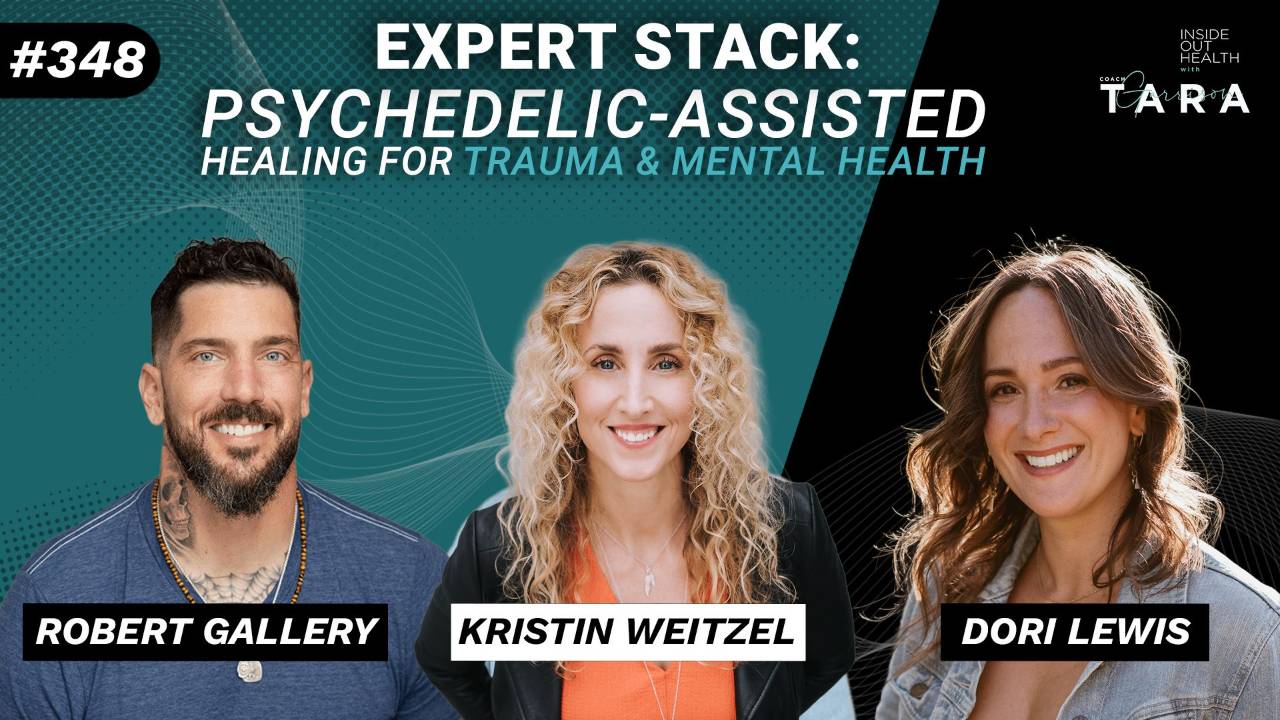


In this episode, three guests — NFL veteran Robert Gallery, nervous system coach Kristin Weitzel, and psychedelic therapist Dori Lewis — share how Ibogaine, 5-MeO-DMT, and mushroom medicine helped them reach trauma that talk therapy, willpower, and every tool they already had couldn't touch on their own.
Robert Gallery is a former professional football player and a 2023 College Football Hall of Fame inductee. Following his professional career, Gallery experienced mental health challenges associated with repeated head injuries and alcohol dependency. Ibogaine treatment was a significant part of his personal recovery. He co-founded Athletes for Care to support other athletes navigating similar post-career challenges and to advocate for research and awareness around athlete mental health.
Kristin Weitzel is a force of nature: a master of both strategic brilliance and soulful transformation. With two decades of experience building Fortune 500 brands—she’s helmed multi-million-dollar campaigns and orchestrated world-class consumer experiences. But her deepest work began when she turned her experiential mastery inward, applying the same curiosity, drive, and devotion to the human experience. Now, as an expert who speaks on global stages, the founder of SHERPA Breath & Cold, and host of the WELLPOWER Podcast, Kristin has become a trusted leader in health optimization, nervous system regulation, and biohacking.
Dori Lewis is a licensed psychotherapist, clinical supervisor, and co-founder of Elemental Psychedelics. She is also the owner of Reflective Healing Center in Fort Collins, Colorado, a psychotherapy group practice and licensed healing center specializing in psychedelic-assisted therapy, including ketamine and psilocybin, as well as integration therapy and transpersonal psychotherapy. Dori is a licensed Natural Medicine Clinical Facilitator in Colorado and serves as a clinical consultant in mushroom medicine work.
RESOURCES:
- Learn more about Robert Gallery here: https://athletesforcare.org/
- Instagram: @athletes4care
- Watch the full episode with Robert here: https://www.taragarrison.com/blog/robertgallery
- Learn more about Kristin Weitzel here: http://sherpabreathandcold.com and here: https://www.wellpower.life/
- Instagram: @kristinweitzelofficial
- Watch the full episode with Kristin here: https://www.taragarrison.com/blog/kristinweitzel
- Learn more about Dori here: https://www.
elementalpsychedelics.com/ - Watch the full episode with Dori here: https://www.taragarrison.com/blog/dorilewis
CHAPTERS:
00:00 – Welcome: the psychedelic healing expert stack
00:49 – Meet the three guests: Robert, Kristin & Dori
03:52 – Robert's first Ibogaine trip
06:47 – 5-MeO-DMT: meeting God and ego death
09:13 – Relapse and the motorcycle death vision
11:57 – A third Ibogaine trip: healing through growth
13:07 – Brain scans: why SPECT missed the healing
14:54 – MDMA research and reconciling with the Raiders
18:19 – Kristin's breakup, collapse, and suicidal ideation
20:01 – Why having "all the tools" wasn't enough
22:06 – Fawn response and the courage to try something new
24:41 – IFS, shadow work, and the body speaking first
28:35 – Dori's first mushroom trip and psychotic break
30:14 – MDMA, LSD, and years of recreational exploration
31:29 – Why psychedelics need real guidance
34:41 – Reconnecting with mushrooms through ceremony
36:22 – From underground healer to Reflective Healing Center
40:38 – Integration beats "take a pill, it's fixed"
42:04 – Working with a "third": respecting the medicine
WORK WITH TARA:
Are You Looking for Help on Your Wellness Journey? Here's how Tara can help you:
- CHECK OUT HIGHER FITNESS APP: https://app.taragarrison.com/
- INDIVIDUAL ONLINE COACHING: https://www.taragarrison.com/work-with-me
- CHECK OUT HIGHER RETREATS: https://www.taragarrison.com/retreats
SOCIAL MEDIA:
- Instagram @coachtaragarrison
- TikTok @coachtaragarrison
- Facebook @coachtaragarrison
- Pinterest @coachtaragarrison
INSIDE OUT HEALTH PODCAST SPECIAL OFFERS:
☑️ Upgraded Formulas Hair Test Kit Special Offer: https://bit.ly/3YdMn4Z
☑️ Upgraded Formulas - Get 15% OFF Everything with Coupon Code INSIDEOUT15: https://upgradedformulas.com/
☑️ Rep Provisions: Vote for the future of food with your dollar! And enjoy a 15% discount while you're at it with Coupon Code COACHTARA: https://bit.ly/3dD4ZSv
If you loved this episode, please leave a review!
Here’s how to do it on Apple Podcasts:
- Go to Inside Out Health Podcast page: https://podcasts.apple.com/us/podcast/inside-out-health-with-coach-tara-garrison/id1468368093
- Scroll down to the ‘Ratings & Reviews’ section. Tap ‘Write a Review’ (you may be prompted to log in with your Apple ID). Thank you!
EPISODE TRANSCRIPT:
Today's episode is an expert stack on one of my favorite topics, and that is the power of psychedelics for transformation and healing. Um, I, I think, like a lot of people who have a lot of psychedelic experience, I have growing concern
as they have become more popular. Um, and I think that there is a lot of education needed. I do not think that psychedelics or, are appropriate or safe for everyone. Um, but for the people who they are, they are one of the most powerful tools that I know of.
And so today I'm bringing you three different guests, and I want you to hear their perspectives, uh, from what they've experienced in their lives as a result of psychedelics and also, um, some education around them. So, uh, that first you're gonna hear from Robert Gallery. He's a retired NFL player, and he's gonna describe his experiences with ibogaine and 5-MeO-DMT.
Um, that includes confronting his own self-hatred, experiencing what it felt like, what felt like meeting God to him, um, witnessing a vision of his own death that permanently changed his relationship with relapse. Really powerful episode. If you missed that one, um, you'll hear, uh, if you listen to this, you might wanna go listen to the whole thing.
Then we're gonna hear from Kristen Weitzel, and she shares why having all the knowledge and wellness tools uh, still wasn't enough to pull her through a personal collapse. And I love it because Kristen is, you know, a, um, nervous system regulation expert. You know, she's deeply entrenched in mindset and wellness and all of the things that create a better life.
But she explains how psychedelic therapy, internal family systems, which is a therapy modality that I'm a huge fan of, um, and also shadow work and understanding your body's survival responses, it helped her access healing that she could not just think her way into. And that's one of the things with psychedelics, is that there are things going on inside of us that are gonna be really, really hard for our conscious mind to reach, and that's where psychedelics come in, but we need trained facilitators, we need education.
And so, um, that leads us to our final expert on this expert stack, and that is Dori Lewis. Um, she's gonna take us through her evolution from an early frightening psychedelic experience, and even a psychotic break, okay? To developing an intentional ceremonial practice and eventually founding a licensed healing center.
Um, Dori is kind of a OG in this space. Uh, if you've heard of the, uh, studies that the clinical research trials that MAPS, which is the Multidisciplinary Association for Psychedelic Studies, um, did with MDMA and treatment-resistant veterans with PTSD, she was one of the therapists that was in those clinical trials.
So she has a lot of background here, and of course, she runs a legal psilocybin, which is mushrooms, uh, center in Colorado, and she also trains people. She has a certification on training people to lead these experiences. So she has a lot of experience and wisdom to share, and she is gonna share in this expert stack something that I really hope you guys will hear, and it's perspective that these medicines don't just fix us.
It's... The healing is a co-creative process. So, um, I hope you guys enjoy. I,
I hope that if this is something that's feeling in alignment for you, that you do a lot of research and hear a lot of perspectives and really seek out people who you trust
really trust, and, um, who are really educated and experienced in the space. All right. Let's go ahead and get into it. We are getting all into psychedelic-assisted healing for trauma and mental health. What, what did you experience in ibogaine that you feel was such a game-changer for you?
Well, I, I think for me, you know, obviously at this time, this was 2021, uh, when I first went. I've, I've gone multiple times. I've, I've done ibogaine three times.
Okay
but in 2021 was my first time with, you know, drastic change.
and so going through it, you know, for me it was, right, 'cause I had so much self-hatred towards myself 'cause of my, you know, what, uh, things I thought as failures, whether that was my career, whether it was being a husband, all these things I had just, I had zero love for myself.
and going through ibogaine, right, it was like a movie floating in the, in the universe, and all of a sudden I'm watching, I'm watching this reel, like an old TV screen go by, and I'm just floating up there watching it. And it's, and it's things in my life, right?
Whether good or bad. And, you know, there's things as, you know, part of my career, things I thought as failures, right? Um, did all these things, but everything I thought about was failure. "Oh, you're a failure. You're a failure." All the, in everything I did. And so I'm watching these things, and I'm, I'm grabbing them out of the, out of the sky, and then I...
You know, the bad things that are, that I didn't like, I'd throw out in the universe, and they'd just fly off and go away.
And, and then there's other things that I enjoyed, and I'd grab them and throw them towards my heart. So I remember doing this for
Mm-hmm
or it seemed like hours.
Mm.
And I'm sure it was. Uh, and it, I just, the load got uh, lighter and lighter as time went on. I remember that feeling, like oh, right? Like I, I... It's not as heavy, right? My, my for myself isn't as heavy. And so that was a big part of my first ibogaine experience and, and a lot of them, you know, all, all three of them, especially the first two.
Uh, and just remember seeing that and going through it. And then for me, you know, waking up the next morning, uh, or coming, coming to after the 10 to 12 hours of, of going through this, you know, in that moment I was very sick, very nauseous. Um, I didn't purge during the ibogaine, but I woke up instantly nauseous. throwing up and felt like death. And so, you know, I was, I felt so bad that I couldn't think of, you know, what happened in my, in my trip, right? I Mm I tried to get up and go to the bathroom. My legs wouldn't work, right? So now I'm like, "I messed this up too," right?
There was, there was a short instance where I'm like, "I screwed this up too." And now I'm, you know, now I can't walk. Literally they put me in a wheelchair to go to the restroom because I couldn't get my legs working. And so, you know, went back to a little bit of not noticing what went on, but then as the day went on, I got feeling a little better.
The,
the visions came back to me of what I saw, so I'm journaling.
Get to through that day, get to the next day, that's when we do 5-MeO-DMT. Uh, and so I still didn't feel great, didn't feel super clear just 'cause I felt so nauseous and sick. Well, then we do 5-MeO-DMT, and it's a short trip. You smoke it. Uh, and so, uh, you know, again, now I'm scared again 'cause, like, they're saying you go see God, you do these things.
And I'm like, "Yeah, I lived through that last night, but the, you know, now this." And so do the 5-MeO-DMT, and for me that experience and that first one was I, I died, like a lot of people do experience death. You know, was a peaceful death. I remember for me, I went to the white light, right?
I went to saw my God, what I... You know, was born and raised Catholic, so what, what my vision of, of religion is and dying. And, and then I remember going to that white light, and then all of a sudden, you know, you know, God appeared or, you know, how I picture God appeared.
And I I was like, "Oh man, I'm, I get to go to heaven," right? I remember like, uh, this is I'm, you know? I, I remember thinking about my family and kids and I'm like, "Well, I came down here and I killed myself." Like, but this is peaceful and this is what it's supposed to be.
Well, then as I talk to Him, I'm angry. I'm screaming at God and you know, telling Him I'm a failure, I'm a terrible husband, and, and to send me to hell. And so I Mm vivid. And then He said, "You need to talk to her." My wife appeared from behind Him, and I'm saying the same thing to her, uh, and screaming at her.
And then all of a sudden this burden, this, the weight was lifted and, you know, I later figured out it was, like, my ego. Like, it, my ego released, and I was so happy to be alive. I felt like I belonged there. Uh,
Wow then I, then I woke up, uh, came, came to out of it. And I remember being everything, when I opened my eyes, being so crystal clear. Uh, I remember just, like, my eyes were wide open. I could hear the grass rustling. I could hear the ocean a couple miles away, and thinking, "Oh man, I'm, I'm not dead," like touching my arms.
And then I just remember the intensity of everything, the brain fog. It's like the, the breaker got turned back on. So Ibogaine beat me down, defragged, did all these things, and literally that 20-minute 5-MeO journey, I mean, the breaker came back on full power. And I, I remember just sitting up, and I was just energized and, and I walked back in the house and, and the other guys are, you know, had and they, and they're looking at me and I'm like, "I'm back," you know?
And it was Mm I could hear everything. My, my thought process, the brain fog was gone. I felt so crystal clear on my thought process and that stuck with me for a very long time after that initial experience. and so, you know, other experiences were similar. I'd gotten after that first time, after about a year, I'd gotten back into some negative, um, negative thoughts.
Mm-hmm you know, and then two years from my first experience, I went back. I'd gotten, you know, not, not where I was previously, but pretty bad. Again, I was, I, you know, that Christmas, uh, my parents were out and I took my son to get a haircut, you know, sitting in the truck with my parents, and they knew I was struggling.
I said, "I'm trying. I'm doing the best I can. Um, but if I mess up and kill myself, you guys were great parents. Like, it's nothing you did." Mm. Like, I, this, I know what's causing this, right? I'm, you know, I've reverted back to some of the, the thoughts and feelings, and so I'm gonna go do Ibogaine again.
Um, but I, I'm sorry if I mess up. Uh, and so went back, did Ibogaine. Very similar experience with Ibogaine. Uh, and then to me the most,
uh, one of most impactful things was my second 5-MeO journey. Um, you know, I went, I died again and I saw that I killed myself. Mm. So I lived this and, and it wasn't, you know, it wasn't suicide as, you know, with, with a, with a gun. It was I had gotten back into the rage stuff to where I'd get on my Harley and drive, you know, 90 in a 35 weaving through cars just trying to make the noise go away or get my, get in our car and go as fast as I could just to see if I'd make it around the corner, and then I'd snap out of it and be like, "What am I doing?" Mm.
And so I killed myself, um, saw that I killed myself on my motorcycle, uh, by doing this, and then I saw what it did to my family. and to this point, I kinda believed that they were still better off without me, had gotten back to that thought process, and I saw how it destroyed their lives.
I everything it did to them that I was gone.
And so I'm watching this. Well, then in real time I started throwing up. So I started to get sick. So I come out of the trip, you know, not completely out of it, and I think I'm dead. So I'm laying on the ground and I start raging and screaming and I'm like, "I F'd up and, you know, fucked up and killed myself," and call my wife.
My, uh, therapist was there, and I grabbed her arm and I'm like, "Call Becca. Tell her I'm sorry. I messed up their lives." So I'm, in the moment I think I'm dead, uh, Wow I just raged for, like, 20 minutes
and finally got settled down, uh, but it impacted me so much that I, I kept asking even days and weeks later like, "You guys, did you revive me? Did, did I really die?" And they're like, "No, you something, something in you died, um, But that moment never left me.
Any
Mm
you know, any negative thought comes in or, you know, sadness or whatever, like, uh, I know I'm better off here, uh, with my family in my worst
Mm
than being gone, and I didn't believe that for a very long time. And so, you know, going through that, uh, that still stuck the new... It's a new thought process. And then, you know, at that point in 2023, my second time, I was, you know, I was scared that I'd revert again, so we booked before we left for the next year.
Uh, couple of guys I went with, we said, "We're guys that need it every year." But then 2024 came. Um, I went, but it was for growth. Like, I had, I'd been doing great, right? Thought process, the negative stuff didn't come back, but I'm like, "This is, you know, now all the research is out on Ibogaine." I'm like, "This, it's not gonna hurt me," right?
I
Mm-hmm
heal my brain, work on the things I need to, so I, I did it for the third time in 2024.
Uh, and was, it was all growth. Uh, there was nothing negative going into it. I went down there in a good place, and, and so since then it's been, uh, very similar like that. I, you know, I work my, work my tail off to stay like I am, right?
And that's a lot of what I've learned through this process is the, the tools that I've picked up. You know, I was always very dialed and I ate good, but I mean, it took it to a new level. The focus is there, and so just it's given me my life back and, and my family back and, and I'm a, you know, now a functioning husband, human being that...
You know, I couldn't handle taking the kids to soccer practice and doing those things or I'd get lost. and so, uh, fixing all those things, it's just been a miraculous journey.
Wow. I'm so curious if you've had another brain scan, like the same one that you got before you did Ibogaine.
I have. Uh, the, the problem we found out... So I did a SPECT scan, which is good.
Oh, okay.
My initial one was a SPECT scan, which is good for surface area. It's not as in-depth as an fMRI.
Yeah.
So you can't... We found out. So I went back. It took, you know, three, three or four years, uh, 'cause I didn't want... You know, it's like I know I feel better. I don't care what the scan says.
Mm-hmm.
But I did it. Um, and then I was, you know, disappointed because it didn't show much improvement on the SPECT scan. And then, so I talked some the top neurologists in the, in the country, and they're like, "Well, we're, we're learning that, you know, a SPECT scan is not great for seeing recovery," right?
Yeah, still some of the surface area doesn't have a lot, you know, electricity or blood flow, um, but where we see the growth and where Stanford did the study is the fMRI, so they're
Yeah
the new neural pathways and the white brain matter. And so long story
are.
I did the wrong scan. Yeah. And so I know there was healing, but yes, there was
five minutes after that other scan came through, then I'm like, "What, so this is all not real? I'm not healed? You know, I haven't had any healing?" But it's, they're like, "No, it's the, the type of scan." "We, we don't completely understand it, but it doesn't show it because there's actually less inflammation in your brain, so it's not showing as much
Mm-hmm
light on the scan." So,
Mm-hmm
unfortunately, uh, I didn't do an fMRI to start with, but,
Mm-hmm
I do wanna do one at some point,
Mm-hmm
just, just to see where I'm at. Obviously, I don't have a baseline to go against, but, uh, that's kind of the story on that.
Okay, yeah. Yeah, well, 'cause, like, listening to this, I, I have not looked into yet the you're saying there is some fMRI research with before and after.
Yeah.
'Cause, like, so much, I hear this also with, you know, we had, uh, an episode a few weeks ago, um, with a woman who, um, was, she was part, one of the therapists in the MAPS clinical trials for the
Mm
with treatment-resistant PTSD with MDMA,
and so I was so curious to ask her about that. And she was like, actually, like, most of the healing that they went through had nothing to do with their time in the military. It was early childhood attachment stuff. And, and, and, and just kind of hearing this too, like,
I, I am curious to see what's happening on the actual, like, physical matter manifestation part, but what I'm hearing from you too is, like, so much of this was your mental emotional relationship with yourself. Now, it's interesting to see, like, I, it makes, I love, this is, like, my favorite thing.
mean, this is why I do health and mindset coaching 'cause it's like, wow, okay, so how does that, you know... Okay, you have these traumas physically to your brain, maybe matched with some, you know, not super great belief patterns or whatever, but obviously those physical traumas were enough to create, like, severe emotional dysregulation.
You couldn't remember your daughter's name, I think I heard you say. You know, the where am I, all this kind of CTE type stuff. I don't even know where I'm going. I don't, who you know. Those are obviously, like, brain, the brain is not connecting, but I also find it fascinating.
I mean, I highly doubt that your brain just completely regenerated, you know, overnight.
But it's fascinating to me that the, the changing that relationship with yourself and how you were seeing yourself and how you're integrating with life, and by the way, it makes a lot of sense that if it's that bad, that you might need another, you know, you're gonna integrate some, but you're not gonna be overnight integrating all these new patterns.
You might need another, you know, dive in and, and, and continue integrating, et cetera. But it's fascinating to me that you could feel so much tremendously better through the mental emotional aspect of things and not just purely, okay, we just gotta, like, you know, be super Newtonian physics here and just, like, fix the actual matter.
Yeah, that's
For sure And, part of that, I mean, it's the, you know, part, another part of my story, the week before I went,
uh, for that first Ibogaine experience, uh, there was a new, the Raiders hired a new alumni director, and she reached out. And I was obviously in a bad place 'cause I was going off of all my meds, but I, you know, to that point I had not watched football.
I had not talked to anyone. I had not gone to any alumni things. I hated it. I mean, it triggered me to see it on the TV, and I hated everything about it, uh, and it brought up all these emotions. And she called and I, and She called a couple times, and I ended up taking the call, and I cussed her out.
I said, "Don't ever call me. You're checking the box. You don't have to check the box for me. I know you're the new alumni director. Like, you guys don't care," right? "So I mean it with res-" You know, I said, "I mean it with respect, all due respect, but don't ever call me again.
Like, you've checked your box, you know, tell your bosses," you know.
Mm-hmm
so then I get home, and the week I got home from, from Ibogaine, I mean, I still had the voicemail, uh, uh, from when she had called before, and it was. It was just that part of it. I called her back, and we had a great, like, hour-long conversation.
Uh, I was actually proud to be, you know, an alumni, an NFL alumni, and there's so many instances like that, that it
Wow.
Years ago, I, I used to say on another podcast back in the day, Tara, I was like, "I don't really have, like, this mess-to-masterpiece story. Like, I feel really blessed and whatever." And then a couple years ago, I went through a really, um, what was gnarly for me, a, a breakup that just...
I had a response in very deep grief.
I had anxiety like I'd never experienced in my life. And from a place of sort of when my clients were showing up saying, "I have crippling anxiety," I understood from a textbook standpoint and a knowledge base what that meant, but I'd never really understood the experience in my body.
And so I think a lot of my father's death and other things as they do attach to a loss of a male figure in your life, I really had to start processing some of my hypervigilance, some of the ways I was sort of disappearing myself as a woman into romantic relationships, into business partnerships and all.
And I wasn't sure if I was gonna get through that. Like, I was so anxious and depressed and not able to get out of bed, and my friends had, like, a group text around checking in on me, like, just from suicidal ideation, and it was gnarly. And I, I'm so blessed to have the community and the group of people, like including people like you or, like, coaches and friends around, and just knowing that I
could maybe find my way through. And what helped me really find my way through was I was suggested by, um, uh, Mark Groves and a couple other key podcasters in the world, "Hey, I see that you're doing all this amazing work, but I know behind closed doors you're like, you're having a tough time surviving.
And I really wanna stress to you that maybe using some psychedelic therapy might be the answer." And I was a little resistant. Some, you know, I've been to festivals in my life and partied my own chair, but I was like, "Mm, I don't know," and, and I think a little resistant and, and scared of it even.
And then I just, um, decided to lean in because I didn't know what other I, I have all the tools. I'm a nervous system coach. I have breathwork. have cold exposure. I have, you know, trauma training. have everything, and couldn't get there. And then, um, used some psychedelic therapy, a couple instances of, instances of it, and a lot of integration to really
bridge the gap on the woman that I was and the woman that I know that I can be, the woman I've always been, right? This whole process, I think, of getting healthy is really about remembering who we always were, and at the deepest core of our programming and our deepest belief sets, really looking at what we believe about ourselves and then saying, "Oh my God.
Look at what I've been telling myself for 25 years or whatever."
Mm-hmm.
"And how do I shift the state to, like, what my higher self actually knows she can do and who she can be and, and give myself the credit of being human," right?
Mm-hmm.
And not having to produce something to have people love you, which is, like, really the essential nature of human beings is, like, we're all worthy of love. So it's a bit of a long story, but those couple of components together really impassion me in, in doing the work with the people that I do in a very one-on-one, um, customized fashion because everybody's a different, got a different version of their own story.
Mm-hmm. Wow.
Yeah.
Thanks for sharing that.
Mm-hmm.
I think you hit on something, like, so huge. Um, I mean, a lot of things, but
one being that, like, you know, uh, we, we often feel like that. Like, I have all these tools, and, and what we don't know, I think... I, always tease, like, my new clients 'cause they'll say, "I know what I need to do. I just need to do it." I'm like, "No, you don't."
what, what, what's coming your way you cannot even fathom right now. It is so foreign
what is about to happen here.
Mm-hmm.
and I'm sure your clients can relate. And, like, that's, you know, as my listeners know, psychedelics have been a huge part of my own transformation journey and, like, to the point that, like, I mean, many times, like, I can't even talk about them without crying because I just have so much gratitude.
There was... I had just... You probably don't even know this. I had a very pretty tumultuous childhood and a single mom with schizophrenia and just all kinds of trauma and all that, and, you know, when hardcore fawn response, you know, the disappearing as a woman. I mean, 100 million percent, which I would say most women, uh, are somewhere on that line through cultural conditioning, and then you add a bunch of trauma and that fawn response.
Man, it just gets intense.
Yeah
um, I think that
often, like, we,
we like as humans to think that we have it figured out, right? That makes us feel really good. Like, we, we... It makes us feel in control, that we, we know the way. We have found the best way to live, and especially when we already have found some really cool tools, right?
Like, you had a lot. And then this little gift comes about, and it takes courage, right? It takes courage. It takes letting go of preconceived. You're like, "Eh, I've, I've done the raves and stuff." "I don't know," you know? And so we have to... It takes so much courage to let go of that and the, like, I already have everything that I need and I, because you do have, you did have a lot, right?
But, like, being open to these different new things and being curious enough, as you said, that you have, which I think is one of the critical qualities to, um, living life at a level that you didn't know was possible is being curious, um, that this new thing came in, and now that's allowed you to deepen the work that you're doing.
But I appreciate you highlighting that fact, that even with trauma training and nervous system regulation training and all, you know, the cold and the breath and the eating healthy and it, all whatever mindset work you've done, which I'm sure has been a tremendous amount,
there's always, like, new little gifts that pop in our way. And it's cool that you're embodying that because that's also what you're doing every day is introducing these gifts to other people.
Yeah, like learning to speak about them in a way that's, like, where the woo meets the science and, like, that
Mm-hmm
just so much groundedness and reverence for... It's not even just, like, I can take people to a pretty deep place using breathwork standalone. It doesn't have to
Mm-hmm
some
Mm-hmm
people are reticent against it. But there's, like, at a deeper level even, it, it's like, I think what I didn't see was, and what I would, like, just lean into listeners to who, who are, people who are listening right now to to to see or to, to explore in themselves is, like, I, what I wasn't doing was, like, what you might call in the world, like, shadow work, which is always like, "Get your shadow work on," and I was like, "Okay, I, shadow work.
Okay, I get it." Like, but
Mm-hmm
didn't. didn't because I was a life that was, like, fully robust in all of my default patterns and, and I, I say
Mm-hmm
to clients all the time. Every part of us... So I work a lot through the IFS, um, Schwartz lens, like internal family systems, and it's helpful to me because it, we can pick out parts of our lives and ages and people and versions of ourselves that are still, again, part of our overall psyche, and it's like every part of us...
You know, you hear people say, "I wanna get rid of this part. don't like this part," and that's the problem, right? The more we push it away, the more it shows up and screams and hollers and says, "I want attention." So it's like how do we integrate these parts?
And every part of us has, like, a superpower, right?
Mm-hmm.
My hypervigilance made me one of the best event producers,
Mm-hmm
executors, knowing my clients' information without having to keep copious notes, just keeping moderate notes and really understanding. I could track every single thing that's going on in their nervous system, in their story, in everything, and know how to adhere principles to help them heal themselves and get healthier and fitter, right?
And that's a
Mm-hmm
superpower, but that hypervigilance was also something that was never letting me
Mm
and never letting me me have stillness, and there's a shadow in there that I have to unpack to understand, you know, that, that these parts have both sides. And, and we have to see both sides so that we can see the way through and the way forward
Mm-hmm
and understand how we as these humans right now get to drive the bus forward of our lives, right? Versus, like, the 11-year-old version of me that's, like, Chrissy that's still trying to, like, get my dad to show up to the recital instead of just sending flowers or, you know, whatever the thing is, right?
Trying to behave in
Mm-hmm
specific certain good girl way in order to be able to, um, gain attention, love, and favor, proving myself, right? My value lives in what I do for you, not just who I am and how I show up, right? These are all parts of me that I've
Wow
and I, I say them not because my story matters, but because everybody... There'll be somebody listening who's like, "Oh, I do that." "Oh, I do that."
Mm-hmm. Mm-hmm.
And those things aren't bad. There's no bad or good. This is just, like, an awareness that we get to capture around them because this is... When we talk about change being made in our bodies, this is where the core programming comes in. Brains are funny. Brains want to be right.
Our brain is
Mm-hmm
"When you were 16, this thing happened. Someone packed a suitcase and left, and you were abandoned, and we're gonna make you... We know that you'd be a victim, so when this happens again, if someone packs a suitcase and walks out the door, even if it's just for a weekend trip and they love you and they're fine, your nervous system's gonna be like, 'I have separation anxiety.
I have...' And these are all just examples. Whatever, but, but our brain wants to be right, and we have to give it permission, and maybe we would call it neuroplasticity or metaplasticity or whatever we're gonna call it these days. We have to give it the capacity to reduce its fear enough to sit in a space of wondering could there be another solution?
And that's really hard to do at talk therapy, and it's really hard to do if you
Yeah
unpack some shadows or get into some self-awareness work.
Yeah.
And it's a lifelong process. Like
Mm-hmm
anybody gonna be perfect at it, you know?
Mm-hmm. Mm-hmm.
I feel like that's just, like, important for to share with listeners is, like, there is work to be done that's sort of this really subtle work and somatic work.
Mm-hmm.
And certainly in the last year I've gone through this huge certification program with my mentor with, like, a, around pharmacology and around, um, MDMA and IFS parts work and therapy and psilocybin and like understanding the landscape so that I can work with people in a safe, embodied way, and knowing the craziest part of the whole thing is, like, our vagus nerve and our nervous system is really going from our body to speak to our brain.
It's our thoughts that... We think we're thinking our way out of shit. It's the thoughts that come last.
Mm-hmm.
It's the body that comes first. And most of the time, right?
100%.
And we're so blind to that.
Okay, so now let's give mushrooms the stage for a minute. Um, can you share a little bit of your relationship with mushrooms and what brought you here?
Yeah.
I have been a psychonaut since I was about 16, and um, the first psychedelic I did was mushrooms, and they scared the shit out of me.
As they do in the beginning.
and I was young and did not, you know, set and
Right
was just not a thing, right? Um, you know, this was over 20 years ago.
Mm-hmm.
And, you know, you'd think that I wanted to stay away from them. But I was just so curious, so, um, I continued to messily explore my relationship with them in, um, uh, you know, unsupported environments, and decided after a few tries to
pause. Um, and because I had actually, like, some had a psychotic break or a like, a dissociative experience on a high dose of mushrooms in my 20s that
Mm
rocked me. And I was just terrified. Um, it was just really,
really, uh, destabilizing for me.
A quick question. Was it only during the experience, or you
That's right
Okay.
Uh, and then it was afterward, I was, um, just not myself and
Okay
disorganized, and fell into a bit of a depression, and was
Wow
not, not well. Um, so I took a break,
Wow
then MDMA really helped. Uh, had an MDMA LSD and MDMA experience. This is all in the recreational space.
Right.
And that actually helped really consolidate some things and kind of help me move out of some of the darkness that, um, had kind of consumed me after that experience. So, um, was really... Then I was like, "LSD is the best, and
Right
so fun." So, you
Right
went down a bit of a rabbit hole for a while. you know, I don't know how, but I was... I did really well in college, I did really well in graduate school, and I was also just really interested in exploring my consciousness.
Right.
And recreation was the only way that I knew at that time. There wasn't research really happening, not that I knew of, you know, maybe in California, but I was in New York at the time, in the East Coast, Pennsylvania, New York.
Mm-hmm
there was really just people, you know, messing around and finding out.
Right
that's what I was doing. I was just, "How do I explore my consciousness?" And I was at the same time taking, like, philosophy and religion courses at my, my
Mm-hmm
just really deepening into a lot of questions and a lot of, um, yeah, spiritual inquiry
Mm-hmm
philosophical inquiry.
Which, by the way, just to interject real quick, is currently still happening at scale. You know, it's funny, like, once you kinda, like, enter a world, like, you know, you're like... People are like, "What? These are drugs." And it's like, dude, you have no idea how many people are...
You're like, pretty much any successful circle I go into, everyone uses psychedelics, or not even success circles, just people who are into exploring consciousness. They're curious, you know? And this is currently happening at scale, and has been for quite a while, and I just wanna interject, that's part of the reason I am so happy that there are people like you doing what you're doing, because pretty much all of us have had an experience where the, we're like, "Hey, guys, let's all go do mushrooms," and then somebody has a really, really negative experience, and you learn, "Maybe I shouldn't be doing that with people."
Yes. Yeah.
Maybe people should go to... Not everyone is a good candidate to find out this way that that wasn't gonna be a good thing for them, you know? Like, kinda like you.
That's right.
You know?
Yeah. Yeah.
So anyway, just sharing for anybody who's like, "This is, like, foreign soil." Like, this is...
Lots and lots and lots and lots and lots of people are doing this, and without proper guidance and education, like, all of these kind of, like, negative, harmful... I'm not saying they're, they happen all the time, but they do happen, and they don't necessarily, like, have to happen at the level that they do.
There's lots of us, I've only ever had beautiful mushroom experiences. haven't saying, I'm not saying I haven't had my ass handed to me a bunch of times. But it, uh, not a psychotic break where I'm, like, dissociated and terrified and stuff like that. But that does happen. So I'm just saying I'm grateful that there are...
We need this, and we've needed this for a while, because lots of people are doing it anyway.
Yes. Yes.
Yeah. Okay.
So, um,
I continued to kind of explore psychedelics in a recreational music scene. A lot of music was part of this for me, so, you know, I was, uh, yeah, very into the jam band scene and then into some underground electronic music in New York and Brooklyn, and so I was really experimenting with music and, um, and drugs.
I don't, I, I wanna be specific. They're drugs. Um, you know, I don't want to elevate this to I was doing medicine work.
Right.
I was exploring my consciousness with drugs in, in kind of less contained set and settings, and
Right
wanna name that there's, I don't have a hierarchy in my mind that one of those is better than the other.
Right
I think drugs are an important part of culture and subculture, and I think, um, psychedelic exceptionalism is a problem. So I'll just, we'll leave that there.
Ooh
but, but calling them, you know, medicines, it's, it's really contextual, and it's how we
exactly
use them, and I was using them as drugs, and I
Right
no judgment of people who use drugs.
Yeah. Totally.
Um, drugs are, in my opinion, um, that is, that, those are attempts to explore or, or care for, or manage feelings inside that we don't have other resources for.
I love that.
Um, so just to destigmatize, like, substance use in that way.
That's awesome.
Yeah.
love that
and so then I would say,
you know, kind of speeding up, uh, finished my master's program, started working as a clinician, Moved out to Colorado, kind of in and out of psychedelic work, and then I was reintroduced to mushrooms in a ceremonial context through my work with ayahuasca and mushrooms concurrently in communal ceremony, and was reconnected to that medicine in a way that was very different.
And I realized, wow, set and setting. I mean, this medicine was like, "This is what I've been waiting for." Like, "This is why I handed your ass to you. You weren't respecting me, and you weren't treating me like the sacred medicine that I am to you," right? This is my relationship with mushrooms.
Mm-hmm.
I just wanna name that. My relationship with mushrooms is me... is personal. And that's not to say that everyone has to use mushrooms in the way that I use
Mm-hmm
and that my way is not better than others. This is my relationship. And so my relationship with mushrooms was that the medicine was like, "You need to hold me in this very specific way intentionally in, in a ceremonial spiritual container because that's what I'm here to do and work with you on." So that became my process.
I was sitting with ayahuasca, and then I was sitting with mushrooms, um, for a number of years and really deepening my relationship with the plant spirits, um, of those two medicines.
Mm-hmm.
And in that, um, time, I ended up doing a really deep body of work with mushrooms and working with them quite frequently for, I would say,
a five or six-year period of quite consistent, dedicated, relational, ceremonial practice. I didn't really know why. Um, and then at some point in my exploration, I had friends who showed up in my life who said, "Hey, we wanna try mushrooms. Would you hold space for us?"
And I thought,
you know, "Sure." Like, "I'm, I'm not gonna charge you anything. Like, you know, we're friends."
Mm-hmm.
"So of course I'll..." They were like, "You know what's up. Like, you've been doing this for a long time. You're a therapist. We trust you."
Mm-hmm.
So that started happening, and
Mm-hmm
their friends started being asked, you know, "Can Dorri sit?" And it just kind of kept being this invitation by my
No
that I started just saying yes to friends and friends of friends and then families of friends, and it just kinda kept happening to a point... And I wasn't charging any money. It wasn't my clients. It was just
Mm-hmm
my community in that way and doing trades like bring me... you know, bake me a loaf of bread or, you know, you know, bring me a plant or some rock that has meaning to you. Like, let's just, just bring some kind of offering, and then I'll do the space holding.
And so that's how I was doing it for a while, and then, um, I started to shift into underground work, um, when the need kind of just kept growing. I never went to seek this out. It was more it kept coming to my door. Uh, other therapists heard about me.
"Can you work with my client?" Medical doctors, "I've got this really tough case. I really don't know who to send them to. You have clinical experience and a ton of psychedelic experience."
Right.
please help?" So it just kept kind of coming to my doorstep, and I became, you know, you know, known in my community as somebody who could support people with pretty severe mental health needs who were at a point where the Western medical model was not... was in and of itself or alone not enough.
And so I was able to work with people who had pretty high level of mental health needs because of my background as a, uh, trauma therapist and somebody who had worked with severe mental health needs in community mental health in the beginning of my career. So my combination of skills was what the community really needed.
And I was... I, I answered the call,
and then over time, the unfolding of, you know, uh, Reflective Healing Center and Elemental, it just naturally...
It just was...
I had a mushroom journey where I had a sense of the question, like, what,
what,
what right do I have to be in this position? Like, who am I? Why me? And, and the medicine just said, "Why not you?" Or really the medicine, my, my inner guidance, "Why not you? When opportunity is here, you can have the choice to step up and into power or not, but it's available for you." So I felt this gentle support, and my m-my...
I will also add, I have a, I have, um, about four years ago, I started going down to Oaxaca, Mexico. I was invited by somebody and introduced to an, um, an elder, uh, who does mushroom work for her community in the mountains outside of Oaxaca, and I began visiting and spending time with her and her family and learning about, um, her perspective of mushroom medicine through sitting with her and just being in relationship with her.
So I do learn from somebody who is in a position of eldership in that part of the world and, uh, has been working with the mushrooms in a, in a more of an indigenous context. Um, so I do have that relationship as well. And now my relationship is I consider myself somebody who carries the medicine, meaning that I don't...
I, I do take it on occasion, although I don't really need to as much anymore because the wisdom and the, and the, the relationship is inside all the time.
Mm-hmm.
So it's really about integrating practices into my life that allow me to be in connection with that wisdom without needing to actually physically consume the medicine and to just stay in relationship with practices that center me in, um, accessing that consciousness that I have developed in that relationship
Mm-hmm
with the mushrooms.
Thank you for sharing that. You're, um, kind of perfectly teeing up, uh, something I wanted to ask you about. I was listening to you on, uh, my friend Lynn Marie's podcast. Lynn Marie has a, the Psychedelic Medicine podcast. Is
Yes. I love Lynn. She's great.
Yeah.
So, um, I heard you saying on there, like you were talking about the
And how people kind of, if, if you've grown up in a Western mindset of like, "Take Advil and your headache goes away," that sometimes that approach is how people, like, are thinking, understandably, honestly, if you've never done it before. Thinking, "Oh, I take this and this goes away. Done." And what you just described there on your journey was, like, the ultimate integration of these experiences, meaning, like, you easily could have had all these things come up and chose not to.
Like, you can be like, "No, no, I'm..." You don't have to listen. It's never gonna be forceful. It's just like, "Here. If, you know, this would be kind of cool, but it's up to you." And you chose to integrate the thing that came up. You chose to be like, "Okay.
Yeah, I will bring this into this physical world." Okay. Cool. Um, so with that example of integration that you just gave, can you describe a little bit what you, what you were saying on Lynn Marie's podcast about the mindsets going into a a mushroom journey specifically that people might need to be aware of?
Yeah. Well, first I wanna speak to, I've been doing mushrooms for 20 years,
and it's not something that I believe we do
Yeah
to get to, to build a relationship that can be supportive of our healing.
Mm-hmm.
I think that when we work with plant spirit medicines like mushrooms, we are working with... And my, my dear friend Micah Stover, who, um, is just a really skilled psychedelic therapist, talks about the idea that we're working with a third. It's like me
and the facilitator and then the, the consciousness of the plant spirit, and so there's like this, like, kind of triad going on.
Mm-hmm.
so the
honoring this third spirit as a consciousness and something that we build a relationship with over time is a different way of looking at healing, which is we don't just take mushrooms, our brain chemistry changes, we come out on the other side
fixed.
Mm-hmm.
Or it, it really ends up sometimes
being a
process of slowly taking layers away or exposing new information about who we are and what we need.
That can be a long, unfurling
Mm-hmm
can take time.
Mm-hmm.
your first journey might be learning to just journey with mushrooms, not even
Right
you know, what you are hoping to, uh, heal.
Right.
It's really oftentimes, like, "How do I navigate this terrain?"
Totally.
"And how do learn to speak this language?"
Right.
"And how do I begin to develop a relationship with this realm?"
And that over time, the more we sit with this medicine, and I say the words sit with because it's relational.
Mm-hmm.
So sitting with plant spirits is, the, the more I do that,
the more information about ways that I can heal myself are revealed through that relationship and that teaching, and then ultimately it's up to me to make those changes in my life. Or I could
Right
have, do mushrooms and have these peak experiences and feel a connection to God and oneness and the beauty of life, but that's gonna go away.
Yeah.
So you're gonna have to keep going to do more and more and more, and I don't think that, I, I don't think the medicine is, is often kind to someone who keeps going over and over again. Um, eventually, you know, the first time the message is a slap on the wrist.
The, the last time it's a hammer to the head. So it could
Mm-hmm
something that, you know, the trips become more difficult and more difficult because we're not integrating, we're not listening.
Mm-hmm.
And that's possible. I'm not saying that will happen.
Right.
You know, the other piece is that, you know, you, you're abusing it. It's not respectful to the plant, and it's not
Mm-hmm
to the consciousness that we're working with, which is to recognize I am a participant in this. I'm not some person laying back, "Do this to, like, fix me."
Right.
It's not surgery where someone's going in and doing that to you.
Right.
It, it's really what do I, what's my responsibility in listening to my own inner healing intelligence, my own wisdom, to listen to what's being shared with me, and to make space in my life to make changes? That's how this medicine works well, is if we're a
a co-creator with it.
Right. Thank you so much for joining me on this episode of the Inside Out Health podcast. I hope it's been helpful to you in your journey. If you think that it might be helpful to someone you know, please share it with them. Please share on social media. It really helps me grow the show and reach more people with these amazing messages.
And if you could be so kind as to rate the show and, um, possibly even leave me a review, that really helps. So, uh, much thanks in advance if you do that. And yeah, please subscribe if you wanna hear more of this type of content. I have lots of amazing expert guests on the way.
All right. Thank you.

Want One on One Coaching with Tara?
Click below to learn more about Tara's flagship 1:1 program HIGHER Coaching. Work directly with Tara on training, nutrition, personal development and biohacking!

Try Coach Tara App for 7 days FREE!
Learn how to train for results at home or in the gym, how to make easy, healthy recipes to achieve your goals faster, and explore the world with Tara as she helps spark shifts inside you to bring your best self out!
