Episode 332: ROBERT GALLERY From NFL Star to Rock Bottom: How Ibogaine Helped Him Heal
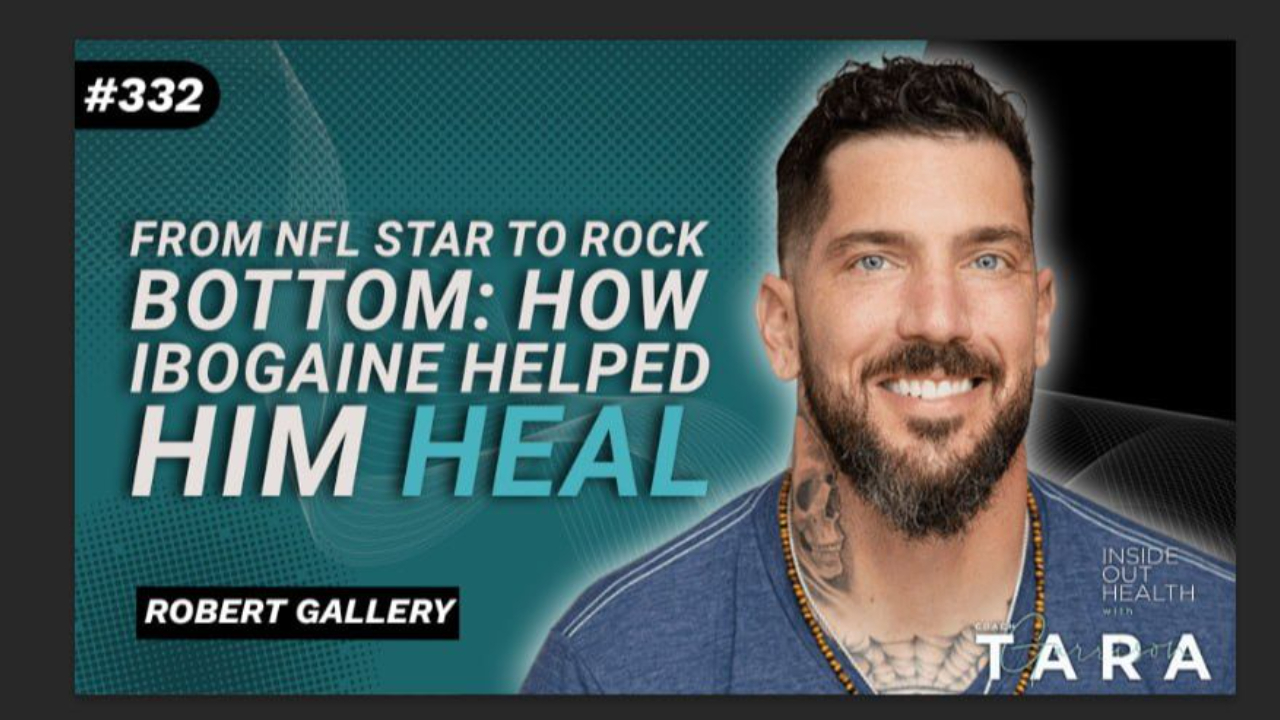


Robert Gallery is a former professional football player and a 2023 College Football Hall of Fame inductee. He played collegiate football at the University of Iowa, earning unanimous All-American honors and the 2003 Outland Trophy. Gallery was selected second overall in the 2004 NFL Draft and played eight seasons in the NFL with the Oakland Raiders and Seattle Seahawks.
Following his professional career, Gallery experienced mental health challenges associated with repeated head injuries and alcohol dependency. Ibogaine treatment was a significant part of his personal recovery. He co-founded Athletes for Care to support other athletes navigating similar post-career challenges and to advocate for research and awareness around athlete mental health.
In this episode, former NFL star Robert Gallery shares how severe CTE symptoms, failed conventional treatments, and suicidal despair led him to medically supervised ibogaine and 5‑MeO‑DMT therapy in Mexico, catalyzing profound neurological, emotional, and spiritual healing and inspiring his Athletes for Care advocacy work.
RESOURCES:
- Learn more about Robert Gallery here: https://athletesforcare.org/
- Instagram: @athletes4care
- Get 10% off Peluva minimalist shoe with coupon code COACHTARA here: http://peluva.com/coachtara
CHAPTERS:
00:00 – Intro
00:22 – Meet Robert Gallery + ibogaine turning point
02:09 – Sponsor: Peluva barefoot shoes
03:57 – Interview begins: welcoming Robert
06:04 – NFL career, injuries, and retirement crash
08:50 – Rage at home, brain fog, alcohol, suicidality
12:56 – CTE brain scan wake‑up call and protocols
15:21 – Hyperbaric, IVs, “fractionally better,” and despair
16:45 – Discovering VETS and hope for ibogaine
18:28 – Cold‑turkey off meds and heading to Mexico
19:43 – First ibogaine and 5‑MeO treatment in Mexico
25:11 – Inside the ibogaine journey: self‑hatred to self‑love
29:04 – 5‑MeO “death,” meeting God, and clear brain reboot
31:45 – Second and third journeys, seeing his own death
34:46 – Life rebuilt: present dad, tools, and daily work
34:53 – SPECT vs fMRI and what scans can’t show
36:31 – How ibogaine shifts self‑worth and emotional patterns
38:42 – Coming back to football, pride, and veterans’ trauma
40:42 – New thought patterns, white matter, and Stanford data
WORK WITH TARA:
Are You Looking for Help on Your Wellness Journey? Here's how Tara can help you:
- TRY TARA'S APP FOR FREE: http://taragarrison.com/app
- INDIVIDUAL ONLINE COACHING: https://www.taragarrison.com/work-with-me
- CHECK OUT HIGHER RETREATS: https://www.taragarrison.com/retreats
SOCIAL MEDIA:
- Instagram @coachtaragarrison
- TikTok @coachtaragarrison
- Facebook @coachtaragarrison
- Pinterest @coachtaragarrison
INSIDE OUT HEALTH PODCAST SPECIAL OFFERS:
☑️ Upgraded Formulas Hair Test Kit Special Offer: https://bit.ly/3YdMn4Z
☑️ Upgraded Formulas - Get 15% OFF Everything with Coupon Code INSIDEOUT15: https://upgradedformulas.com/
☑️ Rep Provisions: Vote for the future of food with your dollar! And enjoy a 15% discount while you're at it with Coupon Code COACHTARA: https://bit.ly/3dD4ZSv
If you loved this episode, please leave a review!
Here’s how to do it on Apple Podcasts:
- Go to Inside Out Health Podcast page: https://podcasts.apple.com/us/podcast/inside-out-health-with-coach-tara-garrison/id1468368093
- Scroll down to the ‘Ratings & Reviews’ section. Tap ‘Write a Review’ (you may be prompted to log in with your Apple ID). Thank you!
EPISODE TRANSCRIPT:
I have a really cool guest and powerful story for you guys today. My guest is Robert Gallery. If any of you are football fans, maybe you recognize his name. He's a former elite football player whose post-career life was nearly destroyed by the invisible injuries of repeated head trauma, brain fog, tinnitus, memory loss, uncontrollable rage, depression and anxiety, isolation, heavy drinking, and suicidal ideation.
He pursued every conventional option he could access, which he'll tell you about, and eventually credits medically supervised ibogaine-based treatment in Mexico as a major turning point. He now leads Athletes for Care, that's athletesforcare.org, uh, to help other athletes find support and advocate for evidence-based, medically supervised psychedelic-assisted therapy, uh, research, and access.
So, um, I know I've had a lot of episodes about psychedelics recently, so I guess we're going through our psychedelics era, but this one is so important. There's actually been a couple of documentaries come out, um, very recently on ibogaine-assisted therapy for veterans, and, um, Robert was actually able to go down with a group of vets and do this, and it just, like, was a massive turning point in his life.
Um, so he's gonna tell you all about that and what he experienced. Um, I am asking that if you know anybody who played sports and they're exhibiting a lot of these signs, or maybe there's other traumatic brain injury, or even without the TBI, possibly, you know, a lot of these symptoms, um, sound like someone you know, please send them this episode.
Um, we kind of get into it a little bit, but it's not just the TBI, you know what I mean? There's also, like, mental, emotional patterns and belief systems about self that exacerbate these things, and there is help available. And I consider this, like, life... potentially life-saving, you know?
As I was listening to Robert, I was just like, "I'm so glad he's here." Like, I'm so glad he made it, because not everyone does. So, um, yeah. Please share this with anybody that you think might benefit from it, and let's go ahead and get into it. Here is Robert Gallery.
Okay, before we get into the episode, I want to take a moment to tell you guys about Peluva Shoes. So here's what happened. So Mark Sisson, if you don't know Mark Sisson, you should know Mark Sisson, okay? Go look him up and start following Mark Sisson. Uh, Mark Sisson and also Brad Kearns, who have been on the...
He's been on the podcast, uh, a few times now, and Mark has also. They are, like, legendary OGs in the health and wellness industry. And, um, Mark, who also started Primal Kitchen, if you're familiar with that brand, um, has started Peluva Shoes. So Peluva means foot glove in Portuguese, and these are minimalist, zero-drop barefoot shoes, and they have that five-toe articulation.
I resisted trying these out for a long time because I thought they looked nerdy. I'm just being so real. Um, but after many times of Brad being like, "Dude, just try them. Just try them," I was like, "Okay, okay. I promise I'm gonna be honest with you." Yeah, I wear them all the time.
I absolutely love them. I didn't think that the five-toe articulation was really that important, because I've been a longtime fan of Vivos and barefoot shoes, and still love Vivos too. Um, but wow, like, major difference. Like, I was like, "Okay, now I'm, like, really actually using my foot the way I was supposed to." So they are awesome.
Um, I told Brad, I was like, "You're right, dude. I love them so much." They're awesome. Um, and then they offered to sponsor the podcast, so thank you to Peluva, and they also offered to give you guys 10% off if you would like to try them out, which I highly recommend.
Um, you can go to Peluva, that's P-E-L-U-V-A.com/coachterra, or you can just use the code coachterra at checkout and get 10% off of your order, and I highly, highly recommend getting some of their toe socks while you're there, because you're gonna need toe socks. All right. Let's go ahead and get into the episode.
All right, Robert, welcome to the show. Thank you for coming on.
Yeah, no, appreciate it. Appreciate you having me on.
Yeah. So I mean, some of my listeners, my probably mostly male listeners, may know who you are, excited to hear your story. And if they don't, if they're not, you know, football followers or avid ibogaine story followers, I think they're gonna get to know you from a place that's gonna be way cooler than just watching you play football on a field.
Um, and so to kind of open this up, um, I'll share quickly. I've worked with several guys that have played in the league, and it really has opened up, I guess, maybe a, a personal interest, slightly professional, uh, of just really acknowledging how bad the CTE problem actually is, um, diving into the research there.
And it's like, "Okay, so they all have it. Okay." I mean, that's how it feels, like, pretty much.
Yeah.
And you know, I mentioned before we started, a friend of mine played a full career and, you know, I I see the impacts of it. I see how it impacts relationship with self, um, emotional dysregulation, suicidal ideation, um, you know, family relationships being very negatively affected, romantic relationships. Like, it's really rough, and it's one of those things that I think, um, is not talked about enough, and I feel like the experience often is like, "Well, what do you have to complain about?
You were this big famous guy who made millions of dollars. Boo-hoo, cry me a river." You know? I feel like that's kind of the... what men who are in that situation experience, and this really needs to be talked about. It is a massive issue, and it's not just NFL players.
It can be other sports. It can be just a lot of TBIs. And I think the saddest part is that people come to a place of like, "What's wrong with me?" Or there's just something, you know, a moral failing or something.
Right.
And it's not. And so I tee that up, um, to now open up the gates if you would please bless us with sharing your story. Um, maybe give them a little bit of your, your professional background in the NFL so they kind of get a, a gist for it, and then what happened from there.
Absolutely. Well, I'll start back, you know, I was born and raised in, uh, a small farm town in Iowa. I had four siblings, you know, sports family. All my, all my siblings played, uh, collegiate athletics. Uh, went to University of Iowa, you know, as an, as a nobody, a skinny 6'7" white kid from, uh, a small farm town, and then through my career at Iowa became, by the time I left, was the top interior lineman, so offensive or defensive lineman in the country.
Won the Outland Trophy, which is the biggest award for, uh, top interior defensive, offensive or defensive lineman. So very, very big deal, and came out of college with a lot of, a lot of awards and, and accomplished a lot of things 'cause I'm, was on some great teams. And was drafted in 2004, uh, with the second overall pick, which is, uh, fairly uncommon for an offensive uh, to the Raiders, and then spent seven seasons i, Oakland with the Raiders.
Um, signed with the Seahawks after that. Played a year there, had some mounting injuries, got released, and then went to New England, uh, for camp, and then couple weeks in, I, you know, told coach that I was retiring. I was just mentally and physically, I was done. And, um, that's kinda what started, that's where the big part of my journey started, and that was, you know, being done, uh, as a professional, right?
I went through all the things that every professional does, not just athletes, right? It's the lack of identity, it's the schedule, it's the locker room, it's all those things that you thrive on and, and I did for years, right? From college to the pros, you know, it was 15, 20 years of my life, uh, that that's what I did.
Every morning, got up super early, went in, did my workout, hung out with the guys in the locker room. You just, you know, you, you got rid of your anger and the stuff going on at home or in your head by lifting weights and running and, and getting in fights at practice and, you know, all those things.
And so when I retired, now I'm home and we have two young kids at that point. Uh, we, we now have three, uh, but had two young kids, so now I'm sitting at home trying to deal with all these emotions of being done, and it was on, you know, it was on my, you know, it's my call to be done, but it was, you know, I just couldn't perform the way that I, I was used to, that I wanted to.
And then, you know, things were creeping in, uh, as far as the, I was getting more and more concussions. They were lasting longer, uh, the effects of what was going on, and by that time, I had 10 surgeries, and so just the recovery part of it. And unfortunately, when I decided to retire, you know, in my mind, I was, you know, I was hoping I'd blow something out so I, I didn't look like I was quitting or I was a coward and, and that would force me to be done.
Mm-hmm.
And so that's when I was with it enough to know like, "Hey, this is, this, I'm not in a good place. I need to be done." Uh, and so being home, right, I'm dealing with that and, and being home all the time and dealing with these, these injuries and trying to recover from, from all the years of playing.
And as time went on, I thought I was just, you know, like every athlete that I thought, right, uh, before I knew what I know, that, hey, that he's just, you know, he's, misses the limelight, he misses the games, he misses all this stuff that, uh And, and that wasn't it.
It was, you know, my anger would come out, and that was fine when I was playing, right? When I was an athlete, that was great. I could be angry.
Right.
I could get in fights in practice with no repercussions, right?
Right.
I could do things in a game that, you know, and now you're at home and you're having these things and these triggers are coming up, and you can't do that.
Right
you shouldn't, right? It's, and I knew. I was aware that these things were not normal, and so it was the rage, right? And stuff that shouldn't have sent me into rage. It was, you know, my kids laughing, right, or giggling as kids should do, and I'd be sitting in a chair shaking, you know, rubbing my hands 'cause I didn't...
You know, in, in my head, I wanted to make them stop. And so I'm sitting there like, "Don't, don't hurt 'em. Don't hurt 'em." And so these things I was aware of that I was feeling and I knew they weren't right, and they, so then they would just pile up, and it led to, you know, coping with alcohol.
I, when I... You know, I wasn't an everyday drunk, but when I drank, I was full throttle. And, and I could handle it.
Mm-hmm.
I could drink a bottle of tequila. I could function, I could walk, I could talk. I was actually more social. And, and then it, you know, made me go to sleep when I needed to. And, and so you're adding all these things, then it turns into suicide nightmares and, and then suicidal ideation.
And I got to the point, like you said, where I just thought I was losing my mind. I didn't have any clue at that point, and it sounds so naive, that it was anything to do with my brain or what I did. I knew some of it was from playing football, but I, you I couldn't put a, you know, I thought I was bipolar.
I was self-diagnosing, right? I'm like, "Am I bipolar?" Right. "Am I, am I this? Am I that?" Right. And so as time went on, you know, people around me close knew I was struggling, but, you know, my wife, my wife was great. I, I met my wife in college, so she's known me for a very long time.
and so she knew this wasn't me, but she knew I was struggling, and she would kind of take the lead and jump on, um, for a better use of word, jump on the grenades before they, they went off, right? She'd get the kids out or, Mm-hmm stop the chaos, or we'd leave places, or if she saw, like she said she could see it in my eyes that I'd, I'd go dark, she'd get me out of the wherever we were.
And then, so Mm-hmm it got to that point where I just stayed at home, and we didn't do a whole lot. And, and add on the brain fog and the ringing in my ears, all the stuff that I knew was from playing, but I didn't really, I just thought I was you know, slow.
I, I didn't know like what, what really is brain fog? I know what it is and how it feels, but I, you know, I didn't, I didn't think, "Oh, that's just from football." I was just like, "Man, I'm, I'm just depressed-" Right "and all these things." Right. So that led me to finally, you know, telling my wife how deep things really were, right?
had a conversation with her, never forget it, in our, uh, we were working out. We had a home gym. We were working out, and we were outside afterwards catching our breath, and I just burst into tears and, and I told her everything. I told her about the suicide nightmares.
I told her about the ideation during the day. This is stuff I had not shared with her. Mm-hmm. And I told her, I said, "I'm, you guys are better off without me, um, because of all these things that you're living through. I'm a negative impact on our family." Mm-hmm.
And so that was obviously very eye-opening for her. And then I reached out to a friend, uh, who I knew had been through some struggles, 'cause she said, "You gotta reach out. You gotta talk to someone besides me." And it just happened to also line up with a time where I was getting a brain scan for my workers' comp case with the NFL.
And, and so I go and I get this brain scan. Uh, went in by myself, did the scan, right? And they ask you questions like, "How much do you drink?" I said, "Oh, depends, you know?" Mm-hmm. "Well, how big's the bottle, you know?" And I drink it. you know, "Are you depressed?" All those things.
Mm-hmm. so I do the brain scan. They call me back. They said, uh, "Come back." They, they wanted me to meet with the top neurologist. He sat us down, uh, my wife went with me, and he put up a scan of my brain. Uh, actually put up first a scan of a normal, healthy 30, at that point I was 30-some years old, uh, 30-year-old brain, and then put mine next to it.
And, and just that visualization itself was, it was shocking. Uh, you know, my wife's in full tears 'cause it looked like, you know, my brain scan had someone had taken a baseball bat to it, right? There's areas that had zero blood flow, and it just looked like someone used it as a punching bag.
And I tell the story, but I started laughing. And, and my wife looked at me, and she was so angry with me, and I understand why. She's like, "What the fuck are you laughing about?" And I said, "I'm laughing 'cause I'm not crazy." Like, there's a reason all these things are going on.
So for Wow it was an answer. And, and so we talked and had that meeting with the neurologist, and I asked. I said, "I don't want doctor talk. You know, what, what does this mean? Is this bad? Have you seen worse? Is this, where is this on the scale?" he's like, "I've, I've seen worse.
This is pretty bad." Uh, you know? Mm-hmm. and he said, "The reality is if you don't do anything, you're gonna be a statistic." And, and I knew what that meant, right? 'Cause I, I knew about CTE. I knew, I knew those things, Mm-hmm and my wife asked, "Well, what does that mean?" And he told her.
He's like, "This, this leads, this is CTE. I can't diagnose," right? All the medical, "I can't diagnose through-" pull your brain out and do all that. This is CTE. All your symptoms, this brain scan, you have CTE." Mm-hmm. "And if you do nothing, that, this leads down a very bad road." And so being all or nothing, I said, "Okay, what can I do?" Like it, I mean, just a flip, a flip of a switch for me, and it was like, okay, like, what I need to do?
And, and, you know, uh, stop drinking. We gotta get your sleep better. We gotta do these things. Hyperbaric chamber. So I went down a rabbit Mm-hmm for about a year and a half of everything they threw at me. I mean, I'm, was daily going in, seeing a brain specialist and doing IVs and doing, getting my sleep to where I could fall asleep and stay asleep.
Uh, and, you know, I tried to stop drinking, so I cut that back drastically. And they told me to try hyperbaric chamber. I did that for two hours a day for a month, and then felt some relief, uh, a little bit of Mm-hmm so I bought one, luckily through my, you know, NFL retirement.
And so then I'm in a, you know, at least an hour if not two hours a day in a hyperbaric chamber. And so doing this over day after day, uh, and about a year and a half in, you know, I was to the point where I'm like, "I don't wanna do all this." Like, I, I, I Mm-hmm fractionally better.
Right, mm-hmm and I'm, I'm spending hours a day doing this stuff, and I'm tired. I'm you know, and I told my wife, "I'm tired of this." I'm, I, you know, and I'd kinda gotten back to a bad place or just stayed in the bad place, but, uh, you know, I wanted to give up, you know, honestly, because the, the brain fog didn't go away, the anger and this stuff, and I'm Mm "This is the way I'm gonna be the rest of my life." And it happened to be that I started listening to military podcasts, uh, the Team Never Quit podcast in particular, uh, that Marcus Luttrell does.
And on there I heard, uh, another former college football player, former Navy SEAL, Marcus Capone, was on there with his wife, and he was talking. And I literally, I was in that state of mind where I heard him talking, and I thought it was me on the radio. I actually called my wife 'cause I was driving up to our cabin to give them a break from me.
Uh, Mm-hmm I said, "You need to listen to this. I'm on the radio." Right? And she was like, "What are you talking about?" Right? She's taking care of three kids by this point by herself Wow said, "What are you talking about?" I'm like, "No, turn it on. You gotta, I'm on the radio." "Yeah, yeah, I'll listen to it." So I listened to it the rest of the trip.
She actually listened to it the next day. But when I got to our cabin, I looked up his story. You know, he had told his whole story, all the things from being a college football player, Navy SEAL, all the things that I was going through, the TBI, the depression, the rage, the anger, the suicide.
And then he went to Mexico and did ibogaine.And it changed his life. And then he started a, him and his wife started a foundation, VETS, Veterans Exploring Treatment Solutions, and they were serving the special ops community. And so I'm like, "Ah, this is the answer." Again, it was just a, a big ray of hope for me.
Mm-hmm. I emailed thinking there's no way he'll ever contact me. I emailed his foundation. Uh, the next day my wife calls me and says, you know, "I listened to it," and she was in tears. She's like, "I listened to it and it does sound like you, you know, so I get what you were saying last night, and you should reach out to them." I said, "I already have." And so that day Marcus and Amber called me, Marcus and Amber Capone, and we had a conversation.
We talked for three, four days in a row, and he's like, "You know, here's all the things you can do." And I said, "Hold my beer." Like, this, "I've, I've done this, I've done hyperbaric chamber, I've done this. I continue to do all these things." And at the end of the conversation he said that he was taking a group of, of some of his friends and well-known, uh, special ops veterans to Mexico for a treatment, and they had an extra, uh, bed, they needed one more space to fill, and he thought I'd fit in.
And so I'm like, "I'm in." You know, I didn't talk to anybody. I said, "I'm in," 'cause it gave me hope. and I knew I couldn't live like I was living. And Mm-hmm you know, he's, you know, I had to go through all the things. I had to get off all my antidepressants, so I'm checking with my doctors and they're not recommending it, right?
Right brain specialist like, "You cannot get off this this fast." And that conversation, you know, was very short and I said, "Is it gonna kill me?" And she's like, "No, it's not gonna kill you, but you're gonna lose your mind. You're on a lot of stuff. You cannot wean off in in five days." And I said, "Well, I don't, you know, care what you effing think." "I'm doing it." And I hung up the phone on her.
And, and I, she, we have a great relationship, but I, I was in that mindset I, don't care. So I went cold turkey on all my medications, uh, and got off those 'cause I, I was going to this treatment no matter what. Mm-hmm. And so prepping, I'm getting prepped to go.
So three weeks from the date I talked to Marcus and Amber, uh, I went to San Diego, met this group, uh, of four other veterans, and we went to Mexico for ibogaine and 5-MeO-DMT. And that experience, uh, in a three-day treatment, you know, drastically changed my life. It, uh, you know, from, from what I showed up there as and how I came home, you know, the stories I heard going into it was, it was unbelievable, right?
Like, I was like, "This is not true," right? Like, I'm talking to veterans who have been through ibogaine and talking about their TBI and all this, and they're talking about the clarity of their thinking and the brain fog being gone and the anger being gone and this... You know, I, and I'm like, there's no way, right?
This, this magic pill, right, is not gonna take care of all my problems. Uh, but I went into it believing because for me at that point, uh, you know, I, I didn't, I wasn't gonna make it in my mind. I was trying, um, but I was struggling so bad and I didn't wanna live like that.
I didn't wanna put my family through that. And so I believed. I went down there believing. I've never done psychedelics before this. Wow. You know, barely smoked marijuana in my life, right? I always got, got sick or super sleepy with, with marijuana 'cause I tried that when I was going Mm-hmm everything.
And so I went in just full open belief and thought, you know, I actually called my parents, told them, said, "Hey, I don't want your opinion. This is what I'm doing." 'Cause they knew I was struggling. "This is where I'm going. I just wanna let you know if I, you know, if I die, 'cause I, I know it's with doctors.
I know it's, it's very, um, you know, it's medical staff there, but I, I, I don't know about psychedelics, but I've been told these things. So if I die, I wanna tell you I love you and I'm sorry, but I can't live like this." And so went to Mexico with this group, and in a three-day treatment I came home a completely different person, right?
I, from the brain fog being, you know, completely gone to, you know, the suicidal ideation, all those negative things were gone and I was actually happy to be alive. I was, got home and I was much more social. Uh, I got, you know, came home to my kids and I was...
You know, before I left I, hated chaos, right? The kids laughing would, would trigger me. And the day I got home, you know, my wife came to San Diego and met me. We stayed there for a couple days and then came home, and then the minute I'm home I'm on the floor with them, wrestling them and tickling them and causing all this chaos in the house.
And I remember my, looking at my wife and her jaw was just dropped, and I remember thinking like, "What's wrong with her," right? And she, I mean, and later talking about it she's like, "I didn't know what to do because this is the stuff I stopped, you know, them doing any of that, and you were causing this and you were loving it." And so, you know, going through that process of ibogaine, and I can go more into the, the actual treatment itself, but I just, it changed so many things and I came back, uh, happy to be alive, wanting to be alive, and with all these symptoms, you know, pretty much gone.
Uh, and kinda a new, a new on life.
Wow. Also, like huge props to your wife. Like, you know, like that is quite the journey she went on with you. There's a lot of love there. It's really cool. And,
It is. And, and that's, you know, and I, I've told her, I've, I've said it publicly, I would not have made it if it wasn't for her. I told her multiple times to leave me. I told multiple times that, you know, I was gonna be gone and, and she told me, the greatest thing she ever told me, you know, after the healing, uh, was that she said, "I was never mad at you." She goes, "I was sad for you." and it took all that burden away from me at that point, 'cause I, you know, I'd, I'd been through some healing, but I still felt terrible, right?
I'm,
Yeah
remembered back to what, and people reminding me who I was and what I had done. Uh, and so that was the greatest thing she had ever said to me, and so I'm, I'm very lucky
Mm-hmm
to have her, and still do.
And I would imagine, you know, I'm jumping the gun a little bit, 'cause I do wanna backtrack here a bit, but I would imagine part of the takeaway from that experience was you got to feel sad for you, too, instead of mad at you. You know? I, I find psychedelics bring a lot of compassion, which is incredibly healing.
But let's go back. I when you said that you, "I, I thought I was bipolar," I'm like, yeah. and I, I, I guarantee anyone listening to this who's in a similar boat to you, I bet they've wondered that. And I, and I would assume it was most likely because of such severe emotional dysregulation, right?
These crazy mood changes like that. And I, I love that you're highlighting this. I mean, I'm not saying much love to everyone with bipolar, too, and also just saying that, you know, when your brain does not have energy going to the right places and there's all these traumas that haven't been healed, and specifically CTE or a lot of TBIs, this kind of thing, that emotional regulation piece is going to be pretty much near impossible for most people.
And I think, I think that's the hardest part because then the shame stacks, right? When you're angry at your kids because they're laughing, you're dysregulated in that moment, but you also have the awareness, and especially after, of like, "Hey, that's messed up that I'm angry at my kids for laughing.
Let me feel bad about myself now." And it's just, it just stacks, right? It just is like all of it.
absolutely And that was, I mean, I, there was one instance I, I really remember. My mother-in-law was visiting. We went to a restaurant to eat, you know. Said, you know, there, there was, it was a cloudy day. My wife said, "Let's, let's eat inside." Walked in the restaurant, and then as we're going to get seated, you know, the sun pops out and she's like, "Hey, let's, let's we'll sit outside instead." And I remember going, and it, it's that feeling when you've had this, like, it's this dark feeling, right?
It's like the lights go out, right? You you feel the mood change. So I was aware of it, and I was so angry. I mean, I, I literally I, I remember wanting to strangle her in that restaurant because she changed where we were sitting. And, and like you said, then after that, I feel like the biggest piece of trash on the face of the earth because I'm literally standing there shaking in the restaurant wanting to hurt her.
Right.
and that, that happened numerous times with my kids, with my different instances. And yes, you, it stacks on and on, 'cause then you feel like the biggest piece of crap human on the face of the as a father, as a husband, and then you don't wanna sleep because now you're dreaming about it, right?
You're dreaming these things that you had. And so the, that emotional part of it was, you know, it's almost worse being aware of it because that's what sent me even deeper because
Right
I'm like, "I'm a I'm a terrible human being." And then that led to the suicide stuff because I'm like, "They don't, they don't deserve this. Like, how do I make this go away?" And, and for me, that
Sucks
the only way I could think that, that would make it stop. 'Cause I couldn't, everything I was doing wasn't working pre-treatment.
Yeah. I, and I bet so many of the vets can relate to all this. And yeah. Okay. So do, are you open to sharing some of your, you know, you don't have to tell us like the deepest, your most personal things, but like some of the takeaways? Like, what, what did you experience in ibogaine that you feel was such a game changer for you?
Well, I think for me, you know, obviously at this time, this was 2021, uh, when I first went. I've, I've gone multiple times. I've, I've done ibogaine three times.
Okay
but in 2021 was my first time with, you know, drastic change. and so going through it, you know, for me it was, right, 'cause I had so much self-hatred towards myself 'cause of my, you know, what I, things I thought as failures, whether that was my career, whether it was being a husband, all these things.
I had just, I had zero love for myself.
Mm
and going through ibogaine, right, it was like a movie floating in the, in the universe. And all of a sudden I'm watching, I'm watching this reel, like an old TV screen go by and I'm just floating up there watching it, it's, and it's things in my life, right? Whether good or bad.
And, you know, there's things as, you know, part of my career, things I thought as failures, right? Um, did all these things, but everything I thought about was failure. "Oh, you're a failure, you're a failure." All the, in everything I did. And so I'm watching these things and I'm, I'm grabbing them out of the, out of the sky, and then I you know, the bad things that are, that I didn't like, I'd throw out in the universe and they'd just fly off and go away.
and then there's other things that I enjoyed, and I'd grab them and throw them towards my heart. So I remember doing this for or it seemed like hours.
Mm.
And I'm sure it was. Uh, and it, I just, the load got uh, lighter and lighter as time went on. I remember that feeling, like, oh, right? Like I, I, it's not as heavy, right? My, my
Wow
for myself isn't as heavy. And so that was a big part of my first ibogaine experience. and a lot of them, you know, all, all three of them, especially the first two. Uh, and just remember seeing that and going through it. And then for me, you know, waking up the next morning, uh, or coming, coming to after the 10 to 12 hours of, of going through this, you know, in that moment I was very sick, very nauseous.
Um, I didn't purge during the ibogaine, but I woke up instantly nauseous.Throwing up and felt like death. And, and so, you know, I was I felt so bad that I couldn't think of, you know, what happened in my, in my trip, right? I
Mm-hmm.
I tried to get up go to the bathroom. My legs wouldn't work, right? So now I'm like, "I messed this up, too," right? There was, there was a
Sure
instance where I'm like, "I screwed this up, too."
Mm-hmm.
And now I'm Yeah, now I can't walk. Literally they put me in a wheelchair to go to the restroom because I couldn't get my legs working. And so, you know, went back to a little bit of not noticing what went on, but then as the day went on, I got feeling a little better.
The, the visions came back to me of what I saw, so I'm journaling. Get to through that day, get to the next day, that's when we do 5-MeO-DMT. Uh, and so I still didn't feel great, didn't feel super clear just 'cause I felt so nauseous and sick. Well, then we do 5-MeO-DMT, and it's a short trip.
You smoke it. Uh, and so, uh, you know, again, now I'm scared again 'cause, like, they're saying you go see God, you do these things. And I'm like, "Yeah, I lived through that last night, but the, you know, now this." And so do the 5-MeO-DMT, and for me that experience and that first one was I, I died like a lot of people do experience death.
You know, it was a peaceful death. I remember for me, I went to the white light, right? I went to saw my God. What I You know, I was born and raised Catholic, so what, what my vision of, of religion is in dying and, and then I remember going to that white light, and then all of a sudden, you know, you know, God appeared or, you know, how I picture God appeared.
And I I was like, "Oh, man, I'm I get to go to heaven," right? I remember like, this is I'm You know? I remember thinking about my family and kids and I'm like, "Well, I came down here and I killed myself." Like, but this is peaceful and this is what it's supposed to be.
Well, then as I talk to Him, I'm angry. I'm screaming at God and you know, telling Him I'm a failure. I'm a terrible husband, um, and to send me to hell. and so I
Mm.
It's so vivid. And then He said, "You need to talk to her." My wife appeared from behind Him, and I'm saying the same thing to her, uh, and screaming at her. And then all of a sudden this burden, this The weight was lifted and, you know, I later figured out it was like my ego.
Like, it My ego released, and I was so happy to be alive. I felt like I belonged there. Uh,
Wow
I, then then I woke up, uh, came, came to out of it. And I remember being everything when I opened my eyes, being so crystal clear. Uh, I remember just, like, my eyes were wide open. I could hear the grass rustling. I could hear the ocean a couple miles away, and thinking, "Oh, man, I'm, I'm not dead," like touching my arms.
And then I just remember the intensity of everything, the brain fog. It's like the, the breaker got turned back on. So Ibogaine beat me down, defragged and all these things, and literally that 20-minute 5-MeO journey, I mean, the breaker came back on full power. And I, I remember just sitting up, and I was just energized and, and I walked back in the house and, and the other guys are, you had gone and they, and they're looking at me, and I'm like, "I'm back," you know?
And it was
Mm.
I could hear everything. My, my thought process, the brain fog was gone. I felt so crystal clear on my thought process and that stuck with me for a very long time after that initial experience. and so, you know, other experiences were similar. I'd gotten after that first time, after about a year, I'd gotten back into some negative, um, negative thoughts,
Mm-hmm
you know, and then two years from my first experience, I went back. I'd gotten, you know, not, not where I was previously, but pretty bad. Again, I was, I You know, that Christmas, uh, my parents were out, and I took my son to get a haircut, and I was sitting in the truck with my parents, and they knew I was struggling.
I said, "I'm trying. I'm doing the best I can. Um, but if I mess up and kill myself, you guys were great parents. Like, it's nothing you did."
Mm.
"Like, I, I This I know what's causing this, right? I'm, you know, I've reverted back to some of the, the thoughts and feelings, and so I'm gonna go do Ibogaine again. Um, but I, I'm sorry if I mess up." Uh, and so went back, did Ibogaine. Very similar experience with Ibogaine.
Uh, and then to me the most Uh, one of the most impactful things was my second 5-MeO journey. Um, you know, I went, I died again, and I saw that I killed myself.
Mm.
So I lived this and, and it wasn't, you know, it wasn't suicide as, you know, with, with a, with a gun. It was I had gotten back into the rage stuff to where I'd get on my Harley and drive, you know, 90 in a 35 weaving through cars just trying to make the noise go away, or get my get in our car and go as fast as I could just to see if I'd make it around the corner, and then I'd snap out of it and be like, "What am I doing?" And so I killed saw that I killed myself on my motorcycle, uh, by doing this, and then I saw what it did to my family.
and to this point, I kinda believed that they were still better off without me, had gotten back to that thought process, and I saw how it destroyed their lives. I
Mm
everything it did to them that I was gone. And so I'm watching this. Well, then, in real time, I started throwing up, so I started to get sick. So I come out of the trip, you know, not completely out of it, and I think I'm dead. So I'm laying on the ground, and I start raging and screaming, and I'm like, "I F'd up and, you know, fucked up and killed myself," and call my wife.
My, uh, therapist was there, and I grabbed her arm and I'm like, "Call Becca. Tell her I'm sorry. I messed up their lives." So I'm, in the moment, I think I'm dead, and I just raged for, like, 20 minutes. And, finally got settled down, uh, but it impacted me so much that I, I kept asking even days and weeks later, like, "You guys, did you revive me?
Did, did I really die?" And they're like, "No, you something, something in you died." Um, but, but that moment never left me.
Mm
you know, any negative thought comes in or, you know, sadness or whatever, like, uh, I know I'm better off here, with my family in my worst than being gone, and I didn't believe that for a very long time. And so, you know, going through that, uh, that still stuck the new, it's a new thought process.
And then, you know, that point in 2023, my second time, I was, you know, I was scared that I'd revert again, so we booked before we left for the next year. Uh, couple guys I went with, we said, "We're guys that need it every year." But then 2024 came.
Um, I went, but it was for growth. Like, I had, I'd been doing great, right? Thought process, the negative stuff didn't come back, but I'm like, this is... You know, now all the research is out on ibogaine. I'm like, this, it's not gonna hurt me, right? I to heal my brain, work on the things I need to, so I, I did it for the third time in 2024, uh, and was, it was all growth.
Uh, there was nothing negative going into it. I went down there in a good place, and, and so since then, it's been, uh, very similar like that. I, you know, I work my, work my tail off to stay like I am, right? And, and that's a lot of what I've learned through this process is the, the tools that I've picked up.
You know, I was always very dialed, and I ate good, but I mean, it took it to a new level. The focus is there and so just, it's given me my life back and, and my family back and, and I'm a, you know, now a functioning husband, human being that...
You know, I couldn't handle taking the kids to soccer practice and doing those things, or I'd get lost. And, and so, uh, fixing all those things, it's just been a miraculous journey.
Wow. I'm so curious if you've had another brain scan, like the same one that you got before you did ibogaine.
I have. Uh, the, the problem we found out... So I did a SPECT scan, which is good.
Oh,
Uh, my initial one was a SPECT scan, which is good for surface area. It's not as in-depth as an fMRI.
Yeah.
So you can't... We found out. So I went back. It took a, you know, three, three or four years, uh, 'cause I didn't wanna... You know, it's like I know I feel better. I don't care what the scan says.
Mm-hmm.
But I did it. Um, and then I was, you know, disappointed because it didn't show much improvement on the SPECT scan. And
Mm
so I talked to some of top neurologists in the, in the country, and they're like, "Well, we're, we're learning that, you know, a SPECT scan is not great for seeing recovery," right? Yeah, still some of the surface area doesn't have a lot, you know, electricity or blood flow, um, but where we see the growth and where Stanford did the study is the fMRI, so they're
Yeah
new neural pathways and the white brain matter. And so long story
are.
I did the wrong scan. Yeah. And so I know there was healing, but yes, there was that five minutes after that other scan came through, then I'm like, "What, so this is all not real? I'm not healed? You know, I haven't had any healing?" But it's, they're like, "No, it's the, the type of scan." we don't completely understand it, but it doesn't show it.
Because there's actually less inflammation in your brain, so it's not showing as much
Mm-hmm
light on the scan, unfortunately, uh, I didn't do an fMRI to start with, but,
Mm-hmm
I do wanna do one at some point,
Mm-hmm
just to see where I'm at. Obviously, I don't have a baseline to go against, but, uh, that's kinda the story on that.
Okay, yeah. Yeah, well, 'cause, like, listening to this, I, I have not looked into yet the you're saying there is some fMRI research with before and after.
Yeah.
'Cause, like, so much, I hear this also with, you know, we had, uh, an episode a few weeks ago, um, with a woman who, um, was, she was part... one of the therapists in the MAPS clinical trials for the
Mm
with treatment-resistant PTSD with MDMA, and so I was so curious to ask her about that. And she was like, actually, like, most of the healing that they went through had nothing to do with their time in the military. It was early childhood attachment stuff. And, and, and just kinda hearing this too, like, I, I am curious to see what's happening on the actual, like, physical matter manifestation part, but what I'm hearing from you too is, like, so much of this was your mental emotional relationship with yourself.
Now, it's interesting to see, like, it makes... I love... This is, like, my favorite thing. I mean, this is why I do health and mindset coaching 'cause it's like, wow, okay, so how does that... You know, okay, you have these traumas physically to your brain, maybe matched with some, you know, not super great belief patterns or whatever, but obviously those physical traumas were enough to create, like, severe emotional dysregulation.
You couldn't remember your daughter's name, I think I heard you say. You know, the where am I, all this kinda CTE-type stuff. I don't even know where I'm going. I don't who... You know? Those are obviously, like, brain, the brain is not connecting. But I also find it fascinating.
I mean, I highly doubt that your brain just completely regenerated, you know, overnight. But it's fascinating to me that the, the changing that relationship with yourself and how you were seeing yourself and how you're integrating with life and... By the way, it makes a lot of sense that if it's that bad, that you might need another...
You know, you're gonna integrate some, but you're not gonna be overnight... integrating all these new patterns, you might need another, you know, dive in and, and, and continue integrating, et cetera. But it's fascinating to me that you could feel so much tremendously better through the mental-emotional aspect of things and not just purely, okay, we just gotta like, you know, be super Newtonian physics here and just like fix the actual matter.
Yeah. That's
For sure And, and part of that, I mean, it's the, you know, part, another part of my story, the week before I went, uh, for that first Ibogaine experience, uh, there was a new... the Raiders hired a new alumni director, and she reached out. And I was obviously in a bad place 'cause I was going off of all my meds.
But I, you know, to that point I had not watched football, I had not talked to anyone, I had not gone to any alumni things. I hated it. I mean, it triggered me to see it on the TV, and I hated everything about it. Uh, and it brought up all these emotions.
And she called and I, and I... she called a couple times, and I ended up taking the call and I cussed her out. I said, "Don't ever call me. You're checking the box. You don't have to check the box for me. I know you're the new alumni director. Like, you guys don't care," right?
"So I mean it with You know, I said, "I mean it with respect, all due respect, but don't ever call me again. Like, you've checked your box, you know, tell your bosses," you know?
Mm-hmm
so then I get home and the week I got home from, from Ibogaine, I mean, I still had the voicemail, uh, uh, from when she had called before, and it was. It was just that part of it. I called her back and we had a great like hour-long conversation.
Uh, I was actually proud to be, you know, an alumni, an NFL alumni. And there's so many instances like that, that it Yeah, it's not just the fixing of, you know, the scientific part of it. There's all those things. And, and you hear so many stories, like of the veterans I've been with.
Like you said, a lot of them... You know, luckily for me, I had a great childhood. Had loving parents that are still married, you know, grew up in this small little farm town in Iowa. You know, I, I didn't have, I didn't have, you know, trauma from my childhood.
I really didn't. My parents were tough now. Like, they were strict and they were tough, but I didn't see that as trauma, right? But a lot of these guys, a lot of these veterans, other people that I know, other athletes, you know, like you said, that it's came out from the...
there's nothing to do with war or these other things. It was from, you know, childhood trauma or these different things that had happened to them. And so, you know, the changing that thought process, right, to me is one of the greatest things Ibogaine did. Yes, it's the scientific part of it that
Mm-hmm
you know, they're showing. Uh, Nolan Williams did a study from Stanford with these veterans, and it shows new white brain matter. It shows the you know, it shows the scientific stuff. But to me it's the, you know, coming back and being proud of who I was, loving myself and just like seeing the trees and just so happy to be alive
Mm
and energized and, and just the combination of the two was, was life-changing.
Wow. Well, so, so tell us what you've been doing since then, what you've been creating with Athletes for Care so people can learn about that.
Yeah. So after going through all this, I finally, uh, opened up, you know, 'cause I went through the process, right? I did, like you said, I had to reintegrate, went back, did it again. But after my second time, I'm like, "Man, people need to know about this." Uh, and so I finally started talking to my friends and old teammates, you know, slowly like, "Hey, this is what I went through.
This is... I've been gone for 10 years, you know, you're still my close friend. I just... I was not in a space to wanna reach out or take your call," and told them what I did. And then the more I talked to guys, uh, the more they brought up things going on in their life, maybe not as dark as me, some darker.
Um, and some were just the anger, just these levels, uh, with every single guy dang near. And then this, you know, the study from Stanford came out, so now there's science behind it, right? It's not just hokey
Mm-hmm
go do psychedelics and everything's healed. Uh, and so the, with the science behind it, I'm like, "Man, we I need to, I need to talk about this," right? It's not, it's not fun. It's not, I'm not proud of it. You know, I'm proud of what I did, but it's not fun to talk about on a podcast or my kids listen to it and hear that I did wanna stop them.
You know, I wanted
Mm-hmm
or that I... those things I said and, and felt, you know, it's not... But other people hearing it, right?
Mm-hmm.
I told a few stories to guys and they're like, "Man, thanks for sharing that," right?
Mm-hmm.
'Cause that's the male macho athlete, you know, humans in general, but especially, you
Right
our line of work. Uh, and so doing that, right, I was like, man, this, this could be an impact. And, and then it was also the emotional part of like, I'm not just a football player. I'm not just the second pick in the draft from 2004
Right
there's so much more that I can do do in my life and, and have a bigger impact than, yes, it was great. I loved what I did, a great experience, but I'm so much more than just that guy. And so, uh, I started Athletes for Care, and what we're doing and what I wanna do is, one, just educate, right?
'Cause the veterans, veterans have educated each other, have bought into, there's thousands and thousands of veterans who have gone through Ibogaine, right? It's, it's not well as known in the sports community, right? I, I talk... Just like me, I knew nothing about it. And so educating guys because, like, hey, there are, there are other options, right?
'Cause there's lots of guys like me who have done everything, right, did everything to that point and had no relief. And so the care in Athletes for Care is community, advocacy, research, and education. So I wanna build a community of, of athletes, like-minded people, right? Because like you said, I can't...
You know, when I was struggling, I couldn't go to my neighbor who's a CPA and talk about my, my issues, right? 'Cause, "Oh, poor, poor guy, the, the, the wealthy NFL guy that lives next
Exactly
is depressed," or you know.
Yeah.
and that's some of us, right? There are people that, that, that get it, but it was, that's why we suffer in silence 'cause like no one will get this. And so that community has been huge. Those guys I went to that first treatment with, uh, it was kinda full circle when I...
You know, the podcast I was listening to was Team Never Quit that Marcus Luttrell, the lone survivor, does. And so I go down to my first treatment, walk into the place, and I remember thinking, "Oh, that's Marcus Luttrell." So Marcus was in my original group, um, went through Ibogaine.
Every time we've gone, I, I've been, uh... we've gone back together. He's become one of my closest friends in the world. He's the guy now that he's my therapist, right? We call each other regularly, right? So that bond, right, that community.
Mm-hmm.
And then obviously all the advocacy work we're doing with what Ibogaine has done, right? There's not the, as much of the stigma, uh, as other psychedelics. Uh, I'm all things psychedelics, but Ibogaine, right, is not a
No
drug, right? You do not... It is not fun. It is, it is not something you can or wanna do recreationally, right?
Mm-hmm.
So it's, there's been a lot of, you know, it's a lot of movement in the last year, so as an advocate for the, uh, Texas Ibogaine Initiative. I'm working with Americans for Ibogaine and, and all these different things to, to, uh, to educate. And so, um, helping to lead into the research and then, like I said, the education.
So, uh, that's what we're doing. You know, we're, we're new. We're probably about a year out from when I started Athletes for Care, but we've had tons of different athletes reach out. Um, you know, NFL guys, NHL guys. We've had some female soccer, uh, MMA, uh, right? And they're like, "Thank you for talking about it." And so
Wow
just wanna continue to build and make that community. Uh, we've helped facilitate guys going down and, you know, some guys are ready, right? They're where I am, and they need help now. Uh, facilitate getting them down to, to go through Ibogaine. Uh, and, and we're actually going to, here in September, take a, a full cohort of, of five former athletes, uh, down.
Uh, we're putting that on as Athletes for Care is, and I'm gonna go down with this group, um, just to build, really build that community. Uh, you know, get these groups together because that group I went with, we'll be lifelong friends. And so I know how this... That's the reintegration part of it is, you know, we're setting up stuff for when they get back.
It's not just, "Go take the magic pill, and then you'll be great," right?
Right
as you know, there's so many things, and I'm working with different groups to help that, that integration, you know, not just a couple of weeks afterwards, but a year afterwards and for life, to teach those life skills like I've learned,
Mm-hmm
and how to, to keep this going. And so yeah, we're, uh, uh... You know, I've been educated on running a nonprofit, so there's a lot of the, you know, the, the procedural stuff you have to do, but man, taking those phone calls and, you know, like, like Marcus Capone did for me, right?
I mean, saved my life by taking that phone call. And to having a guy tell that to you, man, that's pretty impactful. And then just, you know, "Hey, I can't fix everything, but here's some resources. Here's what, um, you know, I lived through, and you're not the only one who's going through it."
Mm-hmm. Well, props, 'cause it's a lot of work coming on all these podcasts, starting a nonprofit. You're right, like, telling stories over and over, you're like, "My kids are hearing this. Cool." Like, eh, like it's so... It, on a, from just time and energy and bandwidth all the way to the emotional aspect of it, it's a lot, and I, I really, um, I see that and, and value that, and that, that's much of the reason.
You know, I'll, I'll always lose a few hundred followers on social media when I start posting about psychedelics, and I just, I have to because I understand the power that they have to heal in ways that nothing else does, period. And, you know, I haven't done Ibogaine. I, you know, earlier in my psychedelic explorations, I was like, "I'm gonna go do iboga." And, like, people were like, "No, you're not.
No. You don't need to go do iboga. You're Are you... Do you have an addiction?" They're like, "What's going on?" I'm like, "No, I just wanna experience it." They're like, "No, no, no." But I, you know, and, and, you know, you mentioned it, but I do wanna really highlight, like, it is definitely something.
you have to have medical supervision. It's actually kind dangerous.
Yes.
Um, and as Dory a few episodes ago, uh, educated us on, Ibogaine is, like, the synthetic version of iboga, and so it's much more potent. It's much
Yeah
powerful. So it's, yeah, it's not something you just mess around with. I actually don't think any of the psychedelics should just be messed around with, especially for newbies, personally, 'cause you can get way better experiences and guidance if you actually learn from people who know what they're doing. So I love that you guys are really big on that, the research and education and, um, and also providing an opportunity for people to experience it.
And I knew that this might be a little bit of a niche episode in terms of who it might apply to, but I just, I just had this feeling. I'm like, I don't know, I just feel like the people who need to hear this episode are going to hear it, and if it's one person-Awesome.
Because, um, yeah, the, I, I, that, how you described you're doing IV treatments and HBOT and all of these things, and none of it's working, that's very demoralizing. 'Cause it's like, oh, I'm doing all the cutting edge. Like, you bought an HBOT chamber, you know? Like, that's not like a little, small expense,
Yeah
blue-blocking glasses. That's like a huge investment financially and your time. And then it's like, cool, it's barely helping. I know a lot of people have experienced that, and then that, it, like, it almost makes it worse, right? 'Cause it's like nothing, there's nothing out there for me. And so yeah, I, I also, I share that same feeling of like, no, like this is not well-known enough at all.
We're at the point that if I even talk about it, people unfollow me because they're like, "She's talking about drugs." And I'm like, this, that, we need a lot of education and a lot of stories and, and people sharing their experiences so people can become more open to what I consider one of the most powerful healing modalities available to us.
So thank you
Absolutely Yeah, and that's, I mean, once you've been through it, it's
Mm-hmm
and I was that way before. I was skeptical, you know? I needed it.
Mm-hmm.
I needed, I needed the hope. Um, but now with the research that's been done, I mean, the, the executive order that was signed here less than a month
Yeah
you know, to study it, right? This is a, right? This is a real thing, and it's not
Mm.
Right? It's a better, it's better for humans, right? Not everyone should do it.
Mm-hmm.
But it's not just for NFL guys with TBI or MMA guys. It's not just for veterans, right?
Mm-hmm.
They started using Ibogaine for addiction, right? They're, they're treating addicts, heroin addicts that come
Right
and are clean, right? I haven't drank since the day I went in 2021.
That's awesome.
I have never been back on a pharmaceutical, and that's not just me. Talk to 200 guys I know, military guys, and I think all of them, or the vast majority of them, have never gone back on anything. Vast
Wow
them don't drink anymore. Like, so there's so many healing things from it, and it's breaking the stigma of, you know, you just have to suffer in silence, and you just take it as a man, right? You just gotta deal with it.
Mm-hmm.
And that's what I've learned with, hey, there are answers. It's not the, the magic pill, but man, you can get so far ahead. I'm
Mm-hmm
with guys now that, right, that have had other trauma in their life after football, and it's the combination of their brain damage, right, the CTE, and these other emotional traumas that they've been through.
Mm-hmm.
And, they're all trying a lot of things. And so that's, that's me. It's something that needs to be talked about, right? 'Cause when
Yeah
educated, they, they understand it. You know, just like parents. I remember when I initially told them I was going to do this drug in Mexico, right? Mom's like, well, you know, she... Well, remember, like back in the '70s, people were walking off the roof with stuff, you know, just stigma of what it was, right?
This is a, a healing, healing medicine, and that's why I call it that, because it is. And, like you said, it is not something you mess around with. This
Yeah
strictly for healing and, repair.
Yeah. Thank you. You guys can go to athletesforcare.org if you wanna reach out and learn more about what Robert and, and all these awesome people on the cutting edge of, of healing are up to. So yeah, thank you so much, Robert.
Yeah, no, I appreciate, appreciate you having me on. And you know, like I said, it's, as we talked earlier, this has led me down. I'm, I am more dialed than I ever was. I was always, you know, my eating, you know, I'm a get up at 4:00 AM, get my cold tub, my breathwork, all these things that I thought were hokey in my 20s, now I am teaching and trying to tell others about.
Because, you know, I still get activated, right? But I can sit up in the top of the gym at my daughter's basketball game, do some breathwork, close my eyes. I'm not worried about what people think. I can calm my nervous system, right? And enjoy, and sit and watch my daughter play basketball.
And so, the, before I'd have to leave. And so all those other things, right, it's just given me my life back. And, and like you, right, it's just, there's so much healing and, and so much that you can do for yourself to, to live a great life.
Thank you so much for joining me on this episode of the Inside Out Health podcast. I hope it's been helpful to you in your journey. If you think that it might be helpful to someone you know, please share it with them. Please share on social media. It really helps me grow the show and reach more people with these amazing messages.
And if you could be so kind as to rate the show, and um, possibly even leave me a review, that really helps. So, uh, much thanks in advance if you do that. And yeah, please subscribe if you wanna hear more of this type of content. I have lots of amazing expert guests on the way.
All right. Thank you.

Want One on One Coaching with Tara?
Click below to learn more about Tara's flagship 1:1 program HIGHER Coaching. Work directly with Tara on training, nutrition, personal development and biohacking!

Try Coach Tara App for 7 days FREE!
Learn how to train for results at home or in the gym, how to make easy, healthy recipes to achieve your goals faster, and explore the world with Tara as she helps spark shifts inside you to bring your best self out!
