Episode 344: KATHRYN NICOLAI Storytelling as Sleep Medicine
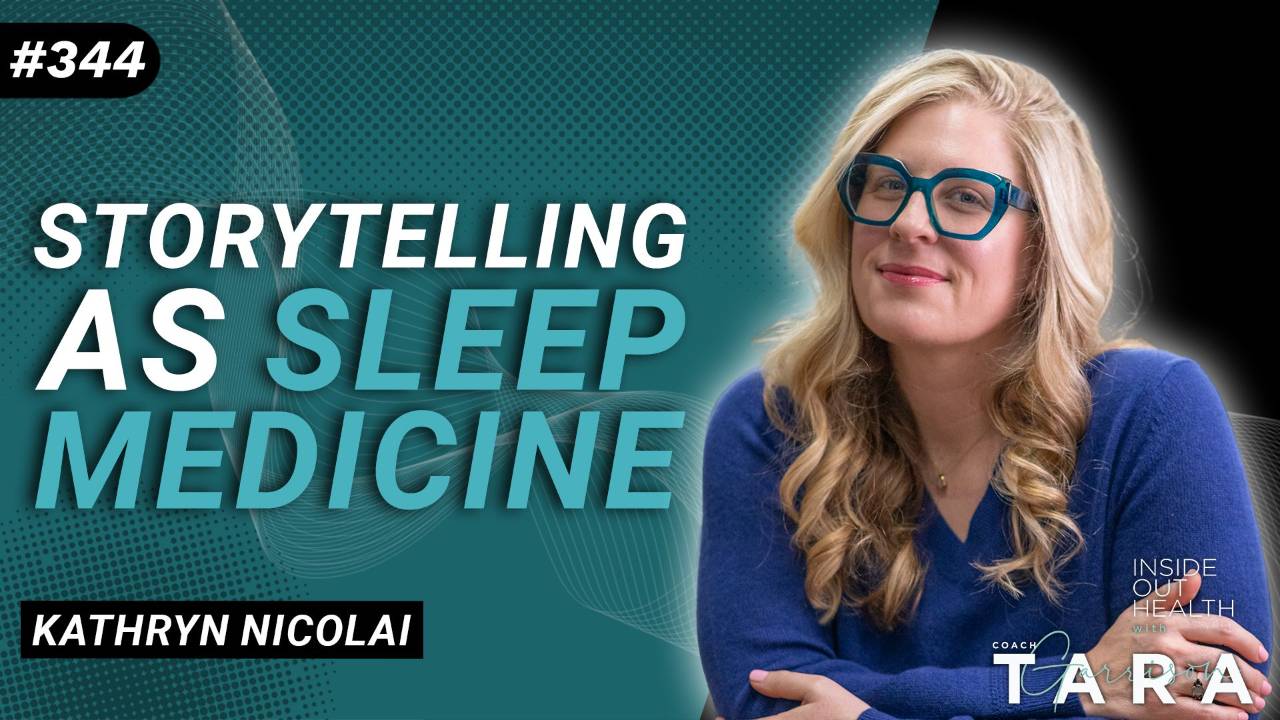


Kathryn Nicolai is the creator and host of Nothing Much Happens, one of the most listened-to sleep podcasts in the world, where millions of listeners use her stories to calm anxiety, fall asleep, and feel more at ease in their bodies.
With over 20 years of experience as a yoga and meditation teacher, Kathryn is a trusted voice in self-care, with a focus on sleep hygiene, nervous system regulation, mindfulness, and storytelling as medicine.
She draws on lived experience and practices including Vipassana meditation, gentle movement, brain training, and bibliotherapy to support people navigating stress, anxiety, depression, and more.
Through her work, Kathryn helps people cultivate rest, creativity, and emotional resilience in a culture shaped by overstimulation and burnout. Her new audio book, On The Street Where You Live, also comes out in July 2026.
In this episode, Kathryn Nicolai breaks down why storytelling calms the anxious brain, how repetition helps you fall asleep, and why joy—not discipline—is the real key to lasting wellness.
RESOURCES:
- Learn more about Kathryn, her podcast, app and book here: https://www.
nothingmuchhappens.com/ - Instagram: @nothingmuchhappens
- Get 10% off Peluva minimalist shoe with coupon code COACHTARA here: http://peluva.com/coachtara
CHAPTERS:
00:00 – Intro: meet Kathryn Nicolai
01:32 – Sponsor: Peluva Shoes ad
03:19 – Interview begins: 200 million downloads
05:11 – Storytelling and the sleeping brain
08:06 – Coqui frogs, Hawaii, and finding your own sound
09:40 – There's no one "right" way to sleep
11:09 – Falling asleep vs. staying asleep
13:45 – Brain dumps, tension release, and medical help
15:54 – Meditation, impulsivity, and Vipassana
17:51 – Neurodivergence, discipline, and choosing joy
21:59 – Eating disorders and food freedom
23:28 – Terra's coaching, app, and retreats
28:16 – Turning bedtime into a ritual, not a chore
30:23 – Soft spaces over rigid sleep rules
32:16 – Morning rituals and the "witching hour"
33:38 – Sleep is brain training: give it time
35:19 – Inside Nothing Much Happens' story structure
38:04 – Origin story: from Flint, Michigan to 200M downloads
40:18 – Healing fiction, gratitude, and negativity bias
WORK WITH TARA:
Are You Looking for Help on Your Wellness Journey? Here's how Tara can help you:
- TRY TARA'S APP FOR FREE: http://taragarrison.com/app
- INDIVIDUAL ONLINE COACHING: https://www.taragarrison.com/work-with-me
- CHECK OUT HIGHER RETREATS: https://www.taragarrison.com/retreats
SOCIAL MEDIA:
- Instagram @coachtaragarrison
- TikTok @coachtaragarrison
- Facebook @coachtaragarrison
- Pinterest @coachtaragarrison
INSIDE OUT HEALTH PODCAST SPECIAL OFFERS:
☑️ Upgraded Formulas Hair Test Kit Special Offer: https://bit.ly/3YdMn4Z
☑️ Upgraded Formulas - Get 15% OFF Everything with Coupon Code INSIDEOUT15: https://upgradedformulas.com/
☑️ Rep Provisions: Vote for the future of food with your dollar! And enjoy a 15% discount while you're at it with Coupon Code COACHTARA: https://bit.ly/3dD4ZSv
If you loved this episode, please leave a review!
Here’s how to do it on Apple Podcasts:
- Go to Inside Out Health Podcast page: https://podcasts.apple.com/us/podcast/inside-out-health-with-coach-tara-garrison/id1468368093
- Scroll down to the ‘Ratings & Reviews’ section. Tap ‘Write a Review’ (you may be prompted to log in with your Apple ID). Thank you!
EPISODE TRANSCRIPT:
My guest today is Catherine Nicolai. She is the creator and the host of Nothing Much Happens, one of the most listened to sleep podcasts in the world, where millions of listeners use her stories to calm anxiety, fall asleep, and feel more at ease in their bodies. With over 20 years of experience as a yoga and meditation teacher, Catherine is a trusted voice in self-care with a focus on sleep hygiene, nervous system regulation, mindfulness, and storytelling as medicine.
She draws on lived experiences and practices, including Vipassana meditation, so the silent one, she talks about that, uh, gentle movement, brain training, and bibliotherapy to support people navigating stress, anxiety, depression, and more. Through her work, Catherine helps people cultivate rest, creativity, and emotional resilience in a culture shaped by overstimulation and burnout.
And her new audiobook, On The Street Where You Live, just came out in July. So yeah, we got into a wonderful conversation here about how storytelling can be medicine and how our sleep is struggling so much, uh, in today's world, essentially because of the patterns of our brain and, like, we're not trained to be able to go into these states.
So, um, yeah. definitely follow her on Instagram, her account there is nothingmuchhappens, or you can go to nothingmuchhappens.com, uh, to find her podcast, audiobook, and everything that we talked about. All right, let's get into the show. Okay, before we get into the episode, I wanna take a moment to tell you guys about Peluva Shoes.
So here's what happened. So Mark Sisson, if you don't know Mark Sisson, you should know Mark Sisson, okay? Go look him up and start following Mark Sisson. Uh, Mark Sisson and also Brad Kearns, who have been on the... He's been on the podcast, uh, a few times now, and Mark has also.
They are, like, legendary OGs in the health and wellness industry. And, um, Mark, who also started Primal Kitchen, if you're familiar with that brand, um, has started Peluva Shoes. So Peluva means foot glove in Portuguese, and these are minimalist zero-drop barefoot shoes, and they have that five-toe articulation. I resisted trying these out for a long time, 'cause I thought they looked nerdy.
I'm just being so real. Um, but after many times of Brad being like, "Dude, just try them, just try them," I was like, "Okay, okay, I promise I'm gonna be honest with you." Yeah, I wear them all the time. I absolutely love them. I didn't think that the five-toe articulation was really that important, 'cause I've been a longtime fan of Vivos and barefoot shoes, and still love Vivos too.
Um, but wow, like major difference. Like, I was like, "Okay, now I'm, like, really actually using my foot the way I was supposed to." So they are awesome. Um, I told Brad, I was like, "You're right, dude, I love them so much." They're awesome. Um, and then they offered to sponsor the podcast, so thank you to Peluva, and they also offered to give you guys 10% off if you would like to try them out, which I highly recommend.
Um, you can go to Peluva, that's P-E-L-U-V-A.com/coachterra, or you can just use the code coachterra at checkout and get 10% off of your order. And I highly, highly recommend getting some of their toe socks while you're there, because you're gonna need toe socks. All right, let's go ahead and get into the episode.
Okay, so Catherine, um, I was looking at your Instagram and I noticed that you said that you had hit 200 million downloads on your podcast. And while on the one hand I was like, "Wow, amazing, like, podcast success. Congratulations," right?
Mm-hmm.
Immediately at the same time I'm like, "Oh, wow, that's how many people are needing help with sleep?" And, and, and real
Yes
before I turn it over, for people... so people understand, like 200 million downloads on a podcast is extremely rare. Like beyond... Like way more than I have. don't know, but like something... You know, 10, 20X or something, you know? So like that is a lot. That's like a... What'd you say?
Like .001%?
It's... Exactly, like .0001% of podcasts. Yeah.
Right. So like did you kinda feel the same way? Like, "Oh, yay, my podcast is doing well," and, "Holy crap, a lot of people need help with sleep." But maybe you already knew that.
I mean, in some ways, yeah. I did already because I'd spent 20 years as a full-time yoga teacher and meditation teacher, and I talked to people every day about their sleep and their health and where they are emotionally and mentally. So in some ways it didn't surprise me, but I was so glad that people were actually finding it as a resource.
Mm-hmm.
I think that's the part that surprised me. I was just thinking, "I'm just gonna create this thing." We didn't market it at all for like five years, and it didn't matter.
Wow.
Like people found it and then told other people. Because I think when you're not sleeping and then you get to sleep, it changes your life so dramatically that you kind of... It's like when you give up smoking and then you are like the biggest anti-smoker, you know?
Right.
you wanna sort of evangelize to everybody. I think that's how it is with sleep.
Mm. Okay, so tell, uh, tell, tell everybody a little bit about storytelling and, like, what is actually going on there, and how does that actually help with sleep?
Yeah. I'm gonna come at this from a couple different directions. One is sort of on the brain, the level of like what's happening in your brain. A lot of times when we're trying to fall asleep, or especially if we wake in the middle of the night and then we need to go back to sleep, our brain slips into this place called your default mode network, and this is the background noise of your brain.
It's chaotic. And if you've ever had that feeling like you're awake at 2:00 in the morning and you can't even focus enough to like quiet down and go to sleep, every thought you've ever had, every worry, everything you ever wanna... have to do this week, it's all spinning around.
That's default mode. And you can't fall asleep in default mode. Uh, you need to be in what's called task positive mode, which really just means giving your brain a job to do. And this is why if you've ever had that experience, you're in bed reading a book and you cannot keep your eyes open.
The book is falling hitting you in the face, and finally you give up. And maybe you're in a really uncomfortable position and there's a light right on you, but finally you give up. You turn off the light, you get as comfortable as you have ever been in your life, and now you cannot sleep.
Mm-hmm.
Because your brain had a job to do and now it doesn't. So now that default mode is getting in the way. So Storytelling helps by giving your brain a job to do, which is just to listen, but it's an external place to put your attention so that you're not just spinning through your thoughts.
So that's one of the ways that it helps. Another is sort of deeper in our DNA. You know, for so much of our history our ancestors would not have slept in silence. Silence is kind of a new phenomenon at bedtime. You know, we would have slept in groups, we would have heard voices, um, other people, uh, lots of noises, and that signals safety to the nervous system.
So trying to be in complete silence, um, I feel like often that's just a recipe for more chaotic thinking.
Mm-hmm
that's a couple of the ways. I think I could also speak to, you know, how storytelling in general, it's medicine. We know this. Um, there's not... It doesn't matter what continent you're born on or what century it is, your culture practices storytelling. Your culture uses storytelling to transfer
Mm-hmm
but also to help people understand the world and their place in it and how to think about it. Storytelling is, some of the oldest medicine there is. And that's why I think a lot of people already have content they fall asleep to. They're watching TV or they're listening to stuff, but it's not designed to put you in the right kind of place to have really peaceful sleep.
So that's why I feel like it's really, it's important to think about that moment. It's a vulnerable moment when you're falling
Mm-hmm
and you're delivering to your brain and body in that moment.
I wanna hit on the sound thing real
Mm-hmm
'cause I was living on the Big Island of Hawaii for a couple years, moved back to Utah a, a year ago, and if anyone's ever been to the Big Island, they have these coqui frogs. They're, they're Puerto from Puerto Rico, but, you know, if something gets put over on in Hawaii it just takes off, right?
Mm-hmm.
And so these coqui frogs, they, it... that's what they sound like, is like coqui, coqui. Like, and there's millions of them. And so, you know, as, as it starts to get dark in Hawaii, there's the coqui frogs and maybe there's still some birds, and there, there's just a lot of sound.
And because it's a very indoor/outdoor lifestyle there because it's always 70-something degrees, your, you always have your windows open 'cause you don't have air conditioning usually, right? So, like, I got so used to that, that I came, I came back to Utah to, um, for something, and I was staying with a friend.
And I went to meditate in the, her room in her basement that I... You know, it's, it's, it's climate controlled, windows closed. And I was like, "I feel..." Like, no offense to my friend. You know, this is just how houses are here. I was just like, "I feel like I'm in, like, a mental asylum." Like, this is, like, like a sound vacuum.
Like, I can hear the light bulb, I think. Is that the light bulb?
so sterilized, right?
Yeah.
Like, that the natural world has been taken out of it. Yeah.
Mm-hmm. And I was like, "Whoa, this is not natural at all." And, you know, so I'm curious your thoughts on, like, beyond the storytelling, too, are you an advocate of, like, I don't know, white noise machines or something like that? What are your thoughts on sound besides storytelling?
I'm an advocate of what works for you.
Yeah.
there's no, you
Yeah
and I feel like in the world of wellness, too, there is, like, this tendency to kind of say, "This is the perfect way, and if you're not doing this way, you're doing it wrong." And there's usually not an upper limit to the amount that people will blame themselves before they go, "Wait a minute.
Maybe this system just doesn't work for me." So I feel like people will beat their heads against the wall with something because they've been told, "If you just try harder, if you just, you if you can just quiet your mind more." Um, and they'll just keep thinking there's something wrong with them.
Maybe that system's just not the one for you.
Not for them.
It's
Mm-hmm
it's not for them. And I always feel like, you know, and I'm, I'm a longtime meditator, too, and I feel like for a long time I was kind of taught, you know, that there's one way to meditate and it needs to be like this and it looks like this.
And, um, the older I get, I realize there's so many moments of my
Mm-hmm
feel like meditation. And, um, there's, there's a little bit of gatekeepiness there or, you know, maybe even, like, practicing a little bit of snobbery of, like, "Oh, it looks like this." But not everybody's brain is the same. Not everybody's history is the same. For some people, quiet might be so affirming.
They are so overstimulated that quiet is perfect.
Mm-hmm.
And for other people quiet might be really alarming. So I think it's totally okay to just do the
Mm-hmm
makes sense to you.
Cool. Um, in terms of, like, I wanna hit on the fact that you are a meditation teacher also. Like, I've never had a problem... we'll throw out some different scenarios maybe and
Mm-hmm
and share thoughts. So for me it was always more once I was asleep, I sleep like the dead. Like, it's like I left the planet. I don't even know. know? It's like, "Oh, gone." You know? Lifelong. Um, and but, but it was always more earlier in my life in terms of, like, actually falling asleep was a nightmare, right?
Mm-hmm. Mm-hmm.
Just, like, laying there forever. Like, I could not even fathom how people could go to bed early. I basically just had to keep going until I couldn't, and that was the Yeah. Otherwise, it was just gonna be laying in my bed for two hours. Like, please.
Mm-hmm.
You know? And then when I started to learn meditation, but also breathing, um, you know, it's funny 'cause my ex-husband would teach our kids this, and it's somehow he just figured this out. He's one of those people that can just fall asleep, like, instantly. Like so unbelievably fast. It's like, what?
You were just talking and, like, within 10 seconds you're asleep. Like, how did you do that?
Yeah. Yes.
Um, but he would always say, "Breathe as deep as you can. Breathe it... Just breathe it really big breaths," or whatever. So I was starting to pick up some tools, right? And that has shifted, right?
Mm-hmm
I'm curious for, like, you know, let's, let's go on the people that were kinda like me. Now, it's not to say I don't... I can still tend to get that way. Especially
Mm-hmm
social, right? Like, it's
Mm-hmm
really stimulated and I'm very extroverted.
Mm-hmm.
"Eee." It's like you ain't going to sleep.
Yeah.
Um, so for people like that, you know, do you have any, like, experience, wisdom, insights in terms of, like, the people who their main thing is just, like, the initial going to sleep?
Yeah. You know, this is a good point, that people do tend to kind of fall into one of these buckets. A lot of people say to me, "Oh, I sleep no problem. It's the 3:00 wake-up that gets me."
Mm-hmm.
Or, "I can't fall asleep, but then once I do I'm asleep." So I feel like that's pretty common that people kinda have one of those experiences. So I feel like for the folks like you that might struggle at night, and I feel like my wife is like this sometimes, and people maybe who have really active minds, maybe even ADHD, maybe, um, you know, just get...
Yeah. I thought maybe. so
those are often the people who tell me, like, "I can't... The, the horses are racing. How do I put them-"
Mm-hmm
a barn?" So there does need to be a process here, and I'm gonna just throw out different ideas 'cause I feel like not one is gonna be perfect for everybody. Often getting the stuff in your head somewhere where it lives on paper so that it no longer has to live in your head is really helpful for people.
I'll say set a timer for five minutes, do a brain dump. Every single thought. It doesn't have to be grammatical. It... Just get it down on paper so it, you can stop retracing it. Um, another thing is to use something like the podcast to slowly bring the energy down.
You know, if you're trying to go from 10 to zero, that that is a leap. That feels so out of it.
Mm-hmm.
You know? But if you can kind of use a half an hour to slowly bring it down with something like my podcast or something like slow music or legs up the wall, you know, something like that that is gonna
Mm-hmm
really soothing to you. Um, another place to come from is it can be physiological. You know, you might have incomplete stress cycles going on in your body. And, um, I think of those as kind of open tabs on your computer, and at some point you've got, like, 50 open tabs and the whole thing stops working.
Mm-hmm
you know, taking some time to close some of those tabs by, you know, completing stress cycles.
Mm-hmm
I like to do, like, the progressive muscle activation where, you know, you squeeze and you release, you squeeze and release, especially if you're just feeling geared up. Because it lets your muscles do something, and then reminds them what relaxation feels like and how... It actually trains them how to relax.
Um, those are just a few of the things that I would start to throw out there. I also wanna say there's no shame in the game. If you need to see a doctor, if you need medical assistance, you should get it, because sleep is essential. And again, I feel
Mm-hmm
there's no amount that people won't feel bad about themselves, shame themselves. Sometimes you have been dug into a pit with your insomnia or your sleeplessness, sleeplessness, and we need a boost to get out of it. And once you get out of it, we can look at more lifestyle changes and more practices that you can take on your own to start shifting your sleep hygiene.
But if you are really not sleeping and, and you feel like, "Oh, I wouldn't ever wanna see a doctor or take a pill about it," I would. I would.
Yeah. I, I really resonate with... I mean, I think for me, beginning a meditation practice was life-changing in terms of I can tend to be very impulsive and, like, switch from thing to thing, like, extremely rapidly.
Mm-hmm.
And, um, it'd just be very reactive, right? Like, I would say that is my, my, my life long until meditation. I still can be that
Mm-hmm
for sure. when I started meditating it, it, it taught me how to not react to every single little thought or impulse that came through my mind. Is that I could feel an impulse
Mm-hmm
not do anything, you know?
Mm-hmm.
And I think
there's that gap between awareness and action, right? And in
Right
gap lives your possibility of choice.
Mm-hmm.
I sit Vipassana meditation, which is, like, the 10-day, you know,
Uh-huh
11 hours a day. And that I feel like was the main thing that I learned, was to feel it and then be able to choose. Because I feel
Mm-hmm
I'd already been on the place of rejecting the sensation, and then you're just... Your life is a string of knee-jerk reactions.
Mm-hmm. Mm-hmm. Yeah. If anybody has ADHD or you're just kinda like and, you know, it, it, it is critical. And I think that, you know, sometimes during really high or anxiety times I can... It's, it's, like, excruciating sometimes. It's like I'll be laying there going to sleep and then I'm like, "Oh," like, I, I need to, "Ah." And I'm like, "Breathe.
Let it go." "I can that tomorrow." You know? But I used to not have that skill.
Yeah.
I used to just do it, right?
Yes.
Um, and then, oh, now I'm up for another hour, right?
Yeah
just, I guess, like, sharing for as someone who used to really struggle with sleep, like, I, it runs in my family. Like, we're a pretty neurodivergent family.
Mm-hmm.
And, like, my dad was, like, a total insomniac, you know? And then we got, like, identified with it of like, "Oh, that's just how we are. We're night owls."
Oh,
You know? But, um, I really think it was just that, like not understanding how to work with our own neurological tendencies.
Yeah
just making a, you know, a, a plug or a, you know, gratitude moment for meditation of like and teaching like how to actually experience impulse.
Mm-hmm.
You know, being wired, being amped, and like being able to come back into calm,
Sit in your own fire. Yeah. For sure. And, and you know, I basically, I built the podcast on the concepts of meditation. But I, I wanted to create storytelling that was meditative because I feel like people often have their own knee-jerk reaction to the word meditation. And also, I come from the place of going, "This should also be super pleasant." This part of your day should feel and loving to yourself.
And if the, we can make the things that are good for you more pleasant, you're way more likely to do them. So I kind of feel like I'm sneaking the vegetables into my kids' spaghetti sauce or whatever, you know?
Right.
Here's a bedtime story, but it will also teach you the principles of mindfulness.
Right. Totally. I, I'm such an advocate for that. I really, really struggle with the, you know, this beat your chest bravado of like, "Discipline," and everything needs to be hard, and I hate doing this, and I force myself. Like, I, you know, my listeners know, like I'll go off
Yeah
the biggest rants on social. I'm like, no. if you look forward to it and you love
Yes
and it's pleasant and brings
Yes
that is how you consistently do the things in your
Yeah
that bring you what you want, you know? I always say, are
For
so disciplined to have your morning cup of coffee? Just sheer discipline, you're just forcing yourself every day?
Yeah, that's you up.
The... I mean, you're pretty consistent with that one, aren't you? All right. Yeah. Why? 'Cause joy.
For sure.
Pleasure.
I feel like, like, you know, I came up in the wellness culture of like the early 2000s, and optimization was like so overloaded that we stripped the joy out
Yeah
so many things that we did day to day. And joy is not expendable. Joy is not a luxury. It keeps emotionally we can emotionally endure things because there are pockets of joy in our life.
Mm-hmm.
And I feel like when you're focused always on optimization, when exactly do you live? When do you
Totally
at the moment that you're perfect enough to now start actually living and enjoying your life?
Mm-hmm,
So I feel like having like been chewed up and spit out by that machine, I'm like now on the other side of it where I'm like, I'm not tracking stuff.
Mm-hmm.
I'm not optimizing anything. I wanna be in my life while I live it.
Mm-hmm.
And it might not always be perfect, but boy, I'm present for it.
Mm-hmm. Yeah, yeah. I you, you would probably... There was a woman, Michelle Segar, she's like a NIH researcher on joy, how joy actually consistency to things. She has a book called The Joy Choice.
Nice.
So yeah, like it's, I, think you would probably really resonate with her. And that's, that's me too.
Yeah.
You know, it's like if... You know, tracking things sometimes can be a good short stint thing for awareness.
Mm-hmm.
But other than that, like the, I definitely am a firm, uh, what should I say? Um, I'm really against this idea that, um, getting healthy should suck. You know?
Yes.
That it needs to be this
Yes
horrible stressful thing. Like, but that's not health.
It's not health. And it's not going to somehow deliver health.
Health... Yeah. Like, I don't eat healthy food because I'm trying to be fit. I eat healthy
Mm-hmm
'cause I love my body, and I wanna give it all the things that it needs, and I wanna feel good.
Mm-hmm.
You know? So.
because it's delicious. Healthy tastes delicious too. It feels good when I put it in my mouth.
Right.
You know? But I, you know, I came out of all those years of wellness with a really intense uh, eating disorder.
Mm
it also just has to be joyful sometimes.
Mm-hmm.
Sometimes not every bite of food I
Mm-hmm
has to be perfectly balanced
Oh,
that's not the sole purpose of food. Food's there
Exactly
you know, to express love, to feel joy, to teach culture.
Mm-hmm.
So I feel like, like I said, like a lot of joy got stripped out, and I feel
Mm-hmm
a lot of us are ready to figure out where it gets put back in.
Yeah, yeah. I mean, I'm never living a life without... I, I, I eat what I want, but I think my wants have shifted. Like, for the most part, it's kind of my, like my life, you know? Like, for the most part I want to nurture and, and, give things that give back to.
And it's gonna taste good too. I'm not eating gross stuff, like, you know?
Mm-hmm. Yeah.
and then if I want pizza or a burger and fries or whatever, I'm like, my body is fine. It's resilient. I just don't wanna do that all the time 'cause I know I start to feel crappy and, and it's, I
Yeah, and I found once I gave myself permission to eat the foods I wanted to
Mm-hmm
you know, I didn't wanna eat it all the time. I didn't wanna eat pizza all the
Right. Yeah, there was just
But this there was a
Mm-hmm
issue going on of me feeling like I had to police every bite of food. That then
Mm-hmm
every forbidden bite something I craved. And now that I allow all
Mm-hmm
I have a variety and I eat what tastes good and what makes
Exactly
feel good.
Exactly. I wanna take a moment to tell you guys what I can actually do to support you in your journeys, and tell you a little bit more about higher coaching, my app, and retreats. So just as a quick summary, higher coaching is my full-tilt, full-on customized health and life coaching.
So we are getting all into every aspect of your life in a very supportive way. So how that's delivered is completely customized training. You'll do my neurotyping test to kick things off, which is a whole thing in and of itself that's really cool. And then I will completely customize your training and also your nutrition.
I base a lot of my decisions on labs. You don't have to do labs, but we can do a lot of labs. You can also bring me labs that you've had done recently or, you know, whatever kind of health history that you have. Love to see it. And, you know, from the labs perspective, we do blood.
We do hair tissue mineral analysis, DNA. Um, I have a software that I run DNA through that I prefer where I can see different snips that have to do with health, um, that are more research backed and I actually trust. Um, we do stool testing, so gut microbiome. So if you got gut issues, bring them.
Let's go. And also, um, hormones through saliva and urine, and those two methods of testing help us get, see a little bit more of a deeper insight into what's going on with your hormones, and cording, and and cording including cortisol, um, and your sex hormones. So, um, there's that.
And then we also have biohacking involved in various ways. That could be through an Oura Ring or Whoop strap or some sort of HRV and sleep tracking device or a continuous glucose monitor or, you know, lots of different interventions that we do depending on the person and what they need.
So there's all of that health approach, and then there's the full-on life coaching because I believe these are one. They are. I just not I believe. They are one. Okay? So it's like if there's a lot of dysfunction in terms of interpersonal relationships or professional life or just internal world in terms of boundaries and self-talk and identity and all of that kind of wounded stuff, like we get into that too, as much or as little as someone is willing to.
So higher is my full till we are going all in on you, baby, uh, one-on-one coaching. And I do have a coach that coaches with me, Coach Daria, who has been on the podcast a couple times. Um, so you do have some options there between working with either of us.
And the... You know, obviously, the cost is a little different too, so it's kind of a nice service for people because, yes, I charge more. But yeah. So if you wanna learn more about that, go to terragarrison.com, and you'll see one-on-one coaching. And just, just click on that one, and you can get a free consultation with my team.
Next is my app. So my app is my solution for not everybody can afford or even wants full-on one-on-one coaching. So if you want all my goods, like you want all my training counsel on form optimization and nutrition and, you know, the biohacking and the info, and we do have live Q&As once a month and community and all of that.
That is, uh, obviously a lot more affordable and pretty awesome if I do say my do say so myself. And, uh, there's a whole mindset part in there that a lot of people like where I take you on these little 22-minute guided journeys. So check those out if you get the app, and there's a seven-day free trial so you can see everything in there, make sure you like it before you actually pay anything.
So just go to app.terragarrison.com for that. And then I do have a retreat open right now. In 2027, we are going up to the Pacific Northwest. It'll be about 45 minutes outside of Seattle. Um, we are staying at the beautiful Salish Lodge and Spa. It sits on top of 168-foot waterfall, and it is owned by the tribe whose lands that those are.
That waterfall is very sacred to them, and that makes me happy that they are in control of that land again. So, um, it's gonna be incredible. We're gonna do lots of fun things like whitewater rafting, paddleboarding. Uh, you know, we're gonna do holotropic breathwork or, like, conscious connected breathwork, which is a healing type thing.
Um, we will have all sorts of amazing facilitation. And yeah, they're the coolest thing that I offer straight up. They're amazing. So if you want to check that out, just go to terragarrison.com and click on Retreats, and you can find out more and get all signed up. If that is speaking to you, I firmly believe that anybody that comes to anything, like whether it's working with me directly or in my app or coming to one of my retreats, uh, my whole business is kind of a spiritual thing for me, so I take that very seriously.
And I fully believe that people who come my way are sent my way for a reason. So if that's pinging at you, um, please, please honor it. Like, uh, it's, it's more than just business for me here, you know? So, um, yeah, I would love to hear from you if I can support you in any of those ways.
Well, Since we're talking about pleasure, let's talk about that a little bit more with, like, you know, our evenings. So
Mm-hmm
open up by saying, like, I've, I've figured this out, right? What we're talking about in terms of other patterns in my life. Like, how can I make it more enjoyable? How can I make it more fun? How can I bring more
Mm-hmm
to this experience? And I realized that going to bed felt like... I, I like to say that we're like big toddlers, you know? We are. We're, we are still the toddler that we once were. We're just older now. But a lot of us act like toddlers. Like, going to bed is like a punishment, and it's like, "No, I don't wanna go to bed.
This is my only free time." Ugh. Like,
Yeah
just a little bit longer scrolling. Like, I'm gonna
Mm-hmm
movie and eat ice cream, and that'll be so fun." You know? Like, we're kinda... It's like something happens.
Yeah.
And so I was like, "Okay, how can I make it more special?"
That's more of a treat
Yeah. So, you know, as I went through this process, I, one, started becoming... I I did have to get a little protective at first of like I'm not doing outings and stuff unless it
Mm-hmm
a rare, rare occasion, like in the evening. 'Cause I know me, if I go to the store or somebody's house, I'm gonna be up till 1:00 o'clock in the morning. Like I'm gonna be so stimulated, you know? And so I just started protecting my like that.
Mm-hmm.
And I got a bunch of salt lamp night lights, 'cause made my house look pretty. And then I got other little, like I have little flower string lights in my room that like it makes it like bring it down, bring it slow, light some, for me, like some incense.
You know? Like
Mm-hmm
making it kind of like
Mm-hmm
bedtime. Like it's, it's like, like almost like the morning cup of coffee, but
Mm-hmm
a different version, you know, of this like ritual. And, you know, I've definitely found taking a shower before bed like helps me sleep better, you know?
Mm-hmm
let's, I'd love for just any thoughts you have in terms of how to... I think you say you, you create soft, soft spaces or something like that.
Mm-hmm.
Yeah,
we're so aligned on this, because this is always my answer when, you know, a lot of times people, uh, want me to kind of say, "First, get blue light glasses. Then," you know, "your room needs to be 64 degrees." And I'm like, that would be nice. I live in 100-year-old house in Michigan and it's
Ah
degrees today, so that's not happening for me. You know? But also, again, that's more like that policing state of mind.
Mm-hmm.
And I wanna be in the carrot, not the stick place.
Mm-hmm.
So I wanna do, I do a lot of those same things. My bedroom is lit prettily. My bedroom smells good.
Mm-hmm
feels inviting, soft sheets, my favorite jammies. I have a whole like skincare routine which feels like very intentional. I'm
Mm-hmm
day off my face. I'm pressing love and care into my skin. I'm sort of just taking this moment to feel cared for, like I did when I was a kid and my parents would brush my hair before bed or something. You know, sometimes you do have to step in and re-parent yourself a little bit and go, "What kind of care does grown-up me need tonight?" You know?
And then like favorite books that maybe I've read 100 times, and they weren't Pulitzer Prize winners, but they feel nice.
Mm-hmm.
You know? It makes me feel good. And soft music and stuff like that.
Mm-hmm.
So to me, that, that is the correct approach. Whether it's a bath or a book or your favorite music, it needs to be something that you look forward to, that draws you because it's pleasant and not you should. I used to
Mm-hmm
in the yoga room, "Stop shoulding all over yourself."
Mm-hmm.
Because it's so exhausting to feel like you're doing everything wrong all the time, and you're not.
Mm-hmm.
You're not. You're doing your best. It's a hard world.
Mm-hmm. And I think also for me, I found having a similar kind of ritual in the morning when I woke
Mm
was very helpful. I love my morning time, like meditating. And it's like, and I call it like the witching hour, 'cause it's just
Mm-hmm
it's like, I don't know, it just feels really special and I'm like moving
We should lead a because I feel like we do so many of the same things.
Oh,
I do the same thing. I get up, I ring my bells, I shift the energy. I'm
Uh-huh
thinking about the good things that I wanna bring in today, the stuff I'm ready to let go of, you know? And those moments to me have become really special and sacred.
Mm-hmm.
I think that for a lot of people, there aren't rituals in their lives anymore, but rituals serve a purpose.
Mm-hmm.
And so I... And it's totally fine to make them up yourself. Sometimes that's even
Yeah
because they mean specific things to you. So having a ritual around going to bed or waking up, that can really change your day, 'cause it kind of puts you on the path that you be on for that day.
Mm-hmm. Yeah. And if, if there's any ADHD types out there, I'd say, like 'cause your reward is, you're dopamine seeking, right? And so when I think about my special morning, it makes to go to bed, so I
Yeah
right?
Yeah.
So I'm just sharing. Okay.
Yeah.
Cool. Any other things on like sleep hygiene or anything like that that you just have any insights or thoughts on?
You know, I would just say, especially doing stuff like my podcast, it is a form of brain training and it takes a little while. So often people will say, "You know, I did it once, it didn't work." And I'm like, "I'm not surprised."
Mm-hmm.
you've probably not been sleeping for a whole lot longer than one night. So we need to like rebuild a whole new habit structure in your brain. you know, try
I lifted weights one time and it didn't work
It didn't work. I don't know what happened. So I always say like, you know, five times a week for a month before you decide if it works or not. Really with any of these things.
Mm-hmm.
You have to give it multiple chances, try it different ways. Some people listen to one episode and fall asleep within five minutes. Some people let it play all night long so that if they wake up, they hear my voice and they pass right back out again. So, you know, I would just say give it some time, try different things.
Don't decide something doesn't work until you've really given it a proper shake.
Nice. Yeah, I like that brain training. I like what you shared on that, 'cause, you know, I, I've done some sleep meditations. I, I haven't done a ton of them. Um, but they, they work really well.
Mm-hmm.
Like they're super effective. Um, but I think, you know, it, it does feel like that in terms of the shifts that I've had on being able to go to sleep, it does feel like I'm operating differently. It, I used to feel like I was just like bracing, you know?
Like it was just like I still felt so tense and it was like, "Come on, dude, go to sleep." Like, "Please go to sleep." Right? And like
And self-monitoring. That's a perfect way to fall asleep.
Perfect, yeah.
Am
Stress and pressure, totally best way to let go.
Yeah.
Okay, cool. And then I'm curious, like, just for some insights in terms of, like, the actual experience of your podcast. Can you, like, just kinda give people a little idea what that's like?
Yeah. So there's a couple things that I built into it very deliberately to make it the most effective version of itself. And when I started sleep podcasting, there was one other sleep podcast, and it wasn't narrative based. It was just, I think, somebody kinda talking
Yeah
like, a TV show or something. So and now it's a, a whole genre. Obviously, there's a bunch of different options. But I feel like I didn't have a blueprint, but after 20 years of teaching yoga and meditation and using this technique myself since I was a child to wind down, I had, like, really strong intuition about how this needed to work.
So there's always an um, an introduction where I just... I explain very calmly and quietly what's gonna happen.
Mm-hmm.
And I say, "I'm gonna tell the story twice, and I'll go a little slower the second time through." And the number of people... I just got a message like an hour ago saying, "As soon as you said that, I felt like the weight came off my body."
Wow.
Repetition itself, super soothing, but knowing that it's gonna come back around, you're immediately given permission to let go.
Mm.
You, we take a couple really deep breaths. I basically tuck you in. I remind you, you're in your bed. You're safe. You have done enough for the day. We take a couple deep breaths, and then I start my story, and it always revolves around something soothing, some everyday activity that's relatable and maybe a little nostalgic.
And it's full of sensory
Mm
because when we're noticing the sensory details of a moment, we're present, and being present means we forecast less. We, we, we wind less. So it's just a naturally calming effect to be with how things smell and how things look and taste and feel.
Mm.
And there's these really safe places. I always think of it like Mister Rogers' Neighborhood for grownups. They're not fairy tales. They're not wild adventures. They're actually the kind of things that a lot of adults look forward to: having the time to do something slowly, feeling like you have support and community around you if you need them, you having space, having access to your favorite things.
So like I said, 400 episodes, 200, and I think we're now at 15 million downloads. Like, it works. I cracked the code.
Wow. Very cool. I love that about the repetition, right? Like, I can feel that innately. It's just
Mm-hmm
pay attention. It's like, oh, I really have to pay attention 'cause
You don't
gonna do it again.
And I even named it Nothing Much Happens to tell you right off the bat nothing's even gonna happen. But if you're worried it might, it'll happen twice.
Wow. Wow. Okay, can you can you share, like, when, when did this idea... how did this creation get born? Like, what happened?
Yeah.
What's the story?
I mean, honestly, it's almost my earliest memory, um, telling myself a bedtime story as a maybe three or four-year-old, and I grew up on the north end of Flint, Michigan in the '80s, and it was a very violent, difficult place to live. And I'm sure some part of my little brain understood that safety wasn't necessarily a part of my world and needed to find a way to build it.
So I would retreat into my mind and tell these... I was a kid with a huge imagination, tell these stories, and I loved doing it. I was kind of like, "Doesn't everybody do this all the time? It's so interesting," you know? And
Mm
kind of kept that habit, I've always been able to sleep. So, you know, I would talk to people in the yoga room, and I would kept thinking, like, "How do I teach this? How do I move this from my brain into yours?" Um, and then I just kind of had this brainwave, oh, it's a podcast, because I've already trained my voice as a yoga
Mm
to find its way under your
Right
and help you soften. And, you know, it can just play in the background. You don't have to be watching anything. You just listen.
Mm-hmm.
And, um, so when I released it, I thought, "It's pretty niche. People probably won't find it." Um, but I was wrong about all of it. It's so universal. It's so, um... and it's, it works for so many different people. I have five-year-olds who listen every single night. I have people who listen in memory care, you know,
Mm
the stories are sort of, there's never any, um, low... they're low stakes. They're, you
Mm-hmm
they're kind of action free, so they're very safe places. They've
Mm
you know, seen a few people through their last moments of hospice because people were like, "I know that her voice is a safe place, and the story is happy and calm." And so I've been so fortunate to be the last voice that people hear. So I'm protective of my listeners, but I just feel like I'm the luckiest person in the world that I get to have this job.
That's awesome. I, I, I wanted to hear your thoughts on this 'cause I saw a Instagram post you had on this. Um, to, to preface it, one of my friends, uh, she got married, uh, it's been almost two years now, and she told me, "I measure... I'm measuring my level of happiness based on how many fiction books I'm reading instead of something that, like, makes my life better or, like, bringing..." "Oh, I'm good.
I have plenty of time to read this fiction book. I love it," right?
Mm-hmm.
and I saw you sharing something about, like, this genre of, uh, fiction. What was
healing fiction. It's called healing fiction.
Healing yeah, can you share about that?
Yeah, so I didn't realize that there was a name for this, but it's basically what I write and what my new book is. The book is called On The Street Where You Live, and, um, it's very popular in Korea and Japan, but the concept is sort of what I've been working on, you know, creating these scenarios and places where you as a listener or reader can feel safe.
You're not gonna get punished for loving these characters. Have you ever read a book where you feel like you fall in love
Yeah
characters, and then a huge gut punch comes, and you're like, "Well, why are you doing this to me?" You know? And all kinds of fiction sort of serve a purpose, but sometimes in a really hard world, you need another place you can nestle into and just explore softer themes.
And there's even an element of reparative witnessing here, you
Mm-hmm
where you are witnessing people go through moments of their life, and maybe your life didn't go that way. But just being able to observe it by proxy can be reparative in your
Mm-hmm, mm-hmm
can help you see how person got from A to B, even if that wasn't how it went for you.
Mm-hmm.
So I feel like it's... I kept trying to come up with, like, what is it that I'm writing? Especially when I would, like, pitch it to, you know, publishers. They would try to go, like, "Where does this go in the bookstore?" And I was like, I... Listen, that I don't know.
But, you know, it's something that is meant to soothe, but also uplift. And I feel like when I first started writing it, people maybe thought it was, like, a little gauche or saccharine, you know, to write something that's optimistic. But we come with a built-in negativity bias.
Mm-hmm.
Um, our brains already pay more attention to things that are scary and upsetting, so pointing them, at least some of the
Mm-hmm
over at things that are good, that's not Pollyanna. That's actually reality.
No. Uh, yeah, and it has to be trained. That's why I'm a fan of a gratitude practice, and it's like I always tell my clients, I'm like, "I'm not trying to be cute. I'm not trying to waste your time."
Yeah.
"I'm not trying to just have some sort of program or something."
Yeah.
Like, gratitude, if, if it's not a... in my opinion, if it's not a practice, you're not every once in a while, you're gonna feel some gratitude, right? But
Yeah.
But
It has to be deliberate, though. It has to be a habit that you deliberately undertake.
Exactly, 'cause it, just we are so prone to just be noticing everything that's wrong, everything that's a threat, you know, that
Yeah
that's how we are going to be, period.
Yeah.
We're wired survival. So it's like you do have to proactively choose to, to see the
Mm-hmm
you know? To see the beauty. And the more you do
Yeah
start to shift your bias into, like, oh, what a beautiful life, what a beautiful world.
Yeah.
Which is then going to lead to more feelings of safety, which are gonna help you sleep.
For sure. It's kind of like when you get a red car, and then everybody has a red car.
Yeah.
When you start looking for good things, you start seeing them everywhere.
Yeah.
And it just starts to change your perspective, and it makes you a little bit more open to your neighbors and your family and your community, and we desperately need that.
Mm-hmm. Is that book out?
It is out. It is an audiobook only, but there's amazing voices on it, people from, like, Broadway and movie and TV, and I'm on it as well. It's called On The Street Where You Live, and it's anywhere you get audiobooks.
Amazing. I love that you're, you're, uh, you're quite the, what we call, like, forging new paths, you know? You're just going, pulling straight from whatever comes through you, and you're like, "Yeah, this is it. Oh, that doesn't exist yet? Okay, well, it'll probably
I'll build it
a .0001 person."
Yeah. Listen, I have to be honest and say half of that is it didn't exist, so I made it, but the other half is no one can tell you you're doing it wrong if they don't know what you're doing.
Yeah. And it's cool, and I I'm highlighting that for a reason 'cause, like, my coaching is also that way. Like, it, I made it up.
Mm-hmm.
I made it up based off what I've found to be needed and helpful and awesome.
Mm-hmm.
And it's it's really more, things are more powerful that way, and just kinda wanna share that because there was a time where I was trying to, like, ee-oo, ee-oo, straight-A student, do the way you're supposed to. How's the how do people do this? They do it like this.
Mm-hmm.
Ee-oo, ee-oo. And it was horrible. And I was
Yeah
I felt very out of alignment, and I was like, yeah, it's 'cause I'm not doing this in the way that feels like it's, like, basically, like, channeling through me or something, you know? And you're doing that, and it's really beautiful.
Yeah.
So I just kinda wanna
It's a mantra. Thank you. It's a mantra I say a lot in the meditation podcast that I have, "Your life only has to make sense to you." Some other people won't understand it, and that is okay. Let them not understand. But it, it only has to make sense to you.
I love it. All right. Well, thank you so much. I'm gonna have, uh, you know, in the show notes, we'll link up your
Okay
um, your book, your
Yeah, and nothingmuchhappens.com
haven't
can kind of find everything there.
Okay. Okay, cool. Well, thank you so much, Kathryn, I hope
It was my pleasure
people come to your podcast from this and get some good sleep. So thank
Okay. Thanks. Take care.
You too. Thank you so much for joining me on this episode of the Inside Out Health podcast. I hope it's been helpful to you in your journey. If you think that it might be helpful to someone you know, please share it with them. Please share on social media. It really helps me grow the show and reach more people with these amazing messages.
And if you could be so kind as to rate the show, and, um, possibly even leave me a review, that really helps. So, uh, much thanks in advance if you do that. And yeah, please subscribe if you wanna hear more of this type of content. I have lots of amazing expert guests on the way.
All right. Thank you.

Want One on One Coaching with Tara?
Click below to learn more about Tara's flagship 1:1 program HIGHER Coaching. Work directly with Tara on training, nutrition, personal development and biohacking!

Try Coach Tara App for 7 days FREE!
Learn how to train for results at home or in the gym, how to make easy, healthy recipes to achieve your goals faster, and explore the world with Tara as she helps spark shifts inside you to bring your best self out!
