Episode 333: HARRY MASSEY Bioenergetics & Infoceuticals: Can Code Change Biology?
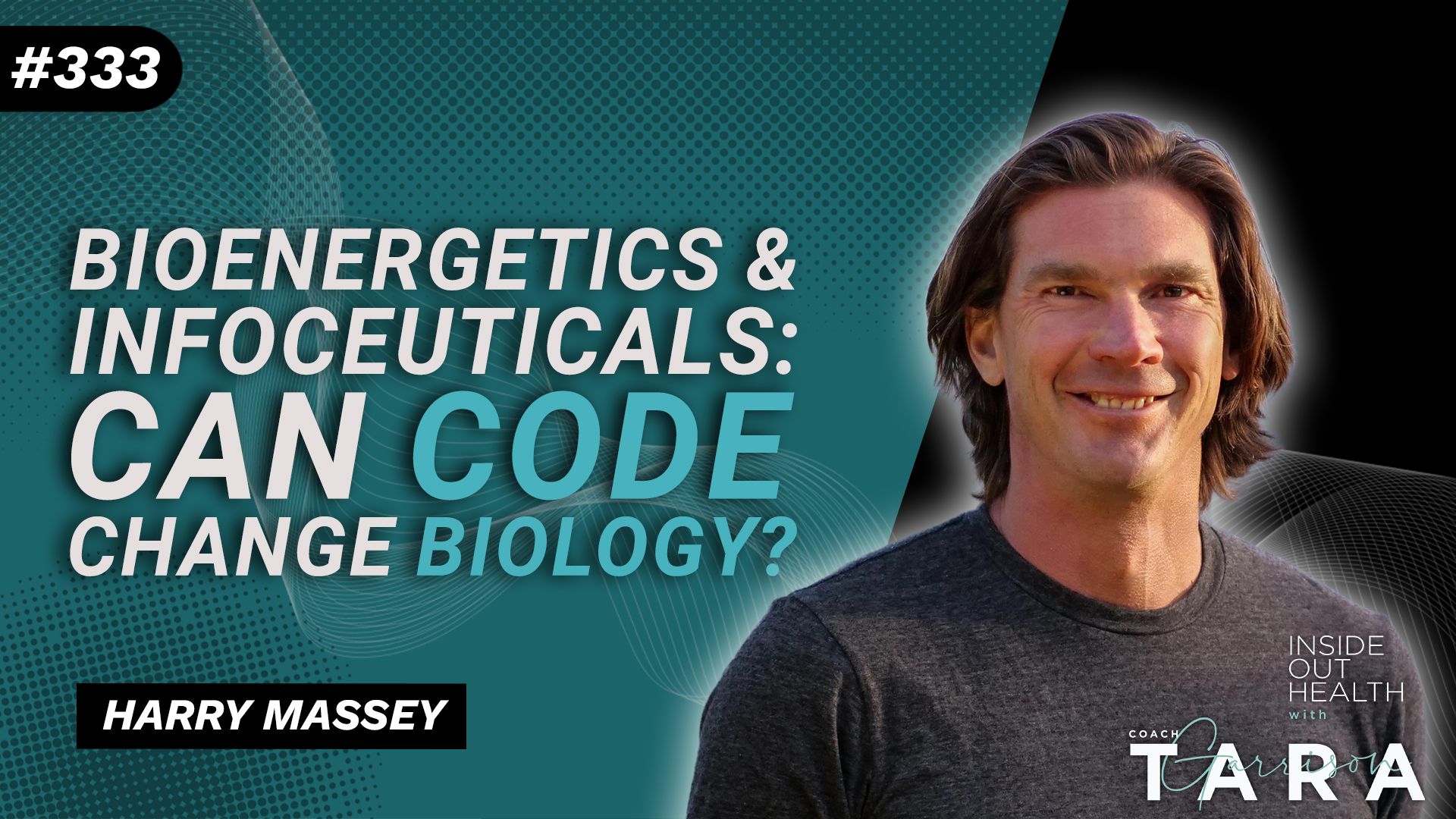


Harry Massey is a Bioenergetics Pioneer, bestselling author, award-winning filmmaker, and Quantum Wellness Visionary whose life's work was forged through one of the most unlikely paths to healing imaginable.
After a catastrophic mountaineering accident left him bedridden for nearly a decade, Harry discovered firsthand what happens when every health system fails you — Western, holistic, and functional alike. Determined to survive, he turned to physics.
Through his research, Harry co-founded one of the world's first R&D companies in bioenergetics and spent two decades building technology that could measure, manage, and master the human energy field.
Today, Harry is the Founder & CEO of Energy4Life and the visionary behind some of the most groundbreaking bioenergetic technologies in the world — including the miHealth Device, the Bioenergetic Voice Scan, and the GEM Wearable, an AI-powered device that detects and corrects emotional energy imbalances in real time.
Beyond his work as an entrepreneur and inventor, Harry is a bestselling author and the writer, director, and producer of several documentaries, including the award-winning film The Living Matrix. His latest film is set to release Summer 2026 — a timely and powerful exploration of what it means to heal at the energetic level.
In this episode, Tara and Harry Massey dive into bioenergetics, infoceuticals, and wearable tech that aim to restore “energy for life” by imprinting corrective information into the body’s energy field.
RESOURCES:
- Learn more about Harry Massey here: https://e4l.com/
- Instagram: @official.energy4life
- Get 10% off Peluva minimalist shoe with coupon code COACHTARA here: http://peluva.com/coachtara
CHAPTERS:
00:00 Bioenergetics, infoceuticals and Harry intro
00:51 Why Tara is open but skeptical about energy tech
03:53 Sponsor: Peluva minimalist barefoot shoes
07:00 Interview begins: What is Energy for Life?
09:17 Physics over chemistry and the body’s energy control system
12:21 Vitality equation: information × voltage ÷ resistance
14:19 Trauma, ACE score and emotional energy drain
18:44 Inside the app: tongue, face, voice, labs and AI coaching
21:55 FIELD model: functional, integrative, energetic, longevity, direction
24:45 Reading tongue, face and voice for organ stress
28:18 Infoceuticals as optimal blueprints for cells and tissues
33:40 Harry’s Addisons story and meeting Peter Fraser
37:43 Mapping the body field via resonance and photon exchange
40:48 Imprinting information into water with lasers and devices
42:18 Homeopathy history, water memory and modern infoceuticals
45:13 Quantum view of reality: information structuring energy
47:40 Films, books, Energy for Life and where to learn more
WORK WITH TARA:
Are You Looking for Help on Your Wellness Journey? Here's how Tara can help you:
- TRY TARA'S APP FOR FREE: http://taragarrison.com/app
- INDIVIDUAL ONLINE COACHING: https://www.taragarrison.com/work-with-me
- CHECK OUT HIGHER RETREATS: https://www.taragarrison.com/retreats
SOCIAL MEDIA:
- Instagram @coachtaragarrison
- TikTok @coachtaragarrison
- Facebook @coachtaragarrison
- Pinterest @coachtaragarrison
INSIDE OUT HEALTH PODCAST SPECIAL OFFERS:
☑️ Upgraded Formulas Hair Test Kit Special Offer: https://bit.ly/3YdMn4Z
☑️ Upgraded Formulas - Get 15% OFF Everything with Coupon Code INSIDEOUT15: https://upgradedformulas.com/
☑️ Rep Provisions: Vote for the future of food with your dollar! And enjoy a 15% discount while you're at it with Coupon Code COACHTARA: https://bit.ly/3dD4ZSv
If you loved this episode, please leave a review!
Here’s how to do it on Apple Podcasts:
- Go to Inside Out Health Podcast page: https://podcasts.apple.com/us/podcast/inside-out-health-with-coach-tara-garrison/id1468368093
- Scroll down to the ‘Ratings & Reviews’ section. Tap ‘Write a Review’ (you may be prompted to log in with your Apple ID). Thank you!
EPISODE TRANSCRIPT:
We are talking about bioenergetics and infaceuticals. It's a super interesting episode. My guest is Harry Massey. Harry is a bioenergetics pioneer, bestselling author, award-winning filmmaker, and quantum wellness visionary whose life's work was forged through one of the most unlikely paths to healing imaginable. After a catastrophic mountaineering accident, um, and some health issues and other things he mentions in the episode left him bedridden for nearly a decade, Harry discovered firsthand what happens when every health system fails you, Western, holistic, and functional alike.
Harry co-founded one of the world's first R&D companies in bioenergetics and spent two decades building technology that could measure, manage, and master the human energy field. Yeah, I told you it'd be interesting. Uh, today, Harry is the founder and CEO of Energy for Life and the visionary behind some of the most groundbreaking bioenergetic technologies in the world, including the MyHealth device, the Bioenergetic Voice Scan, and the GEM wearable, an AI-powered device that detects and corrects emotional energy imbalances in real time.
Yep. Um, he's developed proprietary IP approved by the FDA, including infaceuticals and the Bioenergetic Wellness System. Uh, beyond his work as an entrepreneur and inventor, Harry is a bestselling author and the writer, director, and producer of several documentaries, including the award-winning film, The Living Matrix, and his latest film is set to release summer of this year, 2026, um, which he's gonna get into at the end of the episode, all of the, the documentaries and books and all that.
So, I decided to have Harry on the show because I've heard of a lot of these kind of, like, quantum and, like, energy, you know, this kind of stuff, and I kinda just really wanted to... He seemed like a great guest for me to just kind of, like, how does that work, though?
How do you do that, though? How do you do that? So,
so I wanted to bring that to you guys so that... I don't know. When I I'm just being real. When I hear about stuff like this, I'm like, "Uh,
mm,
open, but very skeptical," you know? Um, but yeah, Harry's just got a great vibe. You can tell that this is a really, really important topic to him, and so he definitely obliged me with my, "Wait, but how does that work? Wait, how? Why? Wait, what are you doing? A laser?
What? It's a machine?" Like,
you'll see. All right. Let's go ahead and get into the episode. Here is Harry Massey. Okay, before we get into the episode, I wanna take a moment to tell you guys about Peluva Shoes. So here's what happened. So Mark Sisson... If you don't know Mark Sisson, you should know Mark Sisson, okay?
Go look him up and start following Mark Sisson. Uh, Mark Sisson and also Brad Kearns, who have been the... He's been on the podcast, uh, a few times now, and Mark has also. They are, like, legendary OGs in the health and wellness industry. And, um, Mark, who also started Primal Kitchen, if you're familiar with that brand, um, has started Peluva Shoes.
So Peluva means foot glove in Portuguese, and these are minimalist, zero-drop barefoot shoes, and they have that five-toe articulation. I resisted trying these out for a long time 'cause I thought they looked nerdy. I'm just being so real.
but after many times of Brad being like, "Dude, just try them. Just try them," I was like, "Okay, okay. I promise I'm gonna be honest with you." Yeah, I wear them all the time. I absolutely love them. I didn't think that the five-toe articulation was really that important, 'cause I've been a longtime fan of Vivos and barefoot shoes, and still love Vivos too.
Um, but wow, like, major difference. Like, I was like, "Okay, now I'm, like, really actually using my foot the way I was supposed to." So they are awesome. Um, I told Brad, I was like, "You're right, dude. I love them so much. They're awesome." Um, and then they offered to sponsor the podcast, so thank you to Peluva, and they also offered to give you guys 10% off if you would like to try them out, which I highly recommend.
Um, you can go to Peluva, that's P-E-L-U-V-A.com/coachterra, or you can just use the code coachterra at checkout and get 10% off of your order, and I highly, highly recommend getting some of their toe socks while you're there, because you're gonna need toe socks. All right. Let's go ahead and get into the episode.
Okay. So Harry, thank you so much for coming on the show.
It's great to be here, Tara. Thank you.
Um, okay, so Energy for Life. Uh, first question is what, what is the central claim of Energy for Life, if you had to put it concisely? If somebody knows absolutely nothing about it and you're introducing it for the first time, which you probably are, what is the claim of, of your technology?
So, like, the company's mission is to restore humanity's energy for life or to restore individuals' energy for life, and it does it through three ways. Um, so one, we take people who are fatigued to having energy. The second is people in pain, like, we get their body to be, like, nice and free and mobile.
And the third is overcoming, like, anxiety and negative emotions and getting people back to a joyful state, and there's, like, three different product ecosystems that help you do that.
Okay. So if we had to identify the mechanism at just kind of a top level, you know, broad scale, like how... What is the mechanism of how you're doing that?
Sure. So the whole premise is based on some some physics principles, and the whole, I guess the whole of Western medicine and most of, um, like, nutritional medicine and functional medicine is all based on this idea that chemistry controls the body or, you know, we're just a big bag of, bag of chemicals, and it happens through all these random interactions.
But actually, that isn't-Really, well, it's only a tiny
part of the whole picture. But actually, physics governs chemistry, and Kevin's, uh, chemistry governs biology. So I'll just take you through some practical examples so it makes more sense. So if you ate a pharmaceutical pill or a supplement, the chemical and the molecules get inside you, they go through the blood, and they get to a cell receptor.
The problem with that, in trying to keep you alive, is that's really, really slow. Yet there's 60 trillion cells in your body, and every cell has three trillion operations that happen every single second. So to coordinate that in real time to keep you alive, you actually need a different system that can do everything almost instantaneously, or it's actually at the speed of light.
And how that happens is through what we call the body's energy control system. And just as your cells have receptors for chemicals, they also have receptors for fields, um, and for photons, and for magnetic fields. So our, our whole way of looking at the body is basically through this field-based control system that is many orders of magnitude more efficient.
And, yeah, that, that's the sort of main mechanism. But even stepping back, I'll, I'll just give an overall principle of how health and healing works. So it can all be summed up in, like, one equation, which is vitality or health equals information, and I'll come back to that concept, times voltage, which is your energy, and then it's divided by resistance.
And resistance is all the things that will leak your energy, such as pain, negative emotions, maybe viruses, et cetera, and, and things like that. And so the whole idea is we wanna get your energy up. We wanna get your resistance or what's leaking energy down, but then we also wanna get your body into a more coherent information state.
So, yeah, when you do those three things, you, you get your health back, and we have all sorts of ways of doing that.
Mm. So you're saying, you know, I'm doing
labs and different, you know, optimizing sleep, and then mindset and emotional health, and all these things, which I'm very aware of how, you know, a self-limiting thought or holding grudges or feeling small, and all these painful childhood stories can really, really manifest in the body as low energy. And what you're saying is that you've discovered a way in which you can just give the body the correct information, and it can restore that energy flow without perhaps having to do mindset work in all of this?
No, no. I, um, actually do all three. Do all, do all
Okay.
So, well, just to take, take that example of negative emotions. There's a study done that looked at adverse childhood events, and if you've had more than four of them, um, and 67% of us have had at least one of them,
then you have on average a 20-year reduction in lifespan. And so, yeah, and actually until you're able, until you're able to resolve some of that trauma, uh, which is mostly relative... I say it's relatively simple, but it's mostly learning how to not respond. Like, as soon as you know what your triggers are, and you have an awareness of, of what they are, then you can respond differently. And once you're able to do that, there's actually... Well, your brain, when you respond negatively, you consume 40% more brain energy than if you just responded sort of neutrally. So that, so that, yeah, that, you know, that, that's, that's, that's a, that's a big one.
Mm-hmm.
At the same time to what you said earlier about putting... You can put information into the body
that will help you use energy in a much more efficient way, and it will also help you... Well, it, it helps your brain to respond, to respond better. Uh, but you do, but you do need to get an awareness of what those triggers are. So, yeah, it's not,
you know, I'm not a fan of, um, I'm not a fan of, like, the one supplement that can cure everything or the one device, you know, you wear the one device and all all your problems all your problems are over. It's, it's, it's more of a, it's more of a system.
Um, but as a system,
then yes. As, a system, yes, it works.
Mm.
Okay. So you've spent over two decades developing this technology. So let's walk people through, like, the actual experience. Like, let's pretend that I'm a brand-new customer, I stumbled across your website, I'm interested. Like, what is the actual process that I would go through?
So, uh, the, our past company has actually been to practitioners and to coaches. The new iteration of it, which is from August onwards, so I'm gonna go with the
as a consumer. You would basically
download an app. The app turns on its camera. You look at it, stick out your tongue. It does an analysis based on Chinese medicine of your tongue and of your face and also records your voice. If you have blood labs, you can upload all your blood labs to it.
It then combines all of, all of that analysis, and also actually if you have a wearable, it'll combine that data too, and that helps you to identify
where you might be leaking energy, um, how coherent your information is. And, and, and you can query the AI in any way you want to basically coach you back to, to better health. Then it'll also suggest different ways of getting your health back, and it's sort of agnostic to, um,
like, like we have different products, but it, it you don't have to use ours. It'll then recommend different infaceuticals, which is what the information side is, which are liquid remedies. It might recommend a wearable. It'll do that automatically for you. Or if you're full of pain and got injuries, it would recommend a, a MyHealth device, but it would tell you exactly where to place it and, and how to use it.
So that's as a consumer. If you wanna come as a client or a patient,
actually it'd be the same process, but your, your coach or practitioner will have access to all of that information, then you would have a, whether it's in-person or a Zoom meeting, you, you can have a consultation with them and get, you know, get, get that extra coaching. 'Cause the,
where AI isn't as good is on the emotional connection. Like, AI can't do... Maybe it could, but anyway, ours can't at this point. You could do, like, hypnotherapy sessions with, um, you know, with people, it would... And coaching them, sort of life,
life coaching. So that's sort of the difference.
Okay. So the, the basis for understanding someone's energy is based in Chinese medicine out of the gate for, uh, correct?
Um, that's a, that's an aspect of it. I call it FIELD. So the F stands for functional, it's based on functional medicine principles. There's I, that's integrative medicine, E, which is the energetic side, that is absolutely includes Chinese medicines, Ayurvedic, but, but also a lot of our own understandings.
And then L is longevity, basically the whole reverse aging movement, and D is direction. So it helps to direct, direct you to the right answers and with what to do.
Okay. And but this initial scan, like if you don't have an Oura Ring or Whoop strap or something, you're not uploading any sort of wearable data, um,
Oh, no. Then, then it'll... If you don't have any other
Uh-huh
it's just looking at your tongue, your face, and your voice. Um, and it can do an awful lot from that, but it can also then, you know, if it's unsure of an area or it's seeing something, it would also it can recommend some particular blood labs that, you know, that will help refine, you know, refine so you can properly get to that root cause.
But then you don't have to go and do every blood test, because, you know, a lot of them you don't necessarily need.
Okay. Can you give us just a basic understanding of how looking at your tongue and your voice, you
Oh,
how, what that's showing?
Sure. So, oh, I could stick out my tongue, but I won't. But yeah, if you look, um, when you look at your tongue, for example, in the center of your tongue there can be a big crack. That big crack can be related to digestion issues, could related to spine.
The tip of your tongue might be red. That'll be related to heart. The, the the sides, if there's, like, teeth marks, um, and it hasn't sort of filled itself out, that's related to, um, like, liver, spleen, et cetera. Different areas related to heart, to lung. Right at the back of the tongue is related to kidney, but that's a little harder.
We can't pick that up too well because of the... It's so damn dark. Like, when you stick your tongue
yeah
it's, hard to get the full picture of your tongue. Um,
so yeah. Uh, your face, for example, like if people have dark eyes, you know, it's very adrenal, kidney related. Um, there's, like, liver lines in here, all sorts of things. So yeah, you can tell, you can tell a lot from the image. Same, same with the voice. There's different vocal biomarkers within the voice that we can get different context about.
Um, and then of course it can do that without you telling it anything. But if you tell it, you know, like, you can also tell it your symptoms or if you've got medical history you wanna upload it, then it has even more context and it can correlate that against what's going on.
And sort of the general, the general idea, it's like if you just were reliant on blood tests that you might get every, every six months, there's an awful lot of information you don't know about what's going on in your body in between. But the great thing, you know, within a camera on your phone, you can just tell, uh, obviously you can just pick out your phone, do it anytime you want, uh, plus with the wearable data, but it will know your prior blood results from three months before, so it, you know, it, it can, it can refine what's going on in your health.
Okay. So let's talk about the, the information, infaceuticals, um, as you call them. So you said that's possibly part of what someone might get recommended. So let's go into that whole sector. Like, help us understand how this works. Like, how do you actually create these products? What is the idea of, like, how they actually work, how is it delivered, and all of that?
Um, sure. So
the best way of looking at an
of, an infaceutical is to see it as, like, an optimal blueprint for how different cells, different tissues, different organs in your body work optimally. Um, and
by delivering the right information to those tissues, it basically then it then basically says to that organ,
"This is, this is how you are when you're working properly. Go towards that." And then the body automatically sends more resources. It, um, or, or ensure it, it basically repairs, it, it repairs that tissue. Um-And for context, in case that sounds really far out, so we've had... Well, I've had multiple universities researching, researching this.
But the last one, um, so we have a research program at University of California in San Diego under Professor Hemal Patel. And, uh, so he, he would basically
grow all these different cell cultures. Uh, so he did one for lungs, and we wanted to see if we could reduce the viral penetration of, that horrible word, COVID. Um, but we could reduce how a virus penetrates into lung tissue by 45%, um, or a different one was cell driver, and with that we saw, we saw 717 different epigenetic improvements, um,
on the... I said we were looking at heart actually we were looking at rat cardiac cells for that one. Uh, we also were able to increase the density of mitochondria and also increase the efficiency of how it was utilizing glucose. yeah, we could make the cell basically use glucose in a 22% more efficient way, which basically means you, you need a little bit less food to, to, to basically grow and stay alive.
Okay. So let's, let's back up to, like, how, how do you have this information for... of, like, how each part of the body works?
So I'll have to roll back 30 odd years. But, so
I was bedridden with Addison's, um, for eight years when in my 20s, and I... about, yeah, six, seven into that,
I tried everything conventionally, which which wasn't working, and then I just started to think, "Well, if I don't know where energy comes from, I should study where, how energy works in the body."
And I was introduced to this scientist from Australia who's called Professor Peter Fraser, and he'd been mapping out the energy and information in the human body for 35 years before, before I ever met him. So I think we're rolling back 60 years. He's been dead 16 years now. And
how he did it, uh, it was a lot of different experiments and trial, and trial and error. But he would, he would basically use a principle of resonance, and he, he would, like, work out these different information sets and then he would see if that information would, would improve a different tissue or different organ.
Uh, and it either would or it wouldn't. And I'd say it literally took him 35 years to run all those experiments and map, and mapping it out.
Sorry, just to interject real quick.
like, how though? Like, I I don't know, maybe this is, you know, too hard to explain on a podcast. But information sets using resonance, can you explain a little more what that means?
Sure. So so information is really it's really map, it's really maths. Um, it ends up as... Well, it basically ends up as mathematical vectors that describe a particular function of a particular cell or particular tissue. So that, that can all be described in maths, but it is literally just pure, pure information.
Um, so that's the source, that's the source of it. And then resonance, there's a lot of different ways of doing resonance, but how, how we did it is looked at photon exchange, and we could measure an increase in photon exchange with those particular cell tissues. And where we got a strong amount of photon exchange, that was seen as a
Resonant
a a resonant effect.
Okay
and if it failed or didn't do it, like, the experiment was trashed, um, and we would try again. So it, it really is to get those right, the right information sets. It's absolutely trial, like, it's trial and error over a very, very long period. I mean, these days it would be way faster 'cause of, um, you know, more modern equipment and AI.
But in, in those days it was, yeah, a very slow process.
So how, how... So the... it's being transmitted through light, is what you're saying, these mathematical vectors? But like, how?
How is that happening? How is the
being communicated? Sorry, my brain is just like, "Err." I gotta
No, it's fine. fine. I'll send you a, I'll send you a book later 'cause it, it, um, yeah, that's, that's a 400-page science book.
Okay, yeah.
But, but, um, for... I, I, I'll just explain it from a patient point of view, so that's probably more relevant.
Yeah. Mm-hmm.
So,
uh, well, it, this here is an pharmaceutical.
Mm-hmm.
basically the to get the information imprinted in, into this
Mm-hmm
we take all of those mathematical vectors and then we shine, we send them on a laser beam, basically in binary code.
Okay.
And then it shine, it's shined through the bottle to encode it. So that, that's how it's done from a patient level, and then you just take, take the drops. if you like, like, if you like, it's like a very advanced version of homeopathy from, from a liquid bottle point of view.
Um, and,
but it doesn't have to be done through liquid. You can also do it... Am I? Oh, I was wearing my wearable. That's weird. It's come off my wrist. Anyway, um, you can, you can do it through a, you can do it through a wearable. You can do it through, um, like we have a whole bigger device that has the laser built into it, so you can do it directly on the right tissues in the body too.
Oh, so there's a device that
Yeah
mathematical
Yeah. like three. There's the analysis side. Um, then we have a device called a My Health That uses both
um, anyway, it uses both electricity and lasers to deliver information, but more importantly, uh, also voltage into tissues. 'Cause to get rid of an injury, we need to increase the energy in a tissue. Uh, so we also have a, we also have a wearable that's coming out in August with that app that I was describing.
But what you can get today is, is the... So this is, like,
the original remedy
Mm-hmm
but now we're doing it through devices.
What's the difference between homeopathy drops and these infaceuticals?
I, I... You know, I'll give you the history of all that. So 200 years ago, Hahnemann, who's the inventor of homeopathy, he basically discovered, like, if he took a... I think, think his first one was nux vomica, that make... If you ate that herb, it makes you vomit. Then he noticed if you made a, a dilution of it, the people who are sick and throwing up, they, they would take it and then they would stop, they would stop vomiting.
So it's like, you know, why, why do they do that? There's a tiny amount of, there's a tiny amount of information from all the succussions that, that he would make that the body recognized. So then the body elicits, uh, like the opposite response. Like, "Okay, well, I need to stop this person vomiting and, and heal." So that, that's how homeopathy started, and it worked.
Like, it was used in all the royal families, Europe. Even used in the State, or it was used in the States a lot too, like back 100 to 200 years ago. However, with all the modern chemicals involved, it sort of, it got way... It got less and less and less effective over time because the reason people are sick was 'cause of all the toxicity from all the, all the chemicals.
And then big pharma, big oil came in 80-odd years ago and basically just discredited and got, got rid of homeopathy mostly. Um, so that's, that's that history. But it was relatively effective 200 years ago. And then if I go back about 40, 50 years, there was, um, a French scientist called Benveniste, and he was looking into the idea of how you can get...
Well, actually, again, it was for him, it was accidental. So he was, uh, an immunologist, and he
had an allergen in a water sample, and I think it was... Yeah, it was a mast cell. And he noticed that the mast cell reacted even though the allergen wasn't quite next to it. was just in the water nearby. he's like, "Oh, that's odd." So then he was like, "Well, I'll..." So he started doing more experiments and just taking the you know, making sure there was no allergen left.
But, but he was getting this response, and then he's like, "Okay, water has a memory." He published the, this, those experiments in Nature. They published it first but with a note saying they weren't really sure, and then the whole scientific community came after him, disgraced, disgraced him. Um, and then they went back and, like, made him...
Well, they got some other place to repeat it but you know, repeated it to say that it wasn't true. Um, and then anyway, I think the third time, but, you know. But he was able to show that it was true, and he repeated it another three universities. However, the scientific community didn't want it at all, and he ended up dying, um, rather suspiciously two years later, um, supposedly from a, from a heart attack.
Um, he may have been murdered. He may have... Maybe it was stress. Who, who... You know, we don't really know. Um, plus forward,
no one would touch this idea of memory in water because, because of what happened to Benveniste. Uh, but a bunch of Russians did more research. Um, they, they also found that water, water had a memory. But the West don't really care about Russian research. And then another Frenchman, who was the discoverer of AIDS, called Luc Montagnier, so he got a Nobel Prize for discovering AIDS. He ran some experiments, um, where he basically took a like a virus, 'cause he was the AIDS discoverer, and he was able to make a, a a replica. So he would
put coils around the virus in one tube and then basically just send the information of that virus, um, and transmit it to another vial, and that other vial had the base pair material ACTH in it. And then was able to completely recreate the virus in that other tube with, think 99.85% accuracy.
Um, so anyway, that was a pre-basis. Obviously, I read all of that a long time ago. Peter had read it, the
scientist. But when I met Peter, I was like, "Well, we don't care about... Who cares about replicating a virus?
Why don't we transmit healthy information into the body and, you know, just create, create remedies that can imprint and do something healthy?" So that's where the idea of infaceuticals came from, and he'd already been mapping out the healthy information of the body before I met, before I met him.
Um, but he, he hadn't quite thought about it in a, this sort of like, that we could use it to to repair the body per se. So that, that was the... I think I was 26 at the time, so that was, like, the sort of the aha moment, if you like.
And then we ended up... Obviously, well, to go back to my story, I was I was totally bedridden. I'd lost a third of my body weight. Uh, Peter had gave me those original infaceuticals and, you know, I'd, I'd had a, I'd had a whole, like a high viral load from Epstein-Barr.
So I got this initial fever, which was the body turning back on the immune system to recognize the virus. It, um, yeah, got, got rid of that.
Mm
well, as, anyway, as many-God, there was probably about 30 infoceuticals I took at the time, um, or that over the next two years. But from that, I, I got my health back. He ended up emigrating from Australia to, to England, and then we formed, formed the company that we have today.
So anyway, I hope that answers your homeopathy question.
Yeah.
that's the backstory of all this. Um.
Oh, super interesting. I like this, uh, water carries memory. Um,
like, so question on that. Like, so you put this information into the water. Like, how...
Like, okay, if it's being transported and and there's other light and other frequencies potentially impacting the water, like, how, how does it stay with the information that you put into it? It's 'cause you need a laser for it to, like, imprint that heavily. Do you know what I'm saying?
Like, how does it stay?
it's it's, it's minerals, um, basically within water.
Which we did a lot of experiments with this, but it didn't, it doesn't work with distilled water. And then we found, like, we had to add, anyway, we had to add a certain quantity of ionic minerals to get the charge to hold.
Okay.
Um, in short, you get, you get a bit more structure when there's, when there's more minerals in, and that, that structure is able to contain, contain that information. But yeah.
Mm. Okay. Okay,
But it, get... I mean, it gets deeper than that. Depends how deep you wanna get into physics, but, um, yeah.
I, I, I'd love to try.
You wanna say... Oh, Oh, okay. Well, I think, um,
so in
in physics, in, um, in in quantum physics,
when you really look at what reality is, or if you, you know, if you look under a microscope and keep going, keep going, keep going, there's actually nothing there at all, um, because the whole of the universe and reality is really information structuring energy. It's just information and energy.
And so even,
you know, whatever, like, this object or you or me, um, all we, all we are is really information structured energy. Um, and so that, in the end, is what an, what an what an infoceutical is. And people, um, depends what your listeners know or don't know, but, um, you know, from a more spiritual aspect, you can you know, you can influence reality, events, times.
There are, you know, there are people who can influence objects as well. But, uh, but imprinting information into water is a, is a lot easier than, I don't know, you might read about a,
a guru or... Not a guru, I won't say that word. Um, like a Qigong master in China who can basically channel qi into the body and, you know, and people have seen it on ultrasounds in real time, where they're able to get rid of people's cancers and, and things like that.
So that, you know, it's mind, it's mind-boggling, but it's less mind-boggling when you
think of, like, when you realize really reality is not what you think it is. It's just, it's just energy and information. So,
Mm-hmm
depends how deep you wanna go. But yeah. Yeah.
So you're saying we're in a simulation.
Um, yeah. Well, it's,
if you, if you like, or, or that's just the nature of the rules of reality. I, you know, yeah, I don't, we don't have to be in a simulation, but it's, it's like a simulation.
Yeah, yeah. No, I mean, it, it definitely makes, makes sense to me. So, thanks for, thanks for sharing that. Um, the wearable. Uh, so how does, how does that work?
Uh, so it, like, that's paired with that app, so it's, you know, um, like, they come, they come together.
Oh, so it's reading information and providing it to the app?
Well, it's it's reading, it's reading
Mm-hmm
data. So, like, we're looking at the shape of your, of your pulse so we can tell different emotional states from that, but it's also combining with your tongue and face and
Mm-hmm
and lab data to get more insights. That's on the detection side. But it also has laser diodes in the back of it and a PMF coil in the back of it, so it'll imprint the information straight into your body based on your scan.
Okay. So will that... Well, maybe you don't wanna say or don't know. Uh, is that going to possibly replace the liquids
eventually? Or, or it could if someone connected to.
It's a, it's a choice.
An option.
It's it's a choice. I mean, um, an infoceutical is,
you know, what, like, one infoceutical obviously costs a lot less than a wearable that does all of that.
Uh-huh.
At the same, at the same time, if you have a wearable, that's cheaper than buying infoceuticals every month. But, uh, we just leave it we just leave it to people to choose. Um, I, don't think, there's a, there's a case for both
Mm-hmm
like, an infoceutical is a easy
start
Right
so yeah.
Okay. So yeah, and then we didn't really clarify this very specifically. So, like, let's say I get the app and it scans and it's like, "Hey, you got some stuff going on with your spleen," or whatever, right? And then I decide to go with the, the liquids, right? So basically, that liquid is going to be Is programmed the right word?
Informed.
It's gonna
Imprinted. Yeah, it's
Imprinted. Okay. It's gonna be imprinted with information that tells my spleen like, "Hey, this is how a healthy spleen operates." Is, is that the basic understanding?
Yep. Yep, yep, yep. Yep.
Mm-hmm.
Yep. Then it starts repairing itself.
It kinda reminds me of, like, psychedelic journeys. Like, um, if I'm, you know, doing a mushroom journey and it's just showing me, it's like, "Okay, so this is kinda how you've been reacting to all that. And, like, here you go. Here, the, see this?" And it'll, like, walk me through an actual example.
It's like, "This is a-" A, a healthier way to respond to that. Like, it feels kinda similar, that, to me, as
Um,
alignment
yeah, it is, it's it's, I'd say it's similar. I mean, yeah.
Not the same mechanism, obviously, but just, I guess metaphorically, it kinda reminds me of that
and honestly I mean, psychedelics are sort of a, they're a they're a way of you getting awareness into your energetic body and, and correcting it, um, if it's done intentionally.
Right.
But if you're doing it all the time, partying, I think it probably doesn't do that. But it's, yes.
Yeah.
Yeah.
when you take it too far.
Yeah.
For sure. Um,
let's, let's hit a little bit more on this, um,
uh, mathematical vectors. I think I heard you saying in another podcast, like, and you, it's like binary code, right? So as, so this machine that you have, it's basically like we know that like 0110011001 blah, blah, blah, blah, is liver.
It's, a it's, it's, it's a language.
So you can,
can tell how experienced I am with it.
Yeah. So, so you can translate, it's like you can translate French to English
Uh-huh
to Python code.
What you, you said about, um, you said about like reality is like, you know, like virtual reality.
It's very like AI in a sense. So AI and LLM, a large language model, underneath is all, is all zeros and ones, yet somehow, yet somehow when we're speaking to it, we're speaking in our natural language. It's, it's, it's a it's a similar idea to that. Um, so all that binary code, it has the it has the meaning of
helping to heal that particular organ. Um, but yeah, you know, it it, it looks foreign to us, but it, it's, it's just a language.
Mm.
It's, you're, you're making me wish that I was a little more informed in that area. I'm like, yeah, I kinda technically know that I don't know anything.
I don't know, have not deep dived on all that. That's cool. And that, and that makes me wonder, like, um, how has this work that you've been up to for almost 30 years now, like how has it shaped your view of life and reality?
So when I
Well, when I started, I was a completely broken kid,
basically, who...
Well, God, actually, I did, I had a, an MBA and an economics degree, and I was very conventionally thinking and trained. Um, I had no idea about any, any, any, any of this. But I would say, you know, that was a
you know, it was a massive aha around 26 to 30 of, like, how, how reality was really working, and meeting that scientist totally blew, totally blew my mind, and I was really lucky to spend 12 or so years with him, and, you know, he educated me massively. Um, and yeah, I'd say over time,
God, there's just, there's so many layers to health and, and healing. Like actually, originally, I was just obsessed with all the infaceuticals, 'cause it got me so much better. Um,
uh, but, you know, there's obviously all, there's all the deeper spiritual, all the deeper spiritual aspects to... So then I, I, well, I
14 years ago, I wrote a film called Choice, written a book, um, that goes with it, called Align Your Purpose, and then that developed into something called GIST, that stands for gratitude, intention, surrender, trust. So I have, like, this whole philosophy I live my, live my life by. But yeah, I mean, over, over time, you end up, well, I've ended up with a more refined
philosophy and methodology, um,
which, you know, I
You, you know, when you're younger, you just try all these different things, do all sorts of things, but I, you know, the, the great thing over time, you sort of work out what, what works and just make little refinements, and I, yeah. So I, I would say, yeah, I mean, I call that, like,
to master your life, you wanna, you, you need to master your energy. Um, so
Okay.
Yeah, there's a lot to it. I mean, there's a free, yeah, that, the GIST. I haven't published it, but there's a 300-page book that I wrote for that, uh, that will go in that. I don't know what I'm gonna do with it. I've created more stuff than I've brought, brought out in the world, honestly.
Hmm. Yeah, so, um, 'cause you were, what, 26, you said, when you met this professor and started on this journey. So obviously, if, if infaceuticals and all of this is coming at you at 26, it's probably gonna open you a lot to energy in general, in terms of, like, our thoughts, our emotions, what's possible.
Like, you know, law of attraction, like, all of that
Well, I'm creating a company out, creating a company out of it. Like,
I've created everything out of nothing, actually. Like, when you
Mm-hmm
about it. Well, even the I mean, there was the idea of homeopathy and what Ben Vista and all those were doing. But, um, you know, oddly, like, well, I So the intention when I was 26, or the thought, is like, "Well, I'm really sick in bed. I can't go and visit practitioners and doctors, 'cause I can't drive a car." So I was like, "Oh, really?
Like, wouldn't it be good if there was a system that could tell you the information to get you better?" But I, at the time, was thinking, like, knowledge. Like, I, I didn't know what was wrong with me or how to get better, so I was thinking, "I need the knowledge to get better." Um, but what the universe did is deliver me this scientist, and, and he he was calling it magnetic monopoles at the time, so, and which you'll hate that word, but anyways.
But-Um, and then I was like, "Well, no, it isn't... It sounds like it's information." And then anyway, so we created this whole section of reality about information, and then I think it was a decade later, I met Luc Montagnier, the Nobel Prize winner and all of that, um, who'd already been previously working on it, and it was 'cause I was making a film at the time.
I think it was The Living uh, it was The Living Matrix then Supercharged. I think, I think he was in Supercharged. But, um,
so, like, reality sort of got constructed around that idea, that idea, and it never even existed for people before.
Mm-hmm
uh, so anyway.
Wow. Yeah.
Well,
You've been on a magical journey
I've been, on a magical journey. I've been on
Yeah
magical journey. Yeah.
So let's, let's talk about your films and books real quick. Feel like you kinda briefly mentioned them, but let's, let's give it a stage for a second. Tell us what you've been up to in that arena.
Um, so seven books and six films, I think. But I, I without going through them all, the, the first one
was called The Living Matrix, and
basically, 'cause at the time people just didn't know about this idea, and I guess still a lot of people don't, but, um, and I thought film was, like, the better way to communicate it, so we filmed some different scientists
like Professor Popp and obviously Peter, I'm trying to remember, Lynne McTaggart, a bunch of people, on, like, the science of how this worked. But then we also went sourced out stories of, like,
people who'd had, like, what you would think is a, is a, is a miracle. Like someone with cerebral palsy who was, who, who was healed, someone with, um, cancer in their kidneys, et cetera, et cetera. So we would film these stories of how they were healed, and then the scientists to explain it.
That, that was, like, a,
I don't know, like, beginner's luck success. So, like, we were... I think that was... Anyway, it sold millions and millions of copies of DVDs at the time, like, back a long time ago. I don't know, 18 years ago now. Um,
so that was the beginning. And I,
like, and then you have beginner's luck. The next film didn't do as well, but I thought it was a better film. That was Choice Point. Like, I put more time and effort into it, but it didn't do as well, but that's how it all works. Um,
and then the last three years,
yeah, the last, last three years, a nonprofit or a foundation wanted us to go and make a film on, on all this research and innovation and to basically, you know, obviously get the message out to help other people. Um,
and that's, that's been quite the journey. And I actually finished the script two days ago. But the, the, the film was basically well, it's mostly edited, but that's coming out in August. And that, I think, is gonna be called Beyond Medicine: The Man Who Invented His Way Back to Life. Um, the title I want is The Vitality Equation, but someone owns thevitalityequation.com, so I'm still slightly wrestling with title.
All right. We'll
With
we'll have to watch and see what happens.
Well,
congrats on that, just wrapping that one up. And then your books, can you share about those real quick?
Um, the one, the one that describes all the initial
journey of creating all this, um, like, way back, is called Decoding the Human Body Fields. Like, if you want the bulky book, that would be it. Um, an easier, more modern, simpler book is called, I think it's called Restoring Your Energy with Bioenergetics. I'm pretty sure that's on Amazon.
It's they're definitely on our website. Um, yeah, there was a book that went with the Choice Point film. And I'm,
now I'm gonna have to write another book for this movie, but
Well, good thing you got Infoceuticals, or you're gonna get tired.
Yeah. Um, yeah. Yeah.
You can still have too much to do. Yeah, the, the the more, the bigger limiter is time. Yeah, it's different.
Mm-hmm.
Yeah.
Well, yeah. And I love, I mean, to that point, I love that you're including... I didn't, I didn't know what fields stood for. Like, you're, you're really encompassing it all. It's like, yes, there's information, energy, and that whole, but there's also value in, like, the functional integrative. Like, sure, let's look at your labs too.
And what were the L and D? Oh,
Oh, uh, longevity and direction.
Okay. Okay.
Could be diagnostics, but I, I think I prefer direction. Well, I prefer direction 'cause gives you the right direction. Yeah.
Yeah. Cool. Wow. Well, okay, so all your books and films are all on energyforlife.com that
Um, they're definitely all on harrymassey.com. Yeah.
Harrymassey.com.
and, you know, amazon.com has... I think that's where you buy them. It is where you buy
Okay. Okay, cool. And then energy4, the number four, life.com is where you guys can find out everything you
Yeah
to follow
Yeah,
this interests
Yeah, and also, think if you, if you subscribe to our newsletter on Energy for Life or opt in, then, like, as these things come out, you know, I, put out a newsletter, and it, goes out.
Awesome. Well, Harry, uh, thank you so much for sharing your magical journey with us, and it has definitely given me some really interesting food for thought as someone who spends a lot of time in,
what should I say, the non-tangible realm.
Yeah.
So, so thank you. Thank you so much.
No, thank you. It's a pleasure to be here.
Thank you so much for joining me on this episode of the Inside Out Health podcast. I hope it's been helpful to you in your journey. If you think that it might be helpful to someone you know, please share it with them. Please share on social media. It really helps me grow the show and reach more people with these amazing messages.
And if you could be so kind as to rate the show and, um, possibly even leave me a review, that really helps. So, uh, much thanks in advance if you do that. And yeah, please subscribe if you wanna hear more of this type of content. I have lots of amazing expert guests on the way.
All right. Thank you.

Want One on One Coaching with Tara?
Click below to learn more about Tara's flagship 1:1 program HIGHER Coaching. Work directly with Tara on training, nutrition, personal development and biohacking!

Try Coach Tara App for 7 days FREE!
Learn how to train for results at home or in the gym, how to make easy, healthy recipes to achieve your goals faster, and explore the world with Tara as she helps spark shifts inside you to bring your best self out!
