Episode 341: DR BRAD BELLARD Recovery & Regenerative Strategies with Denver Broncos’ Sports Medicine Doc
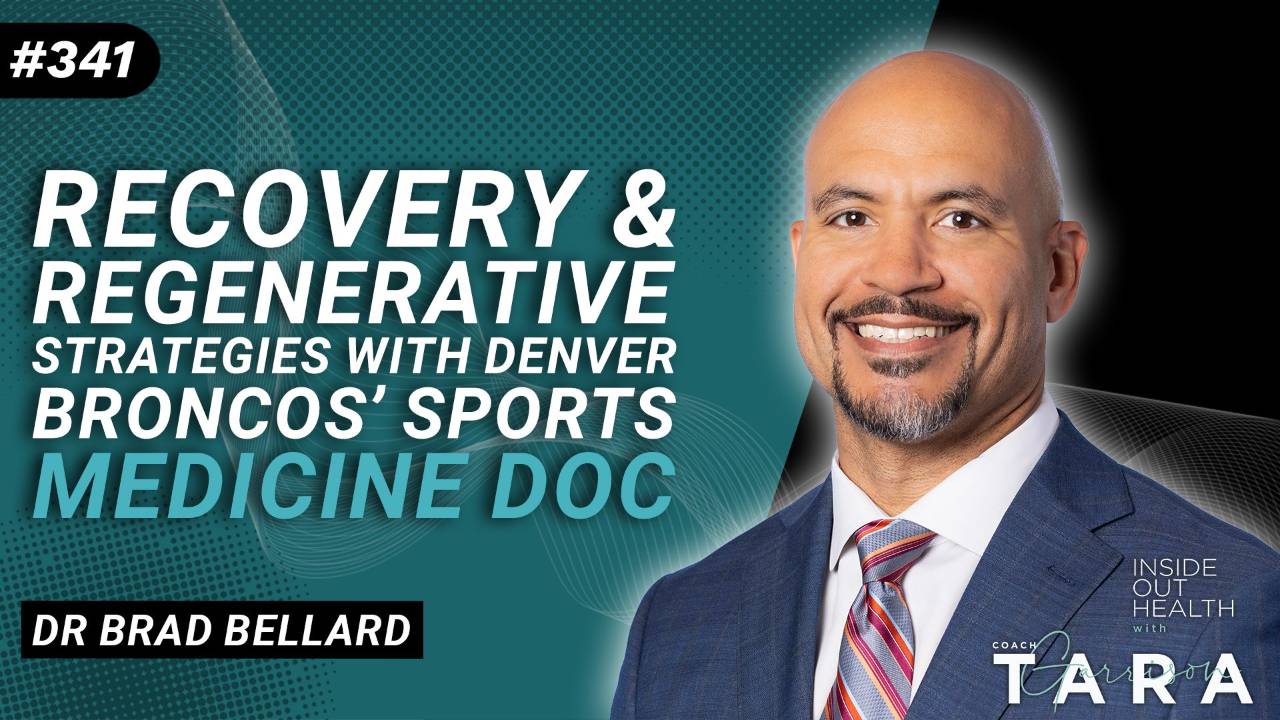


Dr. Brad Bellard is a board-certified Sports Medicine physician at CommonSpirit’s The Sports Center. He has served as a physician for multiple professional sports teams, including his current role as assistant team physician for the Denver Broncos and his prior role as assistant team physician for the Dallas Mavericks.
Whether working with elite pros or everyday fitness enthusiasts, his goal is to help active individuals safely accelerate recovery, break performance plateaus, and optimize their physical health. In his clinical practice, he utilizes cutting-edge regenerative medicine and minimally invasive procedures that help patients avoid the burden of surgery and return to the lifestyle they enjoy.
In this episode, sports medicine physician Dr. Brad Bellard breaks down how high performers can prevent and recover from injury—covering rotator cuff and tendon overuse, regenerative treatments like BMAC and PRP, plantar fasciitis, lessons from pro athletes, and why sleep is the ultimate performance multiplier.
RESOURCES:
- Learn more about Dr. Brad Bellard here: https://www.mountain.
commonspirit.org/provider- search/bradford-bellard-md - Get 10% off Peluva minimalist shoe with coupon code COACHTARA here: http://peluva.com/coachtara
CHAPTERS:
00:00 – Meet Dr. Brad Bellard, sports medicine physician
01:26 – Sponsor: Peluva Shoes ad
03:13 – Why recovery matters most
07:21 – Rotator cuff injuries from repetitive weightlifting
10:54 – Warming up vs. stretching before workouts
13:58 – What is bone marrow aspirate concentrate (BMAC)?
16:34 – Case studies: BMAC saves a knee and a hamstring
18:19 – PRP explained and how it differs from BMAC
21:03 – How BMAC is collected: the in-office procedure
23:17 – Calcific tendonitis and in-office debridement
24:54 – Most common cases: tendonitis vs. arthritis
28:38 – Pro athlete mindset: lessons from Broncos and Mavericks
32:24 – What else drives arthritis: genetics, hormones, nutrition
34:58 – Tennis elbow, golfer's elbow, and when to get PRP
40:41 – Treating plantar fasciitis and ankle mobility
44:22 – Sponsor: Higher Coaching, app, and retreats
49:13 – Physical therapy first: fixing the root cause
50:05 – Common threads: pro athletes vs. everyday gym-goers
52:36 – Why sleep is the ultimate performance multiplier
WORK WITH TARA:
Are You Looking for Help on Your Wellness Journey? Here's how Tara can help you:
- TRY TARA'S APP FOR FREE: http://taragarrison.com/app
- INDIVIDUAL ONLINE COACHING: https://www.taragarrison.com/work-with-me
- CHECK OUT HIGHER RETREATS: https://www.taragarrison.com/retreats
SOCIAL MEDIA:
- Instagram @coachtaragarrison
- TikTok @coachtaragarrison
- Facebook @coachtaragarrison
- Pinterest @coachtaragarrison
INSIDE OUT HEALTH PODCAST SPECIAL OFFERS:
☑️ Upgraded Formulas Hair Test Kit Special Offer: https://bit.ly/3YdMn4Z
☑️ Upgraded Formulas - Get 15% OFF Everything with Coupon Code INSIDEOUT15: https://upgradedformulas.com/
☑️ Rep Provisions: Vote for the future of food with your dollar! And enjoy a 15% discount while you're at it with Coupon Code COACHTARA: https://bit.ly/3dD4ZSv
If you loved this episode, please leave a review!
Here’s how to do it on Apple Podcasts:
- Go to Inside Out Health Podcast page: https://podcasts.apple.com/us/podcast/inside-out-health-with-coach-tara-garrison/id1468368093
- Scroll down to the ‘Ratings & Reviews’ section. Tap ‘Write a Review’ (you may be prompted to log in with your Apple ID). Thank you!
EPISODE TRANSCRIPT:
My guest today is Dr. Brad Villard. He's a board-certified sports medicine physician at CommonSpirit's The Sports Center. It's out in Colorado. He has served as a physician for multiple professional sports teams, including his current role as assistant team physician for the Denver Broncos and his prior role as an assistant team physician for the Dallas Mavericks.
Whether working with elite pros or everyday fitness enthusiasts, his goal is to help active individuals safely accelerate recovery, break performance plateaus, and optimize their physical health. In his clinical practice, he uses cutting-edge regenerative medicine and minimally invasive procedures that help patients avoid the burden of surgery and return to the lifestyle they enjoy.
Um, we can find the link to his website in the show notes. And yeah, I really picked his brain for you guys. I was I really appreciate Dr. Villard's time. He has a mountain of expertise on both how to prevent and treat injury in ways that don't involve surgery, so really, really awesome stuff.
And obviously, it's cool that he has that perspective from working with, um, you know, basketball and football athletes at the highest levels. And yeah, he really hits a lot of words of wisdom for you guys too. We hit this, you know, for the high performers out there. Um, yeah, you're gonna get a lot of wisdom, so enjoy.
Okay. Before we get into the episode, I wanna take a moment to tell you guys about Peluva Shoes. So here's what happened. So Mark Sisson, if you don't know Mark Sisson, you should know Mark Sisson, okay? Go look him up and start following Mark Sisson. Uh, Mark Sisson and also Brad Kearns, who have been on the He's been on the podcast, uh, a few times now, and Mark has also.
They are, like, legendary OGs in the health and wellness industry. And, um, Mark, who also started Primal Kitchen, if you're familiar with that brand, um, has started Peluva Shoes. So Peluva means foot glove in Portuguese, and these are minimalist zero-drop barefoot shoes, and they have that five-toe articulation. I resisted trying these out for a long time 'cause I thought they looked nerdy.
I'm just being so real. Um, but after many times of Brad being like, "Dude, just try them. Just try them," I was like, "Okay, okay, I promise I'm gonna be honest with you." Yeah, I wear them all the time. I absolutely love them. I didn't think that the five-toe articulation was really that important 'cause I've been a longtime fan of Vivobarefoot shoes and still love Vivobarefoot too.
Um, but wow, like, major difference. Like, I was like, "Okay, now I'm, like, really actually using my foot the way I was supposed to." So they are awesome. Um, I told Brad, I was like, "You're right, dude. I love them so much." They're awesome. Um, and then they offered to sponsor the podcast, so thank you to Peluva, and they also offered to give you guys 10% off if you would like to try them out, which I highly recommend.
Um, you can go to Peluva, that's P-E-L-U-V-A.com/coachterra, or you can just use the code coachterra at checkout and get 10% off of your order. And I highly, highly recommend getting some of their toe socks while you're there because you're gonna need toe socks. All right. Let's go ahead and get into the episode.
Okay. So Dr. Villard, uh, we spoke a little before we got started, guys, and we're gonna, we're really gonna speak to high performers today. Obviously, this will apply to anyone, even if you don't consider yourself a high performer. And probably a lot of you, I would consider you a high performer, even if you don't consider yourself a high performer, meaning you're just, like, going after it.
Like, you're, you're working hard at work. You're showing up for your family. You're working out. Like, you're like, you know, really trying to be on your A game. This, this is geared for you guys today because you guys are really often quite strong. I'm not saying everybody, so don't wanna offend anyone, okay?
I know some of you guys are really great at recovery, but a lot of you aren't. And you're really good at going hard and not so great at making sure that you're not getting worse results by going so hard, right? So, um, Dr. Villard, you work with obviously a lot of people like this.
You work with everyone, you know. Um, but you also work with professional athletes, like
Yeah
ultimate of what we think of as high performers. And so to kick this off, like, in terms of people not getting injured in the first place, what have you found to be critically important?
Yeah, I mean, you know, you're For those who can't see me, I mean, you're saying these things, and I'm over here shaking my head. Right? Um, yeah, I think recovery is, is probably overlooked, uh, probably not talked about enough.
Mm-hmm.
And, um, I think it's inevitable that most people who are either elite athletes or high performers are going to get some kind of injury, even if it's not something surgical, it's not something that's gonna put you down. But you're gonna start feeling a joint that's bothering you.
Mm-hmm.
Um, and so I think, uh, you know, when that happens, the question is what are you gonna do? Are you gonna continue to just say, "You know what? I'm I can still do what I gotta do, and I'm not gonna look at it or address it"?
Mm-hmm.
Um, or are you gonna really stop and say, "Okay, what can I do now to prevent this from turning into something?"
Right.
And I think, you know, it's interesting 'cause people come and see us, and it's almost they come and see us at the last second when things are so bad that they can't function anymore. They can't lift. They can't run or whatever. And oftentimes the reason they delay coming is 'cause they're like, "I was afraid you were gonna tell me to stop doing what I was doing." And Tara, to be honest with you, my goal is not to stop people.
A sports medicine physician's goal is not to stop you. It is actually to try to help you hit your goals, but certainly not have, have you do that at the cost of your joints or at the cost of your longevity. So, you know, one of the things I would say is if you start feeling something, That's a clue that we gotta do something different, okay?
Mm-hmm.
Oftentimes, um, or I should say it is, it is not uncommon that usually that means we either have to switch up the workout, either put some more recovery in there, or schedule your workout to where things are gonna be staggered to where, for example, if you have a shoulder injury, um, uh, we've either gotta modify some of the workouts that you're doing, or we need to make sure that your your workout following a shoulder workout is not gonna be something upper body.
So, so we gotta get real customized in terms of how your workout is and where we're putting recovery so that that shoulder can recover before it's time to do another shoulder intensive workout. Um, so these are some of the things that we kinda talk about, um, when we sit down with our our athletes who are still pretty functional, but they have something going on.
the body needs to be able to heal. And so if we don't get some sort of plan for that and you just say, "You know what? I'm just gonna keep lifting," doing the same exact thing that got you there, it's, it's probably gonna end in something to where you're gonna be out longer than you want to.
Mm-hmm. Okay, let's hit on shoulders for a second. I'm gonna kind go back and forth here. 'Cause obviously, I mean, you're looking at rotator cuff injuries probably, like, every single day.
Yeah.
Right? And I'm curious, I mean, you're working with the... You're, you're working with the Broncos right now, right, which is football, so I mean, you know, obviously there's some throwing involved or whatever, getting smashed or whatever. So those are kind of maybe extreme cases of what we might be working with, you know, in terms of causing ours.
But, like, what are you typically... Is it weightlifting? Like, what are you seeing these rotator cuff injuries from mostly? Is it mostly regular people weightlifting, or...?
Oh, yeah, yeah. Definitely weightlifting.
Uh-huh.
Um, uh, weightlifting without a doubt. And it's, it's... What I'm seeing is that people are doing the same
Yeah
over and over and over and over and over again.
Right.
The body likes variety. And, and oftentimes these, these, these, particularly, like, these rotator cuff
Mm-hmm
these are not what some would consider, like, boom, pow, I, I felt a pop and then it was over. Yeah, we see those, but usually what we're seeing
Mm-hmm
is that people over time have frayed that tendon so much over time that it's just chronically torn, okay? So and it usually started with just, "Yeah, I, Hey, Doc, I've always had some shoulder, you know," I'm doing air quote, "stuff," you know, going on in my shoulder.
Mm-hmm. Mm-hmm.
Um, so to, to, to give some education, the, the, the shoulder is a ball and socket joint, okay? And around the ball and socket is a collection of tendons and muscles that fit around it, that when those muscles and tendons engage, it helps to rotate the ball about the socket.
That's your rotator cuff. And so, typically what we're seeing is, is chronically overuse injuries, right? So doing the same motion over and over and over again, going heavy over and over and over again.
Mm-hmm.
And the body is just going to like variety, okay? We preach this all the way from youth to adults in terms of you've gotta put some variety in there. You can't just be doing military press constantly over and over and over again. We've gotta mix it up. We've gotta mix up weight with reps with, um, you know, can we do
Angles.
yeah. I mean, like, yeah. Can, can we do something else?
Mm-hmm
but it can't just be heavy all the time, military
Mm-hmm. Right
you know, for months and months, years and years and years.
Right.
So we have to put some variety in there. Let's put some, you know, some, some flies. Let's put some other things in there to allow the entire shoulder to be able to, to, to be worked out. But not only that, the shoulder has to have balance, so you gotta work out back so that the shoulder has balance so that the rotator cuff isn't having so much strain.
Right.
Um, so anytime people are having shoulder or, or shoulder issues, or they're trying to work out chest and their shoulder's bothering them, I'm like, "Look, take somewhat of a break off of it, off of the heavy chest and shoulders. Focus a little bit on back." "Let's modify your chest workouts to where you're not doing a bunch of press
Right
but we can still get a little bit of, you know, pec and, you know, delt and, um, trap engagement."
Right.
But that's gotta rest. It's gotta... Like, those have to recover, you know what I mean?
Right.
So if people are open to modifying
Mm-hmm
modifying grips, modifying your workout, doing something a little bit different, we can avoid some of this overuse stuff. But that's typically what we're seeing, is that it
Mm-hmm
chronically tearing over time, and people don't realize it until it's too late, and that's when they come see me.
Mm-hmm. Okay, so let's, let's go a little bit with warming up. You know, can you talk about your thoughts on warmups?
Yeah. So like we were talking about before we, we hopped on, I mean, I'm, uh, I'm my ideal patient. Like, I I'm pretty active.
Mm-hmm.
So I speak to my patients both from what I've, what I've learned and what I continue to learn as a, as a scientist, in essence, but also what I practice in, in my own life. I, I, lift weights. I do some HIIT workouts. I'm, I'm training, I'm currently training for a HYROX event.
So, you know, for me, there's two things that have to happen before you work out. One is stretching, the other is warming up. These are not the same things, okay? Some people are like, "Well, I'm gonna stretch." But to me, both work synergistically whenever you stretch and you warm up.
Typically, a stretch is a static movement. You're you're, you're standing there. You're, you know, you're stretching your hamstring or you're stretching your shoulder. But we've gotta get some, we gotta get some, some, some blood pumping to these areas.
Right.
And so typically what you'll see is if you do a of a warm-up. Um, it could be anything from a brisk walk to a light jog,
Mm-hmm
jumping jacks, getting your arms moving, getting the body moving, that your mobility is actually gonna get better when you
Right
stretch. So doing a combination of both stretching and, and a warm-up is necessary, uh, for the workout and to be able to prevent injury. I mean, I can tell you this right now, I mean, this just happened to me the other day. I was in a rush, probably like most of us are.
I get to the gym and I was like, "You know what? I'm just gonna go straight and start, you know, um, hammer strength machine for my chest." And within the first couple of reps, I was like, "Oh."
Mm-hmm.
And I was like, "Okay. See, this is why I need to make sure I enough time to, to
Mm-hmm
to stretch and, and, and warm up." Just, just sharing that, just, you know, that happens to me, I'm sure it's for other people, but it's gonna help you prevent injury.
Yeah. And on some of those, you know, uh, dynamic stretches and things when after you've warmed up, I, I myself as a trainer find out that sometimes I get in ruts with my dynamic stretches, right? 'Cause I'm like, "Oh, I know what I'll do," these same three ones that I always do, and I have to be like, "Dude, Tara, just use your brain for a little second.
Make it a little hard. Okay, do something else so that you're, you know, getting those joints moving in a little different way than only ever doing, you know, the shoulder dislocates or whatever when you're gonna work shoulders," right? It's like,
Right
that's cool, but, like, throw some other things in sometimes too. Just
That's right. But most importantly, do, do something. Don't
Yeah,
just come into it, particularly if you're gonna be doing, you know, going heavy or doing something explosive. I mean, you know, heaven forbid, I mean, you know, you tear something because it wasn't warm and it wasn't stretched.
Mm-hmm. Mm-hmm. Yeah, okay. Now, I kinda want... Maybe we'll get a little bit back to the prevention stuff as we go, but I, I just wanna pick your brain so much about what you're doing every day in your, in your practice. 'Cause I was, you know, as I told you, I was reading his special interest on his, on his website, and I'm like, "What's bone marrow aspirate concentrate injections?
What's... Oh." So let, let's go through... Can you... You know, let's start there, I guess. So, you know, what, what is that?
Yeah. Well, in general, my practice is, uh, you know, I help active... I help athletes and active individuals get back to the things that they enjoy doing, uh, with non-surgical techniques. So, um, typically when you work in a practice, you'll have a, a comprehensive kinda set of different physicians that have different specialties.
Mine just so happens to be everything is non-surgical. Ironically enough, even the surgeons that we work with in our clinic, um, here at the sports center in, in, in Colorado, it, it, we have the approach of we don't wanna do surgery first. Um, with working with the Broncos the athletes that we
Mm-hmm
we wouldn't be able to do what we do for our clients, AKA the Broncos, if they're in surgery all the time.
Right.
Right? So we have to find unique ways to be able to keep people on the field, on the court. Um, having said that, you mentioned bone marrow aspirate concentrate. Uh, that's a fancy term for what we call orthobiologics, which is another fancy way of saying using the body's biology to be able to help promote healing or decrease inflammation in an area.
So,
Is it kinda like stem cells? Is that...
Absolutely.
Okay.
Right.
Okay. Okay
so when we, so when we talk about stem cells, and we could really go down a rabbit hole, I mean, that alone could be, you know, probably a
Mm-hmm
series in and of itself.
Mm-hmm.
But when we look at the data, when... And, and because we are data-driven, when we look at the data, what has the most data in terms of, um, you know, stem cells are what we call mesenchymal stem cells, uh, that come from the, the actual person.
Okay
we can harvest those cells either from their bone
Mm-hmm
we can harvest it from fat.
Okay
once we harvest it, we then concentrate it by centrifuging it or spinning it and taking what we need out of it. and then the rest is discarded. But really, we need, we need some of the cells and the growth factors that are in that. And then we can inject that into a multitude of places.
We can inject it into an actual joint, particularly a joint that may be arthritic or starting to get arthritic.
Mm-hmm.
Um, or we can inject it in the soft tissue. So, um, for example, you know, I've got a patient who, um, was told they were gonna need surgery, possibly a knee replacement, very active. Um, came in with a knee. Her MRI, um, lots of inflammation in the bone, lots of inflammation in the joint.
And I said, "Listen, I think you'd be a great candidate for bone marrow aspirate concentrate." We did that for her. Bone marrow edema in the knee calmed down significantly. I mean, she was told she probably wouldn't be able to play tennis anymore. Uh, so we did that along with a platelet-rich plasma or PRP injection her knee.
Both Okay.
Yep, yep. And so usually we'll combine them.
Okay.
And, uh, and within six months we were able to get her knee looking great, feeling great. Uh, followed up with her the other day, and she's, you know, she's back playing tennis.
Nice.
So, so these are some things that we could do. I mean, you know, and then that's an example of injecting in an actual joint. But, um, I mean, we've had situations where people have torn their hamstring, bad hamstring tears, particularly like in some of our athletes who play professionally.
Um, we can drain the hematoma, 'cause usually it'll, it'll bleed. So we take that out, we put the stem cells in. And, um, and I'll tell you, it's just remarkable the amount of time that we're able to shave off on the recovery time. And that means something when we're trying to get athletes To the field
Mm-hmm, mm-hmm
Uh, if we can shave off a week, two weeks, three weeks, in this case we probably shaved off somewhere close to three weeks, which is significant to be able to
Awesome
get them back. So, so bone marrow aspirate concentrate and PRP are what we call orthobiologics. It's just using the body's biology to help promote some healing.
Can you talk about what role... and, and first of all, maybe a little discussion of PRP for those who aren't familiar what that is. You know, maybe
Yeah
like you did for the other. And then like the role that both of those are playing in terms of you choosing to use both of them together for an injury.
Yeah, so no, great question. So one of the things I, um, I didn't close the loop on is this evidence base. So again, stem cells, a lot of different places that you can get it from, but the most evidence base is by getting it from the actual person. That's what we have most research on.
Uh, it's not that what other people are
Mm-hmm
doesn't work, but this is what we have the most evidence in terms of like doing
Mm-hmm
and controlled trials with. But, um, so you mentioned about platelet-rich plasma. Again, what we, what we know is that there are things in our blood that can help promote healing, and the challenge is there are areas in our body that don't get the best blood supply. So if we can bridge the gap and draw someone's blood, centrifuge it or spin it, we don't need the red blood cells, but we do need the growth factors and anti-inflammatory factors that are in the, in the plasma.
And we know that platelets are a key part in the cascade of being able to help heal tissue. So we can inject that, for example, in a elbow that has chronic tendonitis from tennis elbow, say for example, and our tendons don't get the best blood supply. So when it gets chronically tendinotic or chronically inflamed, it starts to change the structure of the tendon.
Well, if it doesn't get good blood supply, it won't heal well. So we take the the PRP and we can inject it into there to be able to help promote healing. Um, we almost kind of look at bone marrow aspirate concentrate, or we just call it BMAC, as almost like a souped-up version, almost like a PRP on steroids.
Because not only does the BMAC have some of the same growth factors that PRP has, but it's got some completely different things. First, it's got the cells, and we know that those cells work well as signaling cells. They communicate with the environment to try to integrate. When we, when we put those cells in an environment, they try their best to integrate to the environment that's around them, and they signal to the tissue around them to decrease inflammation.
Inflammation equals deterioration. I'll say that again for the ones in the back.
Right.
Inflammation equals deterioration. So everything for us is about decreasing having a low inflammation environment in a joint or in tissue. And so, um, so they work a little bit differently, but they also work synergistically whenever we're injecting into an area.
With the bone marrow or the BMAC, uh, how do you, where do you usually draw from? Like, how painful is this you know, Walk us through. You know what mean? Where do you get it from? Like, how do you do that?
Great question. Yeah, so we, we do this in office.
Mm-hmm
uh, you know, patients are awake, so, um, we walk them through the entire process. There's an area on the very kinda portion of the back of the hip called the posterior superior iliac spine. It's just... I just explain to patients the back of the hip, and I'll even show them where, where we can numb it up.
We do everything ultrasound guided, so we
Mm-hmm
see exactly where we're going. We can numb up that area. Once that area is numb, then usually they'll feel some pressure whenever we, whenever we pull the cells, but, you know, patients are awake. I mean, and we do this all the time. Um, uh, they can choose to do it to where they can get, you know, some general anesthesia.
Usually the most that I'll do is just give them some oral Valium, which is just a oral sedative, on the day of the procedure. They walk in, we numb them up, um, we inject them and they, and they walk out.
Is the recovery when they do the BMAC, is that longer? Like the recovery, is it more intense or longer than just... 'Cause I got PRP in my hamstring tendon once.
Yeah,
And it was miraculous and amazing, like five years of bullshit gone. I was just like, "This is the most amazing thing ever." But it was a little like unnerving, the recovery. I was like, "Ugh, this feels weird." It wasn't
Yeah, yeah
excruciatingly painful. It just felt weird, you know? Um, is it more longer and more intense when you do the BMAC?
Yeah. It, it really kind of depends on where we're injecting.
Okay.
it sounds like to me like you had you know, a high hamstring.
Mm-hmm.
You know, we're injecting usually in the soft tissue there. That takes a little bit longer,
Okay
whether you're injecting BMAC or PRP into that area, uh, as opposed to injecting into a joint, like a hip joint, knee joint.
Mm-hmm.
Um, that tends to, the recovery for that is a little bit quicker,
Okay
when you're injecting in soft tissue, it takes a little bit of time. So that feeling you felt where you're like, "Man, this feels weird," like that tendon is full and then it's trying to, it's trying to heal. It'll take a little
Mm-hmm
longer depending on where you inject it.
Okay.
Soft tissue longer than joint.
Okay, thanks. Um, can you talk about calcific tendonitis?
Yeah. So, um, basically it's like a bone spur within soft tissue. So for whatever
Okay
there are people who when if they get chronically injured, or if they've had what we call chronic tendinopathy, or again, another term for that is called tendinosis.
Mm-hmm.
It just means that that tendon has been chronically overused over time. Instead of healing, um, excuse instead of healing in a, in a certain way where there's this organized pattern of the, of the tissue fibers, it heals with this very disorganized pattern that makes people at risk for tears chronic pain and so forth.
And so but some people heal that tissue with, they put down calcium. They put this calcium deposit down for whatever reason. And over time we can get an X-ray and somebody might say, "You know, Doc, I've been having all this shoulder pain." We can look on X-ray and
Mm
what looks like this piece of calcium or like a bone spur just sitting right within their tendon.
Hm.
And so we can do a procedure that's in office. Historically in the past, those would be surgically taken out.
Right.
But now we can numb the area, we can go and do what's called a debridement, which is basically just breaking down that
Hm
um, using a, a, a, a tool that, uh, kind of, kind of blasts it out. And then instead of getting
Wow
people can do that. And over the course
Wow
eight to 12 weeks they can get back to doing what they were doing before.
Oh, cool. Okay, thanks. Um, uh, I'm curious what you're seeing come in the office the most. You know, are, is there something that you're like, "Oh my gosh, yeah, like, that's, like, half of the time we're running into this"? What, what do you end up treating most often? Maybe not...
I'm exaggerating a little,
Yeah,
some of the most common things. And then, like, any words of wisdom for people who do have those things in terms of possibly preventing or, or, um, you know, what, what that you would recommend them to do
Yeah, yeah. No, great question. I, I would say in a broad sense for me, what we see in the sports medicine clinic are two things. It's tendonitis and arthritis. Let's break down what each of those things are. So let's take, for example, a knee. A knee joint, when we look at that joint, um, it's comprised of three bones.
There's the, there's the, there's the thigh bone, which is the femur bone, there's the lower leg bone, which is the tibia, and then there's the patella, which is the kneecap. And when those bones, what we call articulate or they, they, um, you know, kind of join one another, there is something called cartilage which has a thickness to it.
That thickness lies over the bone, and that cartilage is like tread on a tire, okay? Now imagine the the tread on the tire starts to wear and it starts to thin. The thinning, the thinning process of the tread on the tire or the thinning process of the cartilage in the knee is the process of arthritis in a joint, right?
So that's arthritis. So we see arthritis of all different kind of joints; shoulder, knee, hip, ankle, you name it. And then we also see tendonitis, which we've talked about before. Sounds like that's what you've been treated for, probably some hamstring tendonitis, some chronic hamstring tendonitis.
Mm-hmm.
And so on a broad sense, those are the two things that we see. How they come to us, though, is typically overuse. Again, people are, are overusing either, either because over time they've done too much, too hard
Mm-hmm
you know, some level of variety. Um, um, or they just didn't listen to their body and they just, again, just kept doing the same thing over and over and over again. So from a preventative standpoint, I think one of the things I tell people is you, you can't do this on your own right?
Like, you know, if you see someone who's, you know, pretty fit and they seem to have, you know, pretty good longevity, I doubt that they've just figured this whole thing out on their own, right?
Right.
From having a physical therapist to be able to guide you through the right biomechanics of how to move, a trainer who's, who understands, you know, how to train someone but also do some recovery, and a physician who can guide you in case you get to a point to where things get to, to where it's affecting your function, just see someone.
It's not gonna hurt, right? And if someone's just absolutely telling you, "Well, you just gotta stop. There's no way you could do this," get a second opinion, okay?
Mm-hmm.
Uh, our goal is not to stop people from doing what they're doing, but how can we get them to reach their goals? It just, it doesn't have to always come at the cost of their joints. So, so, you know, the way we prevent that is, is recovery. Joints have to recover.
The body needs to recover. Um, sleep is huge. We can come back to
Oh
here in just a little bit.
Mm-hmm.
Um, but you gotta have some variety in your workout. You gotta have things recover. And, um, usually those things will allow people to be able to have greater longevity in their workouts.
I don't know if you have anything here, but I'm curious, like, you know, 'cause you were with the Mavericks before, right? And
That's right
so we got basketball and football, which, so that's cool you've been able to experientially be around these totally different sports, these high-level athletes.
Right.
Like, uh, you know, in terms of sharing some of the mindsets of, of an athlete in terms of, you know, how they're thinking about staying high-performing, 'cause they got a lot at stake, obviously.
Yes, absolutely. Yes.
You know, can you share some of that, how they look at making sure they're staying optimal in their ability to not get taken out?
Yeah. I mean, look, uh, some of these guys suffer from the same things we do, right? I mean, they're high-performing guys. They wanna go hard. And typically to get to where they, you know, to where they
Mm-hmm
they've had seasons where they just powered through
Right
you know, work, worked out harder.
Mm-hmm.
So part of what we try to do, they get to this level, is it, it's education.
Mm-hmm.
And it's not just education, but it's also we have a little bit of control over their schedule, right?
Okay.
'Cause it's a team. It's, it's a team. We, you know, they're working with the PT, the team PT.
Mm-hmm.
They're working with the team trainer, right?
Mm-hmm.
So but we're explaining to them, "Listen, you don't have to go hard all the time." You do not have to go hard all the time. If you do, you are running yourself at risk for injury, and you need to be on the field not only for the team, but for your career.
Mm-hmm.
So it is a delicate balance
Mm-hmm
making sure that these guys get good workouts, great recovery, fantastic
Right
so that we can keep them on the field. I mean, we're just learning so much more now about this recovery aspect, that it's not just going hard all the time. You look people like LeBron James and,
Mm-hmm
you know, Lionel Messi, these people
Mm-hmm
are playing deep into their, you know, 30s and, like, 40s, and one of the things that we're constantly talking about is rest is part of your workout. Your rest and recovery is part of your performance plan. It is not taking away from your plan. So I'll give you an example.
I was,
Story of my life. I'm did all my clients hear that? Okay.
Right. So, so, so I had a... I was talking to someone, um, at the gym the other day, and he mentioned, he was like he had taken two weeks off from benching. I think he said maybe his shoulder was bothering or something. I can't remember why he took the time off, but upon returning after taking that two weeks off...
Now, I'm not telling you that two weeks is the magic number. The point I'm making here is the fact that there was a rest and recovery period.
Mm-hmm.
Upon returning, he hit his bench
Mm-hmm. Mm-hmm
after taking the two weeks off, and he was, like, surprised. He was like, "I couldn't believe, like, that was the case. I took two weeks off." I was like, "Well, that's just probably saying that that was what you needed in order to perform better." So again, we're constantly telling people, like, "Listen, your rest and recovery is not taking away from you.
Trust me. It is adding to your workout." And if people can understand that... And listen, I'm type A. I'll say it. I'm type capital A with a, you know, bold and underline, right? I get it. I sometimes don't wanna hear that, but the reality is once you buy into it and then once you see it, I started realizing my workouts don't have to be as
Right
so often every time, and I actually feel better and I'm performing better.
Mm-hmm.
So, so there's something to it.
Mm-hmm. Yeah, absolutely. So, okay, going back to what you were talking about with the arthritis, and thanks for explaining that with the cartilage. You know, is there... Like, are there things that people can do besides variety?
Mm-hmm.
Like, are there certain reasons you see this happen besides just overuse that may... I mean, I know you're not a nutritionist or you're not getting into, like, hormones or, you know, the, all of these factors, but anything else, to prevent that?
Yeah. It's, it's multifactorial, right? I mean, there are some people who are just unlucky. They've
Mm-hmm
they've got uh, uh, anatomic predisposition. Just a fancy way of saying
Okay
the the way they were built, they may be a little more predisposed than someone
Mm-hmm
to be able to develop some level of injury, right?
Mm-hmm.
Doesn't mean that they're down and out and can't work out at all. We want people to move. We want people to be active. We just, we just need to customize something that's specific to them and their joints.
Mm-hmm.
some people may have some sort of genetic predisposition, right?
Mm-hmm.
Um, but, um, you mentioned hormones. It's interesting you mention that, um, 'cause I do think there are some things where hormones play a part. I don't think we've figured it out yet, right? So you talk about high hamstring injuries. I mean, Tara, I'll tell you, it's probably a ratio of 10 to one of when I...
The amount of hamstring tears that I see in active females than I do in males. When we start to see that skewed of a
Mm-hmm
right, we start asking, is there a hormonal difference why we're seeing this more in men versus women? And we have a lot of men who are runners, we have a lot of women who are runners, but why are we seeing this so much more in women?
Mm-hmm.
Yes, women have, their anatomy is different in terms of how their pelvis is and how their hips are. So is it a combination of that and hormone?
Mm-hmm.
A lot of this stuff, you know, a lot of this stuff is multifactorial.
Right. Yeah.
Uh, it's connected to one another. Nutrition is huge.
Mm-hmm.
Right? It's not the only thing, but it's very significant. How
Well, when you're talking about inflammation, I'm so sorry. Like, the
Yeah
its deterioration part, man, I mean, nutrition's gonna feed that like crazy. And not sleeping which we do need to get back to.
Absolutely, right? So, so, you know, how you fuel, when you fuel for the type
Right.
you know, activity that you're doing, again, these things are important.
Mm-hmm
lot of stuff we probably... There's probably more that we don't know at this point when it comes to medicine than we do, but, but all these things kind of play a part into, you know, how people's joints feel or how they respond in terms of their workout.
Let me ask you this real quick. It just popped to mind. 'Cause, like, you know I share a lot of training tips on social media, right? And one of the most common questions or, you know, comments I'm getting is, like, "I've got tennis elbow. I'm, the tendons in my el..." It's always the elbow tendons.
Yeah.
You know, people are always telling me how their, their elbow tendons hurt constantly.
Yeah.
And I'm... You know, there's a lot of factors, like you said, but I'm, I'm thinking with weightlifting there's so many people trying to extend their arm out all the way and do, like, the heaviest stuff that they can, or holding dumbbells out, like, you know, for biceps curls, and they're incredibly heavy and, you know, all that kinda stuff.
Yep.
But, um, I'm curious, like, at what point would you say you would say somebody with that is you would recommend they get, like, PRP or something like that?
Yeah, yeah. Uh, man, this is a great question. So, and I can speak about this from what I do, again, as a physician, but in my own life. 'Cause I've dealt with tennis elbow.
Mm-hmm.
Currently dealing with a little bit of golfer's elbow.
Here's what I'll tell people. If it is constantly hurting during the movement, it's not gonna change. Like, we gotta do something different, okay?
Mm-hmm.
Now, if, if someone's competing and they, they can't really modify some things, we'll, we'll try to work with it and work around it, but
Mm
when the event is over
Right
thing that they're training for, we, we, we gotta mix it up. We gotta do something different.
Mm-hmm.
Um, but, you know, if it's affecting your function, if the movement is painful both during and after the workout, you gotta see someone, okay?
Mm-hmm.
But what's happening is that that tendon is getting overloaded.
Mm-hmm.
It is absolutely getting overloaded. And so you can see someone, but again, what I'm telling my... In my clinic, what I love is that my, my patients wanna get better. That's excellent, but it's a double-edged sword. They wanna get better yesterday.
Yeah
I'm telling people, "Look, if we do this PRP, you're gonna have to rest a little bit."
Mm-hmm.
Like, it's gotta take some time to work.
Mm-hmm.
So whether it's me doing PRP or you trying to get better, it still means that at some point we gotta let it
Mm-hmm
and during that time modify and do some, do some different things. But I'll, I'll tell you, like, so to answer your question, if it's hurting during the movement, during the workout, and sometimes I get it, once it warms up it's a little better, but if it's hurting during the and after, and just normal activities of daily living, I'm grabbing a cup, it's hurting me, I'm washing my hair and it's constantly hurting, whatever the case may be, then yes, you need to see someone.
Mm-hmm. And especially if you wanna keep weightlifting per se, right? 'Cause tendons take forever to heal. How... mean, do you know... Like, what would you... What's the timeline of how... let's say you've got this elbow thing going on and you're like, "I'm not gonna go get help. I'm just gonna not lift with my arms forever." Like, what, what, what are they looking at if they wanna go that route?
I mean, look, if, if they're willing to
Mm-hmm
if they are willing to, again, put some variety in their
Mm-hmm
I mean, it could take you know, up to six months.
Right.
But, like, I'll give you my example. I've got some golfer's elbow. Um, it's kind of funny story. friend of mine challenged me several months ago to start doing a workout that a lot of military people are familiar with called the Murph.
Yeah.
Um, and I used to do a bunch of pull-ups and stuff, but my elbow started bothering me, so I started modifying my workout. Well, the Murph involves you doing some, some pull-ups, and, and I, and I was, I, I was good. I worked, you know... I, I didn't do them all at first.
I just kinda over a few months worked my way up to being able to, to, to do the Murph. But at the same time, I was also doing a lot of back stuff. I was doing a lot of, uh, lat pull-downs, a lot of seated rows and stuff, and so my elbow started flaring up.
Totally.
And I realized I can't do both.
Right.
Like, like, so I, you know, I would do the Murph one day. By the time it was time for me to do my back workout, my elbow was not recovered to be able to do back workout. It just wasn't.
Right.
So I was like, "Can I still do some other things in the meantime? Can I adjust my grip?" So instead of
Mm-hmm Mm-hmm
know, with, like, a full open grip, I started doing, like, a
Neutral
you know, neutral grip.
Mm-hmm.
Helped a ton. Uh, took some of the stuff out of my back workout. Said, "You know what? I could probably take this time to do a little bit more chest or some other stuff."
Mm-hmm.
And my elbow, I'm still aware of
Mm-hmm
but it is nowhere near what it was before. But I was willing to. And and if I wanna pick up some back stuff, maybe I don't do the Murph as hard and I can kinda gradually integrate that into my workout depending on what my goals are. But that's just an example of what somebody can do if they're willing and they have the, the, the, the capacity to, to modify what they're doing.
To, to me what matters more now, you know, you know, Tara, I'm 46, you know, I'm, I'm, I'm getting up there. It, it matters for me to be able to continue doing this than it does that I gotta be some extraordinary person in the gym, you know?
Yeah. Right. Yeah. Yeah. I'm right there with you. Um, and then there was one... what was it? Oh, yeah, it was like I can't forget the feet and the ankles. I wanna pick your brain on that a little bit, 'cause I know plantar wait, how do you say it?
Fasciitis?
Plantar fasciitis.
Okay. I thought I was... But I was like, "Have I been saying this wrong all these years?" Okay. So can you, can you talk about that and, like, how you help people with that? And then also I would love to hear, 'cause ankle, like, poor ankle mobility and, like, ankle dysfunction is so common, and then it goes all the way up people's chain 'cause they, like, you know, don't have good range of motion through the ankle and stuff.
So let's start with feet, though. How do you treat plantar fasciitis?
Yeah. It's annoying.
Mm-hmm
probably just annoying for most people if you've ever experienced it. So what plantar fasciitis is first, it's... Uh, so there's a band of tissue on the very, um, um, plantar surface of the foot that helps creates, create the arch of the foot. Um, that band is called the plantar fascia.
Um, it attaches to the heel on the back part of the foot and extends all the way up to the, to the, um, kinda, like, the ball of the foot. Um, it is typically characterized by the first step in the morning is the worst step of the day. So you've been kinda...
The foot's been what we call plantar flexed the whole night. You go to take a step, it feels like a sharp pain right at the bottom of the heel. Um, might hurt to stretch and stuff like that. So that's typically plantar fascia. What's happening is that, again, that tissue has just been probably chronically pulled and tugged on.
And again, the challenge is it just doesn't get the best blood supply, so it takes forever to
Okay
like we were just talking about. So, you know, I mean, I had a patient this
Mm-hmm
talk about plantar fascia. Typically, the go-to, what I'll tell people is, "Look, if we can get some flexibility in the
Right
if we can get the calves stretched out, even the hamstrings," 'cause that whole, what we call posterior chain, hamstring,
Mm-hmm
back of the heel, foot, if we can get that all stretched out. So let's start working on a program where you get stretched out. And then let's start doing some things to try to bring some blood supply to that thing. That's something as simple as either getting a tennis ball, I like a lacrosse ball 'cause it's a little more firm.
Mm.
Put on the ground and just, and just push that thing directly into the area where it hurts. Most people are like, "Am I gonna make it worse?" No. You gotta dig into it until you get that kinda hurt so good kinda feeling. And what that's trying to do is it's trying to increase the blood supply.
So when
Mm
go a physical therapist and they're digging into your calf, they're digging
Mm
soft tissue, they're trying to create this healing cascade to come to the area. Part of which is like a, like a blood response to the area.
Right.
So I either tell them do that or freeze a water bottle, um, and then use that as what you roll on the bottom of the foot.
Mm.
Uh, 'cause it's both cool, it'll kinda help you feel better, and it can potentially bring some, uh, some healing to the, to, to the area.
Mm
that's plantar fascia. But I agree with you when it comes to, like, ankle mobility. Ankle mobility affects knee.
Mm.
Um, it affects how people run.
Mm-hmm.
Um, very
And then people are squatting, they're squatting and they're or doing forward lunges, walking lunges and, like, their with these big heavy weights with their heel not even hitting the ground. And, you know, I just say that, don't mean that in like a, you know it just concerns me. I'm like, oh no.
Absolutely.
Like, you might need your knees.
Absolutely.
'Cause your knees are gonna take all that, you know?
Yeah.
I wanna take a moment to tell you guys what I can actually do to support you in your journeys, and tell you a little bit more about Higher Coaching, my app, and retreats. So just as a quick summary, Higher Coaching is my full tilt, full on customized health and life coaching.
So we are getting all into every aspect of your life in a very supportive way. So how that's delivered is completely customized training. You'll do my neurotyping test to kick things off, which is a whole thing in and of itself that's really cool, and then I will completely customize your training and also your nutrition.
I base a lot of my decisions on labs. You don't have to do labs, but we can do a lot of labs. You can also bring me labs that you've had done recently or, you know, whatever kinda health history that you have, love to see it. And, you know, from the labs perspective, we do blood, we do hair tissue mineral analysis, DNA.
Um, I have a software that I run DNA through that I prefer, where I can see different SNPs that have to do with health, um, that are more research backed and I actually trust. Um, we do stool testing, so gut microbiome, so if you got gut issues, bring 'em, let's go.
And also, um, hormones through saliva and urine, and those two methods of testing help us get, see a little bit more of a deeper insight into what's going on with your hormones, incorting, incorting, including cortisol, um, and your sex hormones. So, um, there's that, and then we also have biohacking involved in various ways.
That could be through an Oura Ring or Whoop strap, or some sort of HRV and sleep tracking device, or a continuous glucose monitor, or, you know, lots of different interventions that we do depending on the person and what they need. So there's all of that health approach, and then there's the full on life coaching, because I believe these are one.
They are. I, it's not I believe. They are one. Okay? So it's like if there's a lot of dysfunction in terms of interpersonal relationships, or professional life, or just internal world in terms of boundaries and self-talk and identity and all of that kind of wounded stuff, like we get into that too, as much or as little as someone is willing to.
So Higher is my full tilt, we are going all in on you, baby, uh, one-on-one coaching. And I do have a coach that coaches with me, Coach Daria, who has been on the podcast a couple times. Um, so you do have some options there between working with either of us.
And the, you know, obviously the cost is a little different too, so it's kind of a nice service for people, because yes, I charge more. But yeah. So if you wanna learn more about that, go to terragarrison.com and you'll see one-on-one coaching, and just, just click on that one and you can get a free consultation with my team.
Next is my app. So my app is my solution for not everybody can afford or even wants full on one-on-one coaching. So if you want all my goods, like you want all my training counsel on form optimization and nutrition and, you know, the biohacking and the info, and we do have live Q&As once a month and community and all of that, that is, uh, obviously a lot more affordable and pretty awesome if I do say do say so myself.
And, uh, there's a whole mindset part in there that a lot of people like, where I take you on these little 22-minute guided journeys. So check those out if you get the app, and there's a seven-day free trial so you can see everything in there, make sure you like it before you actually pay anything.
So just go to app.terragarrison.com for that. And then I do have a retreat open right now. In 2027, we are going up to the Pacific Northwest. It'll be about 45 minutes outside of Seattle. Um, we are staying at the beautiful Salish Lodge and Spa. It sits on top of 168-foot waterfall, and it is owned by the tribe tribe whose lands that those are.
That waterfall is very sacred to them, and that makes me happy that they are in control of that land again. So, um, it's gonna be incredible. We're gonna do lots of fun things like white water rafting, paddleboarding. You know, we're gonna do holotropic breathwork or, like, conscious connected breathwork, which is a healing type thing.
Um, we will have all sorts of amazing facilitation, and yeah, they're the coolest thing that I offer, straight up. They're amazing. So if you want to check that out, just go to tara-garrison.com and click on Retreats, and you can find out more and get all signed up. If that is speaking to you, I firmly believe that anybody that comes to anything, like, whether it's working with me directly or in my app or coming to one of my retreats, uh, my whole business is kind of a spiritual thing for me, so I take that very seriously, and I fully believe that people who come my way are sent my way for a reason.
So if that's pinging at you, um, please, please honor it. Like, uh, it's, it's more than just business for me here, you know? So, um, yeah, I would love to hear from you if I can support you in any of those ways. Um, so yeah, okay, so, like, yeah, I mean, I guess you guys are probably having to just do a lot of education
Yeah It's education. I mean, we partner with physical
Okay, cool
physical therapy offices. They do a lot of the work. Uh, you know, if, if somebody can't get better with physical therapy, then they'll, the, you know, we come back and... Again, our first goal is not to just do a procedure or put a needle in something or, you know, something like that, but, but, but some of these things can be fixed because the underlying problem is a what we call biomechanical issue.
Mm-hmm.
How your body moves in space, what the range of motion is of certain things.
Mm-hmm.
You know, if you're trying to help the knee, you gotta work on the glutes kinda thing.
Right
you know? So, so if we can get somebody to a physical therapist, oftentimes we, you know, a lot of these people will get better. But if they, if they don't get better with that, then usually we're starting to look at an MRI or what do we gotta do to start to intervene at that point.
Mm-hmm. Um, okay. To kinda, to cap things off, um, I'm wondering, like, in terms of the athletes versus the regular everyday people, like, what kinda similar, uh, issues, you know, are you seeing across the board in terms of, like, this isn't just like you got slammed by a 300-pound dude or whatever.
Like, those are, they're obviously gonna have some very separate sports injuries. But if you had to say, "Yeah, it doesn't matter if you're a professional athlete or you're just kicking butt in the gym and whatever, these are the commonalities that I see that people need to watch out for and probably get help for sooner."
Yeah. So, um, you know, I, mentioned earlier, we were talking about, you asked me about the athletes, and I was like, yeah, they, you know, some of the, you know, some of these guys we're, we're educating, the younger guys, we're
Mm-hmm
um, you know, how to take care of their body.
Mm-hmm.
Uh, that's, that's, that's really it. I
Okay.
and then what's happening is that we're, we, we just need to customize 'cause I think a lot of people, either because of lack of education, not realizing that they can, they can modify some things and still get a pretty good
Mm-hmm
or just plain out on being
Mm-hmm
they're not, they're not switching things up.
Okay.
Or maybe just the comfort of, of the, of having the workout that they've had all the
Right
and doing anything new,
they're falling into a space where,
Mm-hmm
the, the tendon or the joint is getting loaded too much. So, you know, I mean, look,
Mm-hmm
even, even myself, Tara, I mean, I,
Yeah. Like I
will fall into the comfort of nice little routine.
Totally.
You know? I will just... It is so comfortable. But, you know, a friend of mine who's a trainer, and he's my trainer, like, you know, he challenges me. So again, it, it, that helps me to be able to, you know, add, add the
Yeah
um, do some things that are not gonna just overload the thing. So I think that's one common thing because these guys are in the gym. These guys are, you know, doing, you know, hard workouts, no different in terms of the elite, you know, professional athletes, no different than, you know, uh, you know, your weekend warrior or the people who are just really health-conscious.
So, um, you know, I would say that's a common thing. I, again, we, we touched on sleep, but just to kind of, you know, come back
Yeah. I was like, I forgot to give you your podium on sleep.
No, come, to come back to that, I mean, and again, I'm recognizing this in my own self. know, the, these, these fitness wearables are, you know, everywhere now, right? I mean, We won't go into all the different ones, but, um, and I've recently started... I've, I've been testing a couple of different ones out for myself to see which one I'm gonna use, but it gives you data on sleep.
Mm-hmm.
And it's interesting, no matter how consistent my workout and my nutrition is, if my sleep is not
Right
it will always give me some sort of negative feedback, and I can't really get to my optimal
Yep
based on my fitness tracker if I'm not getting enough sleep or if I'm not getting good quality sleep.
Mm-hmm.
And we're seeing that, that it correlates to so much stuff. It
Mm
to increased inflammation. It
Mm
into more cortisol, more stress. If your body
More blood sugar.
exactly.
All things. Yeah.
So, uh, more mental... You know, we, we
Right
about mindset. I mean,
Right
like, I am so much more clear in terms of thinking for what I have to do as a physician, as a husband, as as just what, what I need to do for my day. My thoughts are clearer. It's easier for me to
Yep
easy
Right
when I'm sleeping. But when I'm, when I'm not getting good The things that are easy become much harder, and I'm having to put much more effort to just my day, right? And most of us will just power through because we have this mentality that's like either no pain, no gain, or I just gotta power through.
But the reality is for many of us, for these high performance like you talk about, what we need to hear is that again, your rest and your
Mm-hmm
needs to be an integral part of your recovery. One of the terms I like to use is high yield, right? 'Cause most of us, we wanna, you know, I want a workout that's high yield, meaning that I just need the, the, the, the, the, cream of the crop of what works to get me to this thing.
If people had an understanding of how high yield sleep
Right
they would do more of it. It's so high yield.
So true. It's so true. And also, your eating starts going to crap 'cause your your hunger hormones are all messed up, and you're craving energy. And then your athletic performance drops dramatically.
Yep.
Your body composition suffers. Your whole life suffers. It's like literally everything.
Absolutely.
I always tell my clients, I'm like, "Order of operations, what matters most, like training, nutrition, sleep, all that? Sleep always." I'm if you, you know, if you keep skipping workouts because you're staying up till midnight every night scrolling your phone, okay, well, that's not prioritizing
That's
over your workout. That's scrolling over your workout, right?
Right. Right.
But if you're just in a a period of time where your body's saying, "I need nine, 10 hours of sleep all of a sudden," you better listen to that. Do you know? And a lot
Absolutely
think a lot of the problem is we're grown-up toddlers. We don't wanna go to bed, you know?
Say it again for the ones in the back. Hey, hey, look, I, I'll say this because I never looked at myself as having poor sleep because I, I seemed to be functional. But, like, we're like people who are functional but fractured. It's like Imagine someone walking but kinda dragging their leg, but they're like, "But, but I'm walking." Yeah, but you're, like, limping.
Mm-hmm.
So I didn't realize that I had been limping in my sleep because I had gotten so used to only getting five and a half hours of sleep.
Mm-hmm.
Maybe six hours of sleep. And in my world as a physician, when we trained, I mean, it was ridiculous. I mean, we would go, I would go days sometimes without sleep. Not healthy at all, but I... And so my body got used to it, so I didn't think I was getting bad sleep.
So I think that's where some of us are. It's like we're expecting just to be like, "Oh, my gosh, I feel so horrible all the time."
Right.
But I think for some of us, if you're not getting at least a good seven and half, maybe eight hours of sleep, like, you're probably, your body has gotten used to just chronically not having what you need.
Yeah.
And you're trying to survive that way, and it's, and it's affecting you more than you realize. That was me. I was
Mm-hmm.
sleep? Like, I'm good.
Mm-hmm. Yeah. I say, I I went through, like, a health transformation, right? And it included, like, weightlifting and changing my nutrition, all that stuff. And I always say, when I, years later, when I got my circadian rhythm right, and I started going to bed about the same time, waking up without an alarm, like, getting as much sleep as my body needed, and I started just naturally waking up at the same time, it was as profound of a health transformation for me internally than, as that one was.
I was like, "Holy smokes." And I, I, uh, a little, since we're kinda speaking to the high performers here, I'll give you a little, little trade secret. As soon as I get a high-performing male client, it's like, ding, I already know what I need to do. He's already working out.
He's already tracking all his stuff, and la, la, la. Sleep. I just already know. I already That's how I feel. I'm like, "So how's your sleep going? Oh, you don't track it? Oh, can you get one?" Uh, do I really need this? Yes.
Yes.
It's just, know.
Absolutely. Absolutely.
Yeah, 'cause, you know, man, they're trying. I, I get it, you know? It's cool. I, I admire the, the tenacity and the, you know, life creation and going for it.
Yep.
And that one always gets pushed to the, the back of the totem pole. Or no, that doesn't make any sense. The back of the, what am I gonna say? I don't know. The the bottom of the list. Shit, am I, something worked out. Okay, but, um, but yeah, it's like they don't realize that, like, their whole body composition will change with so much more.
When you already have everything else on lock, like you're eating
Yep
you're training, like, it's so cool. It's, they're like, "What? This is amazing. I just need to sleep better."
Yes, yes. And, and, you know, we, we're constantly adding stuff. I mean, again, we're busy people. We, you we, we're juggling a bunch. And some of us seem like we're, like it's doing well, but usually it will come at the cost sleep. It's just like, well, I'll sleep later.
Uh-huh.
I'll add to this, and I'll just sleep later. And, and I'm telling you, it, all the things that you're juggling are gonna be much better if you could just say, "You know what? I'm gonna prioritize sleep." It's crazy.
Mm-hmm. Yeah. Well, thank you so much for taking the time. You're, you're a busy guy. You you got all the, all the, whole practice full of people, and then you got on top of it the sports team, and, you know, and shout out Denver Broncos. I live in Utah, so they're, I
Oh, nice
they, they're our team here, you know?
Yeah, I was about to say, we're the, we're probably the closest to you, so yeah.
So thanks for your support for them. The next time I see them play, I'll be like, "Yeah, that's Dr. Bellard's people. I bet he, like, fixed his knee or something." So thank you so much for your time and everything you shared.
Absolutely. Thanks for having me. I appreciate it.
Thank you so much for joining me on this episode of the Inside Out Health podcast. I hope it's been helpful to you in your journey. If you think that it might be helpful to someone you know, please share it with them. Please share on social media. It really helps me grow the show and reach more people with these amazing messages.
And if you could be so kind as to rate the show and, um, possibly even leave me a review, that really helps. So, uh, much thanks in advance if you do that. And yeah, please subscribe if you wanna hear more of this type of content. I have lots of amazing expert guests on the way.
All right, thank you.

Want One on One Coaching with Tara?
Click below to learn more about Tara's flagship 1:1 program HIGHER Coaching. Work directly with Tara on training, nutrition, personal development and biohacking!

Try Coach Tara App for 7 days FREE!
Learn how to train for results at home or in the gym, how to make easy, healthy recipes to achieve your goals faster, and explore the world with Tara as she helps spark shifts inside you to bring your best self out!
