Episode 345: DR ANIK ST. MARTIN The Game-Changer that Healed this Doc’s Severe Psoriasis
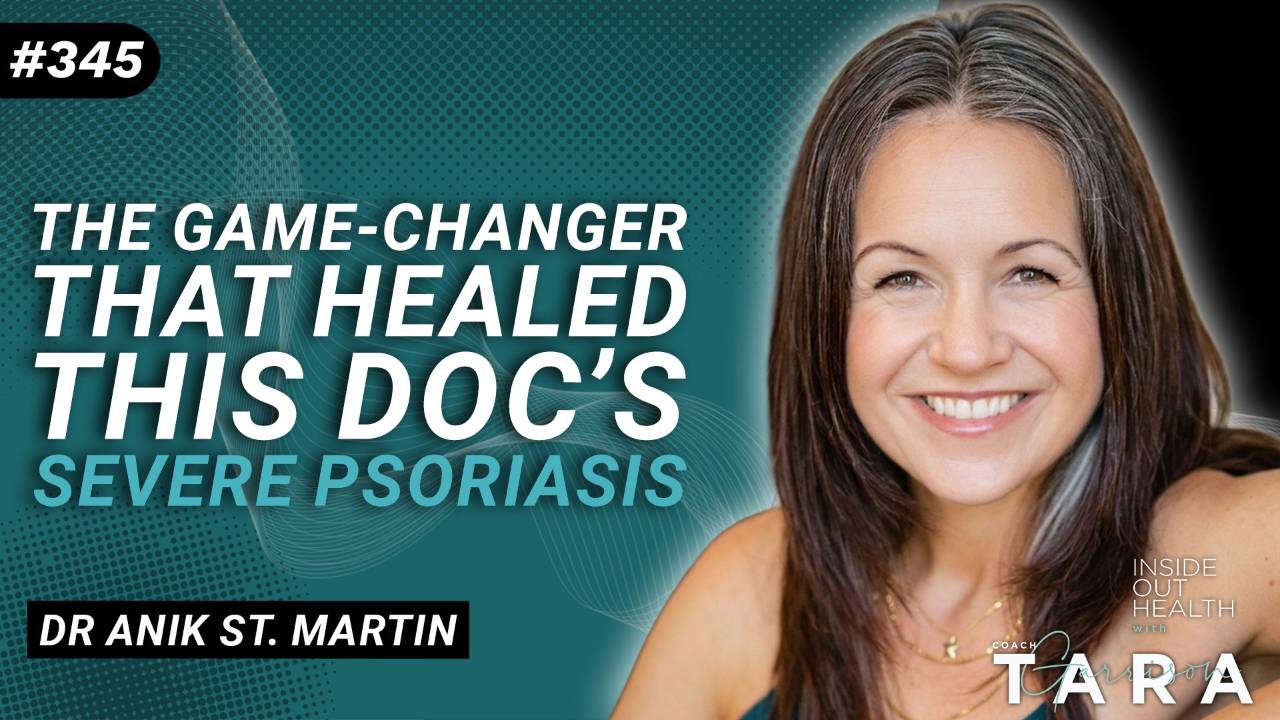


Anik St. Martin, D.C., DACCP, has owned and led a large holistic family wellness practice for twenty-five years. After a personal journey with autoimmunity and conducting over two decades of extensive research on psoriasis, Dr. St-Martin has developed, refined, and applied her expertise and experience to helping people of all ages overcome and cure their psoriasis.
Dr. St. Martin practices and lives with her husband, Dr. Darin Shook, in Washington State. When she isn’t creating something in the kitchen, the couple spends their free time sailing and in the outdoors with their sons, Simon and Marco, and with their dogs, Stella and Charlotte.
In this episode, Dr. Anik St Martin shares how healing her mindset — not just her diet — finally cleared decades of severe psoriasis, and breaks down the gut, hormone, and stress factors driving autoimmune skin flares.
RESOURCES:
- Learn more about Dr. Anik here: https://www.anikstmartin.com/skin-on-fire
- Instagram: @psoriasis_healing_hub
- Get 10% off Peluva minimalist shoe with coupon code COACHTARA here: http://peluva.com/coachtara
CHAPTERS:
00:00 – Meet Dr. Anik St Martin & Skin on Fire
01:22 – Sponsor: Peluva Shoes ad
03:09 – Anik's psoriasis story
04:00 – Childhood onset to a severe adult flare
07:07 – The restriction spiral of chronic illness
08:41 – The Secret: rewriting her self-talk
12:01 – Becoming a mindset coach & the mirror epidemic
14:03 – Biology of Belief & the placebo effect
17:25 – Instagram pressure & the inner bully
21:37 – Psoriasis as detox; yoga & sleep-first advice
25:07 – Inside the five days: 20-mile walking meditations
31:05 – Blue Zones & mindset as the secret sauce
37:10 – Gut health: emotions and the gut connection
40:08 – Tara's Higher Coaching, app & retreats
45:08 – Four stressors, leaky gut & skin turnover
48:45 – 90-day gut protocol, LDN & staying in your lane
53:01 – Hormones, cycles & pregnancy flares
55:54 – Gluten, sourdough & real carbs
59:00 – Listening to your body & food freedom
WORK WITH TARA:
Are You Looking for Help on Your Wellness Journey? Here's how Tara can help you:
- TRY TARA'S APP FOR FREE: http://taragarrison.com/app
- INDIVIDUAL ONLINE COACHING: https://www.taragarrison.com/work-with-me
- CHECK OUT HIGHER RETREATS: https://www.taragarrison.com/retreats
SOCIAL MEDIA:
- Instagram @coachtaragarrison
- TikTok @coachtaragarrison
- Facebook @coachtaragarrison
- Pinterest @coachtaragarrison
INSIDE OUT HEALTH PODCAST SPECIAL OFFERS:
☑️ Upgraded Formulas Hair Test Kit Special Offer: https://bit.ly/3YdMn4Z
☑️ Upgraded Formulas - Get 15% OFF Everything with Coupon Code INSIDEOUT15: https://upgradedformulas.com/
☑️ Rep Provisions: Vote for the future of food with your dollar! And enjoy a 15% discount while you're at it with Coupon Code COACHTARA: https://bit.ly/3dD4ZSv
If you loved this episode, please leave a review!
Here’s how to do it on Apple Podcasts:
- Go to Inside Out Health Podcast page: https://podcasts.apple.com/us/podcast/inside-out-health-with-coach-tara-garrison/id1468368093
- Scroll down to the ‘Ratings & Reviews’ section. Tap ‘Write a Review’ (you may be prompted to log in with your Apple ID). Thank you!
EPISODE TRANSCRIPT:
We are talking about psoriasis on the show today with a very paradigm-shifting approach. My guest is Dr. Anik Saint Martin. She has owned and led a large holistic family wellness practice for 25 years. After a personal journey with autoimmunity and conducting over two decades of extensive research on psoriasis, Dr.
Saint Martin has developed, refined, and applied her expertise and experience to helping people of all ages overcome and cure their psoriasis. Dr. Saint Martin practices and lives with her husband, Dr. Darren Shook, in Washington State. When she isn't creating something in the kitchen, the couple spends their free time sailing and in the outdoors with their sons, Simon and Marco, and with their dogs, Stella and Charlotte, which one of them made a quick appearance on the show, which was awesome.
We... I love dogs. Dogs are always welcome on the show Her book is called Skin on Fire. We're gonna talk about that. Um, and I'm excited for you to hear what actually helped her clear her psoriasis for good. Probably not what you're thinking. Um, her Instagram is psoriasis_healing_hub, and then you can go to aniksaintmartin.com, um, to find her book, which is also on Amazon and Barnes & Noble, or you can find the link there on her website, and to find out more about what she does.
All right. Let's go ahead and get into the show. Here is Anik Saint Martin. Okay. Before we get into the episode, I wanna take a moment to tell you guys about Peluva Shoes. So here's what happened. So Mark Sisson... If you don't know Mark Sisson, you should know Mark Sisson, okay?
Go look him up and start following Mark Sisson. Uh, Mark Sisson and also Brad Kearns, who have been on the... He's been on the podcast, uh, a few times now, and Mark has also. They are, like, legendary OGs in the health and wellness industry. And, um, Mark, who also started Primal Kitchen, if you're familiar with that brand, um, has started Peluva Shoes.
So Peluva means foot glove in Portuguese, and these are minimalist zero-drop barefoot shoes, and they have that five-toe articulation. I resisted trying these out for a long time 'cause I thought they looked nerdy. I'm just being so real Um, but after many times of Brad being like, "Dude, just try them.
Just try them," I was like, "Okay, okay. I promise I'm gonna be honest with you." Yeah, I wear them all the time. I absolutely love them. I didn't think that the five-toe articulation was really that important, 'cause I've been a longtime fan of Vivos and barefoot shoes, and still love Vivos too.
Um, but wow, like, major difference. Like, I was like, "Okay, now I'm, like, really actually using my foot the way I was supposed to." So they are awesome. Um, I told Brad, I was like, "You're right, dude. I love them so much." They're awesome. Um, and then they offered to sponsor the podcast, so thank you to Peluva, and they also offered to give you guys 10% off if you would like to try them out, which I highly recommend.
Um, you can go to Peluva, that's P-E-L-U-V-A.com/coachterra, or you can just use the code coachterra at checkout and get 10% off of your order, and I highly, highly recommend getting some of their toe socks while you're there, because you're gonna need toe socks. All right. Let's go ahead and get into the episode.
Okay. So Anik, uh, thank you for coming on and talking about psoriasis. I'm excited to jump into this with you, and anybody with psoriasis is probably real excited too.
Absolutely. Thanks for having me.
So of course. And so, like, can you share just a little bit of your professional and personal background? 'Cause there's a lot of things you could talk about, right? But that led you to this, "I need to write a book about psoriasis."
Yeah. Right. I think most people, you know, especially with chronic illness, you know, if you do manage to get to the other side of
Mm-hmm
um, you might find yourself compelled to just sort of wanna share your story with the world. And for me, it was such a long journey, and it was so tedious, and I, I felt like I was getting so much, which still happens now, mixed messaging about what I should do, about what was causing it.
And basically, when I was 12 years old, I started noticing a few little skin patches on my elbows and behind my ears, and, uh, we didn't know why, even though now I know that prepubescence is a really common time when your hormones are starting to change, especially for girls.
And I'd had a really significant, um, physical injury. I was in an accident the, a few months before it started to show up, and physical injuries happen to be a trigger also for people. Basically nervous system trauma, right?
Mm-hmm.
So, um, I started noticing it on my elbows and my, my ears, and my mom took me to my family doctor. We didn't know, we didn't know anything, and I was basically just given some steroid creams, which worked like a dream, of course, until it got to the point where I was using more and more and more of them, 'cause the body, you know, can, can get amalgamated to that quite quickly.
And then, um, I grew up in Canada, and so when I was... when I finished my undergraduate studies, to go to grad school, I was going into the US, and I had to apply for a student visa. And in order to... And honestly, I can't even remember if it was a New York State specific thing or just a US thing, but, um, in order to matriculate in the US, I had to be able to show proof of vaccination.
And back then, when I was a kid, it was all on paper, on these paper cards that you would, you know, file in your cabinet. My parents had had a whole house fire, and so my documents were lost. And so to make a long story short, I was vaccinated for every mandated vaccine in one sitting.
Oh, wow.
Which, uh, you know, we know now that with genetic things like MTHFR or, um, for people who have a hard time assimilating those things, that that can be problematic, and it was. I mean, within three weeks, the psoriasis was probably on 30% of my body, and I didn't... I was putting two and two together, but it...
you know, nobody had told me anything. I was just kind of figuring it out on my own. And so I struggled with that through graduate school As I was learning holistically how the body works, I guess. And then I fell in love with an American and, uh, in got married, and in order to get my green card, in the green card process, they kind of put you in separate rooms and interview you, but there's also a physical exam that takes place, and without much conversation or much informed consent, somehow I was vaccinated all over again.
Oh my goodness. And, um, my body just absolutely freaked out, to put it simply. And, uh, within two weeks, I was pretty much covered in psoriasis, and that went on for about close to, uh, I don't know, 15 years or Oh where I just struggled. I really struggled. And what led me to eventually write the book is the fact that people with chronic illness, as you very well know I'm sure, they will, especially if they're holistically minded, right, and they know that their lifestyle and their diet and their environmental choices and all of those things will make change, they'll put themselves in a box with all of these restrictions.
And as the, as, as that's not working, let's say they're not getting better, which I wasn't, then the box gets Mm-hmm and smaller and smaller until not only are you miserable to live with, but you just have no, there's just no, you know, no joy. It becomes very, it can become very obsessive quite Mm-hmm because you keep feeling like, "I can do more.
I can be better. I can..." You know? And the entrepreneur in me and the overachiever and all of these things, I just, it quickly became kind of a, miserable, a miserable way to be. And back then it was like, "Be vegan." You know? "Don't eat, don't do this. Don't do that." And I was doing all of these things.
I became a raw foodist and I, I did all this stuff, and none of it was working until I realized that, um, obviously the nutrition piece is really important, the supplementation piece, you know, the staying away from glyphosates, the saunas, the, all the things. But, uh, that also can become a source of stress.
Mm-hmm. And the stress becomes self-perpetuating, where if you veer away from what you're supposed to do, you start to punish Mm-hmm and then you feel guilty, and it just becomes this like vicious cycle. And so, um, for me, what happened was I was gifted this book called The Secret by Rhonda Byrne, which is definitely not something you would read for the quality of like literature or Mm-hmm but it's very, at that point in my life, it was, it just, I read it in one sitting, and I had never entertained the idea that my mindset or the language I was using with myself on a daily basis could have an effect on my health outcomes.
I, with everything I knew, and I, we were really successful in family practice, and all of these things were happening in our lives, and I, that had never occurred to me that I had this sort of tape running. Mm-hmm. Mm-hmm. so once I identified that, I, um, over a course of about five days, where I just sort of started listening to the thoughts I was using with myself and realized that they were, all the time, very self-deprecating, just not good.
Mm-hmm. But I didn't know until I actually started Mm-hmm um, I just spent these five days sort of catching the, these thoughts and literally flipping them. It was almost like a, um, a walking meditation project for five days nonstop, where I just kinda would flip these thoughts as soon as they would come, right?
So if the thought was, "I'm ugly, I'm ugly, I'm ugly," or, "I'm sick," or I'm, whatever it is, I would flip it to the exact opposite, right? Mm-hmm. beautiful, I'm radiant, I'm vibrant, I'm healing." I'm all of these things. Mm-hmm and in front of my entire family, and none of us could believe it, within five days, my skin was completely clear.
I mean, just like that, and that was 20 years ago, and I haven't had a problem since. And of course, uh, the ground I mean, this, this was almost 15 years into, you know, eating well and taking the omega-3 fatty acids and the gut healing and all the things.
But, uh, the missing link was definitely the mindset piece. And Um, I spent years then pretending that I had never even dealt with psoriasis, 'cause I felt like if I brought it back to myself, that I would be at the mercy of it again, right?
Mm-hmm
and then, um, during COVID, autoimmune disease rates started, you know, in my practice I was seeing
Right
everywhere, and psoriasis rates were going up, and people are really, really suffering. There's 125 million people with psoriasis, and biologics are the most advertised for drug out there right now. It's a huge problem. And so I, I realized that I was safe, so to speak, and that I could share my story, but that I also was equipped to do the proper research and, um, put together, you know, a really well-thought-out protocol, sort of like download everything I knew and, and that's why I wrote the book.
I, I just felt like, at this point in my life, I felt like the best possible person to be able to write this book.
Mm-hmm. Well, thank you for completely validating my approach to health coaching. Appreciate that. 'Cause I mean, I, I always say I feel like I was... I became a mindset coach out of pure necessity as a health coach, because I realized this. You can't help but see it. It's like, well, you can't be healthy, actually.
Your physiology can't be thriving when you're chronically stressed because you're being hard on yourself, you're scaring the crap out of yourself all the time with all these catastrophizing, scary thoughts. You know, you don't like what you see in the mirror. That one in and of itself, I, I, I think it's really, um, you know, you mentioned the, the I'm ugly.
I, I'll share a quick story. This, this was a... It'll resonate with you.
Mm-hmm.
I was watching a, um, documentary from Rachel Hollis, and she was doing some women's event, and she had like a checklist of like just hard, horrible things. Like, I've been raped, I've been, you know, I was molested, or I was in have been in an abusive relationship, blah, blah.
There's all these, this list, and one of them was, "I hate what I see when I look in the mirror." Okay?
Mm-hmm.
So there's just all these things.
Mm-hmm.
And then she had them check their things and told them they were gonna like fold it up and pass and pass and pass around this big auditorium until nobody could ever know whose was whose, and then you are gonna stand up on behalf of another woman to kind of
Wow
the, how common these things are. And, you know, it was, the whole thing was pretty impacting, but when she got to I hate what I see when I look in the mirror, the entire auditorium stood up. All of them.
Yeah.
And Rachel started crying. I started crying watching it, 'cause it just, I know that, you know? Like, I know how prevalent that is in the work that I'm doing. And if we wanna look at this in terms of autoimmunity, right? Like your body is fighting itself.
Mm-hmm.
it's like, no. You know? And so, like, when you're fighting yourself by telling yourself these mean thoughts, scary thoughts, insulting thoughts, it's, to me, it's not, it's not woo woo. In fact, if, if anybody thinks it's woo woo, they can read The Biology of Belief by Dr. Bruce
Exactly
'cause he literally validated this. It, uh... Thoughts?
Exactly. And, and Candace Pert, you know,
Yes
Molecules of Emotion.
Love
She talked about that. She's amazing.
Yes.
And we, the science is pretty sound on the fact that the mind and body aren't separate, right? We've we, we always separate
Oger
but they're... Exactly. And, and it's kinda like as simple as, you know, watch what you're saying to yourself, 'cause you're listening.
Mm-hmm.
And every piece of you is listening, and it's so, it, and it's, but it's also so easy to, you know... And I'm sure this happens to you, too. I have conversations with people who are really suffering, and I remember what that was like when people would say, "Well, have you, you know, are you handling your stress?" And I would be like, "Are you kidding me?
I'm on a chemotherapy drug for my psoriasis," or, because back then, you know, that's what they did. Or, "I, I bathe in steroids," or, "I sleep in coal tar," or, "I... You're talking to me about stress?" Like, it's a very, there's a very big disconnect. And it seems, it feels woo woo, because you feel like, do you know what I'm doing and what I've tried?
You're telling me my mindset, you know?
Yeah.
And that's where I was.
How insensitive of you.
Yeah, like do
F off.
Like, there, yeah. There's absolutely no way this is gonna have an effect.
Mm-hmm.
You know, you just kind of are in this... And so I find myself, and that's why I wanted to write the book, was it's kinda like as a, like what do you have to lose, you know? Like eat this, not that. Don't be too strict on yourself. Take these gut healing supplements, 'cause your gut is most likely damaged.
Take a look at... You know what I mean?
Right.
Don't take blame. Don't take the blame for any of it.
Right.
And, and start to just kind of notice how you're speaking with yourself, and maybe just, um, even in the beginning, if it feels like a lie, start lying to yourself. Because the science also
Yeah
your, your body doesn't know the difference.
Yeah.
Especially when you say certain things out loud, right?
Mm-hmm.
And affirmations and just all of those things.
Mm-hmm.
We, we also know that, um, the placebo effect, for
Yep
is real.
That's exactly what I was gonna say.
Right?
it, how can we not see that this is
Exactly
when placebo effect has happened multiple, many, many, many, many, many documented times?
Exactly. There are science that shows that if you do a study, they've done this with people with, uh, IBS, where they give the people a bottle. They're gonna see, you know,
The, the whole purpose was to study the placebo effect. The, the, the participants in the study didn't know that. So some people are handed a bottle of something that says, like, IBS medicine or whatever, and the other group is handed a bottle that says placebo, and they both equally improve.
Oh, wow.
You know? So even when you know you're taking a placebo, the body just can't help itself. And so I think that especially in a world now where every time... We were just talking before, before the show about how I'm terrible with Instagram. I have to figure that out, but I am sometimes on it.
There's so much pressure
Mm
be more, do it better. You're not doing it well enough, you know. Maybe, maybe I should implement these fermented foods. Maybe I should do this. Maybe I should do that.
Mm-hmm.
And we don't take a moment to really ask ourselves, "Well, how am I feeling about myself right now?" You know?
Mm-hmm.
And is there anything I can do about that? And will that have an effect on the way that I'm healing and, and in and of itself on my gut healing? 'Cause that's the other part, right? The gut is so intricately involved with our neurotransmitters and all those things, and so the two are are so very connected that I really think it's the missing link.
Mm-hmm. Mm-hmm. Oh, 100%.
Mm-hmm.
I mean, I've watched it happen over and over.
Yeah.
And it's like, okay, think of... I'm thinking about chronic. there's a huge difference between, like, an
Yeah
health issue and a chronic health issue, and the chronic ones, you know, any time I have somebody with hypothyroidism, which is, you know, almost probably half of my clients at any given or some sort of, you know, autoimmune condition or, um, you know, Epstein-Barr stuff that keeps getting reactivated, ugh, like these kind of chronic things, for...
I have them read The Biology of Belief.
That's awesome.
And I, I, I think it's so important. It's like we're not denying the fact that currently your thyroid is lagging, but we don't wanna be saying, "I have hypothyroidism," or even worse, "I am hypothyroid." Like as
Yes
program that you're repeating, like, to your body, yes, you your thyroid, it's, it's... My, my thyroid is telling me it needs support.
Right.
Something like that.
My body's expressing something right now.
Yeah. My body's telling me something.
Exactly.
It's letting me know what I need to do. And on that note, I'll just add real quick, what's crazy to me, um, is, uh, in a lot of these types of conditions, I almost every time I see that a lot more rest and recovery is needed, and that... what, gets triggered is, "Oh, I'm tired because of my...
'cause I'm hypothyroid."
Mm.
"I'm tired because of my celiac." And, like, while I totally get that, I totally get that, what I consistently remind them is, like, "No, no, no, no, I'm just tired right now. My body's letting me know what it needs." It's our bodies are always trying to thrive as hard as they possibly can, and they're sending us messages, you know, and I think that's a, a big component of it too is when you have this, you know, constant inner bully, you know, perfectionist, like, do more, be more, go be better, blah, you know, like, when your body's telling you, "Hey, like, just chill this weekend," or, "No, don't go to that party.
I don't... They can handle their own emotions if they're upset about that. Like, this is what I need," it's like what you're talking about of building a healthier relationship with ourselves, being kinder and more supportive with ourselves, prioritizing ourselves. That kinda has to come in order for people to get the rest and recovery that
Absolutely
need.
and we're, we're really... The teaching is opposite that, right? I... In my I specialize in pediatrics, so I see a lot of young families. I mean, that's what I
Mm-hmm
you know, all day long. And the push, you know, the push with sports and
Mm-hmm
with, you know, taking college classes in high school and, and push, push, push, and so I think it almost becomes an an addiction
Mm-hmm
you know,
Prove my, prove my value
Yeah.
driving myself into the ground.
Yeah. And if I'm not
Mm-hmm
uh, I'm not doing enough and all of the
lazy.
Exactly.
I'm underperforming.
Exactly. And, and to your point, you know, absolutely, I think that the body always defaults toward And even when we're something like as obvious as psoriasis, it comes out on your skin, you think of that as the largest organ in the body, even that is actually an expression of health because the body's trying to detox.
The body's giving you signals. The
Mm-hmm
until we're dead in the ground, the body's always moving toward health.
Mm-hmm.
And sometimes it just manifests itself in different ways. And so not necessarily going from being grateful, you know, for, you know, your skin on fire, so to speak, but, um, not judging it. You know, they talk about that in yoga.
Mm-hmm. Mm-hmm
like, if you're, if you're having a hard time with this pose, don't judge it.
Mm-hmm.
And if you're having a really great time and you're doing really well, don't judge it. You
That's why I put one day of yoga in all of my clients' training plans. They all have one day of
Yes
week. And it's part, it's partly 'cause yoga can get things that weight training can't, but I, it's also because I know the things that they're they're getting, they're hearing, you know?
Yes.
And then when somebody comes and puts some essential oil on their rubs it so lovingly and, like, rests.
Yes.
Like, that is just as
Absolutely
as beast mode. Just as important.
Exactly. And the trying to find the balance between those two. And it's a lot. You know, you can... You've spent, you know, maybe a good portion of your life, I would assume, working on this, and I have, too. And
Mm-hmm
still learning every day. And so I'm really... I have so much compassion for somebody who's like, "I just need some relief."
Yeah.
You know?
Mm-hmm
I'm I am exhausted and I need some relief. And it's like, okay, what do I start with? And my advice is always sleep. Sleep
Mm-hmm.
absolute first thing.
Yep.
Sleep and gut, gut repair, um, as simply as possible. And then, you know.
Mm-hmm.
Um, 'cause it's so easy to be like, "Why don't you do the, why don't you do these 145 things?"
Yeah.
And then we'll start to talk about like, "Oh, it's really good. You know, the hormetic stresses are so good for you." And it's true, but that person is like, "What are you talking about?"
Mm-hmm.
Like, "I'm already stressed enough."
Mm-hmm.
You know?
Yeah. I've, I, I mean, I, I hate to say it, but I've had a couple clients in tears. I always feel bad, like, uh, but as long like it's gotta be said, like, I
Yes
I'm like, this is so stressful. Like, you're like working out in the morning, and then you're like doing this like hardcore walk later at night, and then you're like sauna-ing like almost every day, and then you do your red light, and then you have this, and then you have this, and then you have this, and then you have this, and then you have this, and you're working full-time, and you have kids.
I'm
Yeah. How did
Ugh
yeah, how do you do that? Yeah.
I, like, let's, let's reduce this quite a bit, you know? And I totally agree with you. On sleep, early in, earlier in my career, it was the first time a client asked me this. I never really thought about it. And she was like, "So should I, which one should I sacrifice, like, if I...
You know, there's no way around it. I'm either gonna have to sacrifice sleep or my workout." And I was like, "Oh."
Yeah.
"Oh, your workout. Absolutely." 'Cause you'll, you're, you're, your hunger hormones are gonna be all messed up. Your mood's gonna be messed up. Your nutrition's gonna fall apart. You're gonna be way more stressed. You're gonna make worse decisions. You're gonna not be able to handle the stressors of life and avoid things and then feel like you're, like, floundering, like, sleep every time, like, always.
Absolutely. Well, and also if you think about, like, athletes, you know, the rest is part of the actual training.
Yes.
You know? And, and just as important.
Mm-hmm.
So.
Yeah. So okay. So we've, you know, established this, um,
aspect of the, the things you're telling yourself, the things you're believing about yourself. I just wanna stay with the... We're gonna get to gut health. Don't worry, guys.
Yeah
and more of the health-y things, the health science-y stuff. But, like, when you were going through this process in these five days, like, was the only thing you were really doing was noticing when you were saying something mean, kinda mean or harsh to yourself and switching it? You know, can you share any other insights that you have from those five days?
Absolutely. Absolutely. Very precisely, actually, because I found it by accident. You know what I mean? I was just kind
Mm
doing what felt
Mm-hmm
really committing myself. And so the timing was really important for me because I was going back east for a family wedding. My husband was staying here to practice, and I was going back to, my parents lived on a farm. And so I was able to sort of hand my kids to my
Mm
share what my plan was with them, and I'm sure they were like, "Oh, my gosh. She's losing her mind." They didn't say it, thankfully. They took the kids, and then I would every morning go for, um, like a 20-mile walk.
20 miles?
I literally. I would be gone for... And it had nothing to do with the exercise piece. I'm just not a very good sit down and meditate type person.
Uh-huh.
Um, so it was like a walking meditation on
Wow
old country roads along this river. You know, just smelled like manure and whatever, daisies. And, um, I would be gone for hours and hours and hours with just a bottle of water, no phone, nothing. And back then, I'm not even sure I had a phone. But, um, and then I as I I was walking on the first day, I was like, "I'm just gonna catch...
I'm just gonna pay attention. I'm just gonna listen. I don't really have a plan. I'm just gonna listen." And I was in tears for myself when I realized that the disparaging messaging and language was literally happening several times a minute.
Mm.
It was almost like in the background, you
Mm-hmm
where unless I quieted my, unless I quieted myself, I couldn't necessarily hear it or even know that it existed in the first place, and it was bad. It was, I mean, it was like, uh, you know, "I'm ugly. I look like a lizard." I'm, I mean, I, it was very...
I was shocked because I was such highly functioning person, but at the same time, right, this ugliness of language. And I mostly just put myself in a situation where I wanted to just have as much compassion for myself as possible, because I was so utterly amazed with what I was hearing.
And so the first day, I just kinda heard it, and almost went through a few hours of, like, mourning, you know, over what I was hearing.
Nice.
And then on the second day, I was like, "Okay, I'm gonna do this again, and every time I have a thought like this, I'm gonna switch it to the exact opposite." to, I mean, and I mean the polar opposite because I was, I didn't know how to speak beautifully to myself, right?
And
Right
I'm ugly became I'm beautiful.
Mm-hmm.
You know, I look like a lizard became I look like a goddess.
Nice.
Uh, I, you know, like, completely polar opposites and extreme on the other end, and it was exhausting.
Mm-hmm.
Because it was like, catch it, catch it, catch
Mm-hmm
flip it, flip it, and just, like... Um, by the end of the day, I remember I got back, I went straight to bed. I barely ate. I was absolutely exhausted from it, but it was almost also felt like a detox, you know?
Yeah.
And then on the third day, I I was, I started doing the same thing except I started to, to try to harness some, like, some gratitude in my heart around it. Sort of, like, um, instead of, um, you know, I'm beautiful, it was like, um, thank you, you know, thank you for my beauty.
Mm.
Thank you for my this. Thank you, and I was would just try to, like, harbor this feeling of gratitude in, in my gut. And then on the fourth day, I was doing the exact same thing, but then I was trying to, like, project it around, literally just around the entire planet and back to myself, kinda like a, a vortex.
And by the end of that fourth day, I realized, "I think I believe it." I can tell, I could tell there was a shift happening where it's like, this is working, and it's not just a, uh, like, my plan is working. It was like, no, no, I'm changing.
Wow.
Every piece of me is changing. And then on day five, my husband flew in for the wedding, but I, I got up very early that morning to do it again. I came back, and I don't know at which point how gradual it was in the five days, honestly, for it happened, I don't know.
My husband flew in. I walked in, and I was like, "Oh, my gosh." And I showed him. I mean, I got naked, as you would. Like, "Look at me," you know? And by then we had been together, uh, I don't know, like seven, eight, nine years. I mean, he knew this.
He went through this entire journey with me. My parents, my kids, so many of my family members at the wedding, we were all, we all felt like we had witnessed a miracle, and it's not something I ever would've said that I believed in prior to that, but there was no denying it.
And good friend of mine always says, you know, "We only call things miracles because we don't think they can happen."
Right.
Right?
Right.
It's only a miracle if you think it's impossible.
Right. Wow.
Um, and I think, and I, and I, I sometimes I'm weary of sharing this story 'cause I don't want people to think that, oh, in five day, you know, it's five days. Well, it could be one day.
Mm-hmm.
It could be one minute. But I'd also been working on my health for nearly two
Right
at that point, right? As far as, like, all of the other things. But for me, I could've gone three more decades, and if that hadn't been addressed, hands down, I wouldn't have seen a change at all.
Yeah.
would've been just on the hamster wheel of trying to figure it out.
Yeah. That's why I say thank you for validating my work, 'cause I, I mean, that's just what I found.
Yeah
the, the nutrition and exercise and sleep and these supplements and all of the things that we do, it's just not complete.
No.
You know?
It's not.
I, Mm-hmm.
Yeah, sorry. I was just gonna
Mm
because we know that health comes from the inside out.
Mm-hmm.
Right? Not the other way around.
Yeah.
Yeah.
Yeah. There's a, um, you know, there's all those documentaries now about centenarians in different parts of the blue zones and things. And a friend of mine, uh, made one really early on before I started seeing them come on Netflix. Um, and The Human Longevity Project is what he called it, Jason Prall.
He was one of my first podcast guests, uh, years ago. But, um, I Just loved it so much because I knew that Jason was from kind of like my world of health, like where, you know, at that time, I watched this in 2018, and in 2018 it was still like, "Gluten is a no-go forever.
Bread is like the worst thing you can eat. Like alcohol is bad." And like there it was very like rigid, very rigid, you know? I feel like social media health stuff, like it was just a kind of... It's still kind of that way right now, but it was really becoming that way, and I think a lot of people were kinda naive to it still.
Like, "Oh, people are just being really dogmatic." And everyone was just kind of like, "Okay, who knows what's going on? That guy knows. He says gluten and bread are bad. Don't ever eat it. Okay, that..." You know? Like we
Exactly
bought everything, like hook, line and sinker. Who has the answers?
Totally. Exactly.
You know? And, and Jason's interviewing, um, you know, an old man in Italy that's like, "I, I eat bread every day. Oh, yeah, every day." You know? And then it's like some hundred-something-year-old in, you know, I don't know, maybe Costa Rica or something. They're like, "Oh yeah, you just have to drink wine every day." And then, you know, just all these like little, "Oh, I love to have a cigar once a week," or you know what I mean?
It's just all of these things that just kinda like flip your belief system upside down. And what I've noticed, I, I love watching those, uh, type of documentaries because I like to follow patterns of success that are outside of the norm. I get really intrigued by that kind of thing, of what like the general masses think.
And what I notice is that they're all really happy. They all are like very involved in their community, relationships. They have a sense of purpose. They're not too stressed out about stuff. And I'm like, that... There's no nutrition strategy or, you know, none of these people lifted weights, I don't think.
You know? Like, and it's like no, like... and I get it. I, obviously am a fan of lifting weights. I think it's a really smart thing, but I'm also not so dogmatic to not be able to see reality that the people who are it's not just living a long time, but are thriving in the years that they are alive, they're not stressing out about their health.
They're living beautiful, happy lives with good relationships and aren't that stressed out. And so it concerns me sometimes how stressed we perfectionist, uh, you know... It's like, are we taking years off of people's lives by creating this scenario in which you're so stressed out about your health that you're actually hurting your health, you know?
Yes. I, and I totally agree. I mean, and if you look at those, all those centenarians, they, they walk a lot.
Yeah.
They all eat real food, but they don't
They
don't have rules.
Right.
They're just eating, like bread, freshly made bread, some, you know, sourdough, like with, with good grain and, you
Right. Yeah
as opposed to... Sorry, I know you can see my dog's tail
Oh, dogs are very welcome.
Good, good. Um, and they, they, yes, they're in a And so maybe, maybe they are having a glass or two of wine a day, but it's in, combination with laughing with their family. And you know what I mean?
Right.
It's not like whatever in the corner by the pantry while they're chips or like bread
In shame
at the same time
and hiding.
So yeah, I agree, and that's, you know, we used to talk about like my, I had a grandfather who lived on bacon and butter and, you know, smoked cigarettes and this and that, was a gambler and all of these and somehow, somehow managed to, uh, you know, live fairly old and very happy and vibrant, you know?
And
Right
I, I agree with you. I think, I think the secret sauce is probably primarily mindset.
Yeah.
And the, and if you are injured, which I definitely was, that has to be handled. Obviously that has to be handled.
Right. Yeah
but then to also trust that, you know what? I am handling it. I'm just gonna trust that I'm doing enough and that I'm handling it.
Yeah. Yeah. I mean, true health, like obviously neither one of us are here to say like, "Oh, none, none of the actual health strategies matter." Like of course they do. We're doing every day, all day. It's just, it, it's, it's incomplete, and I love to highlight that, you know?
Yes.
Great, that's, that's awesome if, you know, maybe it's not that serious and it's just like a little thing that popped up and you did some sort of health strategy and that got rid of it, great. But, you know, we're gonna transition into the gut now and like the gut...
First of all, I would I always like to preface this by saying none of us know how the gut works, okay? Like some of us, we're, a lot of us are very, very nerdy about the gut and we love learning, but we're not even remotely close to fully understanding the gut at all.
Like we haven't even probably discovered half, the gut-immune connection. Like we know some stuff, and that's really exciting and cool, but we do not know how it works all together. Um, and you know, before I, we are so lucky to hear your thoughts about the gut and psoriasis and autoimmunity, um, I just have to say what I have witnessed so many times is the emotional status of a human being is, in my experience, the biggest contributor, unless it's some weird thing like environmental mold or you know, some sort of obvious damage like that.
When it comes to gut issues, it, the, the emotions and the gut are hand-in-hand. And when it's chronic stress or environmentally, like, in terms of the people you're around, you don't feel
Mm-hmm
you know, unhealed traumas causing you to have these stories about life that are really scary or pressuring, or the hard work mentality of, like, "I'm a loser if I'm not grinding every second of the day and building an empire." You know, like, these type of things, it's kinda like, in, in my experience, like, we could temporarily get it better, but you're very likely to drive it right back into that pattern, you know?
And I don't say that in, like, a I don't mean that in a shamey or pressurey way at all. More in, like, a invitation to, like, you deserve, if, if this is anybody listening, like, you deserve so much to, like, whatever tools, resources, teachers, mentors, whatever, like, you deserve access to those things.
I think that's why a lot of us podcast and things, you know? Um, it, is Like, everybody deserves to feel better. We've all been through traumas and programs and all of these things. And, like, the more we kinda group together and share our resources, like you're sharing this kind of paradigm-shifting approach to psoriasis, it's like the more we'll try it, see how that helps.
That's
So I don't, I don't mean to say, like, "You need, you need to fix your emotional status if you're gonna fix your gut." Like, No, no, no, no. I just mean, like, notice the connection. I think most people with gut issues do, you know? And, and, and keep continuing to search for ways to calm your nervous system, uh, calm your emotional state, feel safe as, like, yeah, for your gut, but just for you in general, you know?
Okay.
Absolutely.
I wanna take a moment to tell you guys what I can actually do to support you in your journeys, and tell you a little bit more about Higher Coaching, my app, and retreats. So just as a quick summary, Higher Coaching is my full-tilt, full-on customized health and life coaching.
So we are getting all into every aspect of your life in a very supportive way. So how that's delivered is completely customized training. You'll do my neuro-typing test to kick things off, which is a whole thing in and of itself that's really cool. And then I will completely customize your training and also your nutrition.
I base a lot of my decisions on labs. You don't have to do labs, but we can do a lotta labs. You can also bring me labs that you've had done recently or, you know, whatever kinda health history that you have. Love to see it. And, you know, from the labs perspective, we do blood.
We do hair tissue mineral analysis, DNA. Um, I have a software that I run DNA through that I prefer where I can see different SNPs that have to do with health, um, that are more research-backed and I actually trust. Um, we do stool testing, so gut microbiome. So if you got gut issues, bring 'em.
Let's go. And also, um, hormones through saliva and urine. And those two methods of testing help us get, see a little bit more of a deeper insight into what's going on with your hormones, incorting, incorting including cortisol, um, and your sex hormones. So, um, there's that. And then we also have biohacking involved in various ways.
That could be through an Oura Ring or Whoop Strap or some sort of HRV and sleep tracking device or a continuous glucose monitor or, you know, lots of different interventions that we do depending on the person and what they need. So there's all of that health approach, and then there's the full-on life coaching because I believe these are one.
They are. I, it's not I believe. They are one okay? So it's like if there's a lotta dysfunction in terms of interpersonal relationships or professional life or just internal world in terms of boundaries and self-talk and identity and all of that kind of wounded stuff, like, we get into that too, as much or as little as someone is willing to.
So Higher is my full-tilt, we are going all in on you, baby, uh, one-on-one coaching. And I do have a coach that coaches with me, Coach Daria, who has been on the podcast a couple times. Um, so you do have some options there between working with either of us.
And the, you know, obviously the cost is a little different too, so it's kind of a nice service for people because, yes, I charge more. But yeah. So if you wanna learn more about that, go to terragarrison.com, and you'll see one-on-one coaching. And just, just click on that one, and you can get a free consultation with my team.
Next is my app. So my app is my solution for not everybody can afford or even wants full-on one-on-one coaching. So if you want all my goods, like, you want all my training counsel on form optimization and nutrition and, You know, the biohacking and the info, and we do have live Q&As once a month and community and all of that.
That is, uh, obviously a lot more affordable and pretty awesome if I do say to do say so myself. And, uh, there's a whole mindset part in there that a lot of people like where I take you on these little 22-minute guided journeys. So check those out if you get the app, and there's a seven-day free trial so you can see everything in there and make sure you like it before you actually pay anything.
So just go to app.terragarrison.com for that. And then I do have a retreat open right now. In 2027, we are going up to the Pacific Northwest. It'll be about 45 minutes outside of Seattle. Um, we are staying at the beautiful Salish Lodge and Spa. It sits on top of 168-foot waterfall, and it is owned by the tribe whose lands that those are.
That waterfall is very sacred to them, and that makes me happy that they are in control of that land again. So, um, it's gonna be incredible. We're gonna do lots of fun things like white water rafting, paddleboarding, uh, you know, we're gonna do holotropic breathwork or, like, conscious connected breathwork, which a healing type thing.
Um, we will have all sorts of amazing facilitation and, yeah, they're the coolest thing that I offer straight up. They're amazing. So if you want to check that out, just go to terragarrison.com and click on retreats, and you can find out more and get all signed up. If that is speaking to you, I firmly believe that anybody that comes to anything, like whether it's working with me directly or in my app or coming to one of my retreats, uh, my whole business is kind of a spiritual thing for me, so I take that very seriously, and I fully believe that people who come my way are sent my way for a reason.
So if that's pinging at you, um, please, please honor it. Like, uh, it's, it's more than just business for me here, you know? So, um, yeah, I would love to hear from you if I can support you in any of those ways.
Um, okay. So yes, when it comes to the gut, it's it's primary. And we know as far as the damage goes, we know that autoimmunity typically has some sort of gut involvement, right? And from my perspective, in terms of what I know in paradigm-wise, is that there are four things that will injure the nervous system, which is kind of synonymous with the gut, right?
They, they say they refer to the gut as the second nervous system
Mm
another nervous system or... The first is physical stress. The second is chemical stress. Emotional stress. And in the past 10 years or so, they've added electronic stress.
Mm-hmm.
Right? Like EMFs
Uh-huh
5G, and now they're coming up with 6G and all of these things. We know that that actually has a, uh, an effect on our cellular function and on our gut. And, um, the body doesn't really differentiate between those stresses. So if I am in a car accident versus I have an emotional trauma, that all that is is, is stress on the nervous system.
Mm-hmm. Mm-hmm.
And so the gut can be damaged technically by those four things. And when there's damage in the gut, it translates, of course, into inflammation, as we know. And those tight, porous tight junctions they're called in the lining of the gut can be affected and become in, in... As they're being affected through inflammation, they can become more porous, basically allowing certain food particles, um, in to the bloodstream because technically the the, the gut separates us from the outside, right?
It, it's a tube. It separates the inside from the outside, and when those tight junctions become more porous because of damage, whole food particles can come into our bloodstream. The body obviously notices that that's foreign material in a place where it shouldn't be and begins to attack itself.
Mm-hmm.
And, uh, and then if it's not handled properly, ideally right away, which, you know, who's gonna do that because it takes a long time for symptoms to appear. You wouldn't even know.
Totally. Right.
Um, and there are various things when it comes to psoriasis, there are various things in the literature as far as chemical exposures go and, and that sort of thing that will cause that. And, um, which is why we talk about the healing of the gut has to be
Mm-hmm
because we know that, um, as the body tries to detoxify and it's attacking itself and the inflammatory process is happening, one of the major detox factors beyond the liver is the skin. And, um, with psoriasis, you know, the skin is supposed to turn over every 21 days. Like in a, in a healthy piece of skin, those cells turn over every 21 days, they reinvent themselves, so to speak, or they divide.
In somebody with psoriasis, it's every four days. And so those patches, that's all it is, is extra skin growth and extra skin cells just kind of out of control, um, creating that. And so, uh, the gut is, is something that absolutely has to be addressed. And so that's how people, I think, when they get tested or to, to your point, can become very gluten sensitive or dairy sensitive or in, you know, can become inflamed eating legumes or those sorts of things.
And so I really am a big believer in a 90-day
Mm-hmm
where we... I, I also really like for people to get tested, food sensitivity tested, but it's not necessary, I don't think. Um, 90 days eliminate very specific foods, only for 90 days, 'cause people can really get caught up, right? I I've met people who have been on the carnivore diet for three years.
Mm-hmm.
You know, because they just You can get caught up in this like, "This really helped me, and now I'm afraid."
Mm-hmm. Yeah.
I'm afraid to reintroduce, and, and then again, you get into that
Mm-hmm
state of being. So 90 days, and then begin to reintroduce slowly and just kind of see what works. And you may have to extend that a bit more, but, um, in combination with some very specific gut healing supplements like, um, obviously a really good probiotic, but a GI repair supplement that would be made up of, um, like slippery elm bark and marshmallow root and diglycerided licorice and L-glutamine.
There are some great products that combine all of those things, and that supplement protocol for me is a six-month protocol, along with really high-dose omega-3 fatty
Mm-hmm
um, and a few other, you know, antioxidants. But again, not forever, but for a short period of time so that the body can take a break while we're working on everything else, get some rest, um, create a pattern interruption, and protect the gut.
Mm-hmm.
And the body knows what to do with the rest, in my experience.
Mm-hmm.
And then also realizing that you know, healing takes time.
Mm-hmm.
So it Even as we bring those things in, we may not, after 90 days, see the big difference that we want to see, but trusting that the body's in a pattern of healing and it's moving forward the way that it should be.
Mm-hmm. Yeah. I, I love your approach here, 'cause it, uh, similar to mine, so I We're aligned. It's like, yeah, let's 'cause, like, okay, when we talk about the mind versus the health, like I always like to say yeah, but, like, certain issues have already manifested in the physiology.
Mm.
So we wanna support the physiology as much as we can, you know?
Definitely.
Um, so and then I have a question, too. Like, do you do all botanicals like that? Or like have you explored LDN or, you know, oral BPC-157? Or like have you played around with any of those kind
I haven't, I haven't played around specifically, but I have colleagues who do who have really good results.
Mm-hmm.
so I And I don't know why I haven't yet. I think, um, I think I'm trying to keep it as simple as possible.
Yeah. Yeah.
And it's not something that I'm not willing to explore, because I've, again, I've, I I know people who've had great successes. I just haven't implemented it yet, because I feel like my protocol is already a lot
Yeah
digest. No pun intended. Um, and, and it seems to work. But I do
Well,
Oh, go ahead.
I was gonna say, and it's in your book, right? So like, I mean, something like
Yes
you would have to work with a practitioner, right?
Exactly.
They prescription for it, and they need to check certain things.
Exactly. And that's and I do quite a bit of that. If somebody If we're hitting a roadblock or I feel like Um, I know where my place is, in other words, and I know what I'm very good at.
Mm-hmm.
And if somebody needs anything more than that, I feel like I'm pretty good at recognizing it, and then I'll send them in the right direction.
Yeah.
You know?
Yeah. That's great.
Collaborating and The one thing I've realized after 25 years of practice is, um, I'm very good at a few things.
Right.
You know?
Yeah. Same.
And I try to stay in my lane.
Yeah. I know. I I'm like referring out is my favorite thing to do.
Absolutely.
It's just, you know, why not refer somebody to somebody that this is exactly what they do and have dedicated their life to versus me trying to be an entry-level, like, junior kindergartner trying to do it while I try to do 50 million other things.
Exactly.
Yeah. Um, I I'm curious your thoughts about hormones' impact. Like you mentioned, you know, prepubescent, blah, blah, blah. You know, I've geeked out a little bit on, like, progesterone and things, and I'm curious if you have any insights into
Absolutely
and how they impact psoriasis.
So a lot of people will self-report that their psoriasis is worse when, when they're going through their cycle, when they're menstruating, or it's, it can become worse during pregnancy or when they're nursing, or I'm talking about women in particular. And there is quite a bit of research showing that those times in our lives or throughout our cycles where estrogen becomes elevated, um, or if even in perimenopause where there's you know, the estrogen, um,
Fluctuating
balance
Mm-hmm
that there can be uh, exacerbations in psoriasis. And I experienced that myself. When I
Mm-hmm
pregnant with my first son, Marco, I mean, I, the, the exacerbation was shocking. And, but then again, you're in a situation where you're like, "Well, what am I supposed to do? I'm pregnant." You know, I'm not take anything. I'm not going
Right
um, and so then I think mitigating the inflammatory process that's being sloughed off from that is, I think, honestly the only option, especially if, if a woman is
Mm-hmm
nursing. And so then again, high dose omega-3s, some really good, um, natural anti-inflammatory supplements like bioflavonoids and turmeric type, you know, supplements and, and things like that, and just doing our best until we can get to the other side. And then even then, with the menstruating girls who have flare-ups with their autoimmune situations, and it's not just psoriasis, it could be like mast cell activation, which so many
Mm-hmm
have now
Mm-hmm
um, I use a lot of chaste tree berry.
Mm-hmm.
So easy, you know? So easy and natural and really contraindication free, um, in my experience, just to help balance things out as much as possible can, can seem to help. But yeah, hormones are a big one.
Mm-hmm. Mm-hmm.
And now we have so much, you know, we have so much hormone disruption beyond the natural cycle, right? Just because of some of the things we're exposed to, and so making sure, too, that your household products, the products you're putting on your skin, the, um, you know, the, all of those things that you're not having some hormone disruption because of that I think is really important.
Mm-hmm. Yeah, I like how you've kind of laid this out of, like, yeah, there are lots of important health factors, um,
Yep
probably not gonna be complete, meaning the clean products, uh, okay, if legumes are the thing that trigger or if gluten, it's almost always freaking gluten, you know?
Yeah, exactly. And I love gluten. I eat a lot of gluten.
And you eat a lot of gluten. You're good with gluten.
I make my own again, I, I'm kind of a nerd in the kitchen.
Oh,
that's one of the things, right, that we talk about a lot. Like, I think there's something to be said about falling in love with the kitchen.
Yeah.
Um, and making it, changing the mindset around that, where people are
Yeah
but I hate being in the kitchen," it's like, "Well, I'm sorry, but this is definitely, you know..."
Mm-hmm.
Um, like your, even the centenarians we were talking about before, like, there's a lot of time spent in the kitchen.
Uh-huh.
I think it's unavoidable. So I, um, yeah, I make, I, I'm a nerd when it comes to grain. I'm very particular about the grain I buy. buy it, I buy it whole. I mill it
Oh,
only because I'm a nerd. That's
That's cool
necessary. A lot of these companies, you can buy it obviously milled and, and they're like heirloom phenomenal companies in Washington State especially. And then I make these long, you know, 24 to 48 hour long ferment sourdoughs.
Mm.
And if I go out to a restaurant and then they bring bread to the table, I eat it, but it's very rare, right? It's not something that I'm, I'm not, you know, I'm not
Mm-hmm
Dave's Killer Bread and eating it every day and, you know what I mean?
Uh-huh. Yeah.
So I think that, uh, there's a reason that bread goes thousands of years
Mm-hmm
that people talk about sharing bread and breaking bread. And I think that's there's a very real, um, enriching component about that. I went years without eating it because of what we were talking about, and when I brought it back in what was, for me, the right form, I could tell right away, like, oh my gosh, this is, this is revolutionizing in terms of the the nutrient density and what it's doing for my body, and even my body composition, and I really realized that I was kind of depleted.
Yeah.
And, uh, as far
Mm-hmm
like good carbs and that sort
Right
it was really important for me.
I see that a lot in people, especially if they've been on, like, an autoimmunity or some kind of journey. Like, pretty I'm like, "What actual carbs are you eating?"
Yeah
I'm like, it's not just fruits and vegetables. We need some real actual carbs here,
Absolutely
potatoes or I'm not opposed to rice. A lot of people opposed, I'm not opposed to
Yeah
at I'm like, "Look at the healthiest populations in the world. They're living off rice." You know?
exactly. And it's interesting because, um, Mickey Trescott, she's the one who, who works a lot with the autoimmune protocol, she has people, um, when she's doing her AIP diet protocol now, will have people continue to eat rice.
Mm-hmm.
Which used to be unheard of, right? Eliminate all grain and this and that, and we're realizing, especially with women, and absolutely I would think with men, but they they, I think it's really precise with women, thyroid and balance and all of these things, we absolutely need those.
Mm-hmm.
Um, and it's just a matter... And everybody's so different.
Yeah.
You know? Like, you may not do well with legumes, whereas somebody else is like, "I live off of, you know, lentils, and I do so
Right
with that." And it's a, it's also about finding the right formula. But, um, I think spending, spending adequate time in the kitchen figuring that
Uh-huh
is really important.
And listening to your body.
Yes.
You know? Like, I know for a fact my body likes beans. All kinds of beans. It is
Yeah
please, yes, like, I could live off of hummus and anything with beans in it. It's like my brain is just like, "Ding, ding, ding, ding, ding. You did it. Good job. Eat that," you know?
Exactly. Exactly. And you can be in tune enough to, to recognize that, and then also realizing that, you know, if somebody has a really hard time with
Mm-hmm
um, maybe trying them sprouted.
Right. Right.
Or, you know, it's very easy to do, or trying them, eating them with a portion fermented food like sauerkraut or kimchi
Mm-hmm
just a little bit of kombucha or something to, you know, help with digestion. And so there are so many ways to make it
Mm-hmm
so that we're not feeling It should be fun to eat.
Yeah.
I love to eat.
Right.
And I love to eat good food, and I, you I like to hang out with people and eat. And just to have
Mm-hmm
so restricted and, a, stress factor
Mm-hmm
is something that I really do think we need to move away from.
Mm-hmm. And the outside in, this is what you should and shouldn't do. Now I, I, I, there's a time and a place for it, right? Like, if you've never You got autoimmune stuff and you never really paid attention to your food that much, and you're gonna do a 90-day thing like and then you're gonna introduce those, like, one by one and see how your body responds.
Yes, there is a time and a place for something like that to gain awareness and insight.
Mm-hmm. And to heal.
And to heal.
To, to get enough of a reset to give the
Exactly
that pause, you know?
Right. And but as they come back in, you're gonna kinda learn, you know? Versus like, "Oh, I read that I shouldn't have any gluten, dairy, sugar, uh, legumes, blah, blah, like, forever. Like, so I
Yeah
don't eat those now."
Exactly.
You know? Is not really as helpful.
It's really not. It's kinda like with the thyroid thing. Somebody was saying to me that their, um, healthcare provider told them to never eat broccoli again because, um, cruciferous
Right. Oh, right
are And I, and I Right away I was thinking, I understand the thinking, but at the same time, I highly doubt it's broccoli that's hurting your thyroid.
Yeah. And I always, you
what I mean? Like, that doesn't make any sense to me. I Chances are something else happened.
Yeah. It's like, just because we have a little bit of data that that can happen, you know what I'm We, we take studies a little too serious. We, we look at studies as that's how it works for everybody now. And it's like, no, no, no.
Exactly.
A study is just showing what happened in that study. That's interesting. That's all.
Exactly. And exactly. And I do, I do think that, um, just because I talk to so many people who are like, "Just tell me what to eat. Tell me what to do 'cause I don't know what to do. Please just tell
Yeah
to eat." And so, like, in the, in the book I have this, like, eat this, not that.
Right.
Right? But at the same time, there's obviously there's wiggle room.
Yeah.
give yourself grace. You're at a pool party
the host offers you a piece of pepperoni pizza, um, and you're not gonna eat for hours, and you, you
You're starving
just eat it. And forget about it, and don't, don't get in, don't get caught up in this mindset of
Right. Perfection
what am I gonna eat, like, tomorrow? What's gonna happen tomorrow? Now what's gonna happen? What am I you know,
Fear
that's what tends to Exactly. Just let it be like, "That was a really great piece of pizza."
Mm.
"And now I'm just gonna go a while without eating one again."
Mm.
That's all. You know? Like, it's, it doesn't have to be so complicated. Um, and that's what's exciting, right? Kind of, like, bringing some joy back into Life is short, you know?
Yeah.
So.
I feel like we need, like, a, one of those 20-mile walks so we could just on and on. You know what I'm saying?
Yes.
Okay. So, but unfortunately we do have to wrap this up. So, um, I'm gonna refer you guys The book is called Skin on Fire. So you can go to her website, which is annicsaintmartin, we'll put it in the show notes, dot com. The book is there. Is it on Amazon
It's on Amazon and Barnes & Noble.
Oh.
And can be ordered through a local bookstore. Yeah.
Okay. Awesome. And then if you want to find her on her thriving Instagram that she is just going ham on, that is psoriasis_healing_hub. All right. And I thank you so much. This was awesome.
I absolutely appreciated it. Thank you so much.
Thank you so much for joining me on this episode of the Inside Out Health podcast. I hope it's been helpful to you in your journey. If you think that it might be helpful to someone you know, please share it with them. Please share on social media. It really helps me grow the show and reach more people with these amazing messages.
And if you could be so kind as to rate the show, and, um, possibly even leave me a review, that really helps. So, uh, much thanks in advance if you do that. And yeah, please subscribe if you wanna hear more of this type of content. I have lots of amazing expert guests on the way.
All right. Thank you.

Want One on One Coaching with Tara?
Click below to learn more about Tara's flagship 1:1 program HIGHER Coaching. Work directly with Tara on training, nutrition, personal development and biohacking!

Try Coach Tara App for 7 days FREE!
Learn how to train for results at home or in the gym, how to make easy, healthy recipes to achieve your goals faster, and explore the world with Tara as she helps spark shifts inside you to bring your best self out!
