Episode 342: DR CHRISTOPHER CORTMAN Guided Imagery for Resolving Trauma
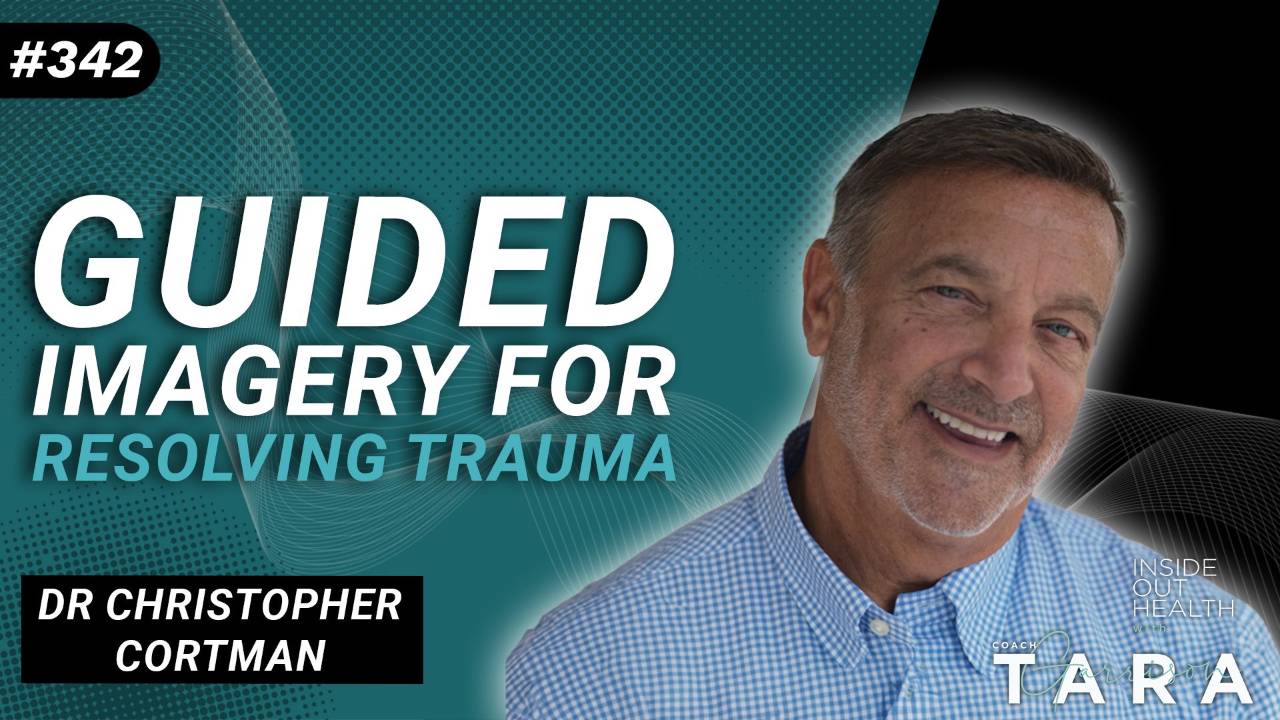


Dr. Christopher Cortman has facilitated over 80,000 hours of psychotherapy during his distinguished career spanning forty years. A Florida Licensed Psychologist, he maintains a thriving private practice while specializing in emotional trauma and anxiety disorders.
He’s appeared nationwide on talk radio and television. The acclaimed author of five previous books, his new book, The Guided Imagery Cure: The Best Proven Methods for Quickly Resolving and Healing Trauma, describes a profoundly impactful tool for addressing trauma, grief, and more.
In this episode, psychologist Dr. Christopher Cortman shares 40 years of guided imagery techniques for resolving trauma and grief, walking through real cases—from a suicidal police trainee to a WWII veteran's 80-year nightmare—to show how confronting and reframing unfinished pain, rather than just letting time pass, is what actually leads to healing.
RESOURCES:
- Learn more about Dr. Cortman here: http://srqshrink.com/
- Instagram: @drchristophercortman
- Get his book The Guided Imagery Cure: The Best Proven Methods for Quickly Resolving and Healing Trauma here: https://amzn.to/4hsXvEW
- Get 10% off Peluva minimalist shoe with coupon code COACHTARA here: http://peluva.com/coachtara
CHAPTERS:
0:00 Meet Dr. Christopher Cortman & his new book
1:12 Sponsor: Peluva Shoes ad
3:00 40 years of guided imagery
3:56 What guided imagery is & everyday uses
5:01 Case study: the suicidal police trainee
9:07 Closure: shutting off the stress response
11:30 The WWII veteran's 80-year nightmare
14:56 Guided imagery for unfinished grief
15:41 Healing a friend after her husband's suicide
23:09 The five steps: remember, feel, express, release
28:36 Reframing: MADD and a cancer fundraiser's legacy
31:19 Tara's coaching, app & retreat offerings
36:16 Guided imagery for fresh, active trauma
37:08 The teen driver who killed a cyclist
44:21 Why grief gets stuck in emotional loops
46:07 Guilt, control & hypervigilance after loss
56:03 DIY imagery vs. working with a professional
57:38 A mother's suicide: becoming his guardian angel
59:35 Rape survivor hears the apology she needed
1:01:04 Licensing & where to learn more
WORK WITH TARA:
Are You Looking for Help on Your Wellness Journey? Here's how Tara can help you:
- TRY TARA'S APP FOR FREE: http://taragarrison.com/app
- INDIVIDUAL ONLINE COACHING: https://www.taragarrison.com/work-with-me
- CHECK OUT HIGHER RETREATS: https://www.taragarrison.com/retreats
SOCIAL MEDIA:
- Instagram @coachtaragarrison
- TikTok @coachtaragarrison
- Facebook @coachtaragarrison
- Pinterest @coachtaragarrison
INSIDE OUT HEALTH PODCAST SPECIAL OFFERS:
☑️ Upgraded Formulas Hair Test Kit Special Offer: https://bit.ly/3YdMn4Z
☑️ Upgraded Formulas - Get 15% OFF Everything with Coupon Code INSIDEOUT15: https://upgradedformulas.com/
☑️ Rep Provisions: Vote for the future of food with your dollar! And enjoy a 15% discount while you're at it with Coupon Code COACHTARA: https://bit.ly/3dD4ZSv
If you loved this episode, please leave a review!
Here’s how to do it on Apple Podcasts:
- Go to Inside Out Health Podcast page: https://podcasts.apple.com/us/podcast/inside-out-health-with-coach-tara-garrison/id1468368093
- Scroll down to the ‘Ratings & Reviews’ section. Tap ‘Write a Review’ (you may be prompted to log in with your Apple ID). Thank you!
EPISODE TRANSCRIPT:
My guest today is Dr. Christopher Cortman. He has facilitated over 85,000 hours of psychotherapy during his distinguished career spanning 40 years. A Florida licensed licensed psychologist, he maintains a thriving private practice while specializing in emotional trauma and anxiety disorders. He's appeared nationwide on talk radio and television. The acclaimed author of five previous books, his new book, The Guided Imagery Cure: The Best Proven Methods for Quickly Resolving and Healing Trauma, describes a profoundly impactful tool for addressing trauma, grief, and more.
You can learn more at SRQ, like the Sarasota Airport code, srqshrink.com, and we'll link that in show notes. And, um, yeah, this episode is, is really, really great. I, I asked him to just help us understand what he means more about this guided imagery cure, and it led to the most amazing conversation.
So I hope you guys get a lot out of this, and please send it to anyone you know who's, um, having a hard time getting past trauma. Okay, before we get into the episode, I wanna take a moment to tell you guys about Peluva Shoes. So here's what happened.
So Mark Sisson, if you don't know Mark Sisson, you should know Mark Sisson, okay? Go look him up and start following Mark Sisson. Uh, Mark Sisson and also Brad Kearns, who have been on the... He's been on the podcast, uh, a few times now, and Mark has also. They are, like, legendary OGs in the health and wellness industry.
And, um, Mark, who also started Primal Kitchen, if you're familiar with that brand, um, has started Peluva Shoes. So Peluva means foot glove in Portuguese, and these are minimalist zero-drop barefoot shoes, and they have that five-toe articulation. I resisted trying these out for a long time 'cause I thought they looked nerdy.
I'm just being so real. Um, but after many times of Brad being like, "Dude, just try them. Just try them," I was like, "Okay, okay, I promise I'm gonna be honest with you." Yeah, I wear them all the time. I absolutely love them. I didn't think that the five-toe articulation was really that important 'cause I've been a longtime fan of Vivobs and barefoot shoes and still love Vivobs too.
Um, but wow, like, major difference. Like, I was like, "Okay, now I'm, like, really actually using my foot the way I was supposed to." So they are awesome. Um, I told Brad, I was like, "You're right, dude. I love them so much. They're awesome." Um, and then they offered to sponsor the podcast, so thank you to Peluva, and they also offered to give you guys 10% off if you would like to try them out, which I highly recommend.
Um, you can go to Peluva, that's P-E-L-U-V-A, .com/coachterra, or you can just use the code coachterra at checkout and get 10% off of your order. And I highly, highly recommend getting some of their toe socks while you're there because you're gonna need toe socks. All right, let's go ahead and get into the episode.
So Dr. Cortman, um, I love talking to seasoned therapists. It's always one of my favorite... Like, I'm sure this podcast I'm gonna be sharing with a lot of people. Um, you have 40 years of experience, 85,000 hours. I think they say that it takes 10,000 hours to become a master at something, so you've more than eight times that.
So thank you for coming and sharing with my audience and with me today.
Yeah, well, thank you for having me. I really, I wanna turn that back around and tell you I'm grateful to be here,
Thanks
appreciate it.
So you have five books and your latest one is called The Guided Imagery Cure: The Best Proven Methods for Quickly Resolving and Healing Trauma. Can we start off by just, like, a high level overview of what you're talking about with this guided imagery cure?
Yeah, certainly. Um, guided imagery has been around for centuries. So to be clear, I didn't invent it. Um, I learned about it in graduate school, and I learned that it's a nice technique to use for relaxation, for insomnia, for helping people gain some confidence to take on performance anxiety.
For instance, if you're an athlete or a singer or stand-up comedian or something, you can practice in your mind. If you saw the, uh, the Winter Olympics, um, the US team is employing guided imagery and help with their downhill skiing techniques or their ice skating, and what they're doing is closing their eyes and imagining themselves skating or skiing, and it has a way of perfecting that in their minds.
So I didn't invent any of that. What, what I stumbled on, if I, if you don't mind, I was, uh, I think 26 years old. I recently obtained my doctorate, and I got a phone call from the fire chief in town, and he said, uh, "Dr. Cortman, we have a guy who's training to be a police officer, and, um, his wife found him with a loaded pistol in his mouth last night threatening to take his life because he was shot in the face accidentally with a blank during his training." Now, blank is wood chips.
He, he, he got hit in the face with wood chips. But he can't get that out of his head. He's dreaming about it every night. So it's like, "No pressure. He just wants to kill himself if you can..." He's like, "You gotta fix him." And I'm thinking, "Wow, that's really great.
Now what am I gonna do?" You know, I'm kind of fresh out of school, and they're handing me this guy who's actively suicidal. So I thought about Guided imagery. I'd learned some work in, in hypnosis, and I did some, you know, practicing guided imagery. And I thought, you know what?
Somewhere I'd, I'd heard about somebody using a technique where they sent somebody to a movie theater, um, so that they could watch whatever was unfinished and kind of replay it from a distance, that you're watching it instead of it's happening to you. And then you could go on the screen and help yourself and kind of put it in a better place.
So that's what I did. I tried that. And I told him, "We're going to whatever movie theater is comfortable for you. We're going to be the only two in there. There's going to be a projectionist, and I'm going to hand you a remote. I'll bring the popcorn, and you can, um, decide when to fast-forward or rewind or pause or whatever you have to do, but we're watching this thing because our goal today is closure.
The reason that this is happening on a nightly basis in your head is because you're not finished with it." Right? I tell people now, not then, but I tell people that the mind is kind of like the stomach. Whatever has not yet been digested may repeat on you. The difference is the stomach can do, like, 10 hours, 12 hours, and then it's done.
The mind can do an entire lifetime. You know, I got people in their 80s telling me for the first time, they never told anyone else, that they were sexually assaulted when they were seven. You know, they never dealt with it. It didn't go away. It's not better. They have to deal with it now to finally make it better.
So back to this guy. You know, we watched the movie. I sent him on there. Like, "Let's finish it. It's done. It's okay. You survived, and you still want to be a police officer. You know, let's, let's learn what we need to from this. It's not going to happen again.
You know? Let's put it away." So behind every movie theater is a dumpster Right? There's always a dumpster back there. So we went back there so we could take the, you know, the, the DVD. You know, the We got the DVD from the projectionist, and we went back there and destroyed it, threw it out.
We don't need this anymore. So what happened to me, to him, was most interesting. I didn't see him again, although he knew he could call me if he needed to. Um, this was before we had the internet, right? But, um, he came back the next week and he said, "Really amazing.
I had the dream that night as if to finish it and then never again." And he came in a few more times. No, it was done. He came in four years later for marital issues. I asked him about. No, that went away that day. Well, I knew I had something there.
And so I began to see this as a technique that we could use for one really important word, which is closure. We need to put something in our head so that we take something awful or we take something unfinished and put it in a place where it's now somehow okay, which not coincidentally is that which shuts off the stress response.
The stress response begins when we perceive a threat. And if you, if you read the stages of stress, it goes from alarm reaction to resistance to exhaustion, where there's breakdowns, to disease, to death. It doesn't go in any good direction. The goal is to take the stress response and shut it off as quickly as possible.
I, I think of it as, as likened unto my smoke detector. I'm glad I have it. I only want it on in an emergency when the house is on fire. That's it. I don't want... It's a loud, terrible noise. I'm glad it's there, but I never want it on unless it's an emergency.
That's what the stress response should be. So anyway, what I want people to do then is to shut this thing off by, by returning to that which isn't finished and then shutting it off by doing something active. It's not the passage of time. You know, you'll hear the, the great myth, time heals all wounds.
No, time passes. What heals is actually learning how to let something go. You know, I, I give people five steps. You remember. We got to go back to what's not finished. We got to feel the feelings that you've been avoiding for 44 years. You got to, you got to express the feelings.
To release the feelings, and then we're going to put a reframe on it. We're reframing it. So those are... You know, if you ask me, "How do people heal?" That's what I'm gonna tell you. So I was counting today about, um, how many stories would I tell in a podcast that are really, like, incredible stories, and I wrote down 18 off the top of my head.
I mean, the book has more, but it, it... They're, they're incredible stories to me, first of all because they're true and I lived them, but because they were life altering in one shot. You know, something that had been tormenting someone. You know, in the case I just told you about, it was only, you know, a week or two, I don't know.
But it wasn't... You know, one guy was 80 years. He was shot down over Romania in, uh... Well, he was 100 when I met him, and it happened when he was 20 in World War II. And if you don't mind, I'll, I'll, tell the story. Yeah, please. So his wife comes to see me for, um...
giving a lecture at a, a church somewhere. She goes home and she says, "Honey, I saw this guy. I want you to see this guy. Um, maybe he can help you," because he's having this nightmare. Uh, again, it was a nightmare in this guy's case. I mean, he he would thrash about in the bed.
He was sometimes dangerous to sleep next to because of his, his, his yelling, his thrashing. He'd throw his arms and legs around. He was reliving what happened in, in, I, I guess it was, like, 1942 at the time, when he was shot down. Anyway, what I learned from him is that he was shot down, and he was rescued, and he was taken into a concentration camp.
But that's not what the trauma was about. The trauma was about one thing. He left his buddy on the plane when he parachuted out, and he could not digest that. How could I do that to my friend? I lived. I mean, here he is, 100. I lived, and he didn't live.
So it was fascinating. I said, "We're gonna go back," like I said before, and in this case, "Let's go into the movie theater, and, and let's watch this, and let's finish this." Well, long story short, he wrote me a letter after the one session, 'cause I ask people to write down what their experience was like, 'cause I don't see it.
I narrate it a lot, but I don't... I'm not inside their heads, obviously. So he writes me this letter, and he says, "The plane is struck, and I'm doing everything I can to get out of there with, you know, and get my co-pilot out. But I go over there, and I looked at him, and I saw the way his arm was laying.
He was already dead."
He didn't know that consciously, but it was always there. He just needed to see the movie in his head, and he was so relieved. He was done with the nightmare that night because he had finally put it in a better place. And it didn't take, you know, anything other than seeing what was already in his head and unresolved.
Was fascinating to me because he, he was suffering from misinformation, and it bothered him so much 'cause he knew he wasn't the kind of guy to leave his buddy to... So after that, I'm like, "Well, I got you. What else you got? You know, you're 100. What else you got?" And he told me a few other stories, but nothing was big like that.
And at the end of it, I said, "You're a fascinating man, but I kind of feel like we're done." So I set up another appointment for him 80 years from now. So,
Wow. It was done. Mm. I, I guess answering your question, so I'll use it lots of times for unfinished trauma. But the second thing is for unfinished grief. And I was thinking three or four stories, um, related to suicide, where I'm seeing a family member of someone who took their own life.
And, you know, what am I gonna do? I'm not gonna bring the person back. I, I can't do resurrection, and I can't make it so that it didn't happen. I can't go back in time and... You know, what are we going to do? So I'll, I'll tell you, uh, one of the stories, if you don't mind.
Yeah, please. Let's transition into it. And this story, this was, um, a, a friend of mine, like, like better than an acquaintance and, um, kind of a friend, not a super close friend. A woman. Um, and, like, she, she cleaned my house for several years, and then she, we would see each other socially sometimes in groups.
But then she moved back north, and she got remarried, and, you know, didn't see a lot of her. But then I found out that Christmas a couple of years ago, I heard this through another friend, a friend of a friend. She's having a kind of a verbal battle with her husband, and she finally says to him, you know, "Merry effing Christmas to you." And he just kind of walks off in the next room and blows his brains out.
Mm. Christmas night. Like, wow. And so, you know, she's coming down to visit, and I'm like, "This is horrible," 'cause now it was, like, a year and a half later, and she's just devastated. And I said to her, "You're not my patient, and I really shouldn't, you know, cross that line.
But I'm doing, I'm having a lot of success with this guided imagery thing. Why don't you come over for dinner and we'll, we'll try this? You know, we don't have a lot to lose here." This was after it like recently after it happened? Like a year and a half later.
A year and a half, okay. Yeah. Maybe two and a half. But I mean, it was, it Mm-hmm in that range. It wasn't 80 years later. And it Right. But she's still in, like, devastation mode, you know? Mm-hmm. Mm-hmm. And it was sad to see her like that. And I was like, okay, you know, I'm not supposed to treat my friends, but this is me trying.
Like, if you called me over and I'm your plumber and I see where the leak is maybe I'd help you anyway, you know? Mm-hmm. Well, let's try this. What do we have to lose? And we're gonna have pasta afterwards, so how bad can it be, you know? So I, uh, clean out the family and get her on the couch and, um, you know, we're gonna, we're gonna go to a place where you can see him and talk to him.
And for this to work, it has to feel real. 'Cause guided imagery works so well when you can experience it as if it's real. It's like a dream. When you have a, a dream that's real, you wake up going, "Did that happen?" You know, whatever feelings you have, you know, they, they, it feel...
I don't know about you, but I've had dreams where I, I ask myself, "Did that really happen? Did I, we have that conversation?" So that's how you want it. If people are fuzzy and they can't really see it, it, it tends to work less than if it's a, a real experience.
And you can usually tell because if there's sad things, they're crying and, you know, it's real to them. It's happening. We're talking to the person. So I, you know, you mentioned I have a lot of experience. I've, I've been doing this and nothing but this for... I, I mean, guided imagery, but nothing but therapy for 40 years.
It's all I've done with my adult life. And, um, I will speak for the departed if I think I have enough understanding of their take on it, and I'm gonna use years of therapy of talking to people, and I'm gonna speak for them. Because who else is gonna speak for them, right?
You know? So, so we're talking and I say, "You know how much we were drinking that night, and I was, I was angry. I was drunk. I was... I'm just so sorry. It was a foolish decision, but I want you to know where I am, I'm okay. I'm not suffering anymore.
I just know that I made a bad decision and I really hurt you, and I never wanted to hurt you." Now, here's what was most fascinating to me. She was um, not doing this just in the silence of her head. She was speaking her part out loud, which is great, 'cause then I know where, where she is.
So she says, "But didn't you love me?" And I knew that was, that was, that was the main thing. She took this as the ultimate rejection. She was devastated. Not only did she lose him forever, but she felt rejected by him. So I said, "Yes. I always loved you.
It was me that I had a hard time with. You know, it was me that sometimes I couldn't stand. It was me that I felt was at times I was just inadequate, and I was ashamed. And now I want you to know that I'm really sorry about that, and I'd like you to forgive me and get on with your life.
And think of me as somebody who, who always loved you, you know? And if you would be kind to my kid," you know, they, he has a kid that she was caring for as well. So we talked like that. And here's the bottom line, you know. When she emerged from that, she felt just better.
And then she wrote about it. She wrote her story for the book and, and, and two things essentially. Number one, she said, "At that moment, that was the first time I could breathe since he died. I could actually breathe again." And then secondly, and I didn't do this. I didn't do this.
She did this after she felt better. She started an organization for survivors of suicide to get, raise money. And she sent me a video probably about two months ago, and it was a video of all these people in a room having dinner and celebrating anniversary as a group of people who are raising money, and they're like, "Look, we raised over 20-something-thousand dollar." You know, it it it's, it's still kind of small potatoes, but it's like, look at this.
They have all these connections, and they're thanking each other and it's, it's a beautiful thing. You know, I mentioned before the, the fifth stage is reframing. That's reframing. Like, you're, you're, you're not sitting every day in the, in the horror of what happened. You're getting up and you're getting going and you're making the world a better place, right?
So anyway, that's that's one story on a survivor of So, so yeah, I've got all these stories. And in the, in the imagery, I'm trying to do whatever it takes to help people to put this in a different place in their minds that lead ultimately to acceptance, to release, to forgiveness, to whatever term you want to use, but those words are a lot closer to what healing is than time passing.
Yeah.
Time just goes by. What did you do with the time? Some people are worse today than when they came home from Vietnam. Some people are worse today than when they were molested as a child. So my job is to, I got to take them in to the, to the horror of whatever, and then we have to do something where they can finally say, "This is okay.
I'm going to put it here, make the best of it, get on with my life."
Mm-hmm. Can you repeat those, I think you said five stages or steps. What were those?
Yeah. I can definitely repeat those. Um, the first one, excuse me, is remember. You got to go back to whatever isn't finished. I'll tell people, um, let's imagine you're coming into my office and you're heading to the couch and we close the door, and you're walking in. You get stuck.
And we turn around and we look and it's 'cause you, your blouse is inside the door. We should go back. We should go back and we should open up the door and pull your blouse out so you can proceed to the We got to go back to wherever you're stuck.
Mm-hmm.
Remember. And Tara, I've, I've... I was in a hypnosis training years ago, and the instructor said something that I'll never forget, and I totally disagree with. I respect the man. But he said, "You don't want to go back to the trauma. The poor person already experienced that. Why would you take them through it again?" And there's an answer to his question.
You want to know why? 'Cause they're stuck back there. Your job is to help get them out of there. They don't have to stay there, you know? And so the first one is remember. We got to, we got to go back and we... And I'll tell people, "Tell the tale in detail.
Tell me everything that happened."
Mm-hmm.
I've had women sit in my office quietly for 35 or 40 minutes because they said something to me like, "And then he put it in my mouth." And I said, "What, what did he put in your mouth?" And they said, "You know." I said, "I might know, but I want you to tell me."
Mm-hmm.
I don't want to rub their nose in it. I know that they have to tell every if they're going to get better. And they sit there in silence. They want so much to finish this, but they know the moment they say it, it's real.
Mm-hmm.
If they can just go around it, which is what they've been doing before we met. They're doing everything they can to bury it.
Mm-hmm.
My job is to help them bring it up, bring it out. Feel your terrible feelings. Express them. Release them. Say goodbye to it. Let's find another way to go on from here.
Mm-hmm.
So it's remember, and the next thing is feel. It's not an intellectual exercise. I need to see the tears. I am not afraid. I should never be afraid of tears in, in my office. A dentist once walks in and he looks around and he goes, "Oh my God, I have so many machines that I have to pay for.
You got a couch and a box of Kleenex." It's like, yeah, that's really all I need, but I need the Kleenex because you got to take me in to where you are not finished, and you got to feel and you got to express. That's the third. You got to express.
You don't just swallow it. You don't just keep it to yourself. I saw a man, uh, in the hospital once in a hospital consult. I'm talking to him for a few minutes and I said, "Were you ever in the military, sir?" He goes, "I was in Vietnam, and we don't talk about it." One sentence, I was in Vietnam, and we...
You know what? He's never going to get better if that's his stance, and it is his stance. You know, Vietnam was done for him in like, I don't know, '70, '69, whatever it was. And when I met him, it was like 2015. It's a long time. It
Mm-hmm.
But he's not talking about it, right? We have to go there. Remember, feel, express, and then we got to release.
Mm-hmm.
What does release mean? We have to say goodbye. We have to finish it. We have to give it up. We have to give it to our higher power, give it to God, give it to the universe. Whatever you believe, you got to let it go. I'm going to trust you with my late husband.
I'm going to trust you with my little brother. I'm you know, I have to let go or else I'm going to carry this like luggage to you know? Think of you're going to a on a cruise or something. You got a bag and each hand. You're going to take it with you to the grave.
It's not going to get better 'cause time passes. In fact, with some people, they become more embittered, angry with the world, angry with God, or, you know, just so locked into their bitterness 'cause their life isn't what they think it should be. Watched a lot of TV over the years, and this is...
Commercials will tell you what they think life should be so you buy their product. This isn't my life. You know? It's not a beer commercial. I'm suffering here. I didn't expect to go through a divorce and Her to run off with the kids or, you know, whatever. People have stuff that no one comes in to see me 'cause they say, "I just thought I wanted my life to be a little better." They all got crazy stuff that we gotta get through.
And the two big categories, you know, there's lots of depression, anxiety, but two big or, or two big categories that we have to deal with are grief and trauma. And sometimes they're born out of the same thing, the, the trauma caused the grief because the person died in there.
So
if, if you're okay, I'll keep talking if you want.
Yeah.
All right.
Well, and that, and that last one was, um... Well, did we get all five? No, we got four, right?
Oh, and then, yeah, and then, and then of course we, we do the reframe.
Reframe.
You know the best reframing? Well, two of them that you may have heard of. I know one of them you have. Um, Mothers Against Drunk Drivers, those ladies both lost teenage daughters who were walking home from school and were killed by a drunk driver you know, they're friends. It wasn't two separate incidents.
And they should have gone in their room and locked themselves in and never come out again because their grief was horrible, but you know what they did? They're like, "We're not gonna let this happen to anybody else." These ladies got... They started this Mothers Against Drunk Drivers, MADD. They changed the world.
You can't even have, like, a glass of wine without thinking, "Can I drive?" Because how you know, it changed the world. How many people have not been killed because these two ladies started that organization which changed all the rules? That's an example of reframing. Here's another one that I just read about, like, last month.
I should know this, this young man's name, but I don't. He, he was suffering from a cancer. Uh, a Canadian... I'm gonna call him a kid. He was in his 20s, so forgive me. He You're an adult, I get it, but in my mind, you're still this really cool kid.
And he says, um, "I want to raise money for cancer awareness, and so I'm going to jog across Canada." Well, you know, if you're gonna jog across a country, pick Belize or something. Don't pick Canada. I don't know if he knew it at the time. Canada's huge. And it's cold.
It's freaking cold in Canada. Anyway, so he that's where he's from, but the thing is his cancer has caused them to amputate his leg. He's got a prosthetic. So it's like, country's too big, it's too cold, and you only have one natural leg. This is... But the, he's... You know, he does everything he can, and there's still...
He's raised millions of dollars. He's deceased. This kid has raised millions of dollars for cancer. Talk about reframing. He, he's like my hero.
Mm-hmm.
But he's deceased, so I can't tell him.
Mm-hmm.
You know? But that's, to me, that, that's reframing. He could have been the self-piteous guy who sat in a room and drink and druged until... or shot himself or whatever. But instead it's like, "What can I do to take what happened to me and make the world a better place?" So hats off to him.
That's reframing. But some way another, reframing is putting it in a better place.
I wanna take a moment to tell you guys what I can actually do to support you in your journeys and tell you a little bit more about Higher Coaching, my app, and retreats. So just as a quick summary, Higher Coaching is my full tilt, full on customized health and life coaching.
So we are getting all into every aspect of your life in a very supportive way. So how that's delivered is completely customized training. You'll do my neuro-typing test to kick things off, which is a whole thing in and of itself that's really cool, and then I will completely customize your training and also your nutrition.
I base a lot of my decisions on labs. You don't have to do labs, but we can do a lot of labs. You can also bring me labs that you've had done recently or, you know, whatever kind of health history that you have. Love to see it. And, you know, from the labs perspective, we do blood, we do hair tissue mineral analysis, DNA, Um, I have a software that I run DNA through that I prefer, where I can see different snips that have to do with health, um, that are more research backed and I actually trust.
Um, we do stool testing, so gut microbiome. So, if you got gut issues, bring 'em. Let's go. And also, um, hormones through saliva and urine, and those two methods of testing help us get, see a little bit more of a deeper insight into what's going on with your hormones, and cording, and and cording including cortisol, um, and your sex hormones.
So, um, there's that, and then we also have biohacking involved in various ways. That could be through an Oura Ring or Whoop strap or some sort of HRV and sleep tracking device or a continuous glucose monitor or, you know, lots of different interventions that we do, depending on the person and what they need.
So, there's all of that health approach, and then there's the full-on life coaching, because I believe these are one. They are. I, it's not I believe. They are one. Okay? So, it's like, if there's a lot of dysfunction in terms of interpersonal relationships or professional life or just internal world in terms of boundaries and self-talk and identity and all of that kind of wounded stuff, like we get into that, too, as much or as little as someone is willing to.
So, higher is my full till we are going all in on you, baby, uh, one-on-one coaching. And I do have a coach that coaches with me, Coach Daria, who has been on the podcast a couple times. Um, so you do have some options there between working with either of us.
And the, you know, obviously, the cost is a little different, too, so it's kind of a nice service for people, because yes, I charge more. But yeah. So, if you want to learn more about that, go to tara garrison.com, and you'll see one-on-one coaching, and just, just click on that one.
And you can get a free consultation with my team. Next is my app. So, my app is my solution for not everybody can afford or even wants full-on one-on-one coaching. So, if you want all my goods, like you want all my training counsel on form optimization and nutrition and, you know, the biohacking and the info, and we do have live Q&As once a month and community and all of that, that is, uh, obviously a lot more affordable and pretty awesome if I do say do say so myself.
And, uh, there's a whole mindset part in there that a lot of people like, where I take you on these little 22-minute guided journeys. So, check those out if you get the app. And there's a seven-day free trial, so you can see everything in there, make sure you like it before you actually pay anything.
So, just go to app.taragarrison.com for that. And then I do have a retreat open right now. In 2027, we are going up to the Pacific Northwest. It'll be about 45 minutes outside of Seattle. Um, we are staying at the beautiful Salish Lodge and Spa. It sits on top of 168-foot waterfall, and it is owned by the tribe whose lands that, those are.
That waterfall is very sacred to them, and that makes me happy that they are in control of that land again. So, um, it's gonna be incredible. We're gonna do lots of fun things like white water rafting, paddleboarding. Uh, you know, we're gonna do holotropic breath work or, like, conscious connected breath work, which is a healing type thing.
Um, we will have all sorts of amazing facilitation. And yeah, they're the coolest thing that I offer, straight up. They're amazing. So, if you want to check that out, just go to taragarrison.com and click on Retreats, and you can find out more and get all signed up. If that is speaking to you, I firmly believe that anybody that comes to anything, like whether it's working with me directly or in my app or coming to one of my retreats, uh, my whole business is kind of a spiritual thing for me.
So, I take that very seriously, and I fully believe that people who come my way are sent my way for a reason. So, if that's pinging at you, um, please, please honor it. Like, uh, it's, it's more than just business for me here, you know? So, um, yeah. I would love to hear from you if I can support you in any of those ways.
Go ahead.
So, this, this book is, you know, you're talking about revisiting something maybe a year at least ago or way, maybe way long ago. What about, you know, if somebody is in more active trauma or grief? What would be your counsel to them if it's been pretty recent?
It's still an active thing. That's a great question, by the way. It's still an active thing, that you have to do something with it, and you have to process it. So, you could bury it. You could say it hasn't been long enough. But as soon as you're ready to deal with it, you, you have to.
You know?
Mm-hmm.
It, there's no expiration date, and you don't have to start it the day after. But the sooner you get to it, all right, you just, uh, you just triggered something. So, a boy, uh, he's really a boy. He's, he's like 16, okay? He's a boy. He, uh, he's going home from school, and, um, he makes a turn, and all of a sudden he runs over a bicyclist.
Mm.
He gets out of the car just in time for a 60-something-year-old man to have his last breath. He killed a man. And the wife comes running over, and she said, there was a group of six bicyclists. She said, "I'm so sorry, honey. I'm so sorry. That was my husband's fault.
It's just like him to go out in traffic. It it we had a red light, but he, you know. I'm so sor-" And, and she's like, she's ministering to him because she has this awareness at her age that this kid's gonna
Mm-hmm
because of what just happened. It wasn't his fault, but he participated in taking a man's life.
Mm-hmm.
So, crazy story, and she says to him This is weird coming from me, but will you pray with me about this sometime? And the kid is like, "What is happening? This is the craziest five minutes of my life." Right? So anyway, he gets home and he tells his parents, and his father has some kind of connection with the police, and the police, and they go, "We know who you should go.
Call Cortman." And so they call me, and the next day, my 3:00 cancels. I was like, "Call that kid." So this is the day after now, and I'm talking with his parents, and I hear this story, and I go, "Okay, this is brand new. You know, I, I don't...
I, I... But let me ask you about your faith and..." You know, at some point in the interview, he said, "You know, I believe in, uh, in heaven, and I believe in an afterlife. I'm not the most religious guy, but I believe in that." And so I said, "You know, for whatever it's worth, I can work with you on, on grieving and expressing and, and, you know, over time.
But I also have this technique that I've been using a lot, and it's, it's helped a lot of people, and it, it... You know, what we're gonna do is, is our best, through imagery, to finish this. I'm gonna have you relax, and, um, that's what we're gonna do. So, um, you could talk to your parents about think-" He goes, "No, no.
I don't need to. I want to do it." So I said, "All right. I'm gonna get you in as soon as we can," and we did. We got him in soon. I don't remember how many days, but we, we got an opening, and it's like, "Get, let's get this guy in." So again, I'm gonna have him talk to this man, and I'm gonna speak for the man, and it's like, "Where do you want to go?" That part's always, um, up to the person.
And it could be, it could be the living room where the, the couple meet. It could be on the beach. It could be in the heavens. Well, this guy, he said, "I wanna..." He raced BMX, bicycle motocross, which is pretty ironic because he just killed a guy on a bike.
But that's what he wanted to do. And so I said, "Okay. You can picture yourself racing around this course." So he did, and like, when he raced around the course a couple of times, I had the man there, and I spoke for the man. And I said things like, "I'm really impressed with the way you ride." He goes, "If I could ride like you, I guess I wouldn't be here because..." You know, so we started off with, like, a little friendly, uh, exchange.
And I spoke for the man, and I said, "I want you to know that I'm safe. I'm well. I'm not allowed to tell you a lot about where I am, but I'm in the next life, and I'm fine here. You don't have to worry about what happened. I'm going to be well.
And you know, one day, hopefully many years from now, you'll be here too, and it's nice. Um, I, uh, I don't want you to ever think badly about what happened. You didn't do anything wrong. It was my mistake, and essentially, I'm finding out it's because my time there was up, and I got more to do here.
And hopefully, you have a lot more time there, but don't worry about me. I'm, I'm gonna be really well. What I would like to ask you, if you don't mind, is when you do think about me, think positively. Like, I'm gonna be the guy rooting for you from the other side.
I'm gonna be talking about you positively. And I understand that my crazy wife came up to you and said she wanted to pray with you. Well, I gotta tell you, she's quite a woman, and if you could find it in your heart, maybe pray with her one time, whatever.
You know, I'm, I'm not telling you what to do, but you might find it worthwhile." So we wrapped it up sometime after that, and he came back the next week, and he said, "I feel so much better about that. And, um, I want you to know, you could tell my story anywhere, and I would even, I'd even tell it with you.
I'd go on stage. I don't like to do public speaking, but I would tell the story because I feel strongly about... I don't want to keep coming. I, you know, I just want to put this away." So for me to write this book, I wanted to see, you know, where he was.
Um, six months later I called, and I got two things from the conversation talking to the mother. Stepmother maybe? Doesn't matter. She said, "He's fine. He's good. And oh, and the wife, she and I are like best friends. We get together every week." So something
Wow
you talk about reframing. Something good came
Mm-hmm
you know, not from the accident per se, but the way we were able to reconceptualize, to work through it, to say goodbye, to put him in a good place. And I have a lot of stories like this where it's what we did with it afterwards that gave the person permission to put it in a better place.
Acceptance, letting go, forgiveness, again, whatever. That is how we actively heal things. We make it okay. Otherwise, just the passage of time means I'm going to... Like a muscle that you just reinforce by, you know, lifting weights, it get, the muscle gets bigger from reinforcing that. Well, you do the same thing with your mind.
Every day you think, "I killed that guy. I ruined that guy's life."
Right.
It just gets worse. It doesn't get better.
Right. Yeah, I'm a, a believer that our, when we get stuck in these emotional loops like that, there's a story that's creating the emotions over and over and over again, and I think that's part of the reason this reframe is so critical because, yeah, if it's, it was I'm a horrible person or these horrible things are gonna happen to me because of this or whatever kind of stories we make up, it's gonna create, like, chronic stress.
Um, and my question is, you know, let's, let's use grief, for example, maybe in the case of suicide or murder even, or even, like, a car accident, and I, you know, it's typical for people to think, "If I woulda just, if I hadn't asked them to go get that from the store," or, "If I would've, maybe if I woulda called them that day," or, you know, these kind of thing, thoughts like that.
Um, when people are... You know, I've, I've personally known many people who they get stuck in grief. You know, like, it's, it's, it's not processed all the way. And I guess my question, it's two part, like, I'm trying to get your perspective on what it is that you find that keeps it stuck forever like that.
Is it the lack of feeling and expressing and releasing? Or more, maybe it's just all of it, but not being able to get to a healthy reframe that starts repeating the story over and over. Like, are there aspects of it that you find more undealt with than others in this process when people get stuck in these traumatic responses?
You ask really intelligent questions, I have to tell you that, so.
Thanks.
Yeah, it's true. So now let me respond. If you don't mind, I will, I'll give you an exact example to answer your question. Um, a young man, 30-ish, overdoses accidentally on drugs. He's dead. His, father and mother come in to see me. Their, uh, physician referred because they just lost their son to an overdose.
They're pretty shaken up. They come in one time. That's it, and never again. And then two years later he comes in, the father does, by himself, and he says, "I can't get past the grief." No, that's not what he said. He said, "I can't get past the guilt," sorry.
Mm-hmm.
"Can't get past the guilt."
Mm-hmm.
I said, "Okay, you know, what's going on? Tell me about your guilt." He goes, "I should have done something to save Matthew." I said, "What, what did you do? What happened? You know, you know, tell me the story." He goes, "I did everything I knew how to do. I talked to him every day.
I was like his best friend and I, I put him in rehab three times. You know, I helped him out financially. I tried tough love. I..." And I said, "Well, what, what would you have done differently?" He goes, "That's just it. I don't know. I did everything I..." I said, "Respectfully, sir, your problem is not guilt." He said, "It's not?" I said, "No.
It's not guilt. It's grief. As long as you can hold on to guilt, you don't have to say goodbye to Matthew." "You could keep blaming yourself because that's your way of protesting his death."
Mm.
Like, back in the day, you could play a baseball game under protest. Like, we're gonna finish the game, but we don't accept that call. We're playing this game under protest. He was playing his life under "I'm not accepting that Matthew died. I should've done something." So answer your question, um, if I could blame myself, I could stay stuck in there because I'm not accepting that I don't have control over what I don't have control over.
So again, about the, the guided imagery, I said to him, "If you don't mind, maybe we can try something." And this is a really cool story to me. "Where do you wanna meet Matthew?" "Well, I, I could meet him in heaven." And so I speak for Matthew and I say, "Dad, stop beating yourself up.
You were my best friend. You were my confidant. I'm fine here. I don't do drugs anymore. It's, it's beautiful here. But I wanna tell you something. The reason that I kept going back to using drugs is because I liked how it made me feel, and I didn't have to face things." 'Cause when life got hard, it was, I, I knew if I just got back to my drugs I wouldn't have to, I could just, I could just detach.
I didn't worry. And, uh, that wasn't you. You, you were the best thing I had going for me. I want you to remember that I'm okay and we're gonna be together one day. Well, while I was doing this, he was creating something really cool in his head. He put his son in a place called Rainbow Bridge, which I'd never heard of at that, until then.
He said, "Rainbow Bridge is where dogs go when they die. I lost a couple of my favorite dogs. I put Matthew on Rainbow Bridge to take care of," and he named, you know, Duke and whatever. And, and he, Matthew's there now, and one day I'm going to Rainbow Bridge to see my dogs and...
It was good. Right from that point, it was good. And, and then when he would come in, he'd go, "I don't have any more guilt about, uh, Matthew ever since we did that thing." I'd say, "The guided imagery?" "Yeah, that thing we did. Matthew's a..." And it's like nothing, none of the facts changed, but what changed was the perception.
He was willing to say Matthew's good, the dogs are good. He put them together, which made it even better. There's hope for the future. You know, there's no better antidepressant than hope. You know, he was now saying Matthew's good. So I saw this guy on and off for years afterwards because, uh, he wanted to work on other things.
But Matthew was good. That was the day where he could put Matthew... And again, we didn't change the facts. We didn't resurrect Matthew back to life, but rather gave him a chance to process this in a way where it was now acceptable. So
Beautiful
yeah.
Would you say this clinging to guilt stories is a way, a common way that people attempt to still feel like they had some sort of control to not fully go into grief? 'Cause grief is horrible. It's a, it's rough.
terrible, you're right. And yes, yes, yes to your question.
Mm-hmm.
I see it a lot. The first time somebody taught me that was a live thing where the woman, uh, said, "I, I should have saved my husband." I go, "Well, what'd you do?" "Well, I took him to Mayo Clinic. I brought him over here. He had a second opinion there.
We t-" It's like I'm listening to her going, you did everything. You did everything that anybody could do. This is not about, you know, it occurred to me, this is not, this is your way of holding on.
Mm-hmm.
If I could keep blaming myself, then, then I had some control. And if I had control, I should have changed the outcome. I'd rather have control.
Mm-hmm.
I've had people blame themselves for their sister being molested. Well, how old were you? I was two. Well, how are
Mm
what exactly do two-year-olds do to prevent that? You know? No. I just wanna think of myself as having control over things. Then I could blame myself. I don't have to accept that it happened, you know? And, and I wanna keep thinking that have more control over things in life.
Mm-hmm.
you know, anybody who's worked in the mental health field knows that there's a, a gem that they have used in the 12-step program called the Serenity Prayer, where you take life and you draw a line down the middle of the page of life, and you got two columns, stuff I can control and stuff I can't control.
And the prayer is please give me the wisdom to figure out which is which so I can let go, give to God, whatever, everything that I can't fix, change, or control. But also give me the strength and the courage to face the stuff that belongs to me, that I do have to take responsibility for, that I do have to change.
Mm-hmm. Yeah. It, this is making me think also of, like, traumatic experiences and the, you know, hypervigilance and the chronic stress, the chronic threat response
Yeah
is so common. It's, it's kind of similar, right? 'Cause it's like this, um, fear of not being able to control outside things, I think, you know, is a common feeling after something traumatic like that. And I, I, it feels like that applies here, too. You know, not, not just, like, a or grief, but also, you know, something bad happened in your life.
And that the, the need for control, uh, uh, the desire to control things that we can't control seems laced throughout both of those type of, um, getting stuck, uh, after traumatic experiences.
You, you speak with a lot of wisdom on that. And, and the exact symptom that you talked about, the hypervigilance, is about trying to take control over everything. You know, all you need is
Mm-hmm
one time been mugged or raped or get into a car accident, and you got this hypervigilance 'cause you're never gonna let that happen again. But here's the thing, you only get to control what you get to control. Stuff happens even, even though you're doing your very best to remain vigilant.
Our goal when we get behind the wheel after an accident is not hypervigilance. It's appropriate caution. It's... You know, I still want you to be a relaxed driver who can sing along with the radio, but I want to be aware of what's going on and, you know, think about what could be happening.
That guy's moving in and out, stay away from him, you know? But the hypervigilance thing where you're grabbing the wheel so hard and you're sweating and you're, you're looking around, like, that's not conducive to your best driving. That's conducive to your best anxiety and avoidance of driving, not wanting to get behind the wheel or
Mm-hmm
the highway. So we, we have to, we have to say at some point, "I can do everything that I can do, but I have to let go of what's not mine."
Yeah. It feels... It seems like underneath the conscious there, there's still some self-blaming happening, leading to the hypervigilance, right? Like, if I had just been more aware or been more careful or done something different. It's like that same
Yeah
as an attempt to keep control, but it's actually
Oh, yeah
creating a nightmare.
What if I did this instead of that?
Mm-hmm.
You didn't know, and it's not fair to do that. You were an excellent mother, and this happened.
Mm-hmm.
You know?
A question is coming up for me as I hear you walk through some of these guided imagery sessions with your actual what do you say, patients or clients? Clients?
Both.
My patients. Patients? Okay. Anyway, in, in, in, in your sessions, um, what about in the book? You know, like, you're, you're, you're acting on behalf of the deceased person in cases of a, death of a loved one. Um, how does that go in the book? Like, is there a way for people to guide themselves through the guided imagery?
You could do imagery on your own every day.
Oh.
Um, if, if and, and I encourage people to do that including, like, the athletic thing or, you
Mm-hmm
practice your stand-up thing and, and listen to the audience laughing and, you know.
Mm-hmm.
But if you're gonna do a major trauma scene or a goodbye to somebody, I tell them, "Guided imagery's first name is guided, and it might be a good idea to have a seasoned professional." And not that the professional has to do hundreds of these like I have done, but rather that they have a...
They're comfortable with, with dealing with, you know, finishing trauma,
Right
understanding what happens in grief. And, and, and it, it helps to have a clue, um, from listening as to what your father would have said to you. You know? Um, a, a boy, here I go again, he was, like, 24 when I met him. His mother suicided, and he was stuck and he was depressed.
And I, um, I told him, "We, you know, get to the point". We did a guided imagery, and I was gonna speak for his mother. And so in speaking for his mother, I said, "If you recall, the day that I took my life, you came to visit me, and I just felt so bad that you're supposed to be in college and living that, and you're coming home to make sure I'm okay.
I didn't wanna be that burden." And I... He mentioned that before, that his mother felt like she was a burden to Dad and to him. "I just wanted to stop burdening you and your dad. I realize now I really hurt you, and I'm sorry I did that." Anyway, so I spoke on behalf of his mother with the best material I had, and I'm glad that I did that.
But in so doing, I always give them an opportunity to, to say whatever they need to say and to hear whatever they need to hear.
Mm.
You know? And in this case, what did he need, he need to hear? He heard his mother say, "And I will always be the angel on your shoulder. I'll always go with you." I didn't say that. I should have maybe. He came out and, and told me that he's been...
That's in a good place. I still see this guy once a month years later for everything else in life. Mom's in a good place. He put her in a good place. She's, she's an angel on his... You know, the facts are the same. He's better. So having a sense of what somebody would say, honoring
Mm-hmm
in, in the, in, in the post-life by staying as close to character as possible.
Mm-hmm.
That's a, that's a challenge. But, you know... And, and giving people the opportunity to see or hear what they need I was doing this with a, a woman who had been raped on a, a rape date, and I apologized, or I was speaking for, um, the, the person who hurt her, who was in prison, 'cause he did it to more than just her.
Anyway, she opened her eyes in, in the middle of my talking and looked at me and said, "I want him to apologize."
Mm.
It was like whatever else I was saying, she wanted him to say, "I am sorry. I'm sorry."
Mm-hmm.
And I did. He did through me. I did through him.
Mm.
And she put that away.
Mm.
Put that away. There's no more of the rape thing. You know, it still happened, you know, but she's in a better place because she was able to get what she needed.
Mm-hmm. Yeah, and obviously, I mean, in any of these cases, like, working with a therapist is gonna be necessary. So, uh, quick question on
I wouldn't people to, to do the, those kinds of things alone.
Mm-hmm.
You know, practice, practice delivering your poetry for the poetry club. Practice the ice skating technique.
Right.
But if you're gonna take on a major goodbye to
Right
I would say get a therapist.
Yeah. Now, your, your office, I mean, you have quite the team of therapists. Um, and it's, by the way, guys, srqshrink.com. Is that Sarasota? Is that what the SRQ is for? Okay.
Yeah, which sounds just like LAX people in Angeles, right? SRQ is Sarasota. So yeah, sarasotashrink.com.
And are you guys only licensed in Florida, your office?
Another good question. Thanks to this thing called
Mm-hmm
we are licensed in 44 of the 50 states the last time. Could be better than that now, but it's, it's that's happened since the pandemic, you know, with, uh, so much telehealth going on. So realize that, you know, I, I saw somebody from Arizona yesterday and somebody from, what, Buenos Aires today.
I mean, you can see people as long as the, you understand what the legal implications are.
Mm-hmm.
You can deal with the issues just like this, you know? Telehealth.
Uh, so what is that called? Psych Act? is that something they can look up to see if they're one of the 44 states?
Well, if they, uh, if, if they wanted to call me, they could call me and, uh, we would know.
Okay. Fill 'em in.
So it's P-E-S-Y-P-A-C-T.
Oh, okay.
Yeah.
Okay. Cool. States. Okay, cool. And then, um, also guys, just to let you know, you can check out, um, Dr. Kortman's other books on there and yeah, reach out to the team. But, and, and also follow him on social. What's your Instagram again?
Um,
I have it somewhere. Here it is. Well, no, that's not it.
Um, it, it, it was,
I, love that you don't remember. That's amazing. Okay.
look up Dr. Kortman. I think it was like,
I found it. It's Dr. Christopher Kortman.
Oh.
Okay.
Yeah. it was something like tiktokshrink.com or something.
Oh, that's right. TikTok. It's something like that, but on Instagram it's
wife be upset with me. How do you not know that? It's like I know
Great. Yeah, you're like, "I'm not spending a lot of time there," so. Um, okay, cool. And then obviously you can go to the srqshrink.com and all of the social media icons are there. You can just click on that way. So yeah, um, check that out, guys. We'll link it up in the show notes.
And Dr. Kortman, thank you so much for sharing your pearls of wisdom from 40 years and 85,000 hours of this work.
Thank you so much. This was really a lot of fun. Thanks for the excellent questions and, um, just been fun to talk to. Appreciate it.
Thank you so much for joining me on this episode of the Inside Out Health podcast. I hope it's been helpful to you in your journey. If you think that it might be helpful to someone you know, please share it with them. Please share on social media. It really helps me grow the show and reach more people with these amazing messages.
And if you could be so kind as to rate the show and, um, possibly even leave me a review, that really helps. So, uh, much thanks in advance if you do that. And yeah, please subscribe if you wanna hear more of this type of content. I have lots of amazing expert guests on the way.
All right. Thank you.

Want One on One Coaching with Tara?
Click below to learn more about Tara's flagship 1:1 program HIGHER Coaching. Work directly with Tara on training, nutrition, personal development and biohacking!

Try Coach Tara App for 7 days FREE!
Learn how to train for results at home or in the gym, how to make easy, healthy recipes to achieve your goals faster, and explore the world with Tara as she helps spark shifts inside you to bring your best self out!
